
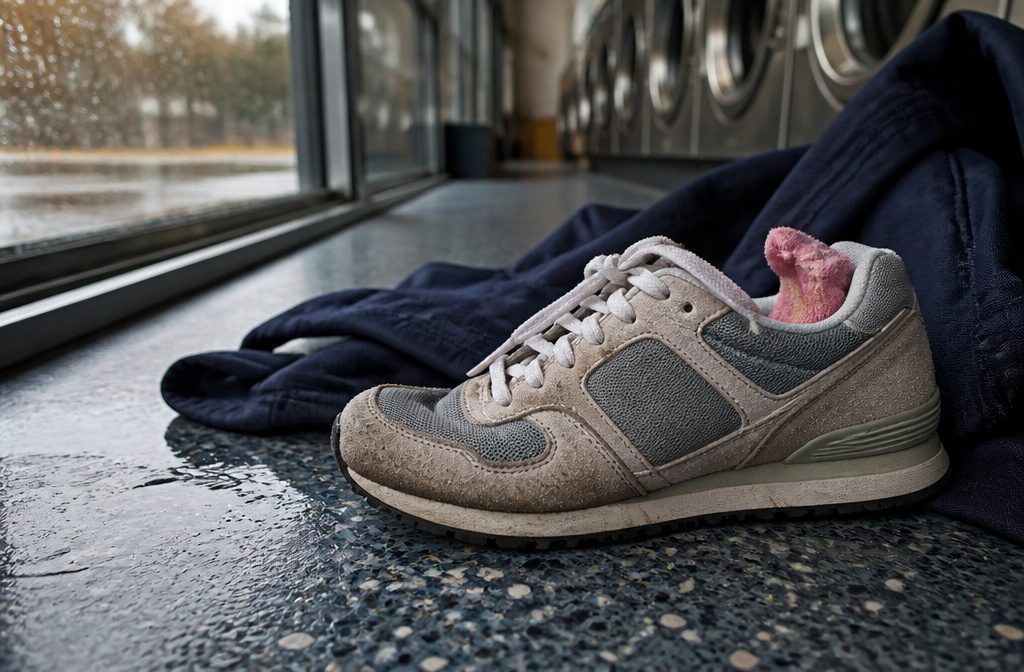
The New Balance 574 is a sneaker that started as a budget runner in 1988 and became a lifestyle shoe instead.
It costs under $90, which puts it well below New Balance’s technical models, but the suede scuffs easily and the mesh stretches with daily wear.
The ENCAP midsole wraps EVA foam in a polyurethane rim for support that breaks in over time rather than cushioning from the first step.
What the 574 Is and Where It Came From
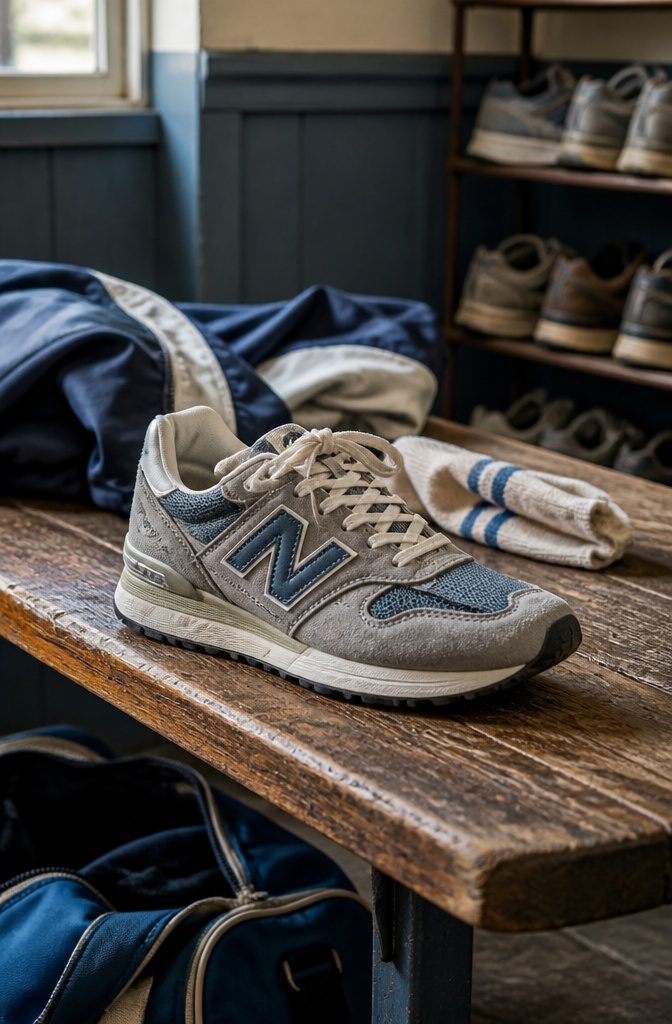
New Balance started in 1906 when William J. Riley, an arch support specialist, sold inserts to make existing shoes fit better.
The company stayed in that business until 1960, when owners Paul and Eleanor Kidd introduced the Trackster, New Balance’s first sneaker with a ripple sole and multiple width options. Cross-country and track teams adopted it quickly.
Eight models followed before the 574 arrived in 1988. New Balance designed it as an economy runner, a lower price point than their technical models, but it worked better as a lifestyle shoe.
A lifestyle shoe originally introduced as an economy runner. For its value, it boasted impressive tech. 574s were comfortable, could be worn for a light workout, but proved best for more pedestrian situations.
The 574 gave New Balance a wider audience. A big N logo and suede panels moved the brand past grays and neutrals, pulling in musicians like Biz Markie and Raekwon who wanted to express something through their shoes.
It survived the years when comfort sneakers were dismissed as dad shoes, and it held up when that look came back around.
Cushioning and Support for All-Day Wear
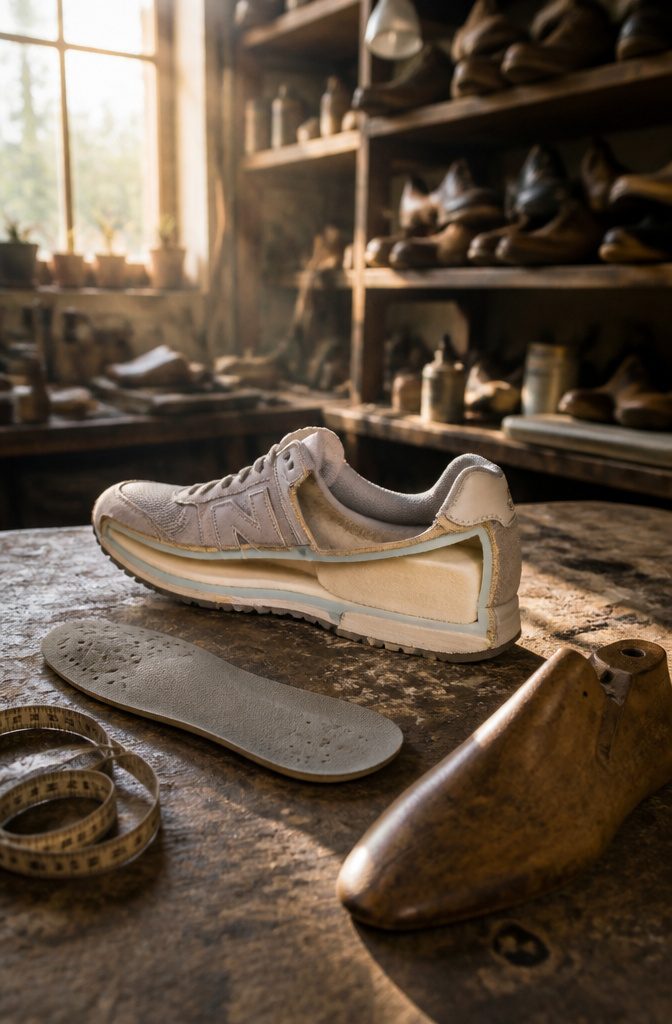
The ENCAP midsole sits in the arch and heel, combining lightweight EVA foam wrapped by a polyurethane rim for durability.
That little ENCAP logo marks the spot. The foam molds to your foot with wear, much the way a Birkenstock does, so high arches get support as the shoe breaks in rather than from the first step.
New Balance offers the 574 in three widths, which helps if your foot runs narrow or wide.
These land somewhere between Vans and orthopedic sneakers. Comfortable for everyday walking, yes.
A fix for extreme foot pain, no. The cushioning works for typical use (errands, a day on your feet, the usual rotation) but stops short of medical-grade support.
If you need serious arch intervention, this is not the shoe. For everyone else, the foam does its job without fuss.
Suede, Mesh and Durability Limits
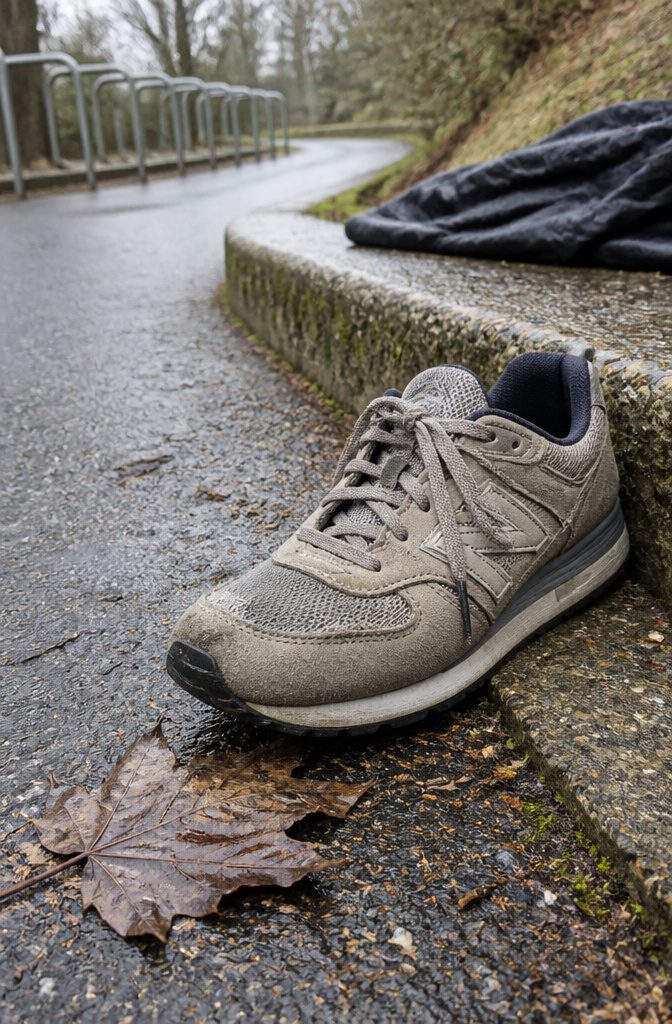
The upper pairs suede overlays with mesh panels and synthetic reinforcements. Suede scuffs easily: normal sidewalk contact leaves visible marks within weeks.
Mesh at the toe loosens with sustained flexing, the kind you get from daily walking rather than occasional wear. The construction is lighter than the made-in-USA models, and that shows in how quickly the materials give.
These are not built for high-intensity interval training. The materials and the sole cushioning both lack the support for lateral cuts, box jumps or anything that loads the shoe hard and fast.
I would skip them for gym sessions where you do more than walk on a treadmill. Daily walks cause noticeable wear over time: the mesh stretches, the suede roughens, and the toe box softens where your foot bends.
If you wear them five days a week for errands and commuting, plan for visible aging inside six months.
The Large N Logo and Classic Silhouette
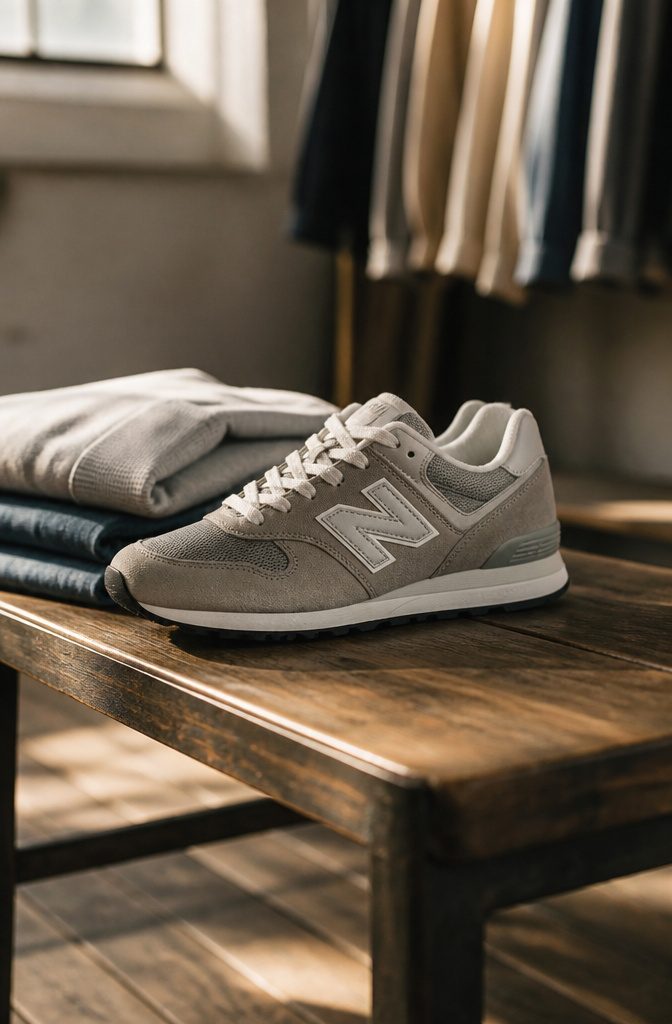
The big "N" on the side of the 574 still defines the shoe, and New Balance has used that space well: mismatched colors, themed collaborations, a canvas for whatever the brand wanted to try.
But as sneaker designs get louder and more layered, the logo now reads large; not wrong, just conspicuous in a way it didn’t when the 574 first arrived.
The silhouette itself holds up better.
The 574 is a heritage shape, part of New Balance’s core history, and that matters when you’re deciding what to wear it with. I treat it as a casual workhorse: it pairs cleanly with jeans, sweatshirts, T-shirts, anything relaxed.
The design is timeless enough that it doesn’t look out of place, but it’s not minimal either. Wear it with that in mind, and it works.
Outfit Pairings for Everyday Style
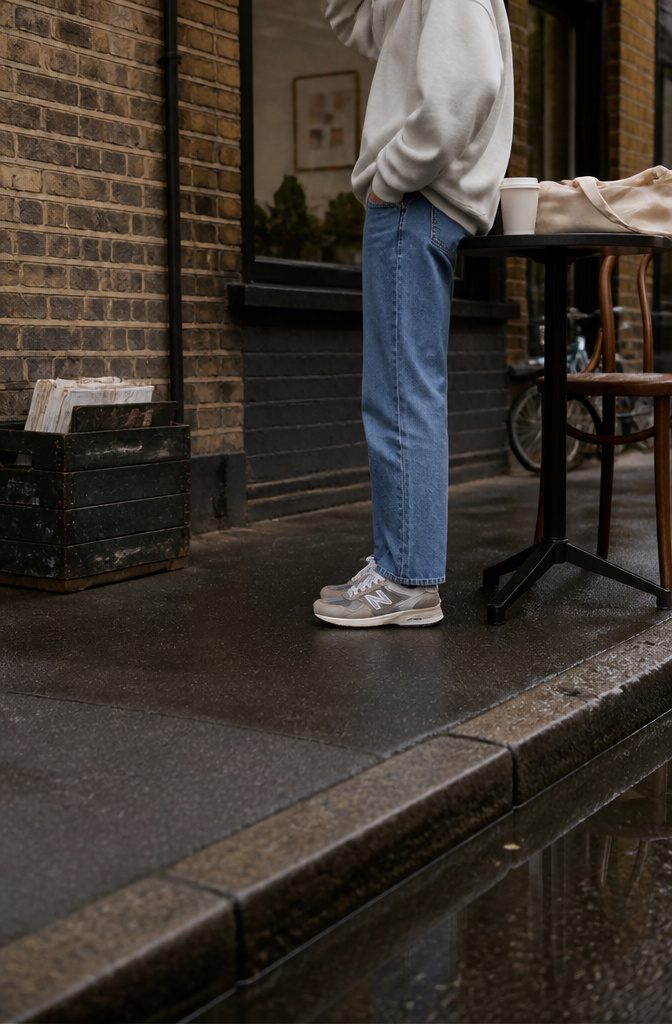
The 574 works best when you keep it casual. Jeans are the natural pair (straight or slim, dark or faded), and the sneaker’s low-profile shape sits cleanly at the hem without competing for attention.
Layer a crewneck sweatshirt or a T-shirt over that, and the outfit holds together without much thought. The silhouette is timeless enough that it doesn’t date the rest of what you’re wearing.
Sweats work just as well, especially for weekend errands or a coffee run where comfort matters more than polish.
The heritage design reads as intentional rather than sloppy next to relaxed cuts, which is harder to pull off with a technical running shoe.
Avoid pairing the 574 with anything that skews formal: chinos and a button-up start to fight the sneaker’s casual weight, and you lose the ease that makes the shoe work in the first place.
Core, Fresh Foam, Re-Engineered and Golf Versions
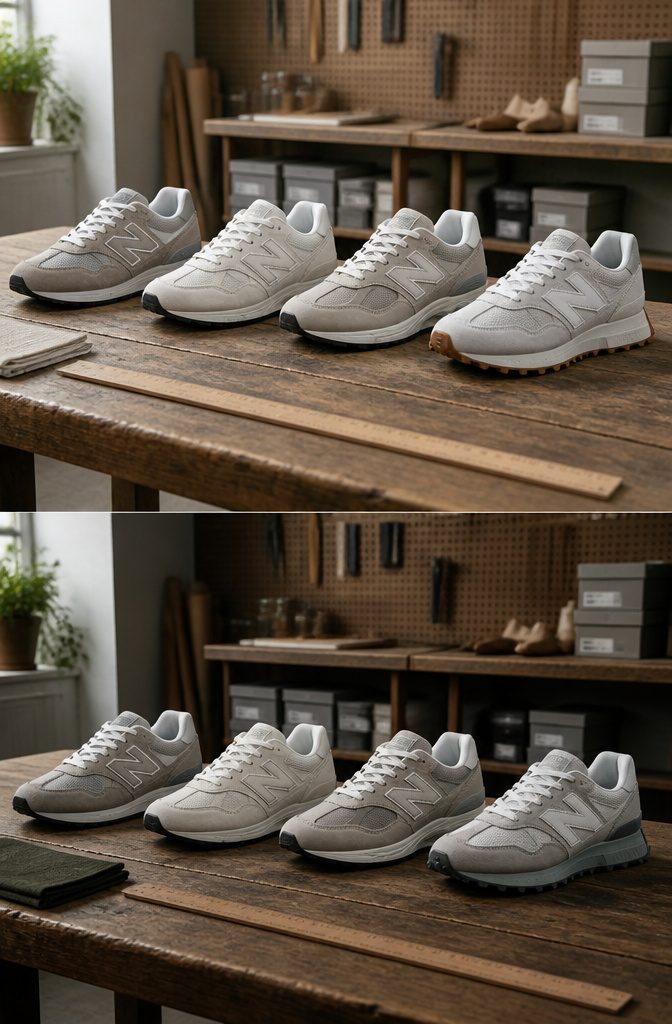
The 574 line splits into several distinct builds.
The Core sits at $89.99 and holds closest to the original design. Fresh Foam Breathe drops to $79.95 from $109.95, swapping traditional midsole foam for a softer compound and more open mesh.
The Re-Engineered version in Black/Grey runs $69.95, marked down from $89.95, and adjusts the upper pattern while keeping the same sole unit. Golf 574 Greens v2 in Grey costs $99.95 and adds a spikeless traction outsole for course wear.
New Balance lists 33 products across the 574 family, meaning these four represent anchor points in a broader range that includes seasonal colors and material swaps on each platform.
Colorways from Grey/White to Burgundy/Grey
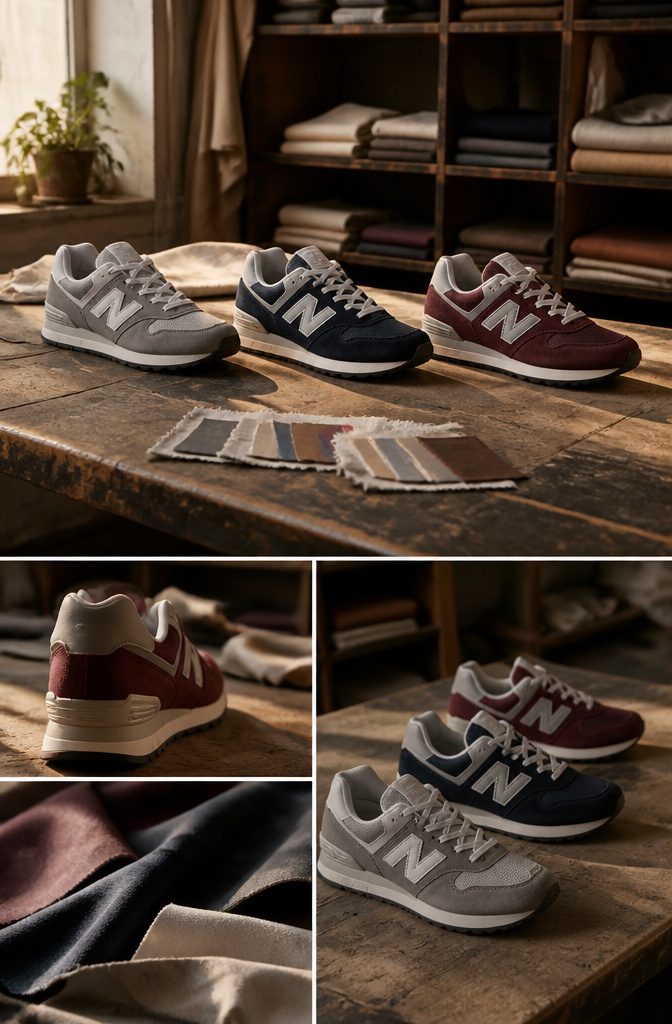
The Grey/White edition remains the foundational colorway, paired often with Navy/Silver as the other anchor option. Burgundy/Grey runs closer to seasonal territory but shows up regularly enough to count as part of the permanent rotation.
The 574 functions less as a single shoe than as a platform for color experiments: New Balance cycles through materials and combinations on a schedule that keeps the lineup moving without retiring the silhouette itself.
Mesh panels let the brand shift saturation without changing the base construction, and suede overlays take dye differently enough that two burgundies released a year apart read as distinct shoes.
Collaborators get the same square footage on the lateral "N" to work with, which explains why limited runs can look nothing like the Grey/White pair and still register as a 574 to anyone scanning a shelf.
Price and Value Under $90
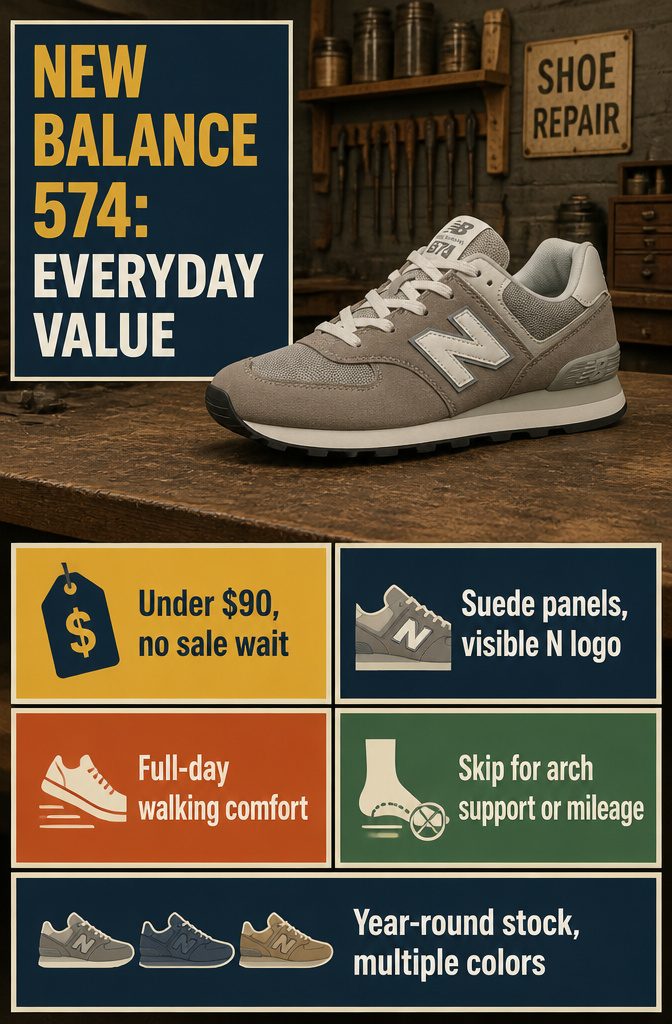
The 574 runs under $90, which puts it well below New Balance’s premium runners like the 990, 992, and 993.
Those models carry better cushioning and construction, but the 574 was built from the start as an economy option, a lifestyle sneaker that borrowed runner tech without the runner price.
For that cost, you get suede panels, a visible N logo, and enough comfort for a full day of walking.
If you need serious arch support or plan to put miles on them, step up to a higher-numbered model. But for an everyday sneaker that works with jeans and doesn’t ask you to wait for a sale, the 574 delivers.
New Balance keeps it in stock year-round in multiple colors, so you’re not hunting down limited drops or checking back when your size returns.
Collaborations with Stone Island, Todd Snyder and Others
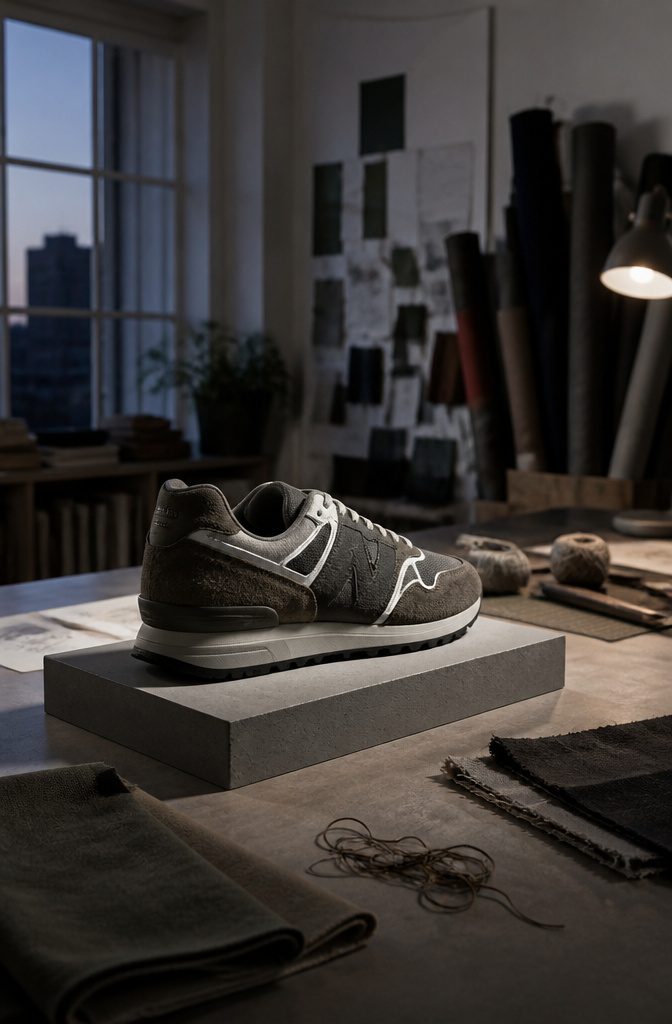
The Stone Island Ghost collaboration arrived on June 26, 2026 at 5:00 PM with reflective detailing across the upper.
Todd Snyder’s version followed, then the Tokyo Design Studio 2040 edition with its updated materials and construction. Lunar New Year releases have become a regular part of the rotation, and the Year of the Horse model marked one of those drops.
Stray Rats put their own interpretation on the silhouette, and Bodega worked specifically with the 574 Legacy rather than the standard model.
Release times for other collaborations included April 27, 2026 at 4:00 PM and February 27, 2026 at 8:45 PM. Each partnership changes the colorway, materials or branding while keeping the 574’s shape recognizable underneath.
Frequently Asked Questions
What is the New Balance 574?
The New Balance 574 is a lifestyle sneaker introduced in 1988 as an economy runner.
It pairs suede overlays with mesh panels and uses ENCAP midsole cushioning for all-day comfort. The shoe became a core part of New Balance’s lineup, bridging the gap between technical running models and casual everyday wear.
How much do New Balance 574s cost?
The 574 Core runs $89.99, staying under $90 as an economy option within the New Balance lineup.
Fresh Foam versions drop to $79.95 from $109.95, and Re-Engineered editions are priced at $69.95, down from $89.95. Golf versions cost $99.95.
Are New Balance 574s comfortable?
Yes, the 574 uses ENCAP midsole cushioning that molds to your foot over time, similar to how a Birkenstock breaks in.
They land between Vans and orthopedic sneakers in support level. The foam works well for everyday walking and all-day wear, though they stop short of medical-grade arch support.
What is ENCAP midsole technology?
ENCAP combines lightweight EVA foam wrapped by a polyurethane rim for durability, sitting in the arch and heel area.
The foam molds to your foot with wear rather than providing maximum support from the first step. New Balance marks the spot with a small ENCAP logo on the midsole.
What are New Balance 574s made of?
The upper combines suede overlays with mesh panels and synthetic reinforcements.
Suede scuffs easily from normal sidewalk contact, and mesh at the toe loosens with sustained flexing from daily walking. The construction is lighter than New Balance’s made-in-USA models, which shows in how quickly the materials age.
What colors do New Balance 574s come in?
Grey/White serves as the foundational colorway, often paired with Navy/Silver as the other anchor option.
Burgundy/Grey appears regularly in the rotation. New Balance cycles through materials and color combinations on the 574 platform, with 33 products listed across the family including seasonal releases and collaboration editions.
Can you wear New Balance 574s for working out?
No, the 574 lacks the support for high-intensity training.
The materials and sole cushioning cannot handle lateral cuts, box jumps, or anything that loads the shoe hard and fast. They work for light activity like treadmill walking but are built for lifestyle wear rather than gym sessions.
How should I style New Balance 574s?
Pair them with jeans (straight or slim, dark or faded) and layer a crewneck sweatshirt or T-shirt for a clean casual look.
Sweats work well for weekend errands where comfort matters more than polish. Avoid chinos and button-ups, which fight the sneaker’s casual weight and lose the ease that makes the shoe work.
What are some New Balance 574 collaborations?
Stone Island released a Ghost version with reflective detailing on June 26, 2026 at 5:00 PM.
Todd Snyder, Tokyo Design Studio 2040, Stray Rats, and Bodega (working with the 574 Legacy) have all put their own versions on the market. Lunar New Year releases appear regularly, including a Year of the Horse edition.