Work boots range from sleek Chelsea styles that clear a suit trouser to knee-high shafts warm enough to skip tights in December.
Which one belongs in your office depends on whether the people around you wear tailored trousers or chinos, and whether smooth leather or suede reads as more formal where you work.
The belt has to match the boot tone or the outfit breaks in half. Black boots with gray trousers lengthen the leg by keeping the values close, and brown boots with navy warm the palette without losing structure.
1. Chelsea Boots with a Suit or Work Trousers
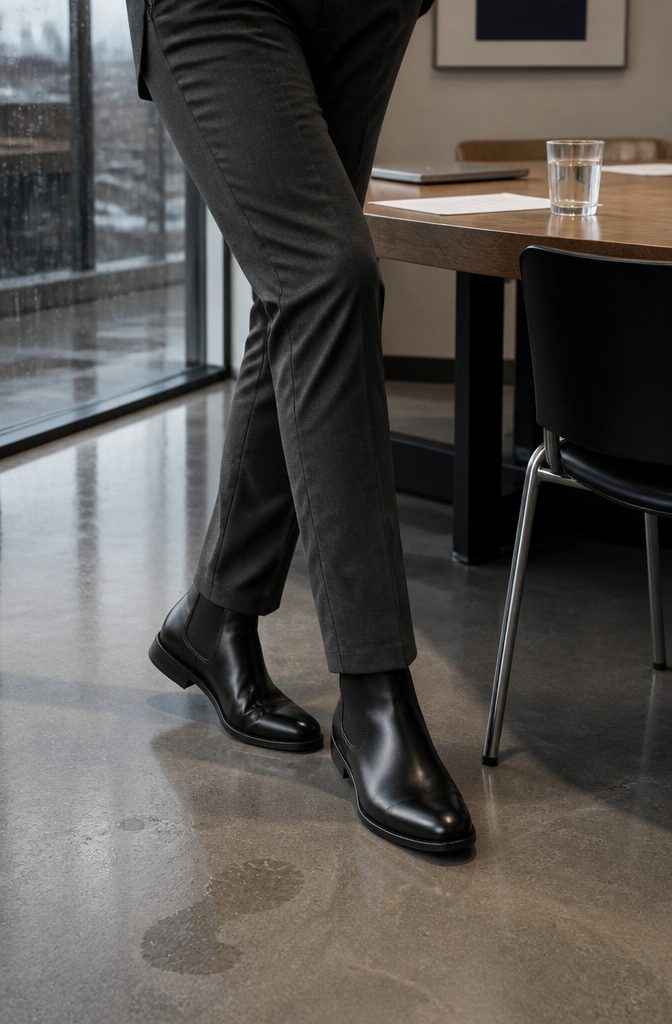
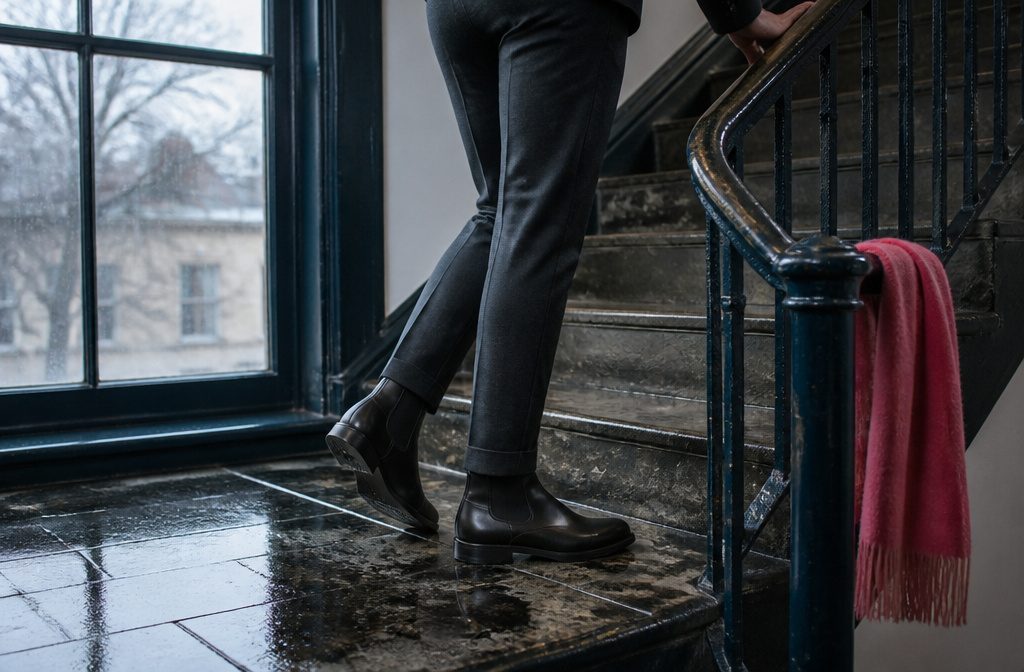
Chelsea boots sit close to the ankle and clear the hem of a suit trouser without bunching fabric or breaking the line.
The elastic side panels give you a clean profile, no laces to interrupt the look, no hardware to catch light under office fluorescent.
Black leather reads most formal and works under charcoal or gray trousers; brown softens the outfit slightly and suits navy or tan better.
The slip-on design makes them fast to put on at the door, which matters when you’re moving between meetings or heading out for lunch.
Smooth leather keeps the boot looking considered rather than casual, and a modest heel, or none, lets you walk comfortably if the day runs longer than the calendar suggested it would.
2. Ankle Boots with Tailored Trousers or Skirts
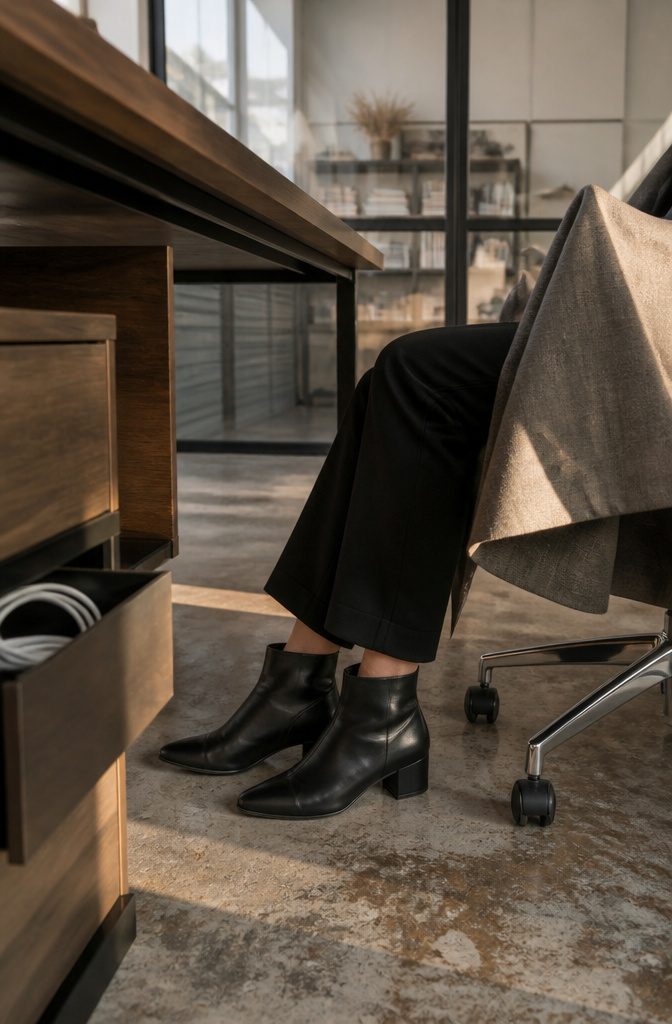
A simple leather ankle boot pairs with tailored trousers and skirts without fighting for attention. The boot stays understated, smooth leather, a modest heel, clean lines, so the tailoring does the work it was cut to do.
Black ankle boots with black trousers create a continuous line from hip to floor, which lengthens the leg and keeps the silhouette tidy.
That seamlessness matters more in a formal office than in a business-casual one, where a bit of contrast reads as intentional rather than careless.
Tan or brown boots warm up navy or grey trousers without tilting casual, and the pairing works just as well with a pencil skirt or a midi length.
The versatility comes from restraint. A boot this plain moves across dress codes, business casual to formal, because nothing about it signals one or the other too loudly.
Pair it with straight-leg trousers and the hem should rest neatly over the boot opening, not bunch above the ankle.
3. Knee-High Boots with Dresses, Skirts, or Slim Trousers
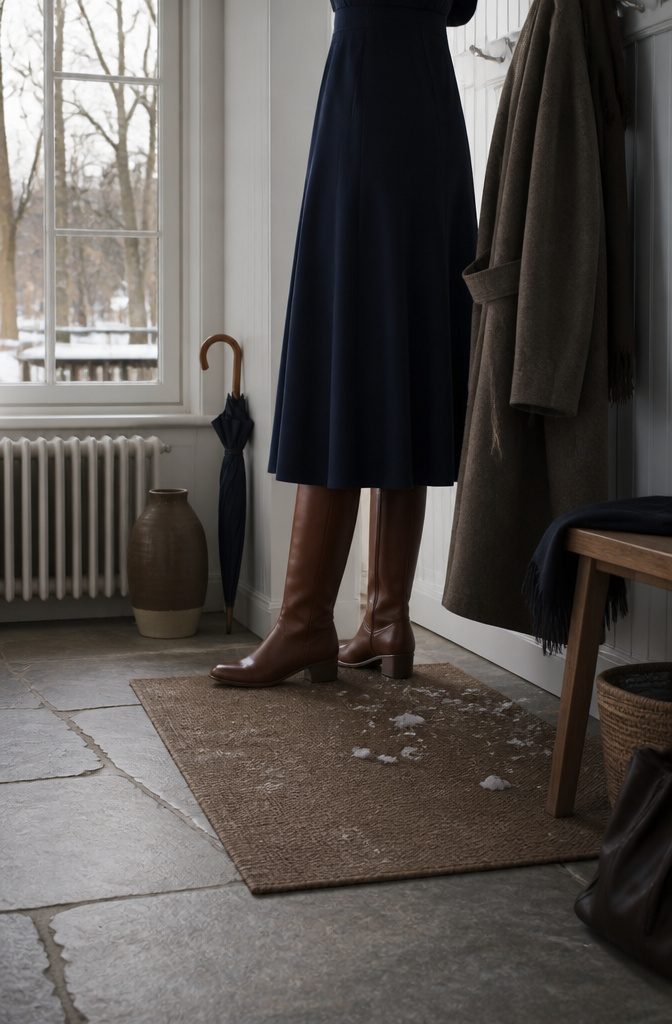
Knee-high boots hit a useful spot when temperatures drop: they cover enough leg that you can skip tights under a dress or wear lighter-weight trousers without layering thermal leggings underneath.
The coverage alone keeps you warmer on a cold commute than ankle boots do, and you avoid the bulk of tucking trousers into a shorter shaft.
Pair them with midi dresses or slim-fit trousers to keep the silhouette balanced.
A streamlined shaft in black or brown looks more pulled-together than slouchy styles or boots with heavy buckle detail, which read casual even when the rest of the outfit doesn’t.
The taller line also works better with skirts and dresses than ankle boots do, there’s less exposed leg to manage, so the proportions stay clean without requiring specific hemlines.
Stick to neutral tones. Black and brown both work across most office palettes, and a plain shaft gives you flexibility to wear the same pair with charcoal trousers one day and a navy dress the next.
4. Heeled Boots to Add Polish
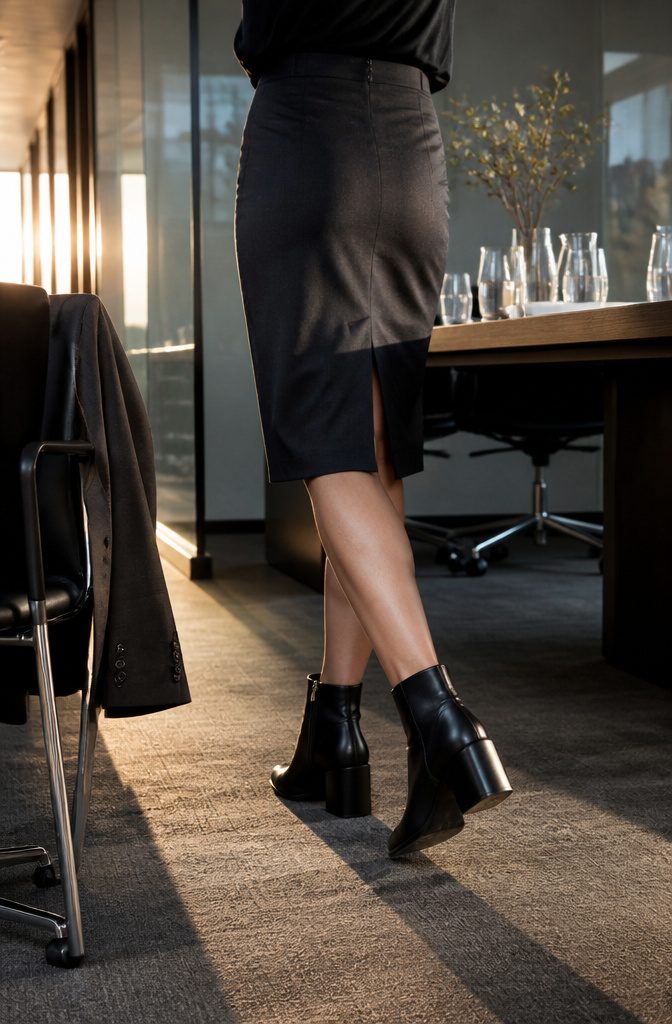
Block heels and kitten heels dress up office looks without the fatigue of a stiletto.
A block heel especially offers stability for all-day wear while still adding polish and height, which makes it a smart pick when you’re on your feet through meetings or walking between buildings.
Kitten heels work the same way at a lower profile, suitable when the dress code leans conservative or when comfort matters more than the extra inch.
Both heel shapes pair well with skirts, dresses, and fitted trousers.
A heeled ankle boot in leather lifts a pencil skirt or sheath dress into polished territory, and the same boot works under tailored pants when you want a dressier silhouette than a flat delivers.
Stick to classic colors and minimal embellishment so the boot reads professional rather than trendy.
Pointed-toe versions add refinement; rounded toes feel slightly more relaxed but still office-appropriate. The modest heel height gives you the visual lift without the price you pay by afternoon in a higher, thinner heel.
5. Brown or Neutral Boots for Business Casual
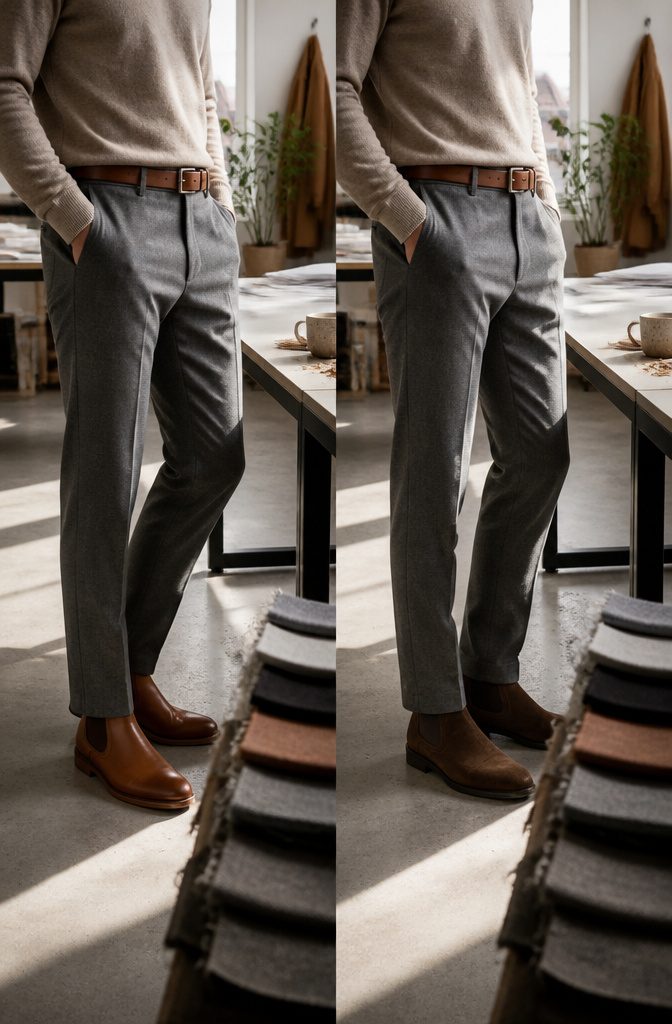
Brown or tan boots read warmer and more approachable than black, which makes them easier to pull off in less formal offices or on casual Fridays.
Burgundy sits in the same family and works the same way. They suit creative industries especially well, where a strictly corporate look can feel stiff.
The palette they open up is broad. Brown boots pair cleanly with navy trousers, tan with grey, and burgundy with charcoal or olive.
Earth tones in general, camel, rust, forest green, fall into place without the precision black demands. If your work wardrobe leans toward those colors already, a brown boot becomes the most versatile piece you own.
One detail worth keeping consistent: match your belt to the boot.
Brown boots with a brown belt, tan with tan. That coordination signals you thought about the outfit, and it holds the look together when the colors themselves are doing most of the work.
6. Black Boots with Gray or Charcoal Trousers
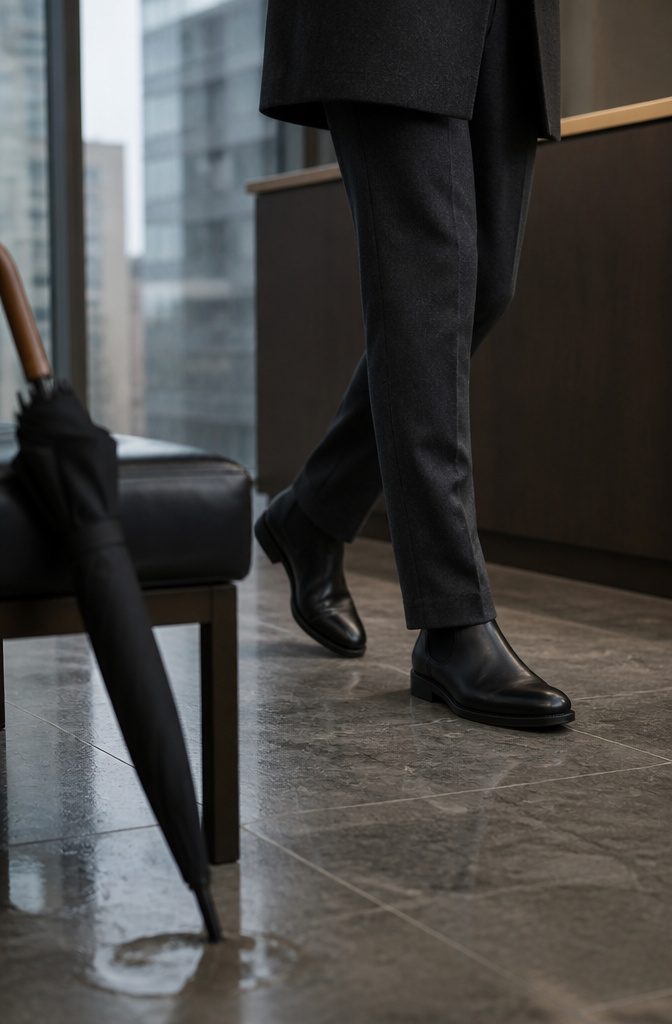
Black boots with gray or charcoal trousers build a monochrome line that reads as polished without reading as stark.
The black-on-black pairing lengthens the leg, especially when boot shaft and trouser fabric meet at the same value, but gray softens the formality just enough for business casual while keeping the silhouette clean.
Charcoal trousers in wool or a structured blend hold their shape better than lighter grays, so the outfit stays crisp through a full day.
Tan or brown boots with gray trousers warm the palette without crossing into casual territory.
Navy trousers work the same way: the contrast stays low enough that the outfit holds together as one thought rather than two pieces fighting for attention.
I keep both options around because some weeks call for the authority of black, and others call for approachability.
7. Brown Boots with Navy, Tan, or Olive
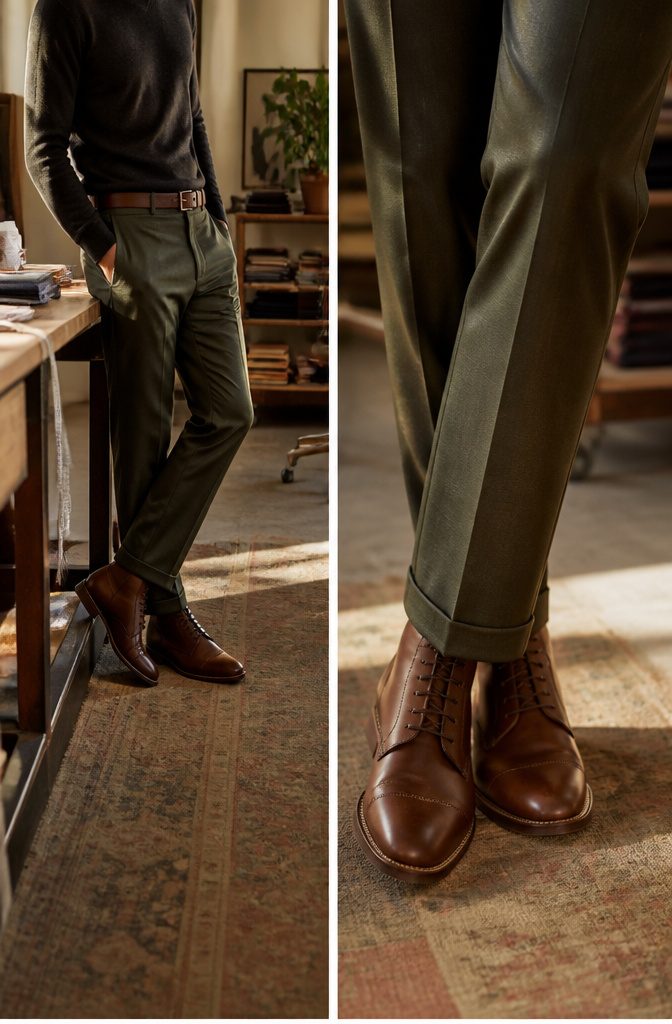
Brown boots pair with navy, tan, or olive trousers because the warmth of brown softens the combination, no stark contrast, just a grounded, approachable look that fits business casual better than a formal office.
Navy trousers with tan ankle boots read warmer than the same trousers with black, and olive gains enough visual weight that brown boots balance it without dragging the outfit casual.
The trick is matching your belt to the boot tone. A tan boot with a black belt breaks the line; swap the belt for brown or tan leather and the outfit holds together.
Grey trousers work the same way, brown boots add warmth without losing polish, as long as the rest of the outfit stays tailored.
This combination suits creative industries and casual Fridays better than client meetings, where black boots and cooler tones carry more formality.
8. Smooth Leather for Tailored Clothes, Suede for Softer Fabrics
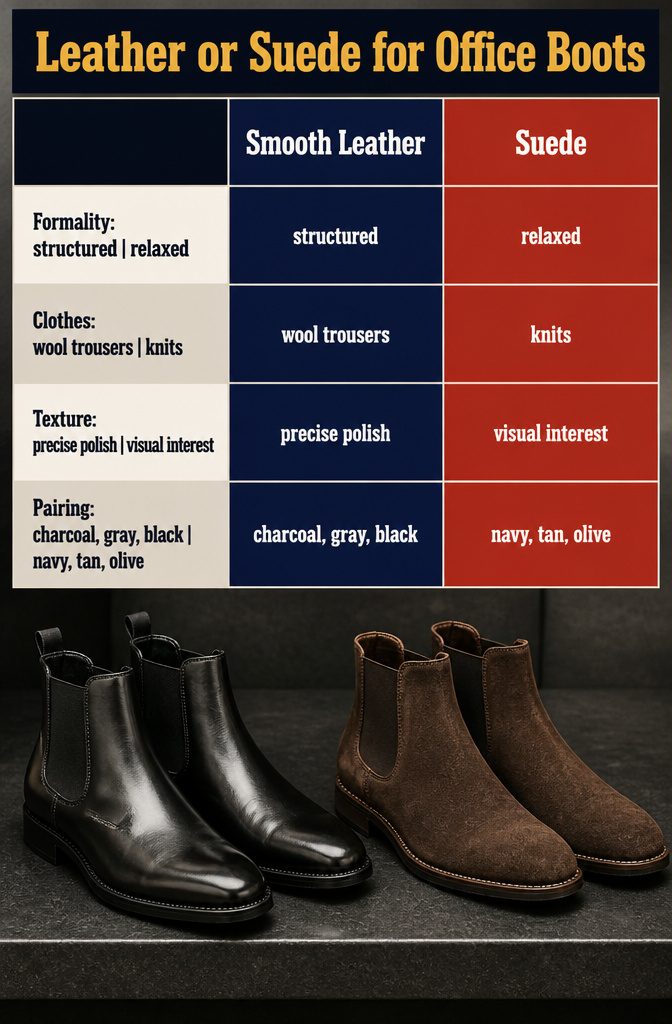
Smooth leather reads formal enough for structured pieces: wool trousers, a tailored blazer, anything with a defined waistline or a pressed crease.
The polish on the leather matches the precision in the tailoring, so the boot doesn’t drag the outfit toward weekend wear.
Suede softens the look and works better when the rest of the outfit has give to it, knits, unstructured blazers, anything without a sharp edge.
The texture brings enough visual interest that you don’t need the outfit to do extra work, but it also signals a step down in formality, which matters if your office leans traditional.
Black leather pairs naturally with charcoal, gray, and black trousers. Brown works with navy, tan, and olive, and darker brown finishes hold more formality than anything pale or distressed.
If your workplace expects tailored trousers and button-downs most days, smooth leather in either color keeps the line clean without looking like you tried too hard.
Match Boot Details to Your Office Dress Code
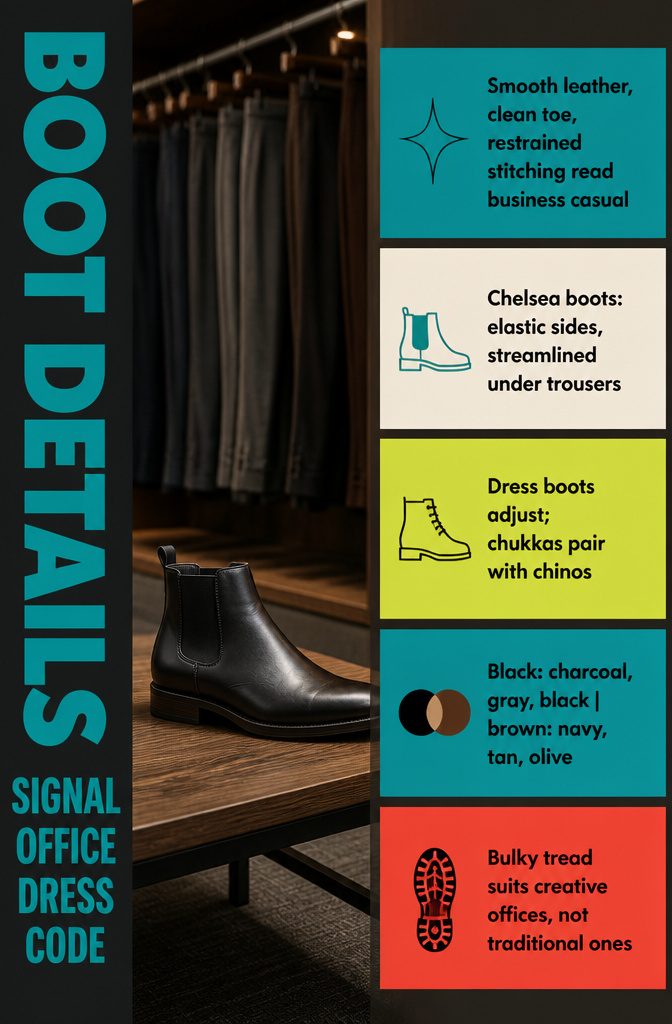
A boot’s finish and shape tell you whether it belongs in your office before your colleagues do. Smooth leather, a clean toe, and restrained stitching read as business casual; textured surfaces and visible hardware step down into casual territory.
If the people around you wear tailored trousers and button-downs, a sleek ankle boot holds that same level of polish without crossing into formal-shoe territory.
Chelsea boots have elastic side panels and a streamlined profile that disappear under straight-leg trousers.
Lace-up dress boots offer structure and adjustability, while chukka boots sit lower at the ankle with simple lacing that pairs well with chinos and a knit polo.
The distinction matters more than any label promising "office appropriate", the boot should look right next to what your coworkers are wearing.
Black leather pairs naturally with charcoal, gray, and black trousers. Brown works with navy, tan, and olive, with darker shades skewing more formal than pale or distressed finishes.
Suede softens the look for less formal offices, particularly with chinos and a collared shirt. Bulky soles and prominent tread can work in creative environments but look out of place where the dress code leans traditional.
Fit for All-Day Comfort
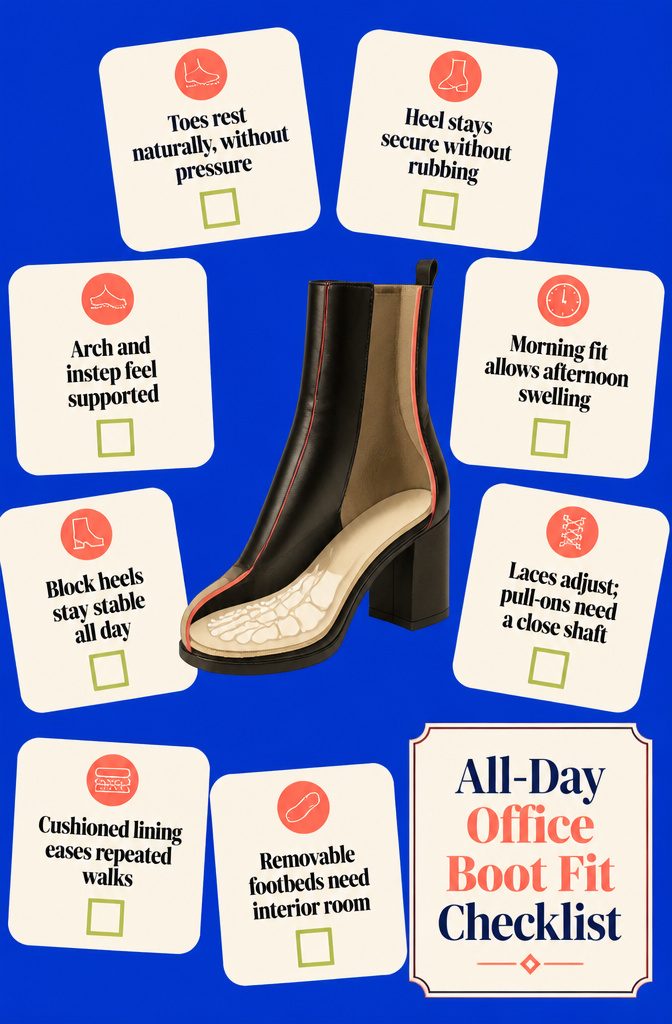
A boot that fits comfortably at the register may feel different after walking from the parking structure, standing through a presentation, and crossing the office for the fourth time before lunch.
Toes need enough space to rest naturally without pressing forward, and the heel should hold secure without rubbing.
The middle of the foot matters too: the boot should support the arch and instep without requiring laces pulled tight just to prevent sliding.
Feet can swell slightly by afternoon, so a fit that feels snug but not tight in the morning is safer than one that starts borderless.
Block heels are stable enough for all-day wear while still adding height, and lace-up styles let you adjust tension across the instep as the day shifts.
Pull-on designs depend entirely on the boot shaft fitting your ankle and calf without gapping or binding.
Smooth linings and cushioning underfoot help during repeated trips between floors or buildings, and removable footbeds work if you use your own inserts, provided the boot has interior space to spare.
Care and Protection
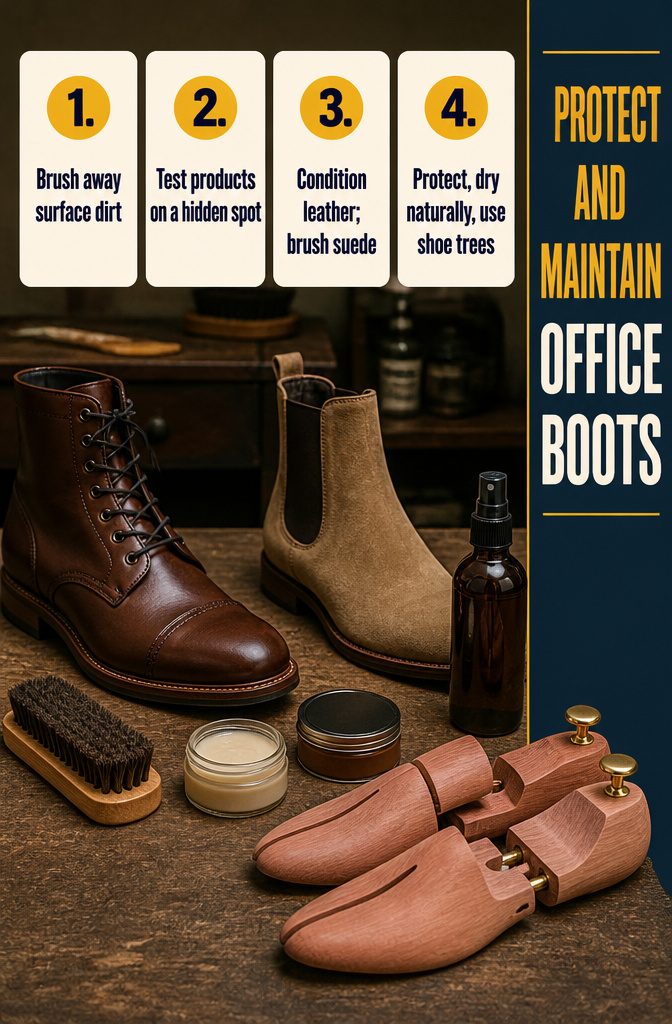
Cleaning and conditioning between wears keeps office boots looking intentional rather than worn down. The approach depends on what the boot is made of:
- Smooth leather takes polish and conditioner after brushing off surface dirt; test any product on a hidden spot first, and let the boot dry naturally away from direct heat to avoid stiffness or cracking.
- Suede needs a suede brush and cleaners made for that finish, not leather polish, which will ruin the texture.
- Protective sprays extend the life of both leather and suede, especially for boots that see sidewalk duty during the commute.
- Cedar shoe trees help maintain shape and pull moisture out of the interior; leaving a day between wears gives the lining time to dry completely.
Worn heel edges and loose soles turn a solid pair into something that reads as sloppy. Catching those early makes the difference between a boot that lasts and one that gets tossed after a season.
Frequently Asked Questions
What types of boots work well for office wear?
Chelsea boots, ankle boots with clean lines, and knee-high boots in smooth leather suit most offices.
Chelsea boots have a streamlined profile that sits neatly under trousers, ankle boots pair with tailored pieces without competing for attention, and knee-high styles provide coverage in colder weather.
Stick to restrained details and neutral colors for the most versatile options.
How should you style boots with business casual clothing?
Pair leather ankle boots or Chelsea boots with tailored trousers or chinos and a button-down shirt.
Brown boots work with navy, tan, or olive trousers, while black suits charcoal and gray. Match your belt to the boot tone and keep the boot’s finish smooth rather than distressed for a polished look.
What boot colors are appropriate for the office?
Black, brown, tan, and burgundy all work in office settings.
Black reads most formal and pairs with charcoal, gray, and black trousers. Brown, tan, and burgundy feel warmer and suit navy, olive, and earth tones better, making them good choices for business casual environments.
Are leather or suede boots better for office outfits?
Smooth leather works better with tailored trousers, blazers, and structured pieces because the polish matches the precision in formal clothing.
Suede softens the look and pairs well with knits, unstructured blazers, and less formal fabrics. Let your office dress code guide the choice.
How do you keep office boots looking polished?
Clean and condition boots between wears to maintain their appearance. Smooth leather takes polish and conditioner after brushing off dirt, while suede needs a suede brush and cleaners made for that finish.
Use protective sprays for both materials, and cedar shoe trees help maintain shape and pull moisture from the interior.