
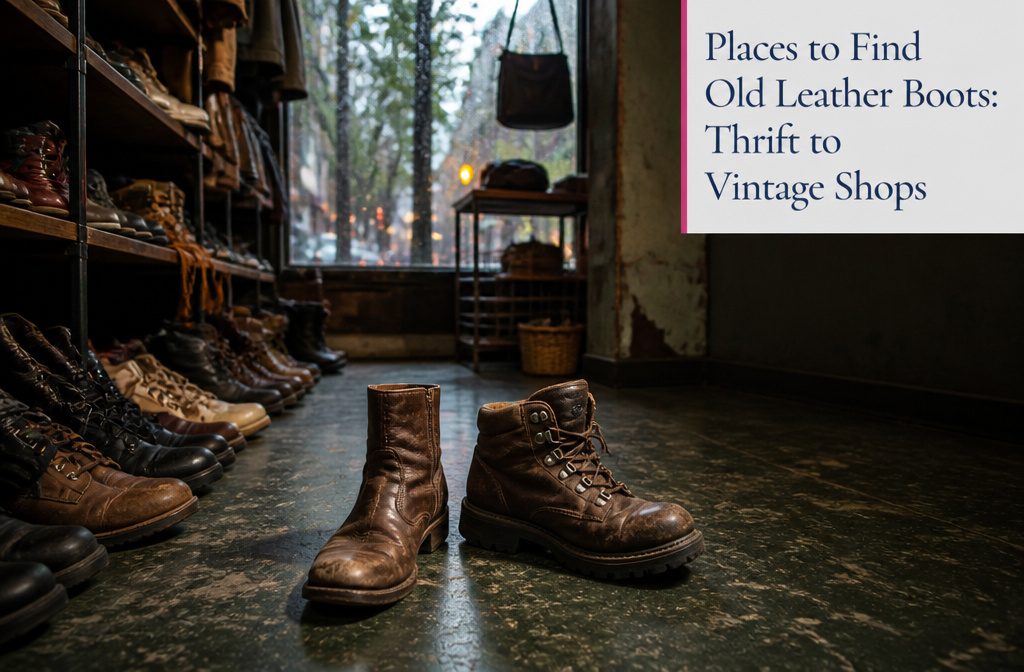
Thrift stores win for selection that refreshes weekly and prices low enough to gamble on boots that need conditioning. Skip them if you want verified luxury labels or you live somewhere rural with one shop in a thirty-mile radius.
The catch: inventory turns over fast, so you either map out three or four locations and visit in rotation, or you miss whatever came in between your trips.
One thrift shop in Austin stocked 1970s campus boots and 1990s chunky-soled hikers in the same week, both under half the cost of new pairs.
1. Thrift Stores
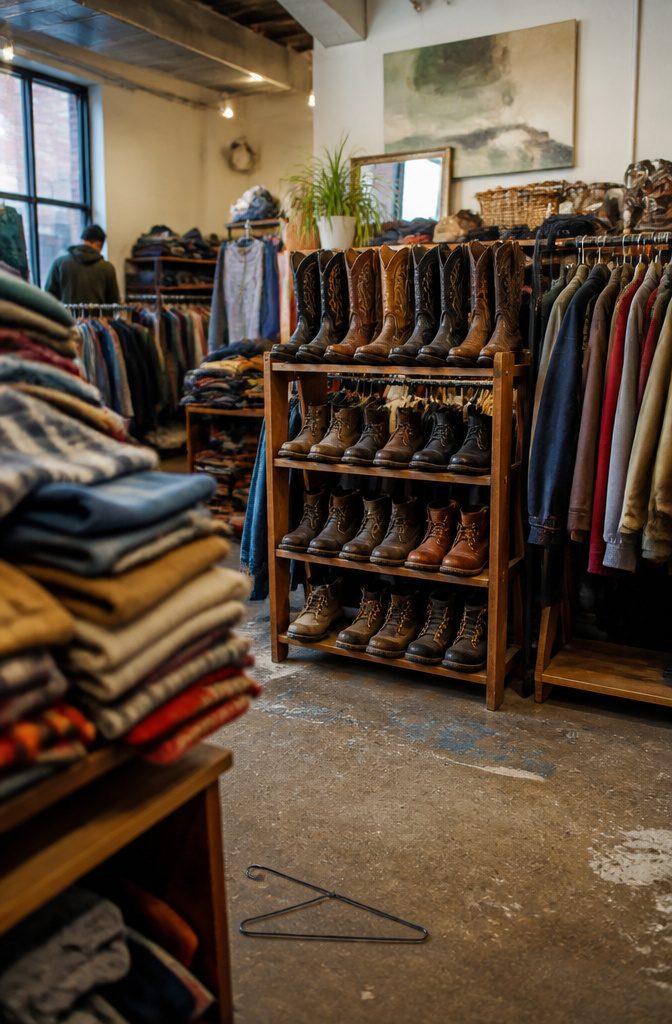
Local thrift shops are where budget-friendly vintage boots turn up from decades you would not expect.
You pull classic cowboy boots with intact stitching off one rack and retro ankle boots with solid zippers off another, often for less than half what a new pair costs.
Prices sit low enough that you can take a chance on a pair that needs minor heel work or conditioning.
The selection changes weekly, so mapping out thrift stores across a few neighborhoods and hitting them in rotation gives you better odds than waiting for one shop to restock.
I mark three or four within a twenty-minute drive and visit each every couple of weeks.
Styles range from 1970s campus boots to 1990s chunky-soled hikers, and the variety means you are not locked into whatever current retailers decided to carry this season.
2. Online Marketplaces
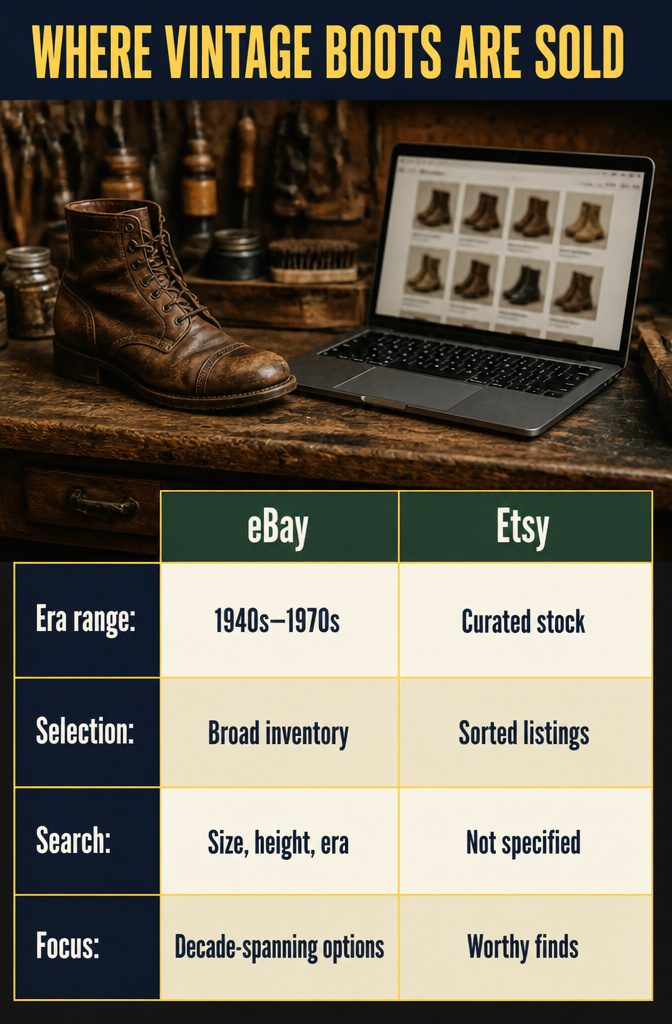
eBay covers the broadest span if you want options across decades: military surplus from the ’40s sits next to western wear from the ’70s, and the search filters let you narrow by size, boot height and era.
Etsy pulls together small shops run by people who actually sort their stock, so the selection skews toward boots that someone thought worth listing rather than bulk inventory.
Poshmark works best as an app and leans toward styles that photograph well: plenty of heeled vintage ankle boots and tall riding boots in good shape.
Depop draws a younger crowd hunting retro fashion, which means the inventory turns over fast and pricing stays competitive.
The RealReal authenticates luxury boots before listing them, so you pay more but skip the guesswork on whether that Frye label is original or a convincing fake.
3. Local Vintage Boot Shops
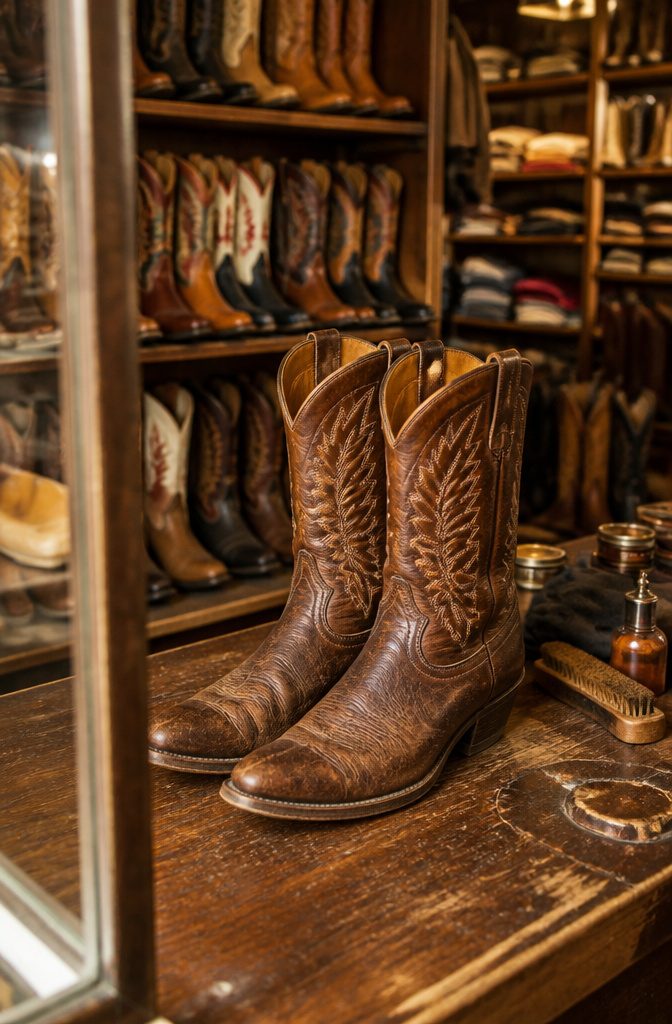
Local vintage shops pull in rare pieces you won’t see on every third shelf at the mall.
The Cowboy Boot Shop in Austin, Texas stocks classic Western styles, while Vintage Vortex in Los Angeles carries retro designs that lean harder into odd colour blocking and asymmetric stitching.
The Cobble Closet in New York City focuses on high-quality leather construction, and Rag-O-Rama in Atlanta mixes old-school attitude with wearable cuts.
Each shop curates differently, which means a weekend drive can turn up a pair discontinued 20 years ago or a style that never made it past a regional release.
Buying local keeps small businesses running and the vintage resale loop intact, so the boots stay in circulation instead of sitting in a landfill.
Why Old Leather Boots Appeal
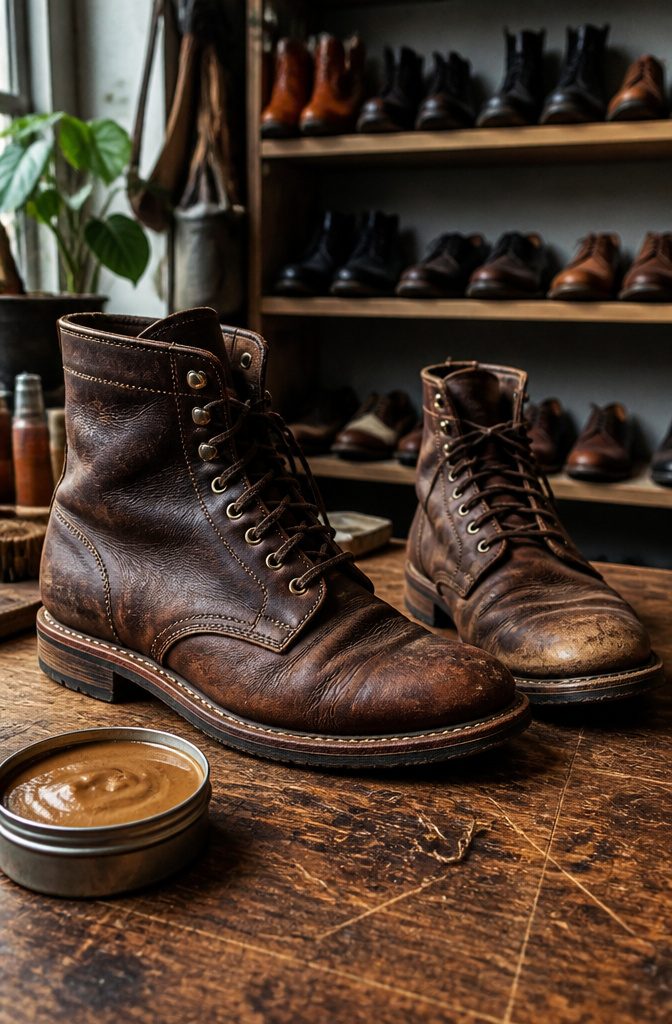
Old leather boots carry a kind of weight you don’t find in new shoes: decades of wear have shaped them in ways a factory can’t replicate, and the creases, patina, and softened edges give each pair a story that shows on the surface.
Vintage styles reflect the craftsmanship of their era, often built with full-grain leather, Goodyear welting, and construction that was meant to be repaired rather than replaced.
Buying secondhand is also a form of recycling. Every pair pulled from a thrift bin or vintage shop is one less item sent to a landfill, and choosing vintage means opting out of the resource-heavy cycle of making new footwear.
The combination of distinctive style, durability, and a lighter environmental footprint explains why old boots have found their way back into regular rotation.
Styling Ideas
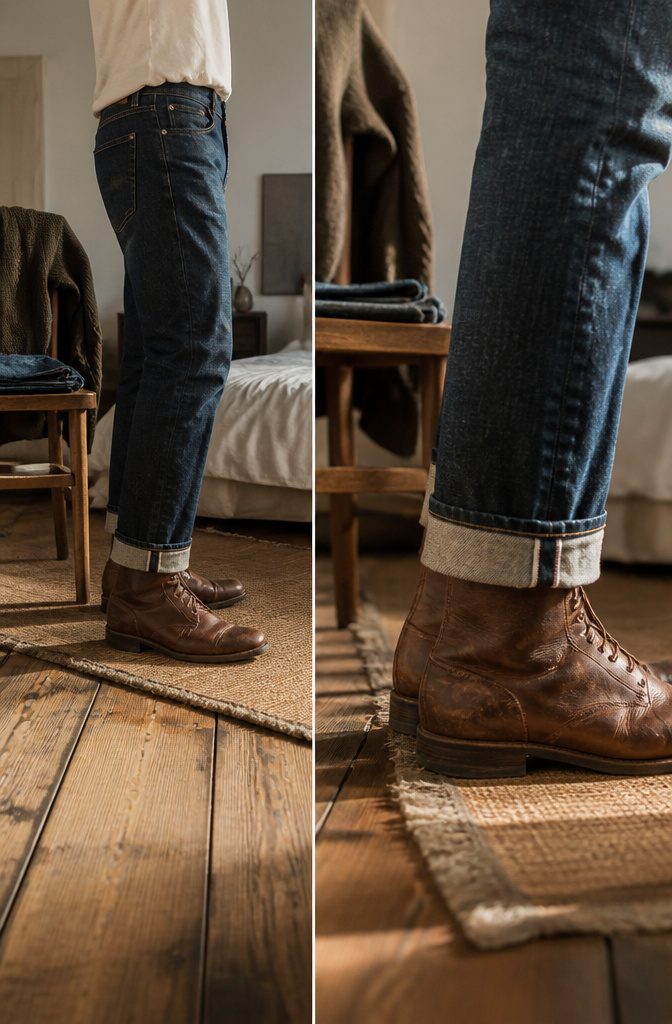
Old boots read as intentional when the rest of the outfit keeps its volume lean. Pair them with slim or straight denim.
The boots anchor a heavier silhouette, so fitted jeans balance the proportions. Cuff the hem once or twice to stop the leg at the boot shaft and draw the eye down.
- Wear them with a midi dress or skirt to soften the rugged look while keeping the boot visible
- Contrast their vintage weight with minimalistic tops: a plain tee, a ribbed tank, anything that does not compete.
- Mix leather with knit for texture without adding bulk: a wool sweater or cardigan over a narrow trouser works
- Keep jewelry simple and timeless so the boot stays the focal point
Care and Preservation
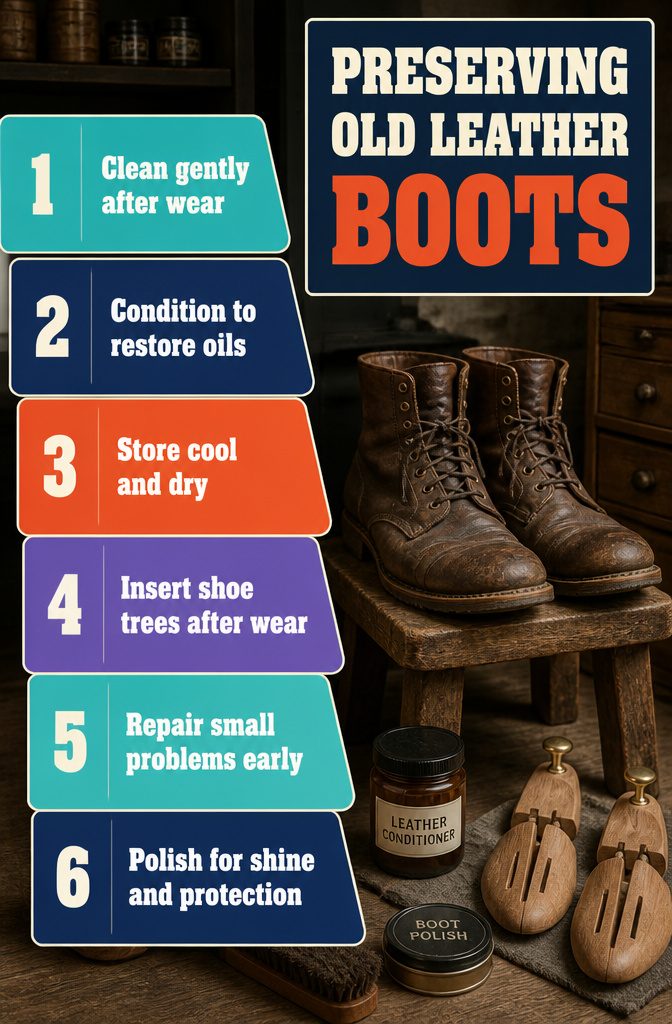
Old leather boots last when you look after them. A few regular moves keep the material supple and the shape intact.
- Clean gently after each wear. Dirt left sitting works into the grain and dries the leather out.
- Use leather conditioner on leather boots to restore oils the material loses over time.
- Store them in a cool, dry place, away from radiators and direct sun; heat warps the shape and cracks the finish.
- Slip in shoe trees when the boots come off to hold the structure and stop creases from setting.
- Fix small problems early. A loose stitch now beats a blown seam later.
- Polish regularly to bring back the surface shine and add a thin layer of protection.
These practices can add years to a pair of boots that already have decades behind them.
Repair
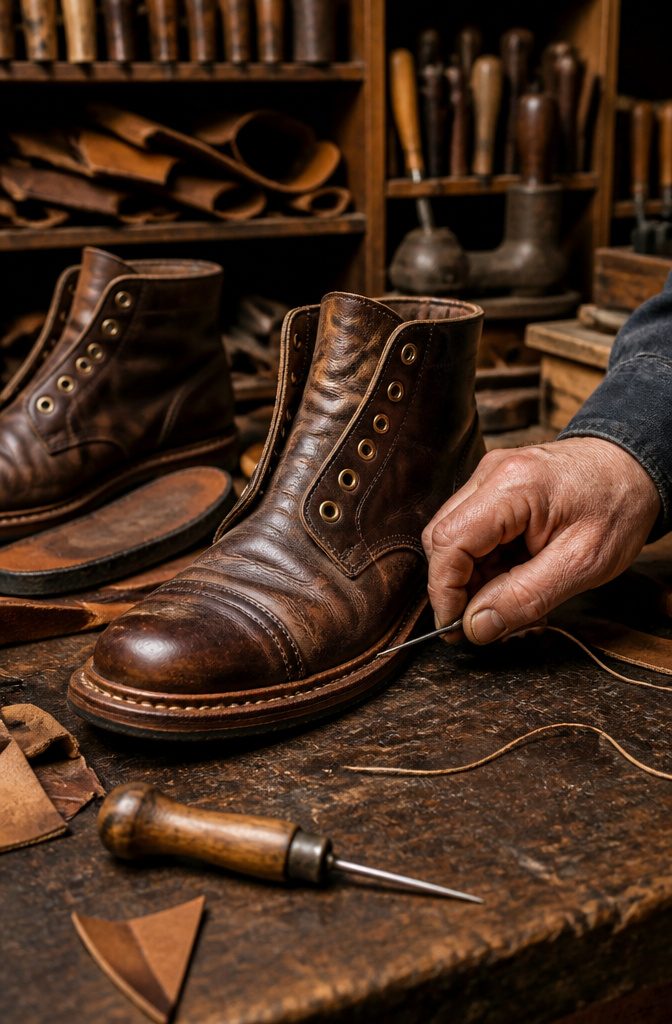
A skilled cobbler is the first call when vintage boots need work.
Look for someone who handles period footwear regularly; they know which adhesives hold up on dried-out leather and which stitching techniques match the original construction. Ask to see examples of past repairs before you hand the boots over.
Keep the materials period-appropriate. Modern rubber half-soles work fine under a leather topper, but a Vibram lug on a pair of 1950s Chippewas kills the whole look.
Same goes for eyelets: if the originals were brass, replacement nickel stands out. A good cobbler stocks vintage-style hardware or can source it.
Regular cleaning and polish between repairs matter more than most people think. Dirt works its way into seams and speeds up thread rot.
Condition the leather every few months. It stays supple, flexes instead of cracking, and the cobbler has an easier time when something does need stitching.
Good work takes time.
A proper resole with a leather midsole and welt stitching runs two to three weeks, sometimes longer if the cobbler is busy. Rush jobs show.
Frequently Asked Questions
Where can I find old leather boots?
Thrift stores, online marketplaces like eBay and Etsy, and local vintage boot shops are the 3 main places to find old leather boots.
Thrift stores offer the lowest prices and rotating stock, online marketplaces provide the widest selection across decades, and vintage shops curate rare styles you won’t see in chain stores.
How do I restore old leather boots?
Clean gently after each wear to remove dirt that dries out the grain, then apply leather conditioner every few months to restore oils the material loses over time.
For deeper restoration or repairs like resoling, take them to a cobbler who handles period footwear and can match original construction techniques.
How should I store old leather boots?
Store them in a cool, dry place away from radiators and direct sunlight, since heat warps the shape and cracks the finish. Insert shoe trees when the boots come off to hold the structure and prevent creases from setting.
What should I wear with old leather boots?
Pair them with slim or straight denim and cuff the hem once or twice to stop the leg at the boot shaft.
Keep tops simple so the boots stay the focal point, or wear them with a midi dress or skirt to soften the rugged look while keeping the boot visible.