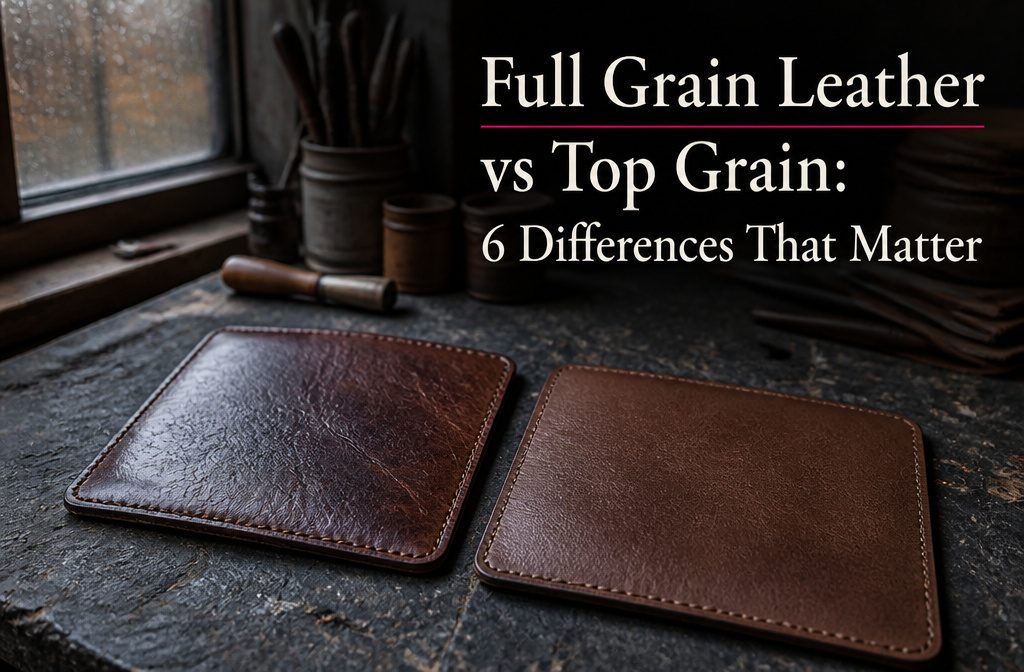
Full grain wins for anything you want to last decades and age beautifully: wallets, belts, bags that darken and develop luster from handling.
Top grain makes sense when you need a uniform surface that resists stains, or when matching panels matters more than patina.
The difference sits in the surface: full grain keeps the hide’s densest fibers intact, the ones that let a wallet hold its shape for ten years, while top grain gets sanded down to remove blemishes and loses some of that structural strength in the process.
What Full Grain Leather Is and Why the Surface Matters
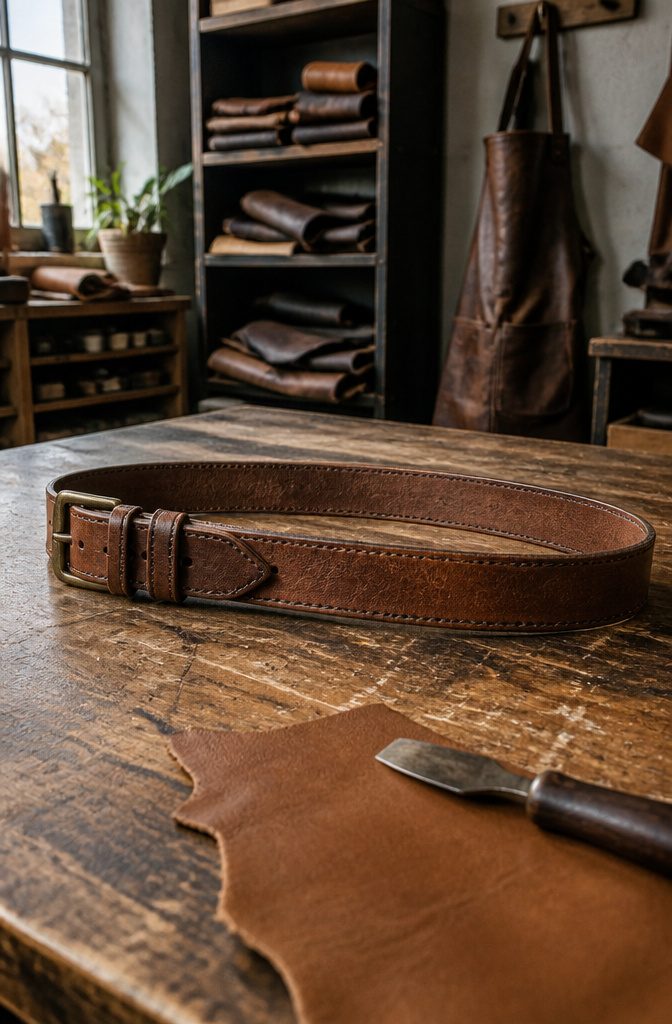
Full grain leather is the hide’s outermost layer left exactly as it came off the animal, grain surface and all.
No sanding, no buffing, no correction. That intact surface is where the tightest, strongest fibers in the hide sit, and it still carries the natural pores, markings, and texture the animal had.
The grain does the structural work: those dense fibers are what let a full grain wallet hold its shape for a decade and a belt take daily wear without the edges fraying.
Top grain and corrected leathers start from the same layer but get sanded down to remove blemishes, which strips away some of those load-bearing fibers.
The surface is then embossed with an artificial grain pattern for uniformity. Split leather comes from the flesh side beneath the grain entirely, where the fibers run loose and need a printed texture to pass for the real thing.
Full grain skips all of that. You get the hide’s original architecture, which is why it outlasts the alternatives and earns that deep patina from oil and light.
Recommended Products

FULL-GRAIN LEATHER CONSTRUCTION | Built from premium full-grain leather with a natural oil finish. This is the highest grade of leather available and the same uncompromising standard Carhartt has stood behind since 1889. Dims at 3.5" x 4.5". This men's leather bifold wallet is made to hold up through daily use on and off the jobsite.
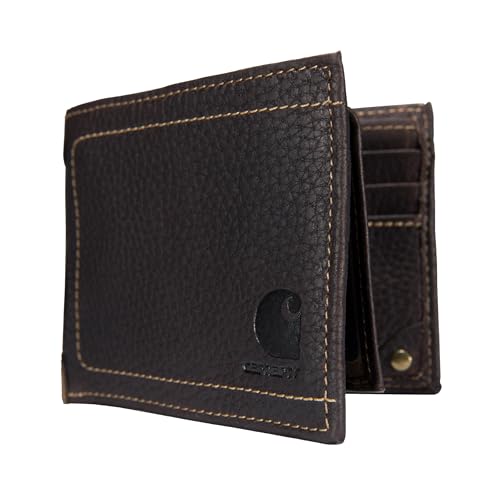
PEBBLE FULL-GRAIN LEATHER CONSTRUCTION | Crafted from genuine full-grain pebble leather with a rich, textured finish and is the highest grade of leather available and the same material standard Carhartt has delivered since 1889. Dims at 3.5" x 4.5". The distinctive pebble grain hides scuffs and scratches while developing character and patina the longer you carry it.

FULL-GRAIN SADDLE LEATHER CONSTRUCTION | Crafted from premium full-grain saddle leather with triple-needle contrast stitching and a reinforced spine. The highest grade of leather available, built to Carhartt's hardworking standard since 1889. At 4.5" x 3.5" x 0.75", this trifold fits cleanly in your back pocket without the bulk of an overstuffed billfold.
Hide Layer and How Each Grade Is Cut or Processed
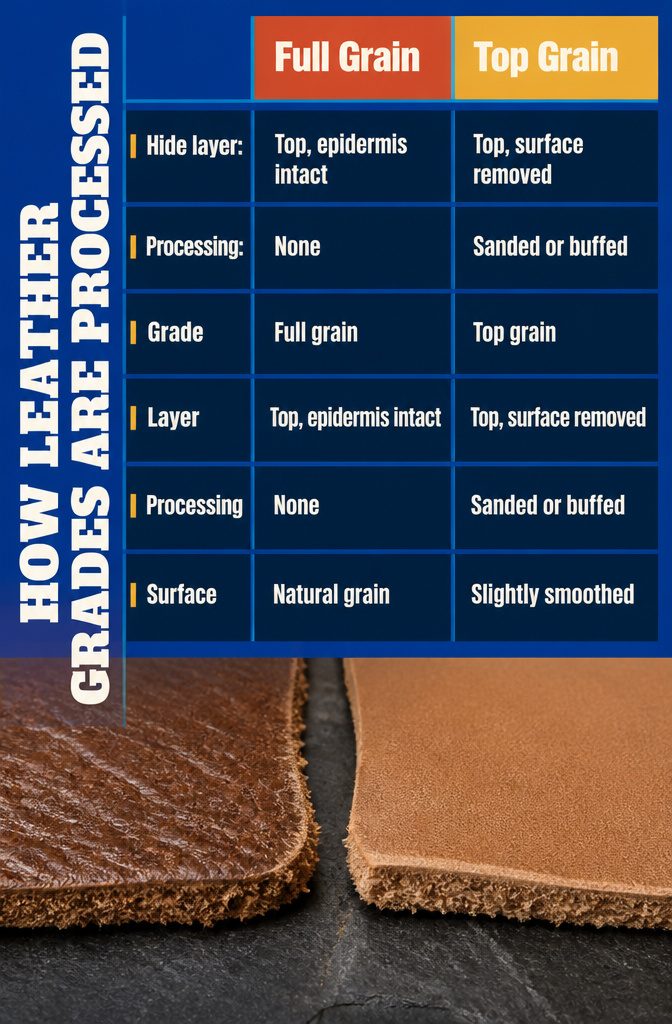
Each leather grade comes from a different layer of the hide or receives different processing after the cut.
Full grain keeps the entire top layer untouched, grain surface and all. Top grain starts from the same layer but gets lightly sanded or buffed to remove blemishes; manufacturers correct hides with too many marks this way.
Genuine leather comes from the lower splits left after the top is removed, often treated to mimic a finished surface. Split leather is the fibrous inner layer, usually embossed with an artificial grain.
Corrected leather is top grain sanded smooth and stamped with a uniform pattern. Bonded leather is shredded scraps mixed with polyurethane and pressed onto backing.
| Grade | Layer | Processing |
|---|---|---|
| Full grain | Top, epidermis intact | None |
| Top grain | Top, surface removed | Sanded or buffed |
| Genuine | Lower splits | Treated, sometimes printed |
| Split | Inner corium | Embossed with artificial grain |
| Corrected | Top grain | Sanded, stamped |
| Bonded | Scraps | Shredded, bound with polyurethane |
Recommended Products

Sizing Tip - Order Up for Best Fit: Belt sizing is based on waist measurement, not pant size. Most customers order 1-2 sizes up from their jean size for a comfortable fit, especially when worn with thick denim or western buckles.

Sizing Tip - Order Up for Best Fit: Belt sizing is based on waist measurement, not pant size. Most customers order 1-2 sizes up from their jean size for a comfortable fit, especially when worn with thick denim or western buckles.

Sizing Tip - Order Up for Best Fit: Belt sizing is based on waist measurement, not pant size. Most customers order 1-2 sizes up from their jean size for a comfortable fit, especially when worn with thick denim or western buckles.
Surface Texture: Natural Marks Against Uniform Grain
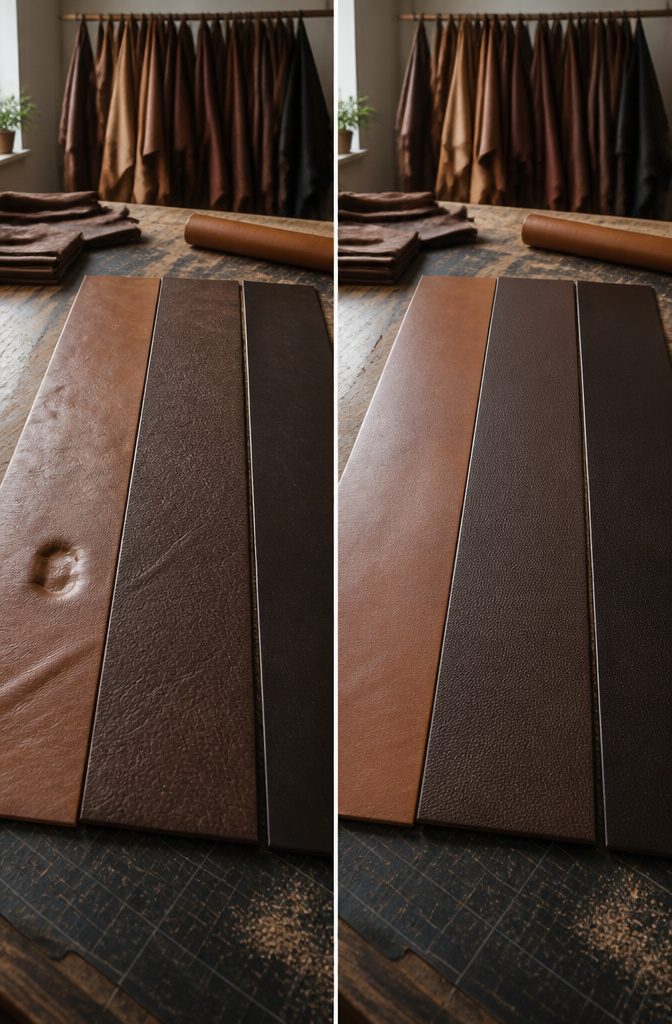
Full grain keeps every scar, wrinkle, pore and growth line the hide carried, variation that makes no two pieces identical.
Top grain gets sanded to even out those marks, then stamped with an artificial grain so the surface reads uniform. Corrected leather goes further: buffed smooth, then embossed to mimic texture it no longer has.
You can see the difference.
Full grain shows the animal’s history, which some call character and others call inconsistency. Processed alternatives deliver predictability (easier to match panels across a bag, simpler to dye in batch), but the surface leans plastic.
If you press full grain with a thumb it gives, then springs back without creasing. A stamped grain holds the print.
Uniformity signals correction. A flawless surface usually means the strong outer fibers were removed.
Recommended Products

FULL GRAINED LEATHER:Our handbag is made of Premium Full Grained Cow Leather, Soft and comfortable texture, Unique handmade stitching, Highlight noble temperament
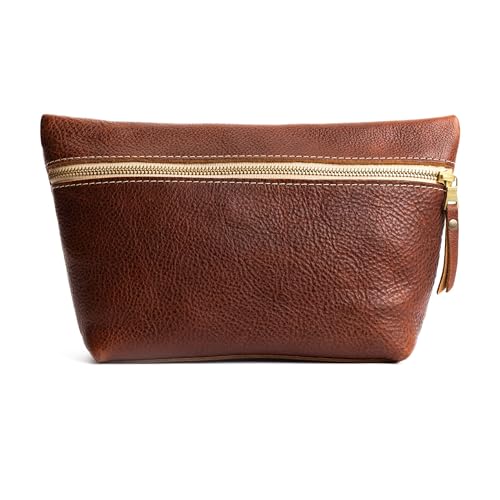
Extra Large Leather Makeup Bag: This extra spacious makeup bag is handcrafted with high quality leather that will last for a lifetime; full grain leather gets better as it ages, naturally conditioning & developing a unique character; the practical, travel-friendly design measures 7” tall, 4” deep, and 9” wide at the bottom with a top width of 12”

CLASSIC COMPANION: Indulge in the timeless elegance of a leather tote bag for women, meticulously handcrafted from full-grain leather that exudes sophistication and durability. Experience the supple texture and divine aroma that only authentic leather can provide, elevating your style at work or on a weekend outing; this bag is not just an accessory but a lifetime companion promising unmatched quality and character.
Strength and How Long Each Grade Lasts
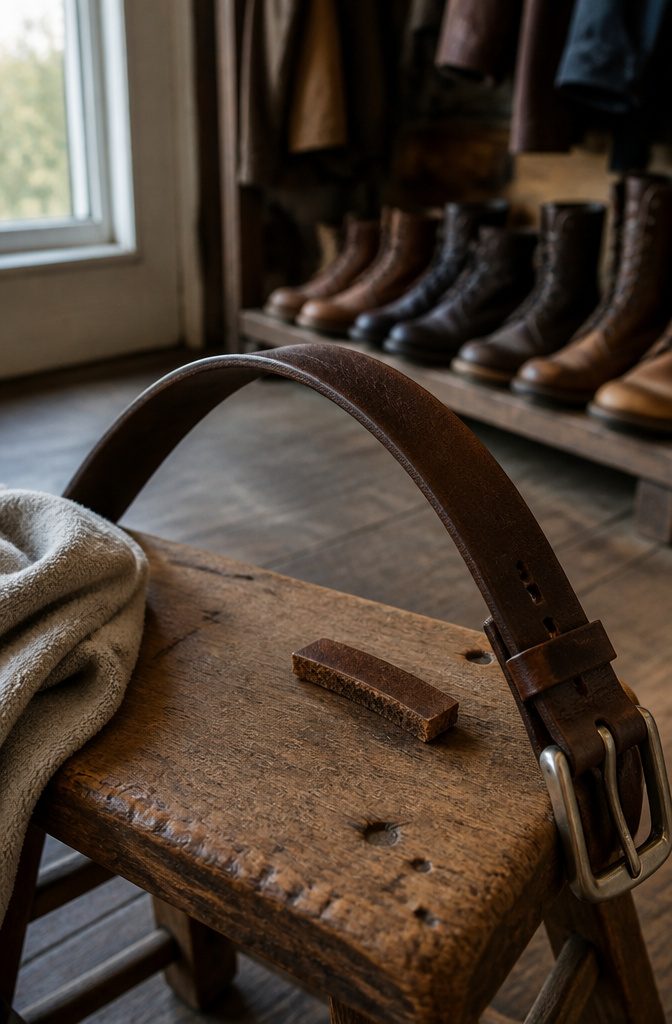
Full grain keeps the hide’s densest fibers intact, which is why it outlasts everything else.
The natural grain layer sits at the very top of the hide, where the fibers are packed tightly together, and those fibers give full grain its strength.
Top grain loses some of that when the surface is sanded away; genuine leather loses far more, since it comes from the looser split layers underneath the grain.
Bonded leather wears through fastest of all: it is mostly binder holding scraps together.
With correct care, full grain can last decades, and sources report it lasting five times longer than fabric. Top grain still holds up well, but it lacks the fiber density that lets full grain resist scratching and flexing without cracking.
Genuine leather tends to peel or crack as it ages, because the strong grain layer was removed before it ever reached you.
The tradeoff: full grain stains more easily than a buffed surface does, so conditioning matters if you want those decades out of it.
Recommended Products

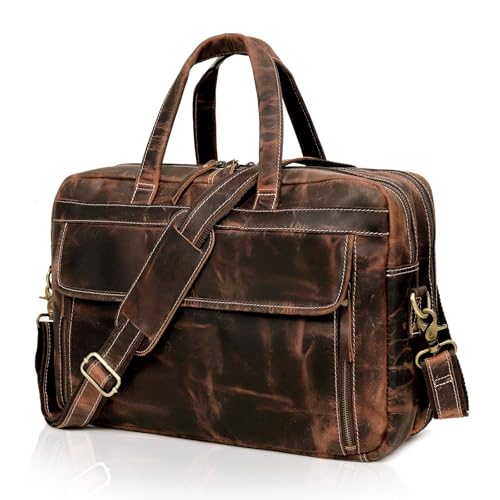
【Full Grain Cowhide Leather】Large 17"/ 17.3" laptop briefcase is crafted of 1.8mm thick real cowhide processed with crazy horse leather tech, which can keep the natural pore texture of cowhide and greatly increase durability to last for decades. The distinguished feature of crazy horse leather is its retro look with disordered "scratches" over surface at first, but the leather gets brighter and shinier after use. Pls wear dark clothes and pants in the first months when carry the brown briefcase

100% TOP-GRAIN COWHIDE LEATHER — The exterior is made from top-grain cowhide leather with a refined pebbled texture. Its balanced firmness feels comfortable to the touch, helps the tote maintain a clean, structured shape, and makes minor scuffs less noticeable during everyday use.
Patina Development and How the Leather Ages
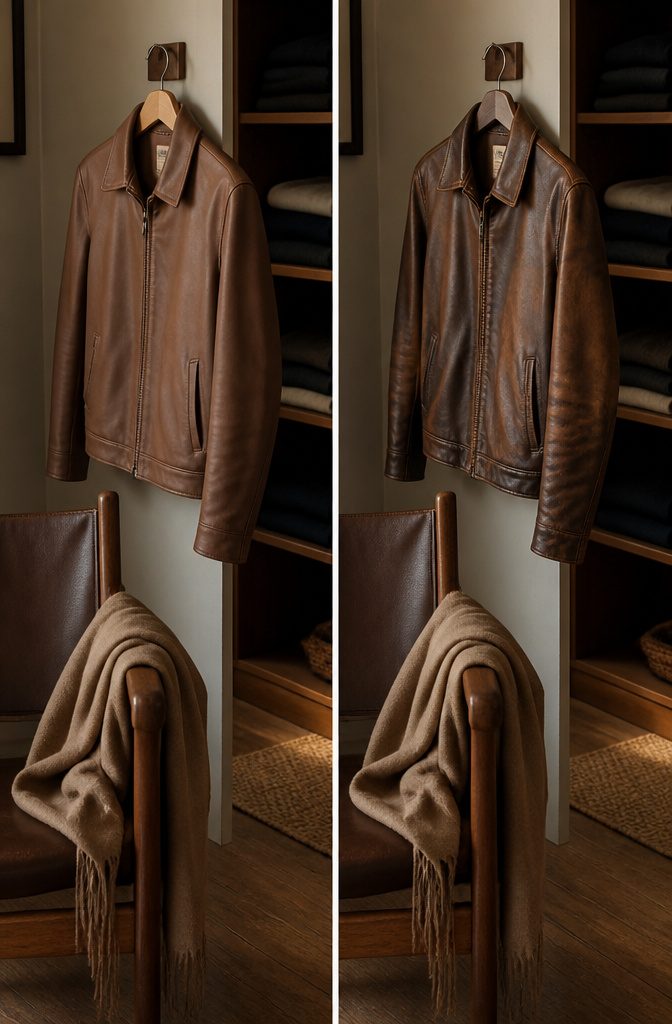
Patina is the change in color and sheen that appears on the surface as the leather absorbs oils from your hands and responds to light and air.
Full grain produces it because the grain layer stays intact: the surface darkens, deepens, and develops a soft luster rather than wearing through.
A jacket in natural chromexcel horsehide shifts noticeably after two or three years of regular use, and the change is considered one of the material’s best features.
Top grain resists patina because the finishing coat applied after sanding limits how much the leather breathes or absorbs anything from handling. Genuine leather skips patina entirely; without the grain layer it tends to crack or peel instead of softening.
Bonded and most vegan leathers deteriorate quickly and show wear rather than character. Full grain ages the opposite direction: the more you use it, the better it looks.
Recommended Products

REAL LAMBSKIN LEATHER: Brown leather jacket men crafted from genuine lambskin leather with a soft, natural feel and full polyester lining for everyday comfort.
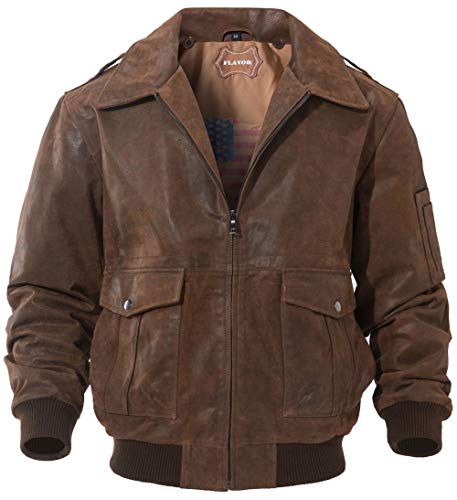
[Material] Fabric: 100% Genuine leather. The inside lining is made of cotton, combined with high-quality, eco-friendly leather and cotton to keep it breathable and comfortable.

Genuine lambskin leather
Breathability and How the Material Feels
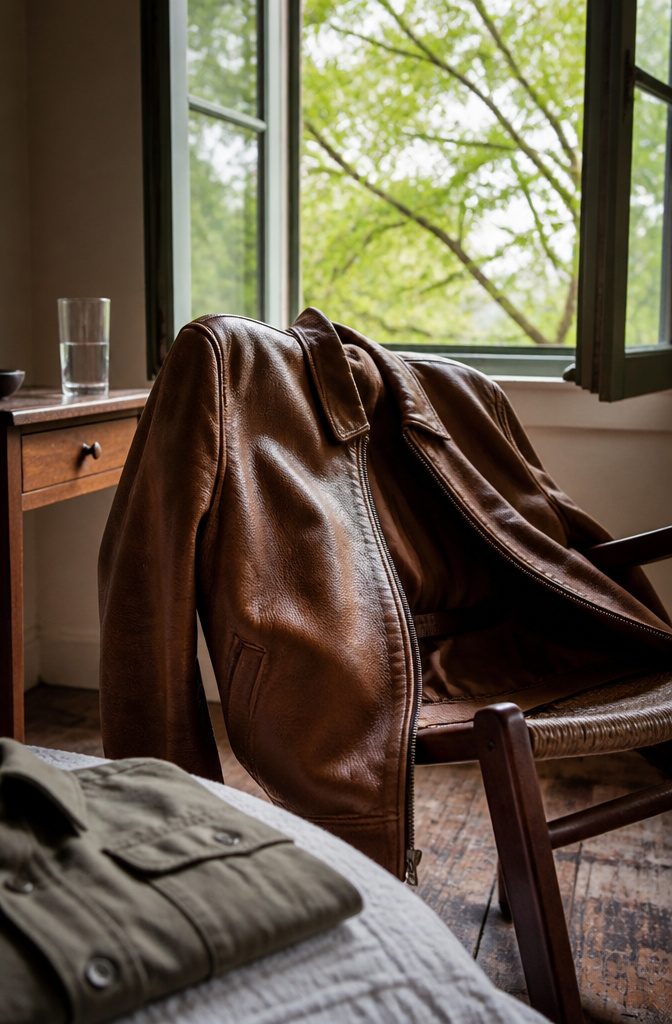
Full grain leather breathes because the natural pores stay open: nothing sanded away, no heavy finish sealing the surface.
Air and moisture move through the hide the way they did on the animal, which matters if you wear a jacket through a long day or carry a bag in summer heat.
The material feels alive against your hand: warm, slightly textured, with the small irregularities of real skin visible when you look closely.
Top grain leather gets a light sanding to smooth out marks, then a protective coating goes on. That finish blocks stains, but it also closes the pores.
Breathability drops, and the surface reads as more uniform, smoother to the touch, sometimes almost slick. If you want leather that regulates temperature and develops character from contact, full grain wins.
If you need something that shrugs off spills and keeps a consistent look, top grain’s coating does the job at the cost of that natural permeability.
Recommended Products

PREMIUM FULL GRAIN LEATHER - Crafted from full grain leather with a crazy horse finish, this bifold wallet develops a unique character over time while delivering a rugged yet refined appearance Designed for men who appreciate timeless style, durability, and quality craftsmanship

RFID Blocking Technology: Stop thieves from accessing your private information! Our RFID wallets for men are lined with technology that blocks radio-frequency scanners, effectively protecting your personal and financial information.

PREMIUM MATERIAL CONSTRUCTION : Superior cowhide leather masterfully sewed with durable and polyester fabric ensures long lasting durability
Cost and Workability Trade-Offs
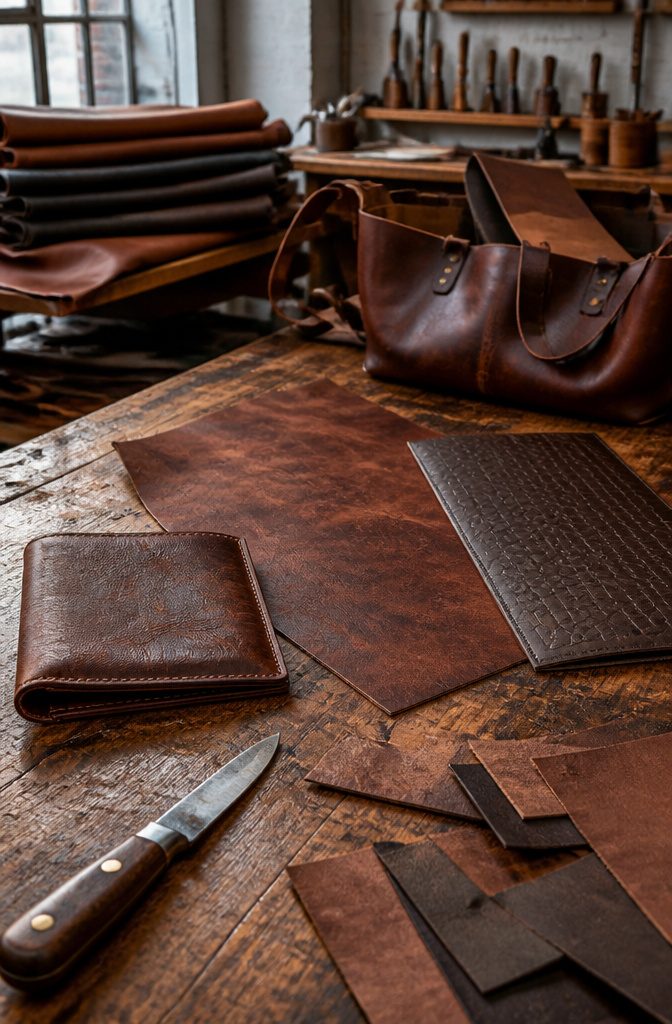
Full grain costs more because it starts with better hides (only those with minimal scarring can skip the sanding step) and because the retained surface is harder to match panel to panel when cutting a bag or wallet.
Manufacturers pay a premium for the raw material and spend more time working around natural variation, which shows up in the price you pay. A full grain wallet runs $31–$35, a journal the same range, and larger pieces climb from there.
Top grain’s sanded surface lets factories stamp on uniform grain and run production without sorting for character.
That uniformity matters if you need twenty identical bags or prefer a clean, predictable finish. The tradeoff: you lose the strongest fibers at the surface and the aging depth that comes with them.
For a high-touch piece judged on patina and decades of wear, full grain justifies the cost. For lining, structural panels, or projects where matching matters more than character, top grain does the job at a lower price.
Recommended Products

FULL-GRAIN SADDLE LEATHER WEARS IN, NOT OUT | Built from full-grain saddle leather, the highest grade of leather available, dense and tightly grained to resist the daily flexing, abrasion, and stress that breaks down lesser belts long before the leather gives out. Unlike genuine or bonded leather alternatives, full-grain saddle leather develops a rich patina with every day of wear, getting tougher and better-looking the longer it carries.
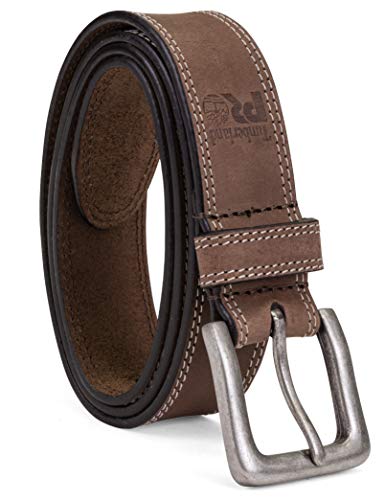
Men's leather belt made with 100 percent genuine leather for a soft smooth feel. Sizing: order 1 size larger than your pant size for the best fit

Premium Full-Grain Leather Belt : Crafted from a single piece of premium full grain genuine cowhide, hand-cut by artisans with no fillers or bonding. This leather resists cracking and stretching, developing a rich patina that deepens with age. The natural grain markings are authentic signatures of the hide—not defects.
How Thick Full Grain Leather Runs
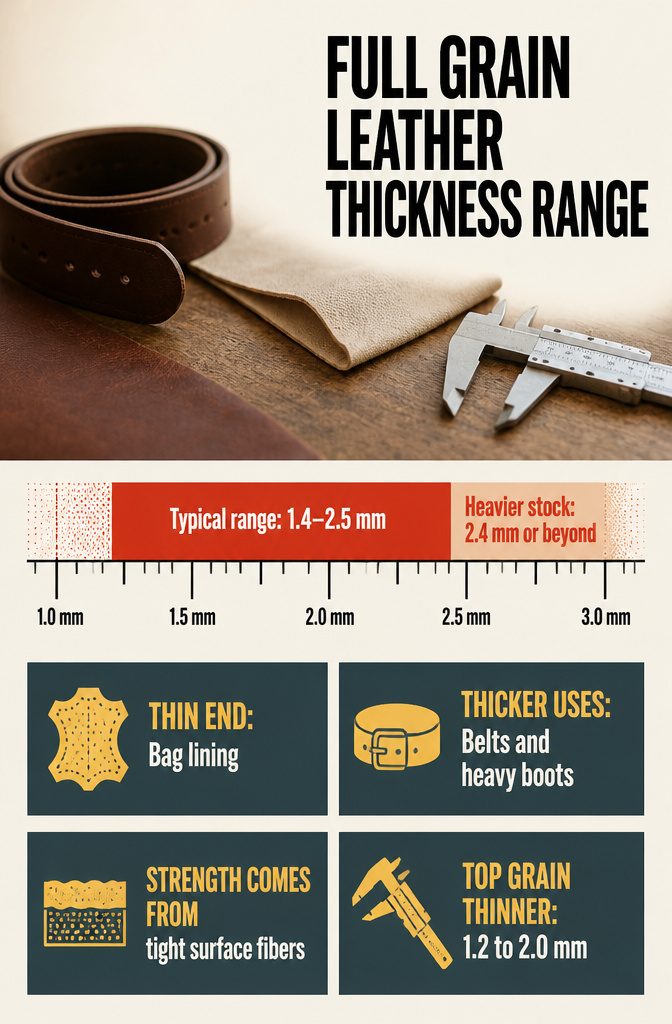
Thickness depends on how the hide is split and what the piece will be used for.
Full grain runs from 1.4 mm to 2.5 mm in most tanned goods, though some makers work with heavier stock up to 2.4 mm or beyond when the application calls for it.
A bag lining sits at the thinner end; a belt blank or heavy boot leather pushes toward the top of that range or past it.
The figure alone does not tell you much about durability. Full grain gets its strength from the tight fiber structure at the surface, not from sheer bulk.
Top grain leather, which has had that surface layer removed, measures thinner (1.2 to 2.0 mm), but the looser fiber underneath means it wears differently even when the caliper reading looks close.
Recommended Products

Anti-Theft Combination Lock: Mens code wallet clutches holder of anti theft design protects your personal privacy, prevent others from opening your bag casually. The Metal Lock Password can reset, you can easily change the password

Premium Italian Full Grain Leather: It is made of natural full grain leather from Italy.The leather is vegetable tanned and hand-dyed by natural dyes in order to greatly keep natural texture of visible grains,pores,wrinkles,etc.So, it is Non-Toxic and Friendly for enviroment. Because of full grain leather, it keeps the good hand feel,glossiness,breathability and durabilility and gives each bag a unique character. It develops a rich,warm patina over time - your bag ages as beautifully as you do.

Premium Quality: This chestbag is made of Italian waxed full grain cowhide leather (leather thickness 2.0mm). This vintage-inspired mens crossbody bag exudes timeless elegance and durability.
Tanning Methods: Vegetable Against Chrome
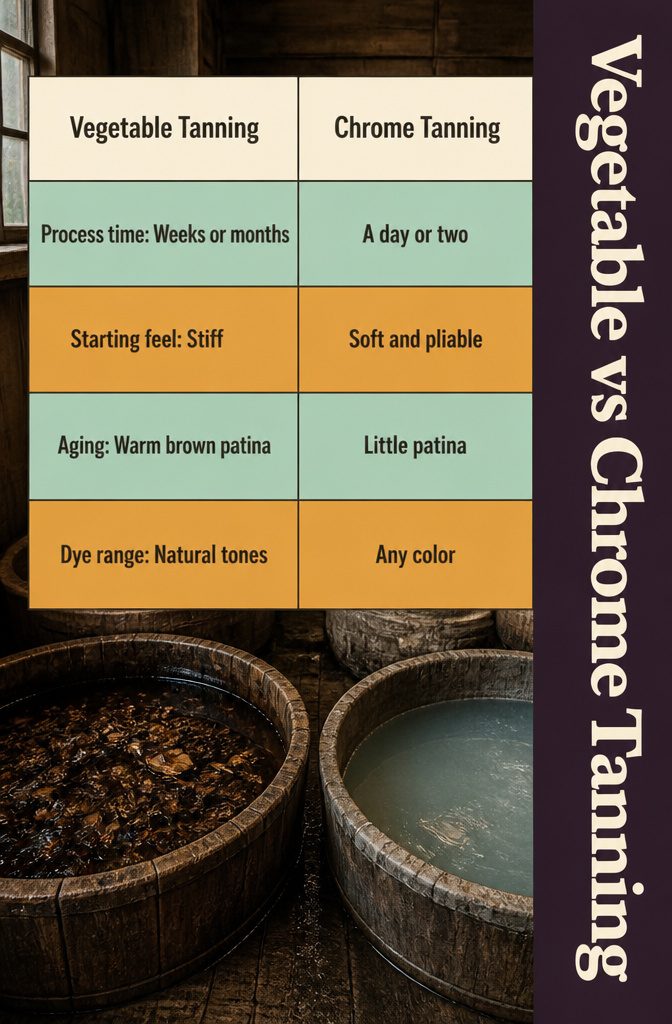
Vegetable tanning soaks hides in plant extracts (oak, chestnut, or mimosa bark) for weeks or months, binding the tannins slowly to the collagen. Chrome tanning drops the hide into a chromium sulfate bath and finishes in a day or two.
The vegetable route leaves leather that starts stiff, darkens to a warm brown or honey tone as it ages, and takes tooling cleanly because the fibers stay firm.
Chrome gives you soft, pliable leather straight out of the tannery, often dyed to any color you want, but it will not develop much patina and the feel stays closer to what it was the day you bought it.
Full-grain leather works with either method; vegetable tanning shows up more often in high-end goods where the maker wants that slow color shift, while chrome dominates in upholstery and garments that need to bend easily from the start.
Recommended Products

✔️ STATEMENT-MAKING STYLE: Crafted from premium Italian leather, our briefcase combines timeless design and superior quality to elevate your professional look.
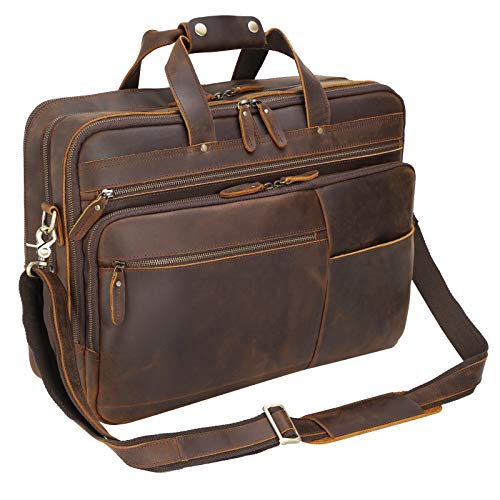
Handcrafted by Artisans: Made with thick Italian full grain cowhide leather, outfitted with robust hardware, and premium YKK zippers - Plan to have this for years to come.

Don’t Settle for Less: Comes with a one year Warranty and Lifetime customer service
Finishes: Aniline, Semi-Aniline, and Pull-Up Leather
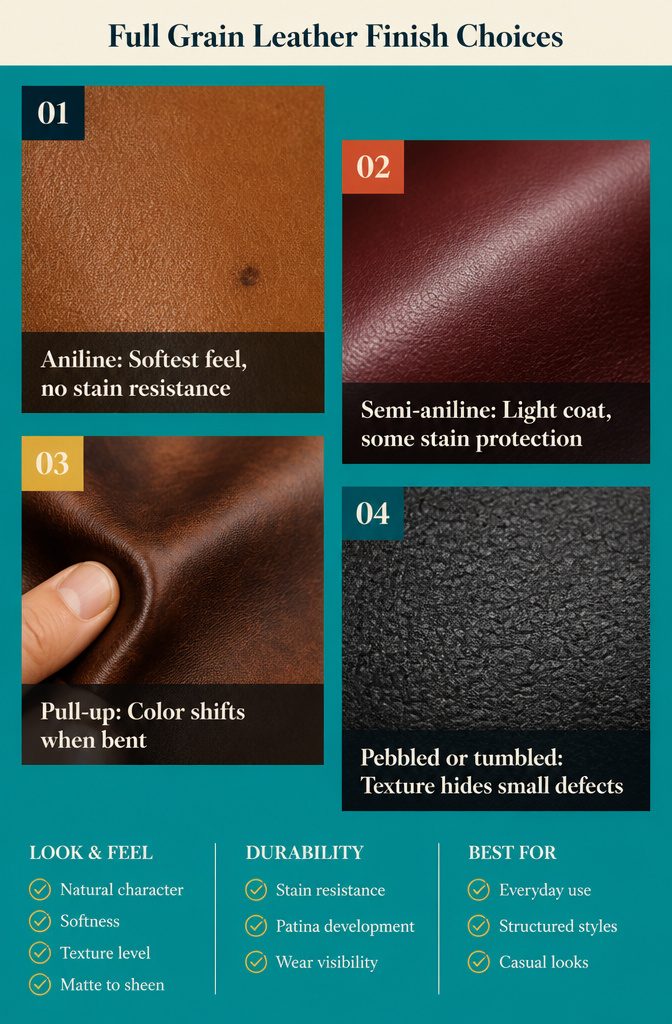
Full grain can be left natural or given a finish that changes how it looks and wears. Here are the common ones:
- Aniline: Dyed with transparent aniline dye that soaks into the leather without forming a surface coat, leaving the grain open to show every natural mark. You get the softest hand and richest patina, but zero stain resistance.
- Semi-aniline: A light protective topcoat laid over aniline dye. You keep most of the natural texture and some of the stain protection, though the color stays truer longer than full aniline.
- Pull-up leather: Heavily oiled during finishing so the color shifts when you bend or scratch it, darker in the crease, lighter where the surface stretches. The effect reverses when you rub the spot.
- Pebbled or tumbled: The hide is milled or drummed to give it texture, either all over or in patches. It hides small defects and makes the surface less formal.
Recommended Products

【GENUINE LEATHER CRAFTSMANSHIP】Made of top-grain real leather with neat stitching. This durable leather notebook cover is built to last and develops a beautiful vintage patina over time. It offers full protection for inner pages while radiating a classic look, serving as an elegant genuine leather journal for daily writing.

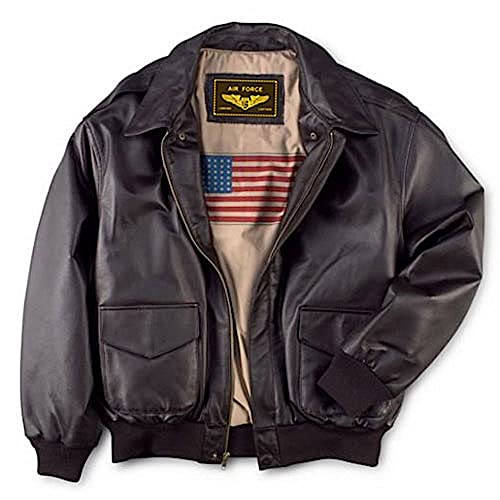
MILITARY HERITAGE STYLING: An authentic recreation of the timeless WWII A-2 flight silhouette. Features a classic point collar, a hidden heavy-duty front brass zipper closure, and a protective snap-down wind storm flap.
How to Identify Full Grain Leather
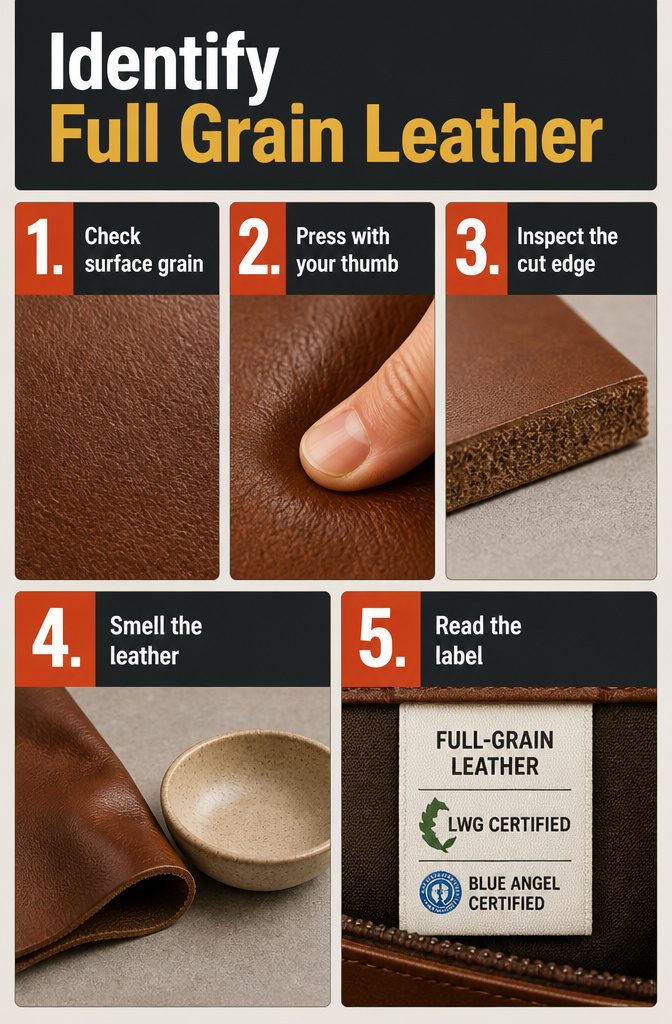
- Check the surface for natural grain and small imperfections: scars, wrinkles, or subtle variations in texture. Full-grain keeps the hide’s original character. A surface that looks perfectly uniform has been sanded and stamped to hide flaws.
- Press your thumb into the leather. Full-grain gives under pressure, then springs back without leaving a hard crease. Bonded or heavily finished leather stays stiff or folds into a permanent line.
- Look at the cut edge. Full-grain is solid leather all the way through. Bonded shows a fabric backing under a thin top layer.
- Smell it. Vegetable-tanned full-grain has a warm, organic scent. Chemical or plastic smells point to synthetic finishes or lower grades.
- Read the label. "Full-grain" is the phrase to look for. "Genuine leather" is a grade marker, not a compliment. Look for LWG or Blue Angel certifications if you want tannery transparency.
Cleaning, Conditioning, and Storage
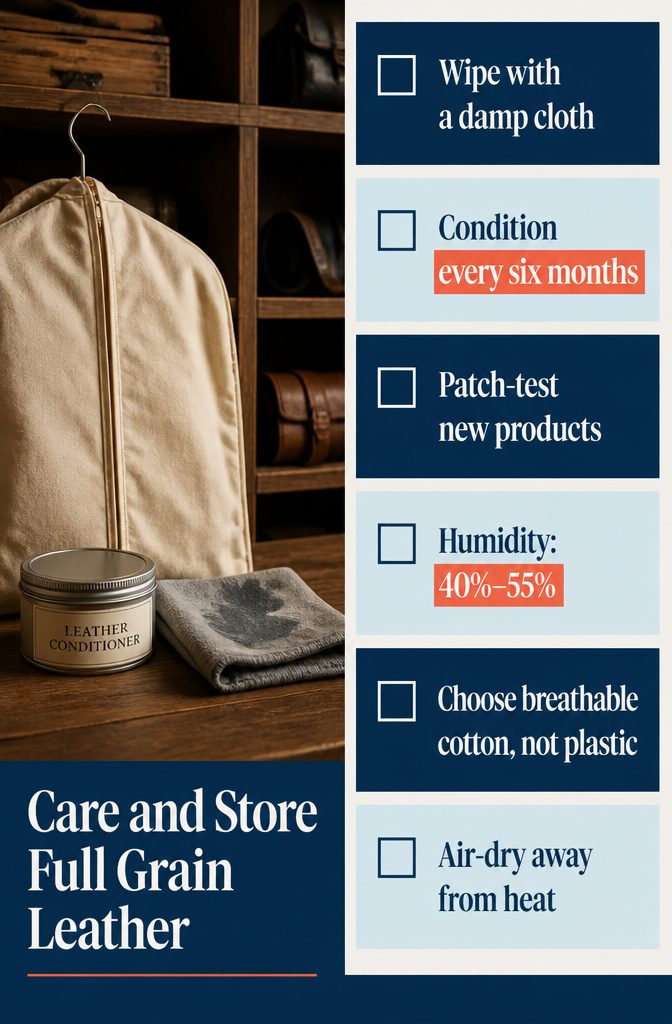
Wipe down full-grain leather with a damp cloth to clear dust, then condition every six months to keep the material supple and prevent cracking.
A high-quality leather conditioner replaces natural oils; extra virgin olive oil works as an alternative. Always patch-test any new product on a hidden spot, since some finishes can shift the color.
Storage matters as much as cleaning:
- Keep humidity between 40% and 55%: low enough to prevent mildew, high enough that the leather does not dry out and stiffen.
- Use breathable cotton garment bags, not plastic, which traps moisture.
- Never place leather near a radiator or use a hair dryer on wet pieces; let them air-dry at room temperature.
Waterproofing is disputed.
One source calls full-grain inherently waterproof, while another points out that leather stays permeable and never reaches 100% protection. Beeswax or spray protectants add a barrier, but test first; some darken the finish.
Frequently Asked Questions
What is full grain leather?
Full grain leather is the hide’s outermost layer left completely intact, with the natural grain surface, pores, and markings untouched. No sanding or buffing is done, which preserves the densest, strongest fibers at the top of the hide.
This is considered the highest quality leather grade because it keeps the original structure that makes it durable and capable of developing a rich patina over time.
Is full grain leather real leather?
Yes, full grain leather is real leather and the highest grade you can buy. It comes from the top layer of the animal hide with nothing removed except the hair, making it 100% natural leather.
Other grades like genuine or bonded leather are also real leather but come from lower layers or are reconstituted from scraps.
How thick is full grain leather?
Full grain leather typically runs 1.4 mm to 2.5 mm thick, though some pieces go heavier when the application requires it. A bag lining sits at the thinner end while belt blanks and boot leather push toward the upper range.
Thickness alone does not determine durability since full grain gets its strength from the tight fiber structure at the surface, not just bulk.
Why is full grain leather better?
Full grain leather keeps the hide’s densest fibers intact at the surface, which gives it superior strength and lets it last decades with proper care.
The natural grain layer also allows it to breathe, develop a deep patina from use, and resist wear without cracking.
Top grain and lower grades lose those properties when the surface is sanded away or the hide is split into weaker layers.
What is full grain leather vs genuine leather?
Full grain leather is the untouched top layer of the hide with all natural markings preserved, while genuine leather is a lower grade made from the split layers left after the top is removed.
Full grain contains the strongest fibers and ages into a patina; genuine leather is weaker, often treated to look finished, and tends to crack or peel instead of breaking in.
What’s better, full grain or top grain leather?
Full grain is stronger and develops better patina because it keeps the natural surface fibers intact. Top grain is sanded to remove blemishes and stamped with an artificial grain, which makes it more uniform but less durable and breathable.
Full grain lasts longer and ages better, while top grain offers a consistent look at a lower price.
What is the highest quality leather?
Full grain leather is the highest quality grade because it preserves the entire top layer of the hide with the densest, strongest fibers intact.
The natural grain surface is left untouched, which gives full grain its durability, breathability, and ability to develop a rich patina over decades of use.
What is the lifespan of full-grain leather?
Full grain leather can last decades with correct care and has been reported to last 5 times longer than fabric.
The dense fiber structure at the surface resists wear and flexing without cracking. Conditioning every 6 months and proper storage keeps the material supple and extends its life even further.
Is top-grain leather fake leather?
No, top grain leather is real leather made from the top layer of the hide. It is sanded or lightly buffed to remove surface marks, then often stamped with an artificial grain pattern, but it is still genuine hide material.
The processing makes it less durable and breathable than full grain, but it is not synthetic.