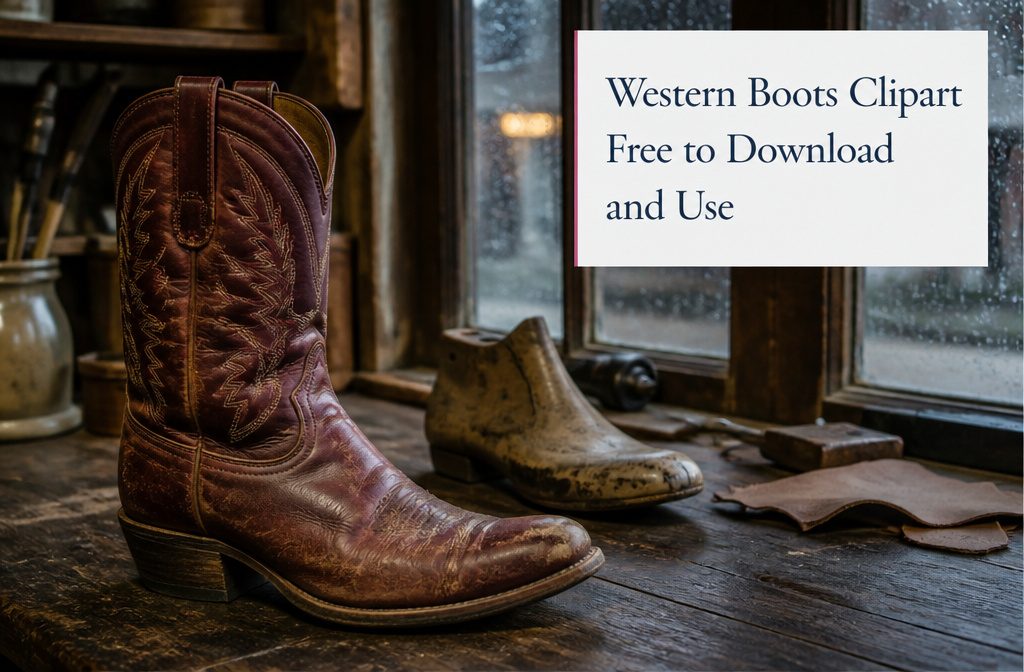
Western boots clipart refers to stock illustrations and royalty-free images of cowboy boots, drawn or digitally created rather than photographed. The library here spans 88 results across nine file formats, split between color illustrations with shading and B&W line work.
Vector formats like AI, EPS and SVG scale without losing sharpness, while raster formats like PNG and JPEG stay fixed at their original pixel dimensions.
What Western Boots Clipart Actually Is
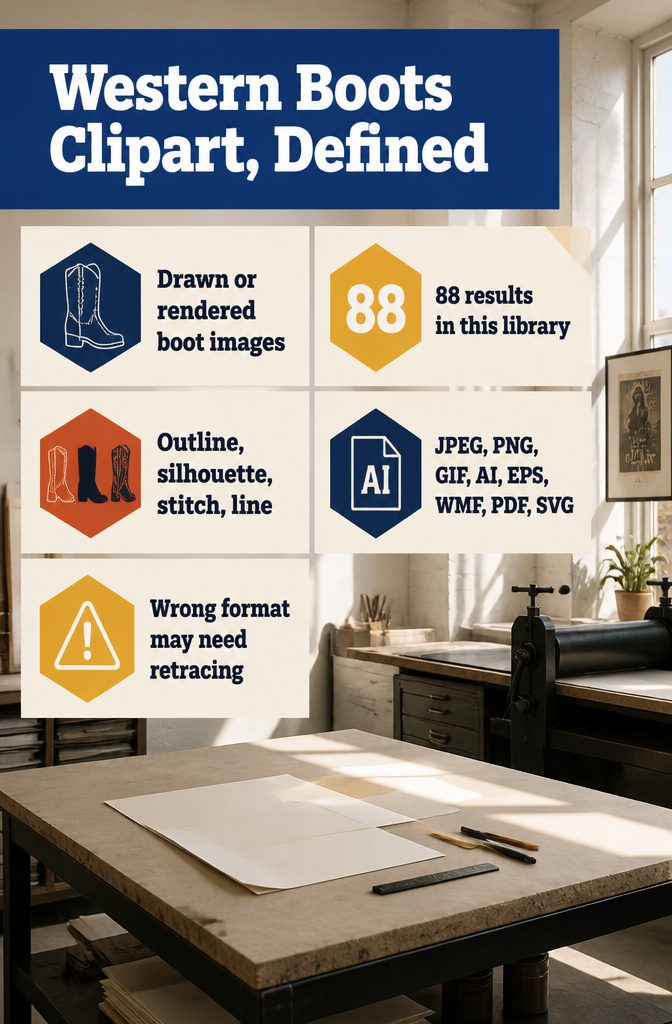
Western boots clipart covers stock illustrations and royalty-free images of cowboy boots, the drawn or digitally created kind rather than photographs.
The library here pulls together 88 results, which means you get a range of styles: outlined boots, filled silhouettes, decorative versions with stitching detail, simple line drawings.
All of them are illustrations someone drew or rendered rather than shots of actual boots.
The format options run broad: JPEG, PNG, GIF, AI, EPS, WMF, PDF, and SVG. That spread matters if you need a file that scales without pixelating or one that drops cleanly into a specific design program.
Some formats handle transparency, some lock you into a fixed resolution, and picking the wrong one means retracing your steps when the image does not work where you need it.
Recommended Products

AUTHENTIC WESTERN STYLE: Crafted with simulated leather upper and classic retro embroidery patterns, these men's cowboy boots feature a bold western aesthetic that captures the rugged, timeless charm of the American frontier

【Embroidered Cowboy Boots】: These cowboy boots for women using threads of multiple colors to embroider different exquisite patterns.They are a great way to add a touch of western flair to your outfit.

High Quality Man-made Faux Crocodile Skin Embossed Leather Upper
Browsing the Image Gallery
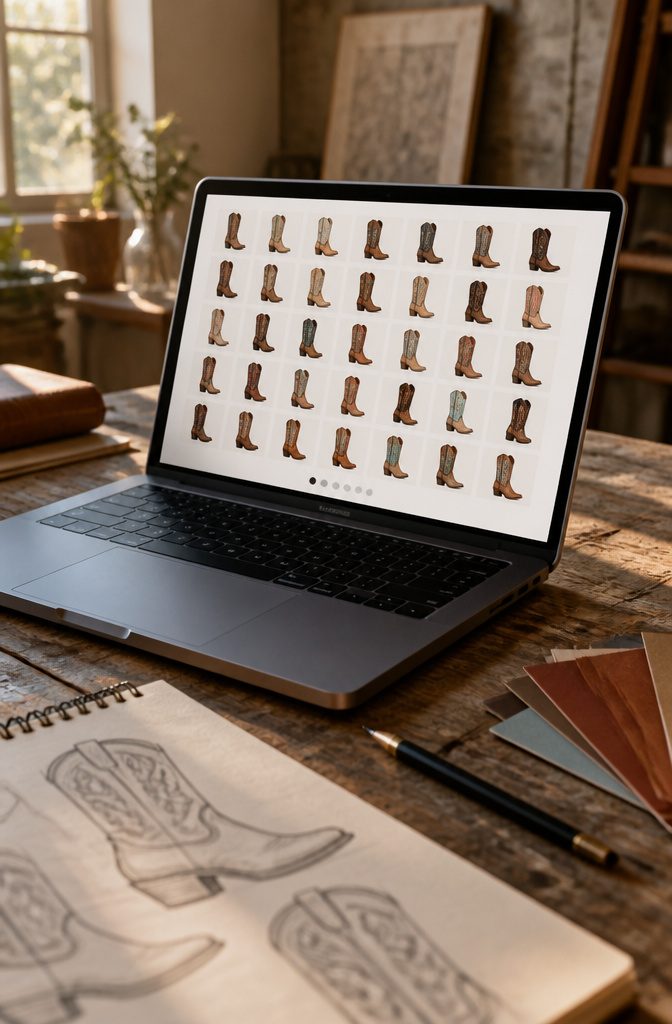
The page loads results 1–40 of 88, each thumbnail labeled with its asset number. At the top sit #540088, #2558820, and #580991, then the rest flow down in rows of four.
Scanning the previews side by side gives you a sense of which styles lean realistic, which read cartoony, and which pairs already have the color work or tooling detail you need.
Below the gallery runs pagination: [1] 2 3, with a Next link.
Page 1 holds the first 40, page 2 the next batch, page 3 the final 8. The asset numbers let you mark which images you want before clicking through, so you’re not guessing what page 2 holds or whether you already looked at something.
Recommended Products


Choosing Between Color and B&W
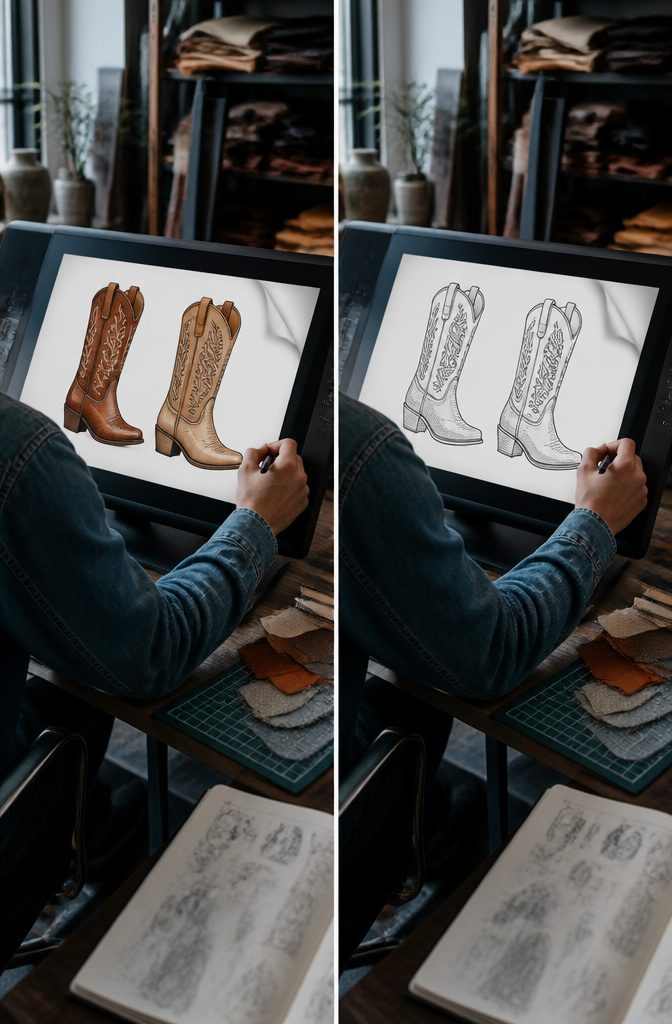
The page splits the gallery with two filters: Color and B&W. Color brings you illustrated boots with shading, highlights and varied tones: the kind that read as polished art rather than outlines.
B&W delivers line drawings and silhouettes, clean enough to drop into a flyer or trace over for a pattern.
Pick color when the project has room for detail: a blog header, a social media graphic, anything printed large enough that shading shows. The illustrations hold up at size and the tonal range gives them weight on the page.
B&W wins for layouts where the boot needs to sit next to text without fighting it, or when you plan to recolor the art yourself.
Line work also scales down better; a detailed color illustration at thumbnail size turns into mud, but a black outline stays legible.
Recommended Products

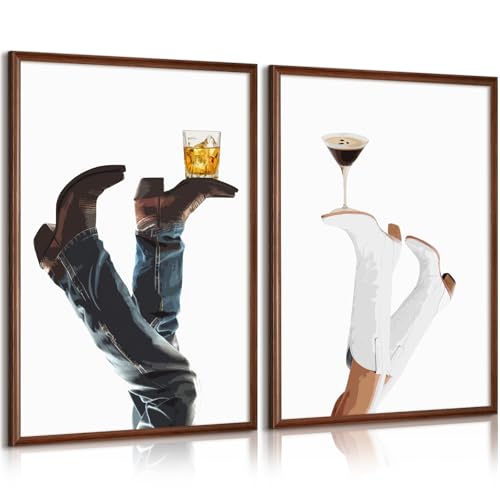
Cowgirl Canvas Wall Art: Cowgirl Canvas painting set size: 12*16 inches (30*40 cm) * 2 pieces, we have different styles and sizes for you to choose from to meet your needs and personal preferences. You can hang it anywhere you want, which will show your unique taste and personality and bring a new look to your living space.

Which File Format to Pick
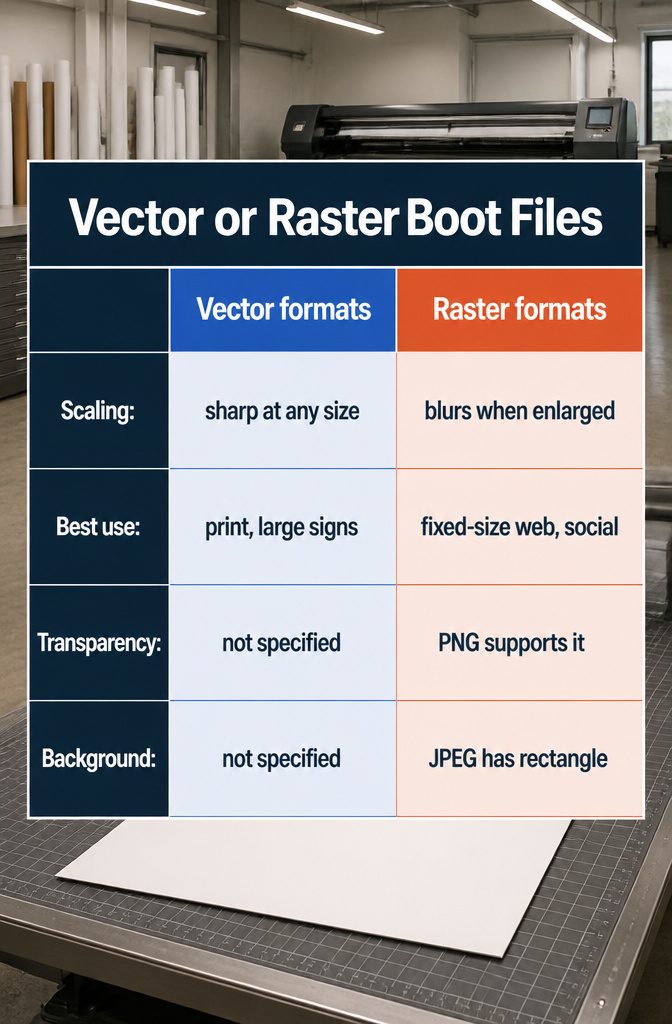
The main split is vector versus raster.
Vector formats (AI, EPS, and SVG) store the boot as paths and shapes that scale to any size without losing sharpness, which makes them the right pick when you need a clean image for print or a large sign.
Raster formats (JPEG, PNG, and GIF) are made of pixels, so they blur if you stretch them much past their original dimensions, but they work fine for web graphics and social posts where the size stays fixed.
For print work, AI and EPS are the standard formats most design software expects, and PDF preserves layout when you’re handing off a finished document.
SVG has become the go-to for responsive web design because browsers render it crisply at any screen size.
PNG gives you transparency, which matters when you want the boot to sit cleanly over a background, while JPEG compresses well but always includes a rectangular backdrop.
GIF and WMF see less use now: GIF for simple animations, WMF mostly in older Windows applications.
Recommended Products

CLASSIC DESIGN: Stylish over-the-knee boots featuring a pointed toe and 2-inch block heel, perfect for both casual and dressy occasions.


old-Over "Shark Boot" Style — The knee-high fold-over shaft and almond toe create the recognizable "Shark Boot" silhouette with a sleek, elongated, and sculptural profile.
Frequently Asked Questions
Recommended Products

All the water bottle stickers made with high quality vinyl and inks, 100% waterproof and sun protection. Never faded out. Easy to stick repeatedly or peel it off and there won't be any residues.

Professional quality decal with precise cut lines!
What is western boots clipart?
Western boots clipart refers to stock illustrations and royalty-free images of cowboy boots that are drawn or digitally created rather than photographed.
These include outlined boots, filled silhouettes, decorative versions with stitching detail, and simple line drawings in various file formats.
What file formats are available for western boots clipart?
The formats available are JPEG, PNG, GIF, AI, EPS, WMF, PDF, and SVG. Vector formats (AI, EPS, SVG) scale to any size without losing sharpness, while raster formats (JPEG, PNG, GIF) are fixed-resolution files better suited for web graphics.
Should I use color or black and white western boots clipart?
Color works best when your project has room for detail like blog headers or social graphics, since the shading and tonal range give the illustrations weight.
Black and white is better for layouts where the boot needs to sit cleanly next to text or when you plan to recolor the art yourself, and line work scales down to small sizes more clearly.
Can I use PNG for western boots clipart?
PNG works well for web graphics and lets you place the boot cleanly over a background since it supports transparency.
It is a raster format, so it stays sharp at its original size but blurs if you stretch it much larger.