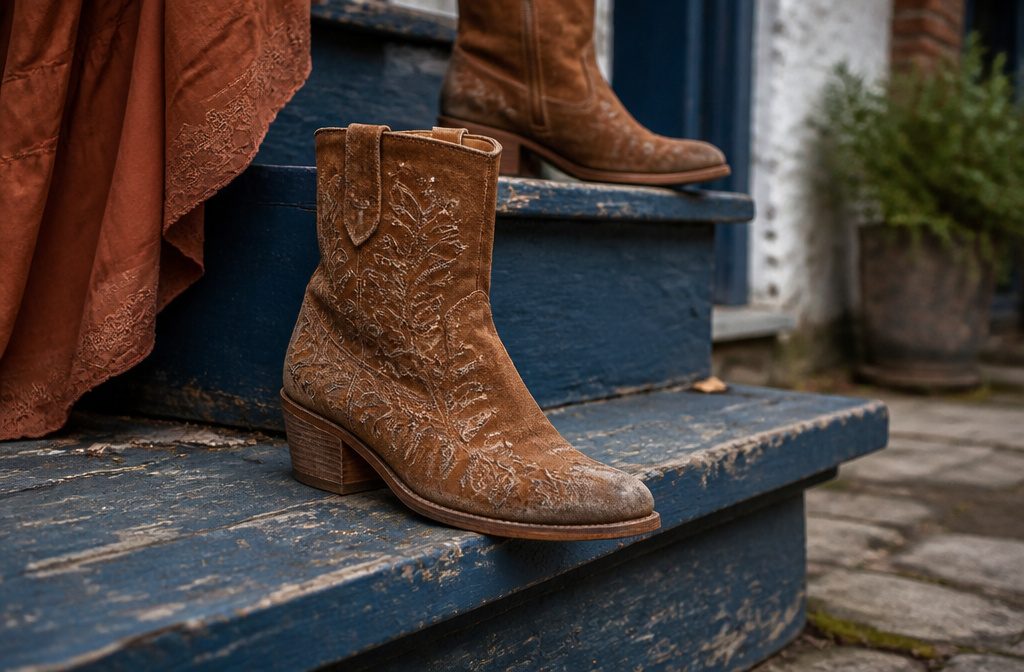
Bohemian style boots carry texture over shine: distressed leather, suede finishes, or matte surfaces that look gently worn rather than polished.
The style stays grounded when the details feel collected instead of loud, which is why embroidered stitching or woven panels work better than hardware that announces itself.
A neutral tan or cognac boot with subtle tooling pairs with flowy dresses and denim without dictating the outfit, and that versatility is what keeps the look wearable past the first photo.
What Makes a Boot Feel Boho
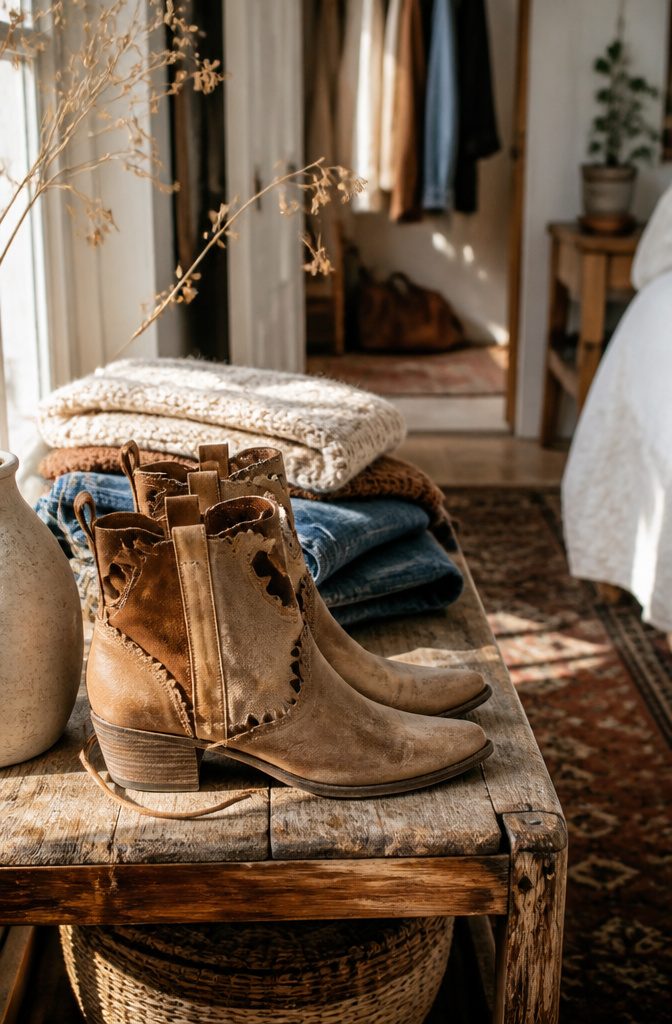
A boot looks boho when the surface reads a little worn rather than polished.
Suede-like finishes and distressed leather fall into this category, along with anything matte enough to suggest the pair has already lived a bit. Shine pushes cowgirl or sleek; texture that catches light unevenly pulls boho.
Details matter more than drama.
Stitching patterns that follow the shaft, subtle embroidery along the ankle, cut-outs placed where they let the foot breathe, woven panels that break up a solid upper, patchwork-inspired arrangements that feel collected rather than planned: these all carry handmade energy without announcing it.
The artfulness sits in the construction, not in how loud the boot reads from across a room.
Shape keeps the style grounded. A slightly pointed toe, a block or stacked heel you can walk a few blocks in, and a shaft height that clears the ankle but stops short of drama.
Boho boots work because you can wear them often, not because they demand an occasion.
Color sticks to earth.
Tan, sand, warm brown, cream, muted black, dusty taupe: the palette layers easily and does not fight florals, denim, or knits. A boot in one of these tones slips into an outfit rather than dictating it.
Classic Cowgirl Shape With Boho Softness
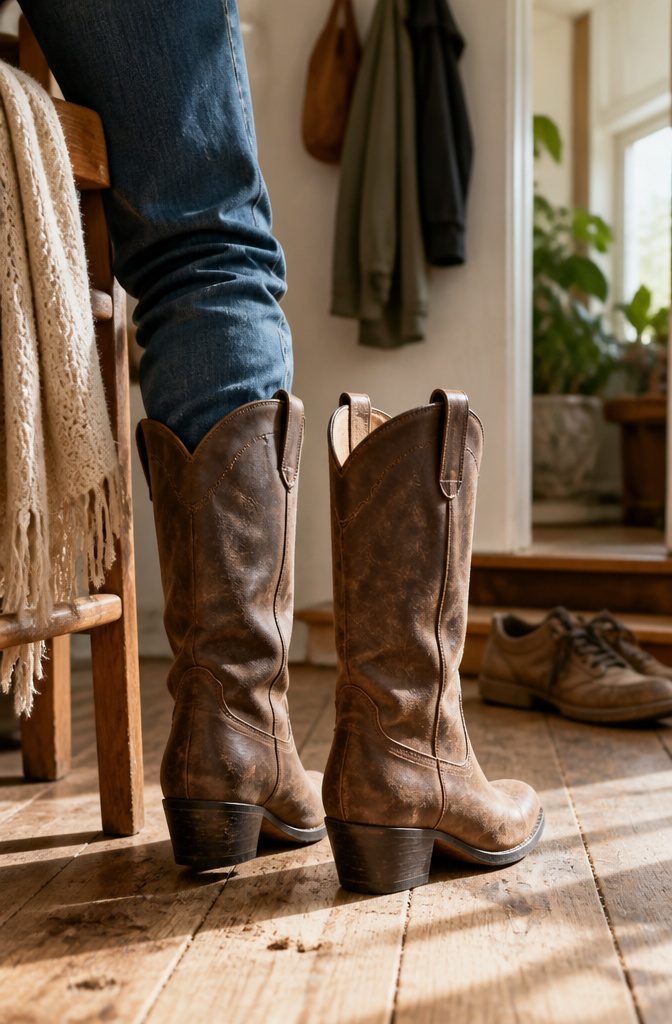
A traditional Western silhouette loses its rigidity when the leather arrives matte or lightly distressed rather than high-gloss.
The stitching stays there (curved panels along the shaft, a slight flourish at the ankle) but scaled back enough that it reads understated instead of ornamental.
These boots work if you have never worn a cowgirl boot before because the shape is recognizable without announcing itself. The toe tapers but does not exaggerate, the heel sits around 2 inches, and the finish suggests wear rather than newness.
Pair them with jeans and a loose knit and the look arrives without requiring you to commit to fringe or turquoise. That softness is the difference between a boot that feels like costume and one that belongs in rotation.
Statement Stitching but Still Neutral
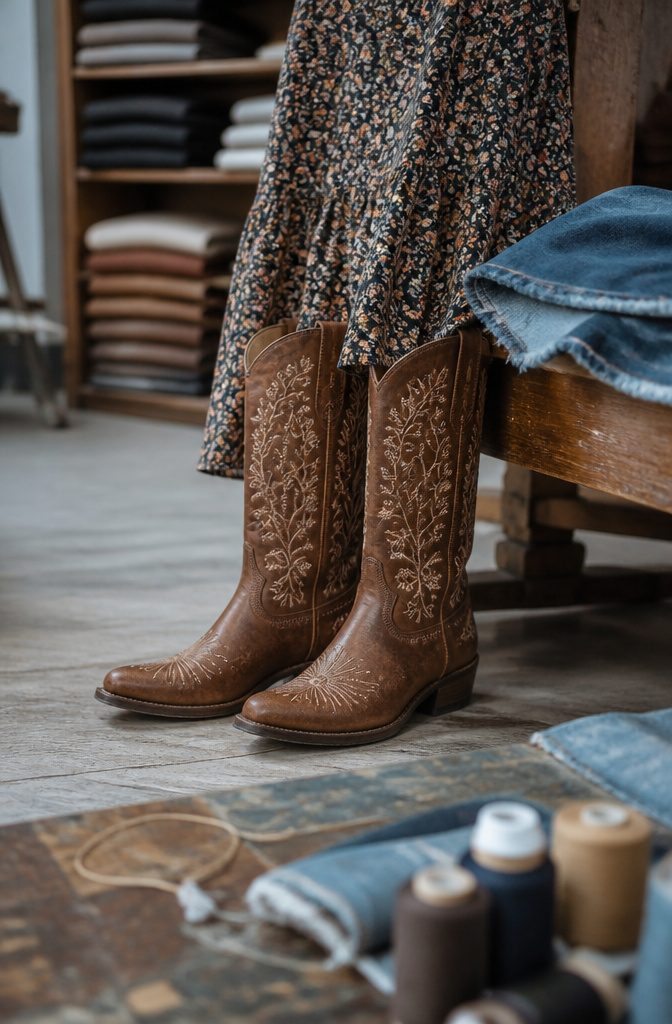
Decorative stitching gives a boot personality without boxing you into a narrow color story.
The detail is in the thread: floral vines running up the shaft, geometric patterns near the ankle, sunbursts at the toe, while the leather itself stays in tan, cognac, or a worn brown that pairs as easily as a plain boot would.
You get the craft and the visual interest, but the base tone keeps working with black jeans, a floral midi, or the denim skirt you already wear.
The stitching reads as intentional rather than loud. It catches light when you move, adds texture to an otherwise simple silhouette, and gives the boot enough character that it does not need hardware or fringe to feel finished.
A grounded palette means the boot still disappears into an outfit when you want it to, but the detail is there for anyone looking closely enough to notice.
Vintage-Inspired Pairs
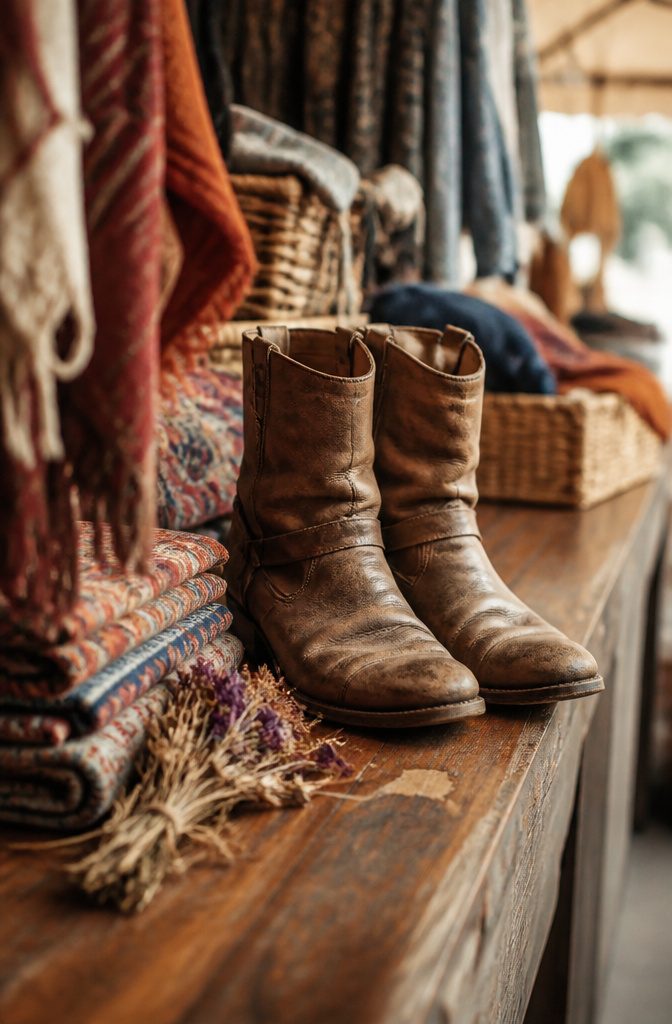
A pair that looks like it has already lived a little carries more character than one fresh out of the box.
Slight distressing along the leather (scuff marks near the toe, creases across the vamp, worn edges at the heel) gives boots the sense that you found them at a market stall rather than ordered them last week.
The finish matters as much as the shape: aniline-dyed leather or suede shows natural variation in tone, and a matte surface reads as broken-in where high shine feels too new.
The effect works because boho style borrows from decades that valued longevity over replacement.
A boot that looks gently used fits into that story without requiring you to actually age a pair yourself, and the worn-in texture pairs better with flowing fabrics and layered prints than something stiff and uniform would.
Flow Dress and Boho Boots
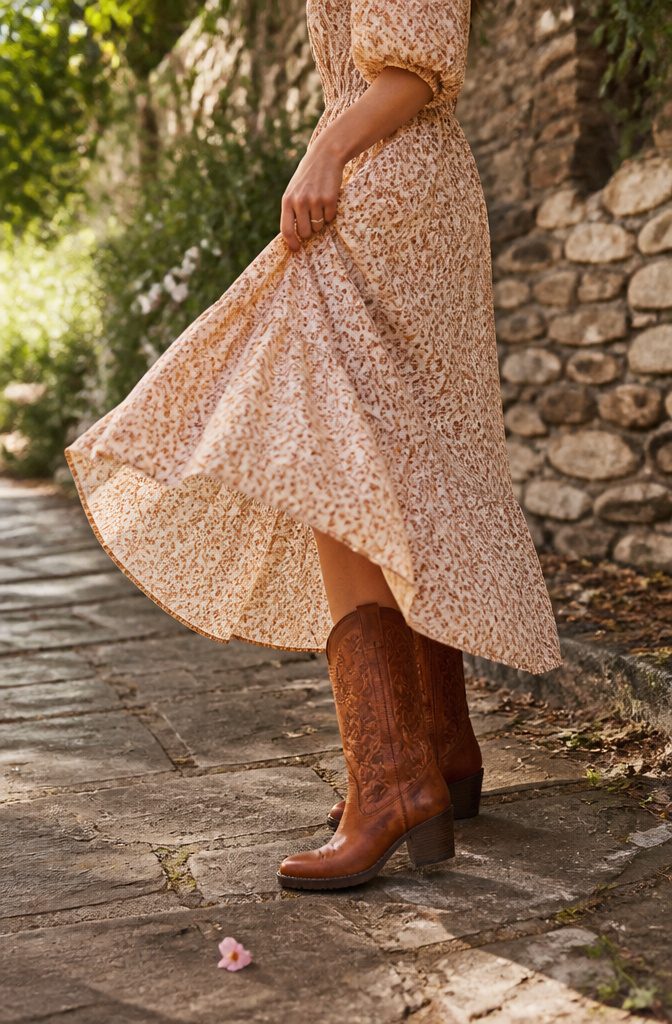
A flowy midi dress with structured boots is the shortcut to an outfit that looks intentional in under five minutes. The contrast does the work: if the dress is soft and moves, I go for boots with shape and edge.
A defined heel, embossed leather, maybe a stacked sole. If the dress is already structured, I reverse it and pick boots in softer suede or distressed finishes that won’t fight the silhouette.
The other guide is pattern.
A busy dress gets simpler boots, always. When the print or embroidery is doing the talking, boots in a neutral tone let it finish.
A plain dress is where I let the boots carry more detail: tooling, contrast stitching, or a vintage buckle that adds interest without requiring a third piece.
Denim on Denim
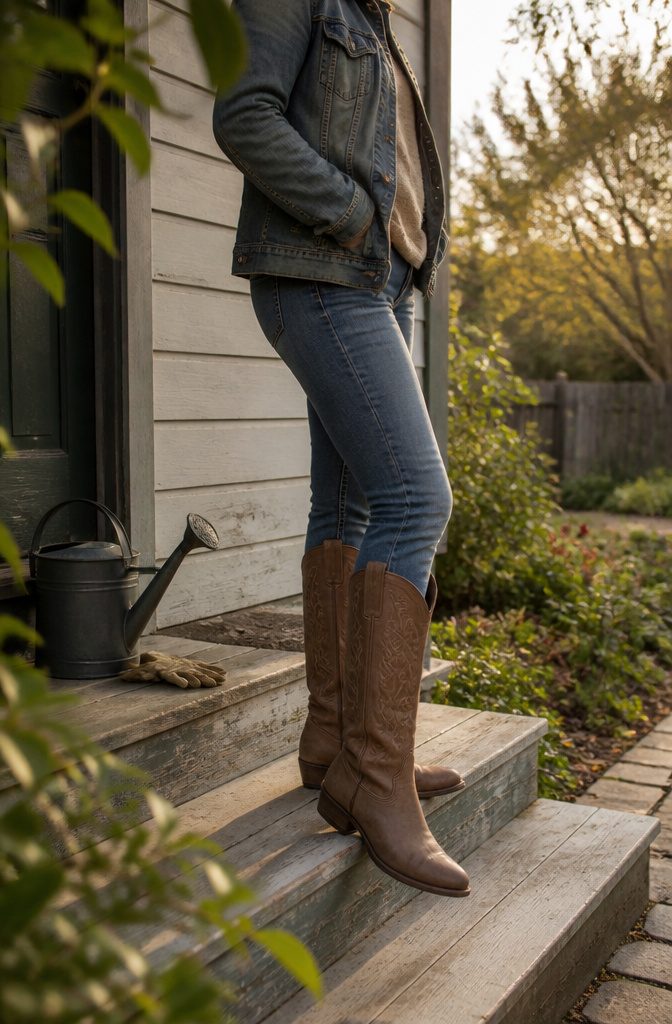
A denim jacket and jeans with boho boots is one of those outfits that works better the less you fuss with it. Slightly rumpled reads as lived-in, which is exactly the point.
The jeans decide where the boot sits. Skinny jeans tuck inside the boot shaft, keeping the line clean from hip to heel.
Straight or wide jeans should hit right at the boot top or cover it slightly. Letting them pile at the ankle breaks up the silhouette in a way that feels more relaxed than styled.
The look gets its ease from repetition: denim meeting denim, texture on texture. The boots carry the boho element, so the rest stays simple.
Shorts and Boots
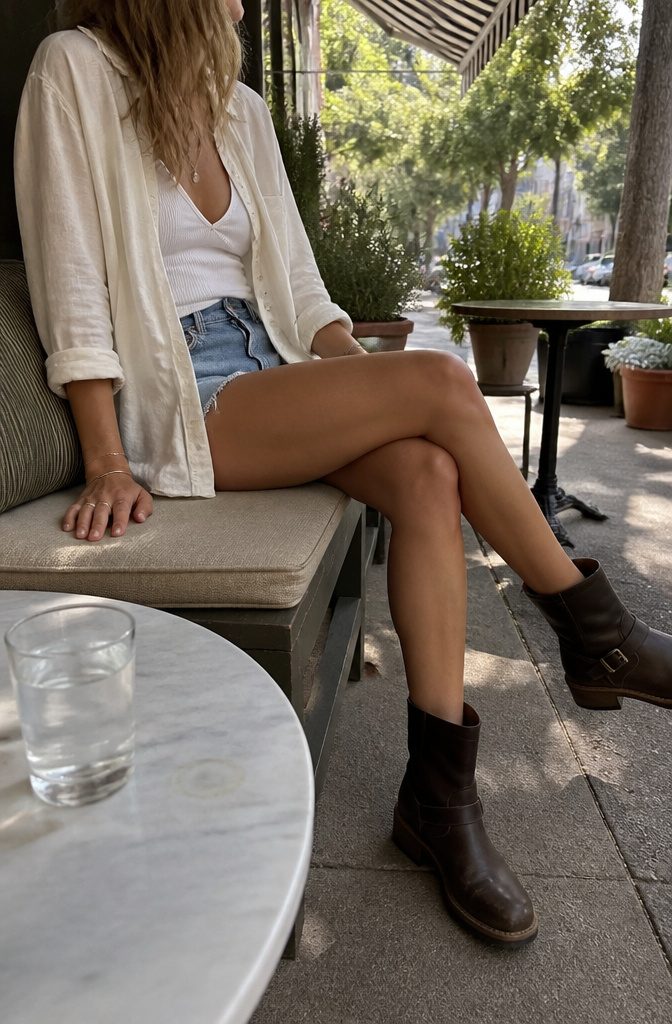
Boots and shorts sit easier together than the pairing suggests, and keeping the top half light (a tank, loose tee, or open button-up in linen) keeps the outfit from reading too heavy in warm weather.
The boots carry enough presence that the rest can stay simple.
Proportion decides whether it feels balanced. Tall boots ask for longer or looser shorts so the leg isn’t cut into too many pieces; ankle boots allow shorter lengths without the line turning awkward.
The boot becomes the anchor, not the complication, and the whole thing reads as intentional rather than mismatched.
Cozy Layers and Cowgirl Boots
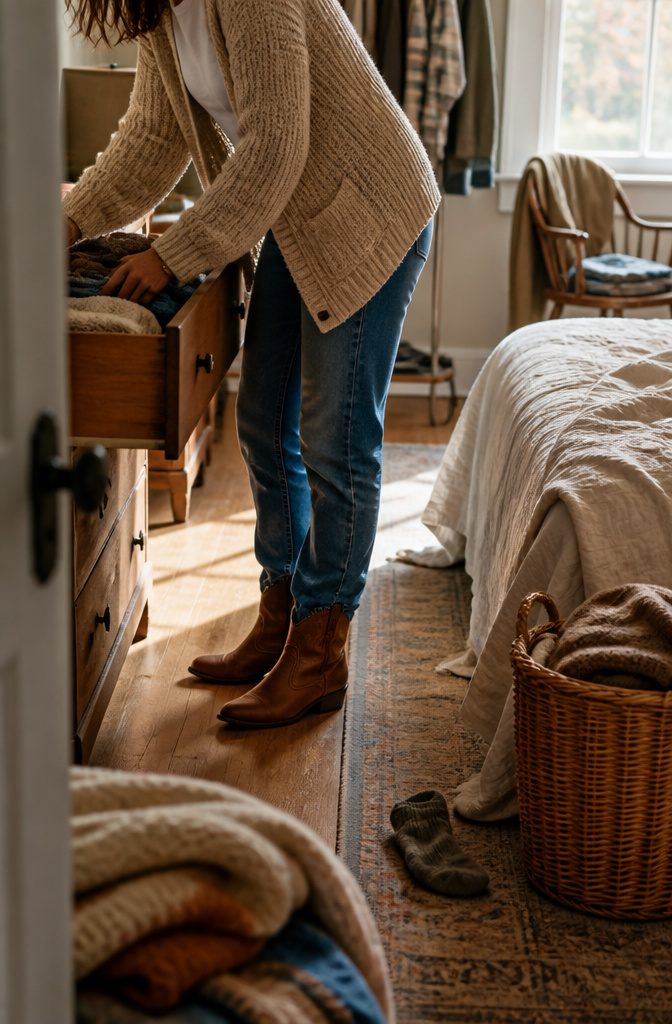
A chunky cardigan over a simple tee, straight jeans or leggings, and cowgirl boots land you squarely in farmhouse-boho territory: grounded, warm, and easier to wear than it sounds.
The cardigan does the layering work without fuss, which means the boots can stay plain rather than needing every embellishment at once to carry the look.
Leggings keep it soft and relaxed; straight jeans give it more structure if you need the outfit to travel from errands to an actual plan.
Either way, the boots anchor the whole thing. This is the version of boho that photographs well but still feels like something you would actually put on to reorganize a closet or meet a friend for coffee.
Choosing for a Wardrobe
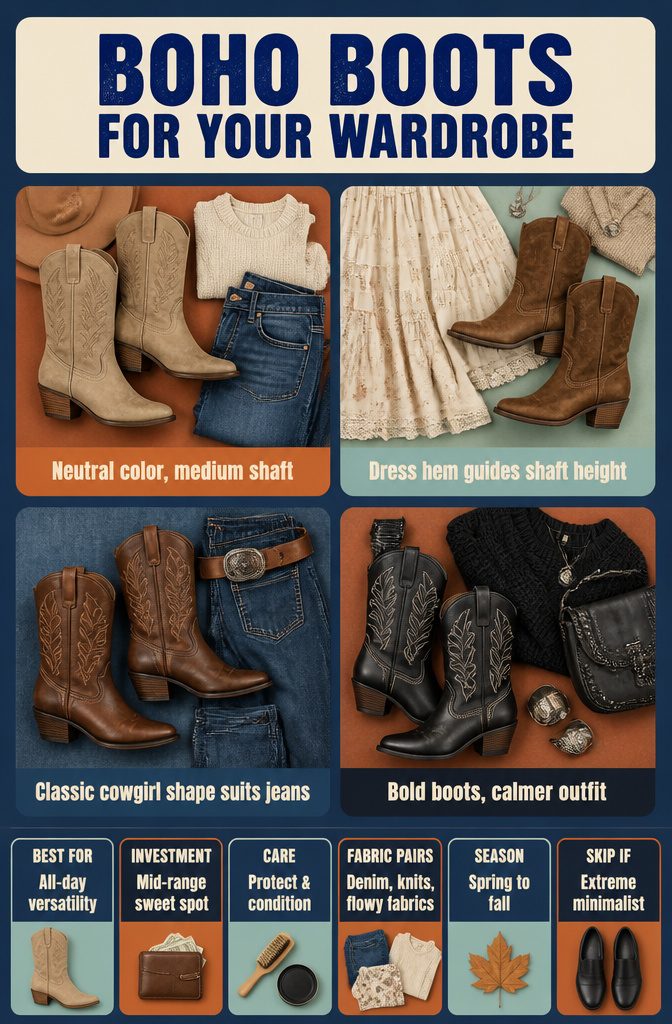
If you’re building a wardrobe and want one pair that works with everything, start with a neutral color and a medium shaft height. That combination tends to be the most versatile with dresses, jeans, and skirts.
When you wear lots of dresses, go for a shaft height that meets the dress hem in a flattering way.
A slightly slimmer shaft often looks more polished with flowy fabrics. Mid-calf boots with midi dresses can be tricky, but when the proportions work, they really work.
If you live in jeans, a classic cowgirl boot shape is the easiest move.
It slides under straight jeans and looks great over skinny jeans. The always-makes-sense option.
For statement pieces, choose boots with bolder stitching or a more dramatic silhouette, but keep the rest of your outfit calmer so the boots can be the moment.
Comfort and Fit
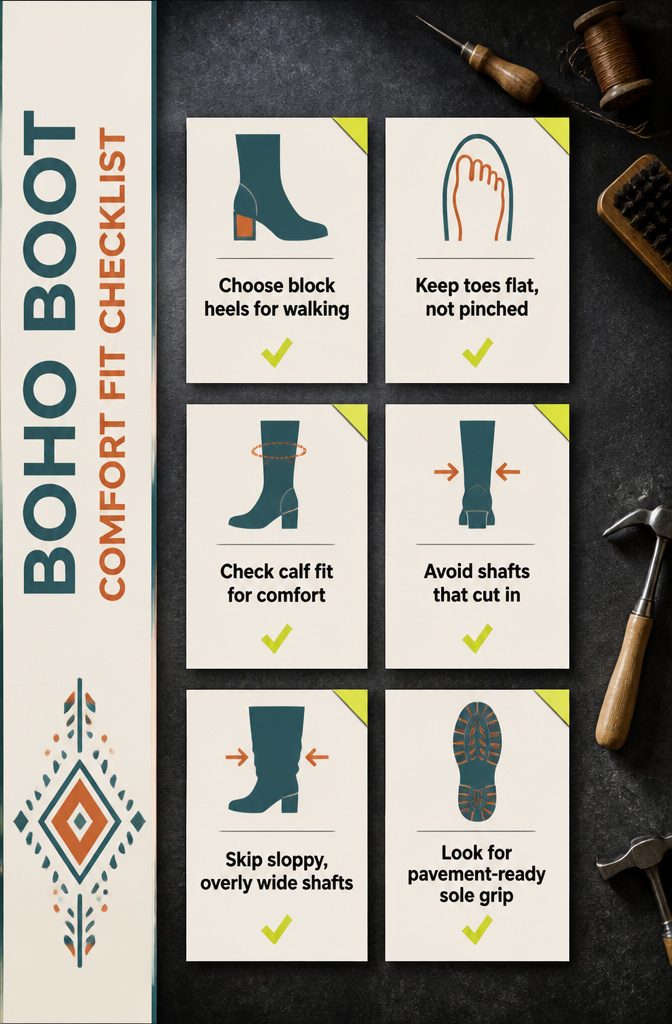
I check heel stability first: block heels over stilettos if I know I’ll be walking more than a few blocks.
A stable heel keeps the boot from feeling precious, and I can wear it without thinking about my feet every ten minutes.
Toe-box shape matters more than I expected.
Pointed toes photograph well, but if they pinch after an hour, the boot stays in the closet. I look for enough room that my toes sit flat, not crammed forward.
Shaft fit is the thing that makes or breaks how intentional a boot looks on.
Too tight at the calf and it cuts in; too wide and the slouch reads sloppy instead of relaxed. The right fit sits where it should without fighting your leg.
Sole grip is the last check.
Boho is supposed to feel easy, and slipping on smooth pavement is the opposite of that. I want traction I can count on if I’m wearing these anywhere beyond a carpet.
Personalizing Boots
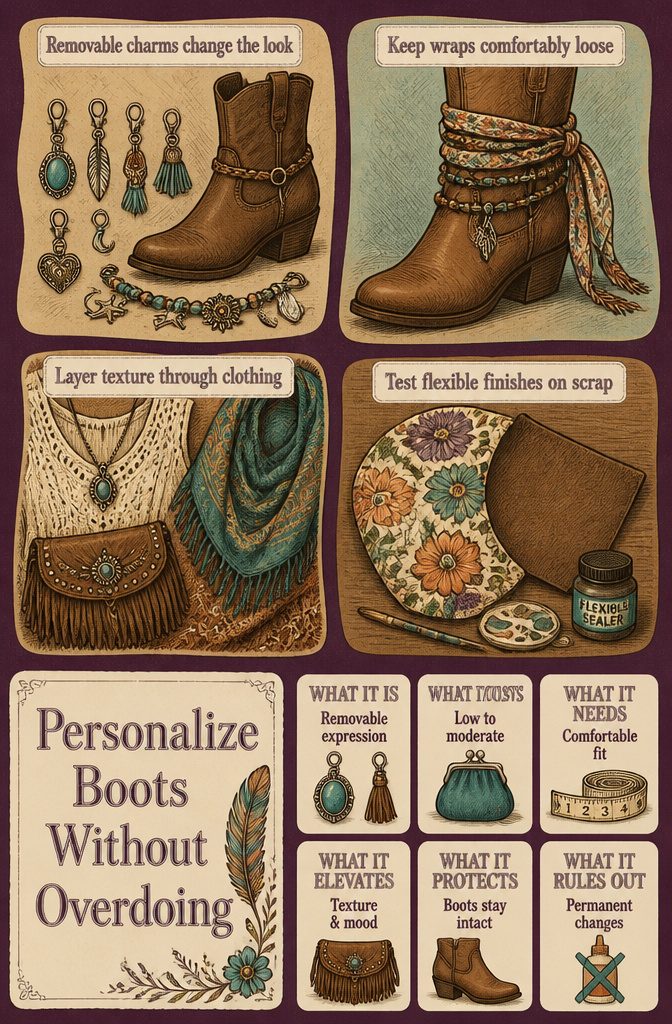
Clip-on charms and removable accessories let you shift the look without committing to anything permanent. The artsy, collected feel is very boho, and you can pull them off when the mood changes.
Wraps around the ankle or shaft work if they stay comfortable and not too tight. The goal reads effortless, not like you tied yourself into something that cuts off circulation halfway through the day.
Texture does a lot of the work. Even plain boots feel more bohemian when you pair them with a crochet top, a fringed bag, or a soft scarf draped at the neck.
Boho is a texture game, and layering it through clothing and accessories saves you from doing anything drastic to the boots themselves.
Decoupage-inspired looks are creative and genuinely beautiful, but boots flex and experience friction in ways a static surface does not. If that aesthetic speaks to you, go for flexible, durable techniques and test on something non-essential first.
The boho feeling is about wearability as much as artistry, and I want boots that survive a full day rather than one good photo.
Frequently Asked Questions
What makes a boot look bohemian?
A boot reads boho when the finish is matte or distressed rather than polished, with texture that catches light unevenly. Look for suede-like surfaces, subtle embroidery, woven panels, or stitching patterns that suggest handmade construction.
The palette stays earthy (tan, sand, warm brown, cream) and the shape remains walkable with a block or stacked heel and a shaft that clears the ankle without drama.
How do you style boho boots with a dress?
Pair a flowy midi dress with structured boots that have a defined heel or embossed leather.
If the dress is busy, keep the boots simple in a neutral tone; if the dress is plain, let the boots carry more detail like tooling or contrast stitching.
The contrast between soft fabric and shaped boots creates balance without requiring extra pieces.
Can you wear boho boots with shorts?
Boots and shorts work when you keep the top half light with a tank, loose tee, or open linen shirt.
Tall boots need longer or looser shorts so the leg is not cut into too many sections; ankle boots allow shorter lengths without the line turning awkward.
The boots anchor the outfit while the lighter top keeps it from reading too heavy in warm weather.
What color boho boots are most versatile?
Start with a neutral color in tan, sand, warm brown, cream, or muted black.
These tones layer easily with florals, denim, and knits without fighting the rest of the outfit, and they slip into your wardrobe rather than dictating what you can wear around them.
How should boho boots fit?
Check for a stable block heel you can walk in, a toe box with enough room that your toes sit flat rather than cramming forward, and a shaft that fits your calf without cutting in or slouching sloppily.
Sole grip matters too since slipping on smooth pavement breaks the easy feeling boho is supposed to carry.