The SOREL Joan of Arctic works for everything from shoveling to ski-resort errands because the 12-inch waterproof suede upper on a vulcanized rubber base sheds slush without cracking, and pairs tested across Maine, Alaska and Colorado have held up 7 to 10 years with soles that still look new.
Skip it if you need boots rated below -20°F or want slip-on convenience over a snug fit that keeps snow out.
1. SOREL Joan of Arctic Boots for Town-to-Snow Versatility
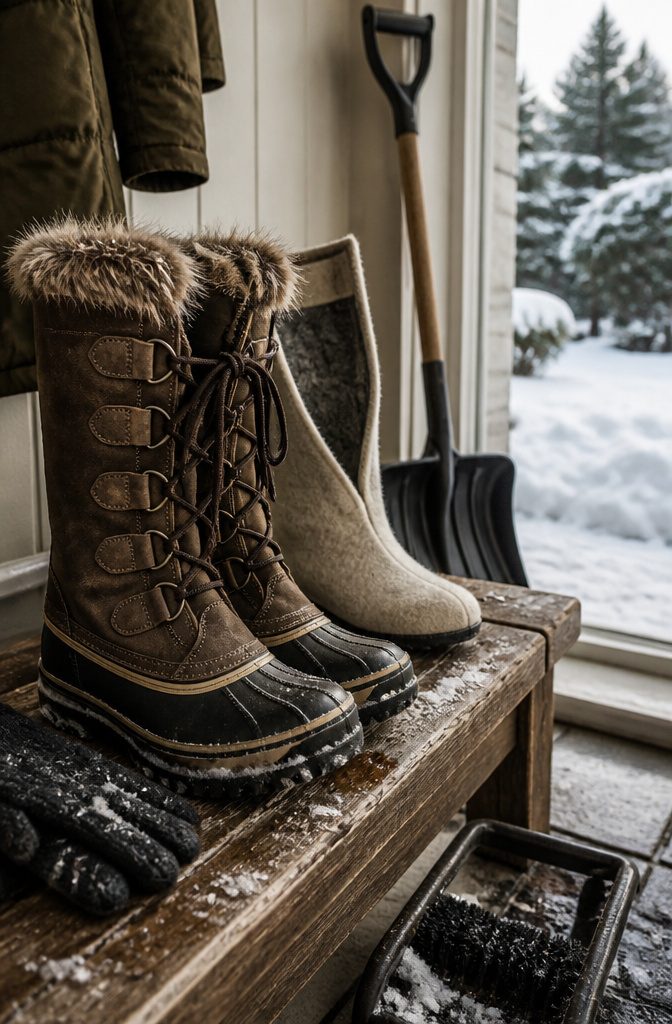
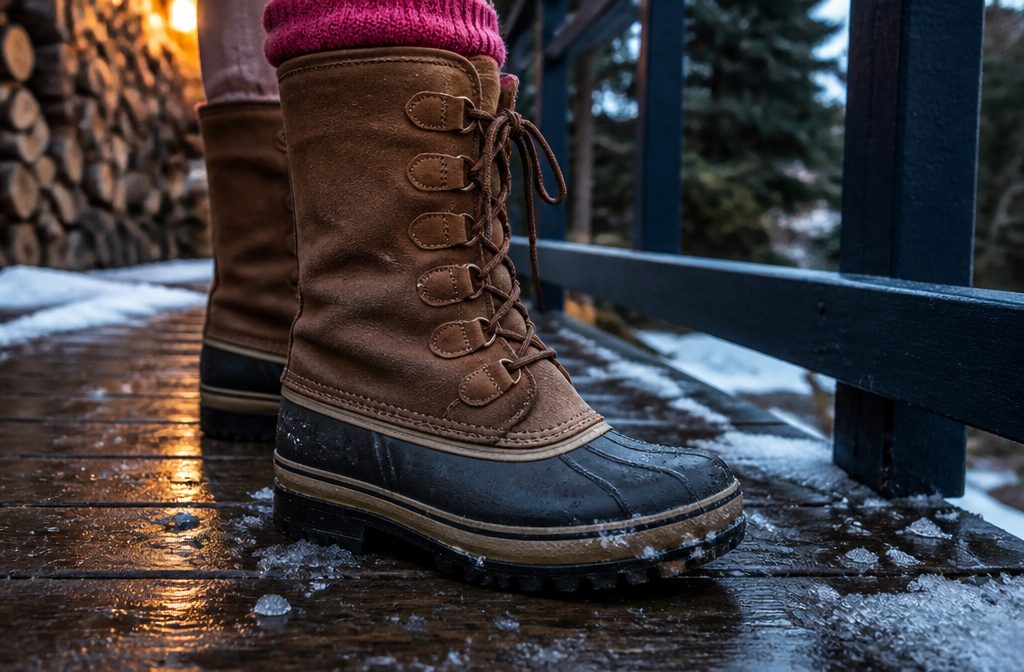
The SOREL Joan of Arctic handles everything from shoveling the driveway to running errands after a ski trip, and the construction explains why they last.
The 12-inch waterproof suede upper sits on a vulcanized rubber base that sheds slush and snow without cracking, while the 9 mm washable felt inner boot and 6 mm recycled felt lining keep feet warm without overheating on milder days.
The liner pulls out for washing or replacement, which matters when you wear them season after season.
I’ve seen pairs tested for 7 to 10 years across Maine, Alaska, and Colorado (shoveling, hiking, standing around in snowbanks) and the soles still look nearly new.
The traction works on both cleared sidewalks and packed trails. They run slightly large, and getting them on and off takes an extra second compared to a slip-on boot, but that snug fit is part of what keeps snow out.
Skip these if you need boots rated for extreme cold below -20°F; for everything else, they’re the pair that does it all.
2. SOREL Caribou for Extreme Cold Down to -40°F
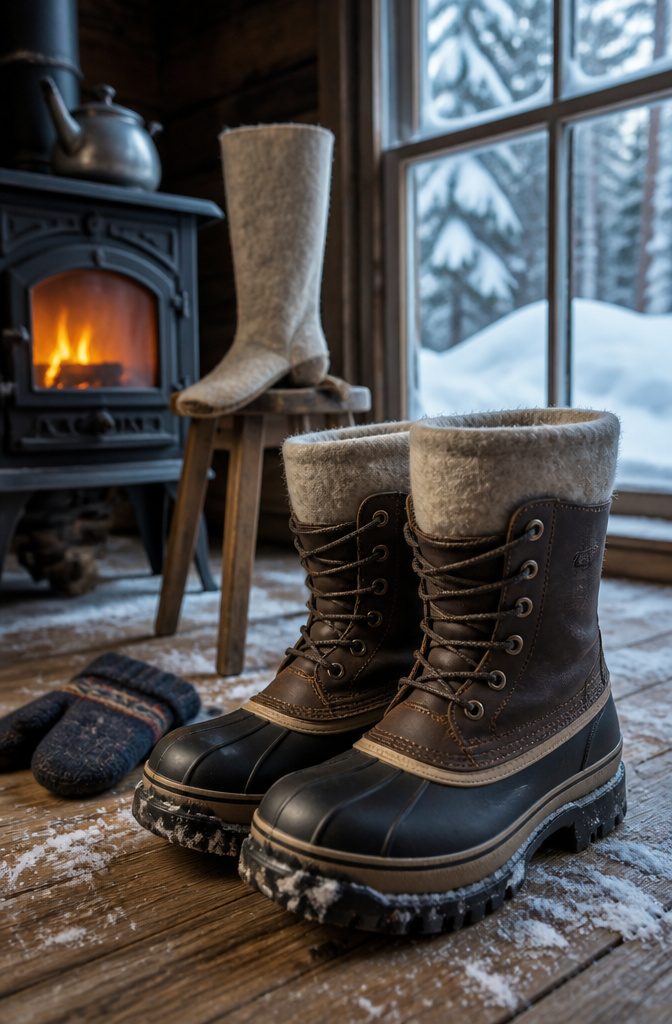
The SOREL Caribou has been around since the 1960s, and families have kept pairs in rotation for decades.
One set bought in 1992 is still holding up, and reviewers regularly report 15+ years of use. The boot is rated to -40°F and stays comfortable down to at least -20°F, verified across Maine, Colorado, and Washington.
The warmth comes from a 9 mm removable felt liner with a snow cuff, and the deep-lugged rubber sole grips packed snow better than most alternatives.
The liner pulls out for cleaning or replacement, which matters if you plan to wear these hard.
The bulk is the cost: the felt sits inside rather than bonded to the shell, so the fit is looser than an insulated boot. They also run warm enough that mild winter days feel like overkill.
If you only see occasional snow or want something lighter for walking, look elsewhere. If you face deep cold and need a boot that lasts, this is the one.
3. L.L.Bean Women’s 8-Inch Bean Boots for Walking and Errands
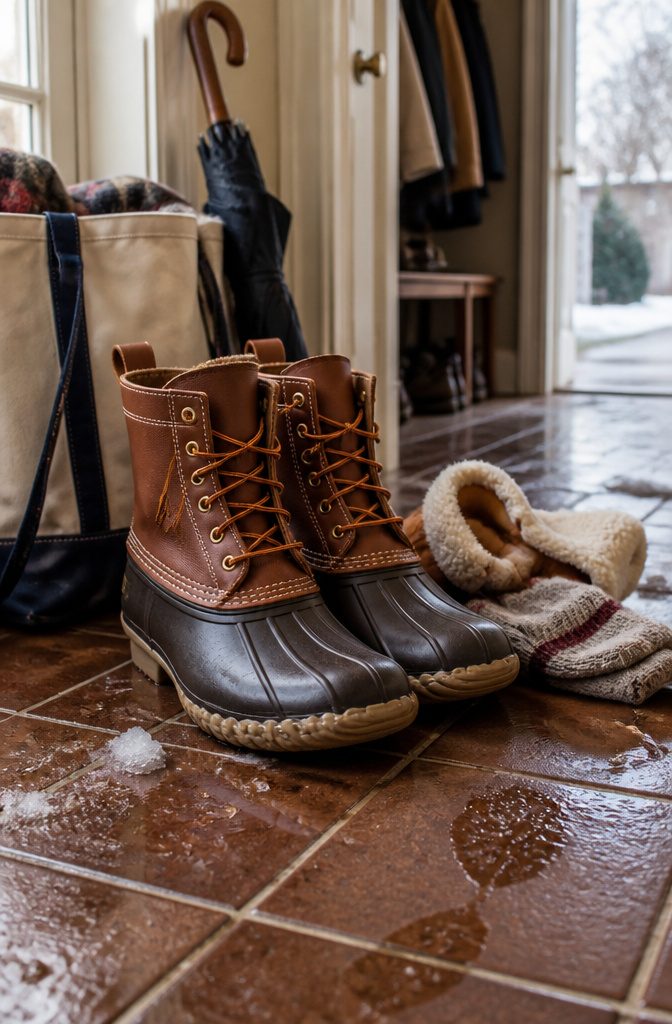
The L.L.Bean 8-Inch Bean Boot has been made in Maine since 1912, and that history shows.
The leather-and-rubber duck boot holds up to daily wear through slushy sidewalks and light snow, and the look works whether you’re walking to the office or running weekend errands.
You can choose PrimaLoft or shearling lining depending on how cold your typical day is.
The boot runs large. Half sizes should order 0.5 sizes down if you plan to wear light or midweight socks.
The leather arrives stiff and needs a few wears to break in, so this is not the boot to grab for an all-day hike on the first outing. L.L.Bean’s exchange policy is straightforward if the sizing lands wrong.
Skip these if you need aggressive traction on ice or protection in deep snow. The tread is modest, and the boot sits best in town rather than on backcountry trails.
4. Oboz Bridger 9-Inch Insulated B-DRY for Ice Traction
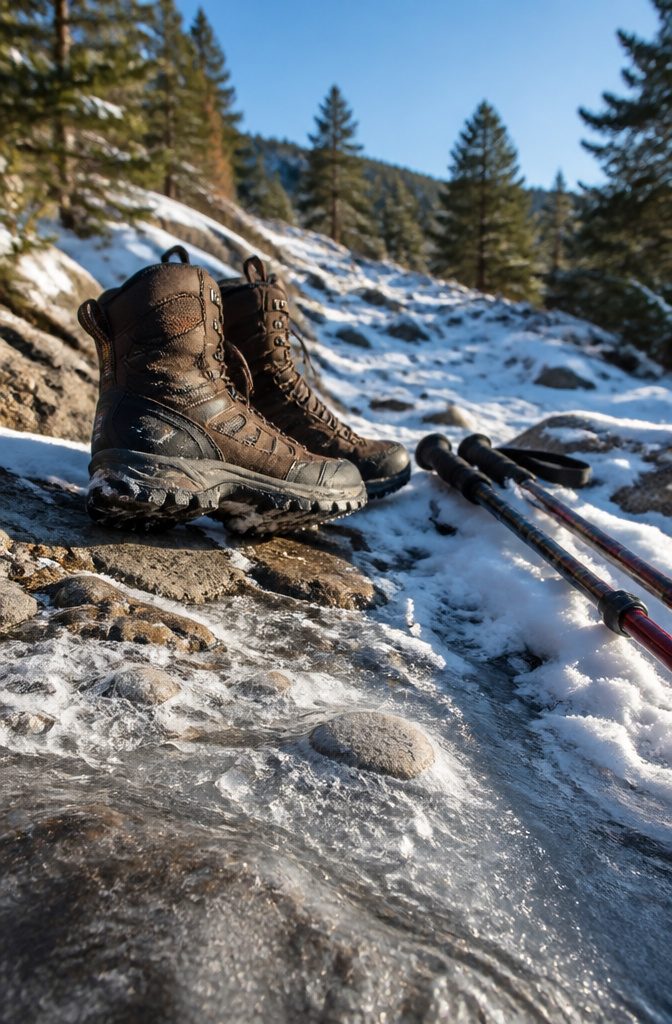
The Oboz Bridger 9-Inch delivers what ice walkers and winter hikers need most: 400 g Freeze Guard insulation wrapped in a boot that grips frozen ground better than anything else tested.
Traction on ice is where this boot pulls ahead, paired with 9 inches of ankle coverage that stabilizes footing on uneven snow and trail sections that shift underfoot.
The design borrows directly from Oboz’s hiking line, adding height and warmth to a platform already proven on trails.
That hiking foundation means the boot feels stiff for sidewalk use: fine for dog walks and snow shoveling, less comfortable for all-day city wear. Sizing runs small, so order up.
If light weight matters more than ankle support, skip this one. The Bridger wins when traction decides whether you stay upright.
5. The North Face VECTIV Fastpack Insulated Mid for Winter Hiking
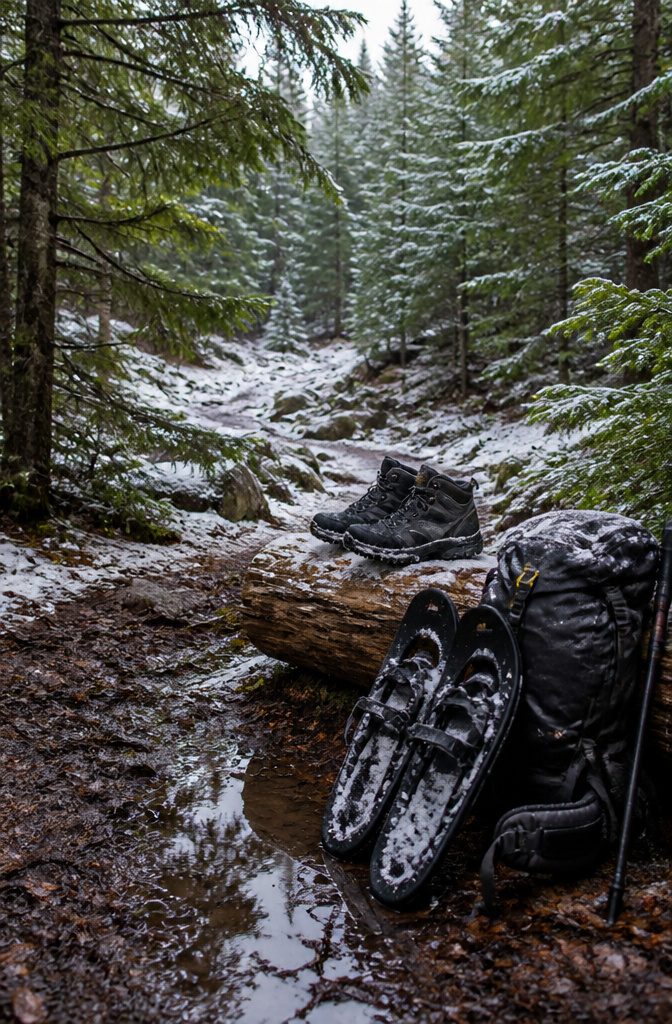
The North Face VECTIV Fastpack Insulated Mid runs lighter than most winter boots while still covering what a backcountry snowshoer needs.
The boot holds 200 g Heatseeker Synthetic Insulation and a 4–6 inch mid shaft, enough to keep feet warm down to 10–20°F while moving but not the choice for standing around at a trailhead.
Testing on a 3-night, 4-day trip in Maine’s Baxter State Park covered temperatures from 15°F to a rainy 45°F, and the boot stayed dry and comfortable through all of it.
The collar sits soft against the lower leg with a fleece closure that does not chafe over long miles. A heel knob holds snowshoe straps in place without slipping.
Heatseeker Eco insulation is 70–85% post-consumer recycled, and 10% of the outsole rubber comes from small farms committed to agroforestry. Skip this one if you need deeper snow coverage or warmth for slow-moving cold-weather use.
6. Columbia Ice Maiden II for Affordable Casual Use
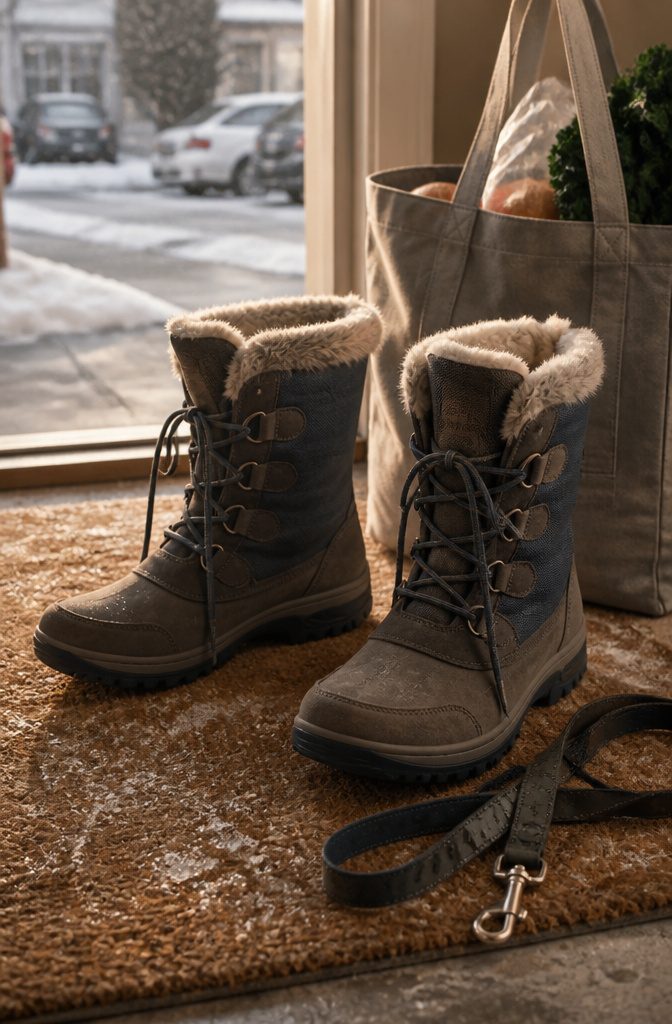
The Ice Maiden II sits at $45 to $110 depending on color, making it one of the cheapest boots anywhere that still covers the basics.
The 200 grams of insulation and microfleece liner keep you warm enough for errands or a week at a ski resort without turning your feet into ovens.
The waterproof suede and nylon upper sheds light snow, and the faux fur collar closes the gap at the top.
I’d reach for these if winter where you live means occasional flurries rather than weeks below zero. They work for walking the dog or running into the grocery store.
Skip them if you need boots rated for serious cold or if black ice is a regular feature of your commute. The traction is adequate but not aggressive, and the insulation tops out well before extreme temps.
7. Baffin Chloe for Broad Coverage and Warmth
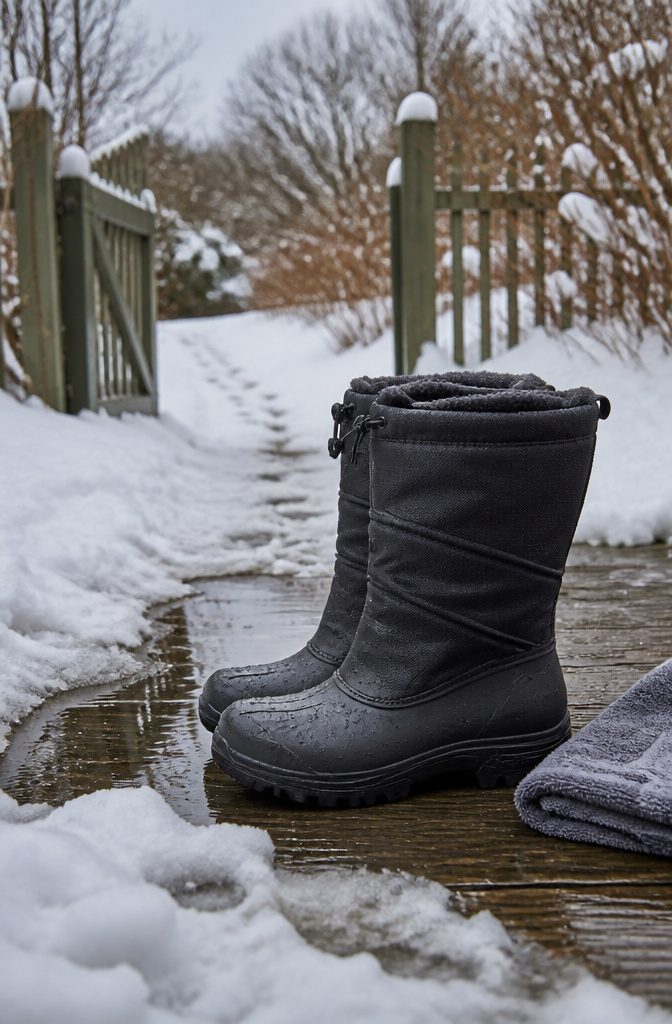
The Baffin Chloe handles deep snow and slush without flinching. That 10-inch shaft keeps weather out, and the multi-layer system (hollow-fiber B-Tek Heat insulation plus a polyester-wool blend) held up in wet conditions without turning feet into sweatboxes.
The boot stayed dry through puddles up to 9.5 inches deep, which covers most of what you’d step into on a slushy street or unplowed trail.
The cost is weight. At 3 pounds 3 ounces for the pair (size 9), these are not the boots you throw on for a quick walk to the car.
If you spend hours outside in cold, wet weather (clearing snow, walking the dog through drifts, commuting on foot), the weight matters less than the coverage and warmth. For shorter trips or lighter wear, look elsewhere.
8. Columbia Minx Shorty IV for Budget Casual Wear
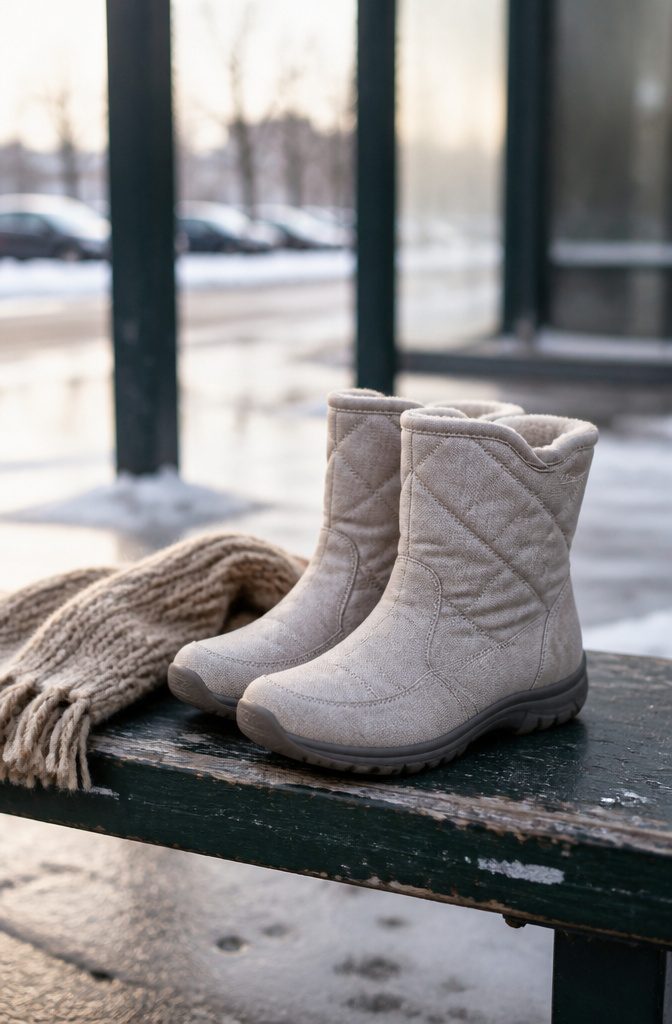
The Minx Shorty IV runs about $100 and feels more like a sneaker than a winter boot, which works if you want something flexible enough for errands and light snow days but skip it if you’ll be out in storms.
The 200 g heat-reflective insulation keeps feet warm through typical winter cold, and the Omni-Tech membrane handles slush and light snow without trouble.
The shaft sits at 6.5 inches, so water starts creeping in around 6 inches of depth: fine for sidewalks and parking lots, not enough for deeper drifts or heavy weather.
The measured weight comes in at 1 lb 12 oz per pair in a size 9, light enough that you won’t feel weighed down walking around town.
One trade-off: the light-colored fabric shows water stains after it dries, so they look a little worn faster than darker boots would.
9. The North Face Shellista VI for Style and Waterproof Support
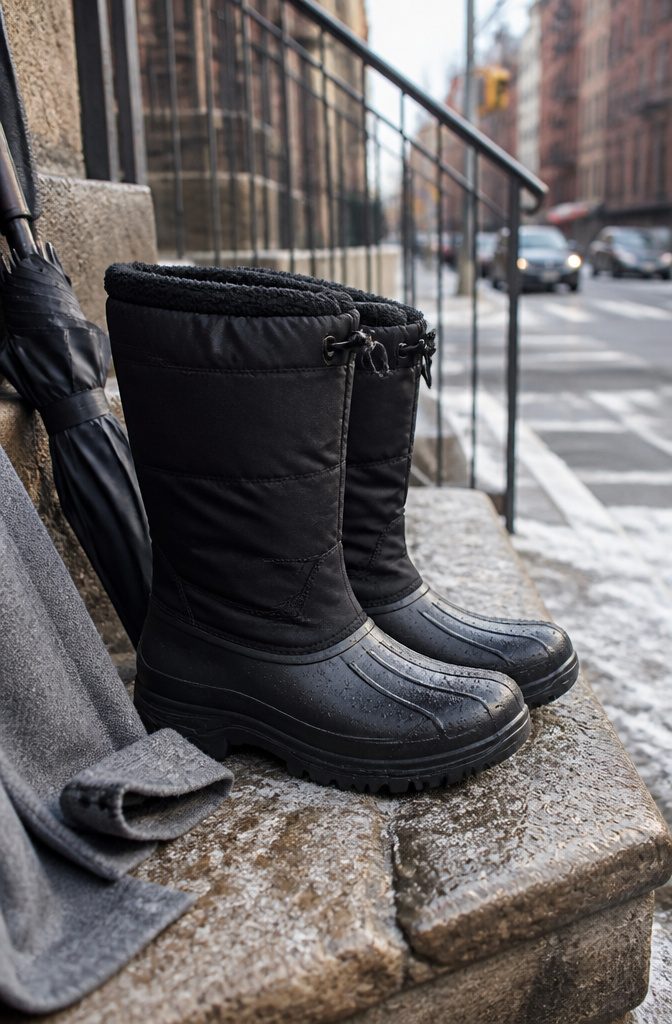
The Shellista VI pairs a 10-inch shaft with seam-sealed waterproof construction and a molded rubber shell that handles puddles up to 7 inches deep without leaking, enough for shoveling driveways or crossing slushy intersections.
The 200 g Heatseeker Eco Pro insulation keeps feet warm through most winter errands without the thickness that makes driving awkward, and the fleece lining feels soft against bare ankles the moment you pull them on.
At 2 lb 16 oz for a size 9 pair, they sit heavier than trail runners but lighter than expedition boots, with enough midsole support to walk uneven sidewalks confidently.
The silhouette reads more street than technical, which makes them work with jeans or wool trousers. Skip these if your commute involves miles of hiking or temperatures consistently below zero; they’re built for town, not backcountry.
10. Muck Boot Arctic Ice Tall AGAT for Wet Conditions and Standing Water
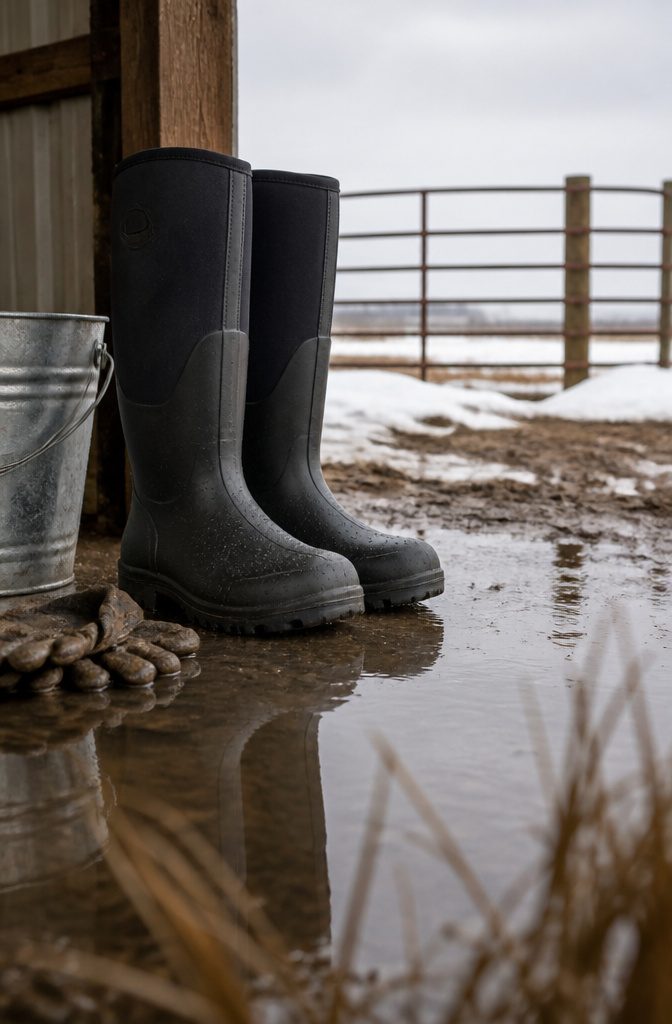
The Muck Boot Arctic Ice Tall AGAT handles what most winter boots run from: standing water up to 17 inches deep. The 16-inch shaft reaches just below the knee, sealing out slush and puddles that would flood a shorter boot.
Construction is 8 mm neoprene with fleece lining, the same material used in scuba suits, and it holds warmth even when submerged in icy water.
The tradeoff sits in your hand before you pull them on: 5 lb 1 oz for a size 9 pair, heavy enough that long walks or deep snow trudging turns into work.
This is a boot for standing in wet conditions, feeding livestock in melt, or crossing flooded parking lots, not for covering distance on foot.
11. Keen Revel IV Polar for Winter Hiking With Microspikes
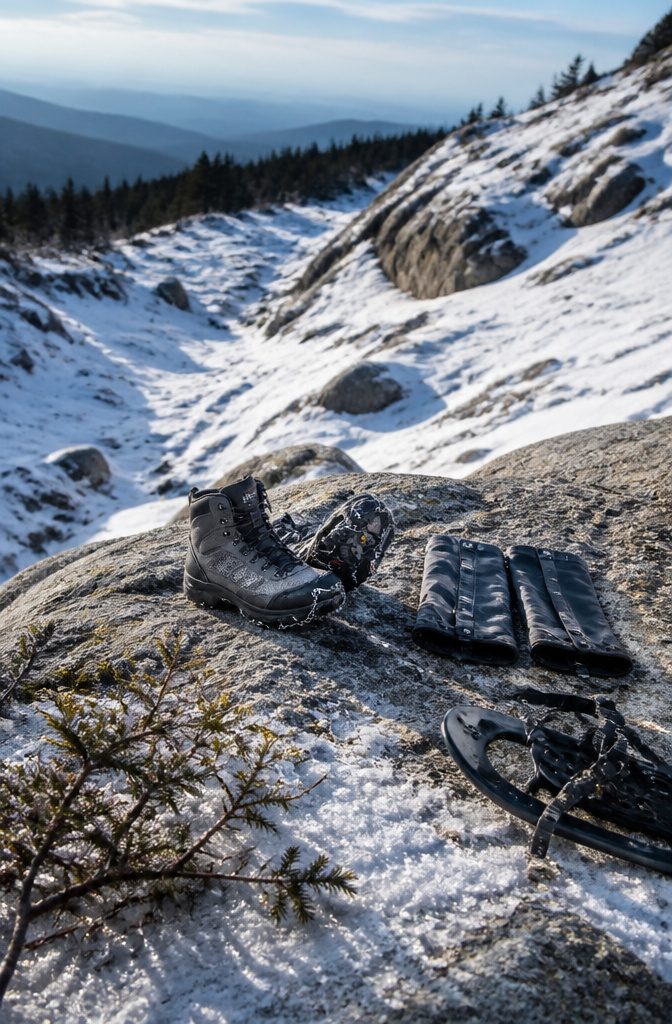
The Keen Revel IV Polar works best when you’re strapping on microspikes or snowshoes rather than walking city blocks.
200 g KEEN.WARM Recycled PET insulation keeps warmth in without the bulk of a 400 g boot, and the 6-inch shaft pairs cleanly with gaiters when powder flies.
Maximum puddle depth sits at 5.5 inches before water finds a way in. At 2 lb 12 oz for a size 9 pair, the Revel feels noticeably lighter on long miles than taller winter boots rated for deeper snow.
Traction holds on icy trails and uneven ridgelines, the kind of grip that matters when you’re moving over frozen ground rather than standing in a parking lot.
The fit runs roomy enough for thick socks, though the technical look skews outdoorsy in a way that reads wrong with jeans downtown.
If your winter means serious trail time and you’ll face shallow to moderate snow, this boot delivers. Pass if you need tall coverage or plan to wade through drifts past mid-calf.
12. Baffin Escalate X for Lightweight Warmth
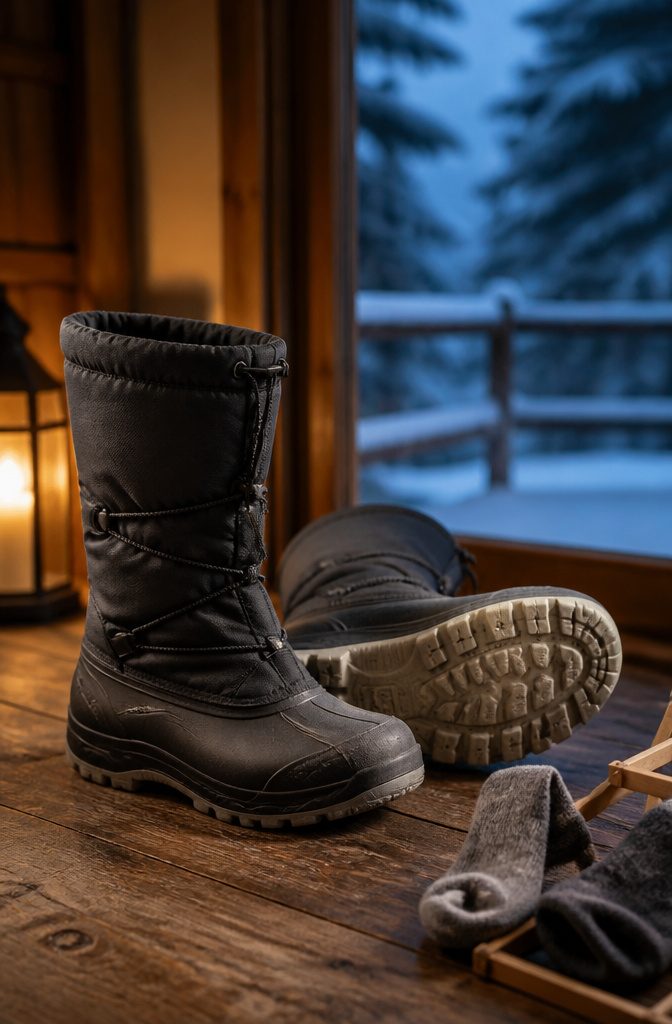
The Baffin Escalate X weighs 12.5 ounces per boot (size 9) with an 11-inch shaft. Light enough that one tester said it feels like a giant slipper with tread, yet warm enough for the coldest days thanks to Baffin’s B-Tek Heat insulation.
These boots feel like a giant slipper with tread
That kind of weight without giving up warmth is rare in a boot with this much coverage. The pair weighs 1 pound 9 ounces total, and the shaft keeps you dry through puddles up to 11.5 inches deep.
The bungee lacing cinches easily once you get the hang of it, but getting the boot on and off in the first place takes effort. The opening is snug and there is not much structure to help you.
If you need to pull boots on and off quickly, this one will frustrate you. If light weight matters more than convenience, it wins.
13. The North Face Chilkat V 400 for Deeper Snow
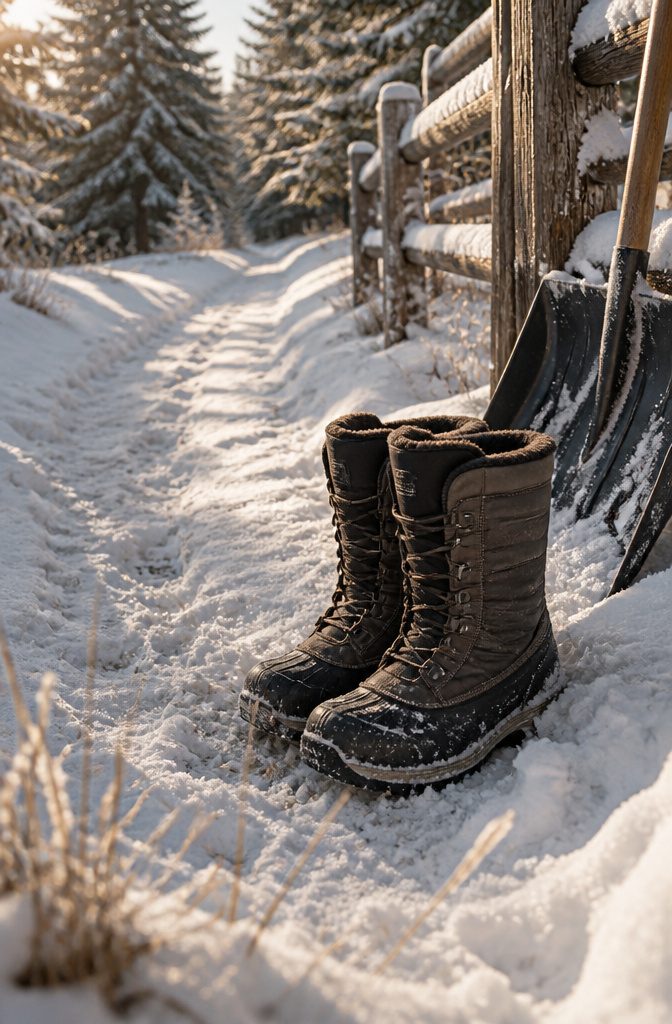
The Chilkat V 400 holds 400 grams of insulation per boot, which puts it in a different category than most of the other options here.
That extra fill matters when you’re out long enough for cold to work through thinner liners, or when you’re standing still rather than moving through town.
The cost is weight: these are noticeably heavier on your feet than a 200-gram boot, and that difference compounds over a mile of walking.
If your winter involves unplowed trails, extended time outdoors in single-digit temperatures, or deep snow that reaches past your ankles, the 400-gram construction makes sense.
If you’re mostly on cleared sidewalks or hopping from car to door, a lighter boot will feel better by the end of the day.
How These Boots Were Tested
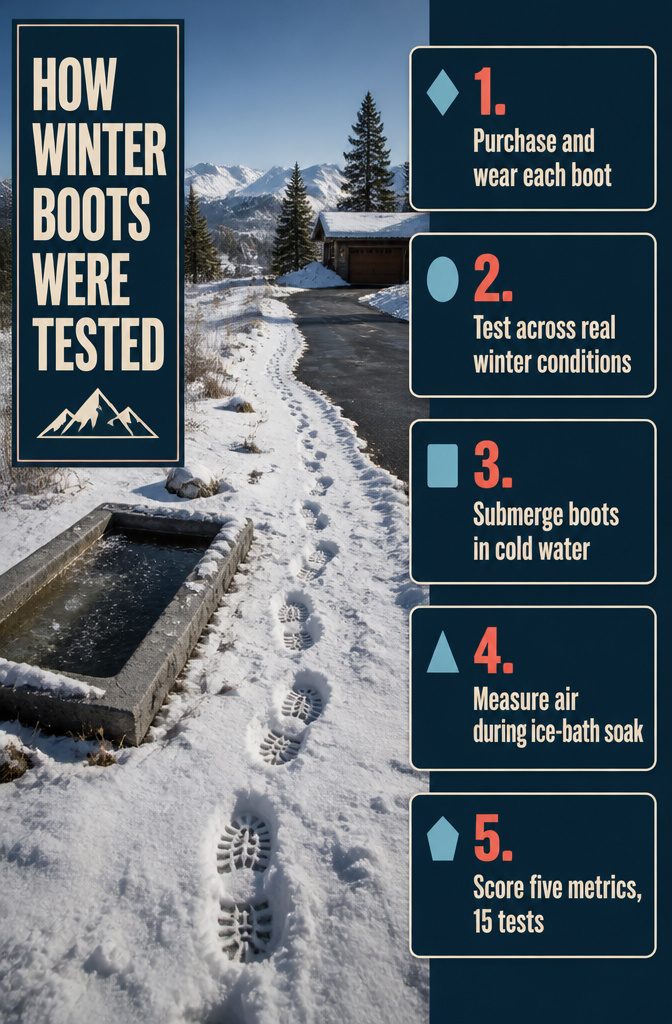
The testing spanned icy walkways, wet snow, deep powder, and extreme cold across hiking trips, snowshoeing, shoveling driveways, dog walks, errands, and outdoor work shifts.
Each boot was purchased and worn through real winter conditions in regions from Southwestern Colorado to Northern California and British Columbia, with testing grounds spanning over a decade of field use since 2013.
The process included cold-water submersion to check waterproofing and measuring internal air temperatures during a 10-minute ice-bath soak to assess insulation.
Across 22 women’s winter boots and more than 100 pairs tested for both women and men, the evaluation followed five metrics and 15 individual tests per boot, covering blowing snowstorms, icy parking lots, wet spring afternoons, and muddy pre-season puddles to determine which boots held up and which failed.
Warmth, Waterproofness, and Traction Compared
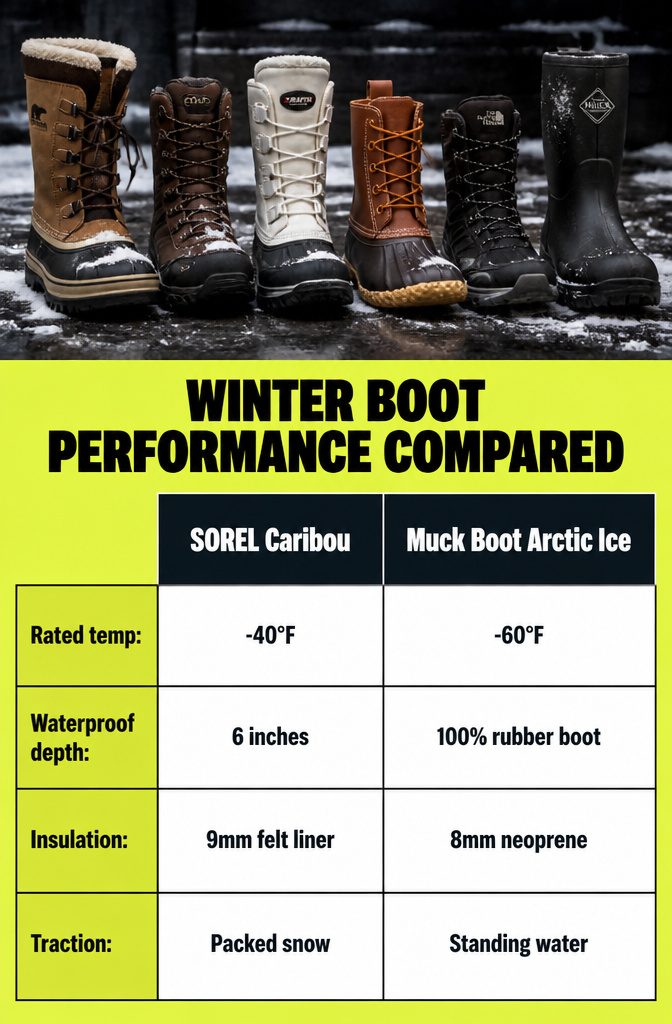
I’ve run temperature comfort ranges from below zero to near-freezing, checked how deep you can step in slush before cold water seeps through, and noted which tread patterns actually grip packed snow or ice rather than skate across it.
The boots below span casual errands in light snow, long hikes on icy trails, and standing outdoors in sub-zero windchill.
| Boot | Insulation | Rated Temp | Waterproof Depth | Best Traction Surface |
|---|---|---|---|---|
| SOREL Caribou | 9mm felt liner | -40°F | 6 inches | Packed snow |
| Oboz Bridger 9" | 400g synthetic | -25°F | Full submersion | Ice (lug pattern) |
| Baffin Chloe | 7-layer system | -40°F | 8 inches | Deep snow |
| L.L.Bean 8" Bean Boot | None | 20°F | 7 inches | Wet pavement |
| North Face VECTIV | 200g PrimaLoft | 0°F | Membrane only | Trail mix |
| Muck Boot Arctic Ice | 8mm neoprene | -60°F | 100% (rubber boot) | Standing water |
Warmth stops being about insulation grams once you hit about 400g and cold goes below zero.
Multi-layer vapor barriers and felt liners matter more. Traction splits cleanly: deep lugs for ice, wider spacing for snow, smooth soles for nothing.
Frequently Asked Questions
What are the warmest winter boots for women?
The SOREL Caribou and Baffin Chloe both rate to -40°F, with the Muck Boot Arctic Ice Tall rated to -60°F. The Caribou uses a 9mm felt liner that stays comfortable down to at least -20°F in real use, while the Baffin Chloe relies on a 7-layer insulation system that held up through wet conditions without overheating.
The Muck Boot trades mobility for extreme cold protection with 8mm neoprene construction.
What winter boots are best for walking on ice?
The Oboz Bridger 9-Inch delivers the best ice traction of any boot tested, pairing deep lugs with 400g insulation and a hiking platform that stabilizes footing on frozen ground.
The SOREL Caribou also grips packed snow and ice well with its vulcanized rubber base and deep tread pattern. Both outperform boots with smoother soles or wider lug spacing designed for deeper snow rather than hard surfaces.
Are SOREL Joan of Arctic boots good for winter?
Yes. The Joan of Arctic handles town errands, snow shoveling, and light trail use with a 12-inch waterproof suede upper and 9mm washable felt liner that keeps feet warm without overheating on milder days.
Pairs tested across Maine, Alaska, and Colorado lasted 7 to 10 years with minimal sole wear. They run slightly large and take longer to get on than slip-on boots, but that snug fit keeps snow out.
How deep can you walk in puddles with winter boots?
The Muck Boot Arctic Ice Tall stays dry through 17 inches of standing water with its 16-inch neoprene shaft. The Baffin Escalate X handles puddles up to 11.5 inches, while the Baffin Chloe stopped water at 9.5 inches in testing.
Most mid-height boots like the L.L.Bean 8-Inch Bean Boot (7 inches) and North Face Shellista VI (7 inches) start leaking when water reaches the top of the shaft.
What are the lightest insulated winter boots?
The Baffin Escalate X weighs 12.5 ounces per boot with an 11-inch shaft and full B-Tek Heat insulation, totaling 1 pound 9 ounces for a size 9 pair.
The North Face VECTIV Fastpack Insulated Mid runs lighter than most winter boots while still providing 200g Heatseeker insulation for moving through 10–20°F weather.
Both sacrifice some warmth for reduced weight compared to expedition boots like the 3 pound 3 ounce Baffin Chloe.
Do L.L.Bean boots run big or small?
L.L.Bean 8-Inch Bean Boots run large. Half sizes should order 0.5 sizes down if wearing light or midweight socks.
The leather arrives stiff and needs a few wears to break in, so sizing correctly the first time matters since you will not know the true fit until after the return window.
What winter boots are best for snowshoeing?
The North Face VECTIV Fastpack Insulated Mid and Keen Revel IV Polar both work well with snowshoes and microspikes.
The VECTIV includes a heel knob that holds snowshoe straps in place without slipping, while the Revel’s 6-inch shaft pairs cleanly with gaiters when powder flies.
Both weigh less than taller winter boots (2 lb 12 oz and under) and maintain traction on icy trails better than boots designed for standing rather than moving.
Are 200g or 400g insulated boots warmer?
400g boots like the Oboz Bridger and North Face Chilkat V 400 stay warmer in extended cold or when standing still, while 200g boots like the Columbia Ice Maiden II and North Face VECTIV work better for active use or milder temps where thicker insulation causes overheating.
Past 400g, warmth depends more on multi-layer vapor barriers and felt liners than insulation grams alone. The weight difference compounds over long walks, so match insulation to how cold you will be and how much you will move.