
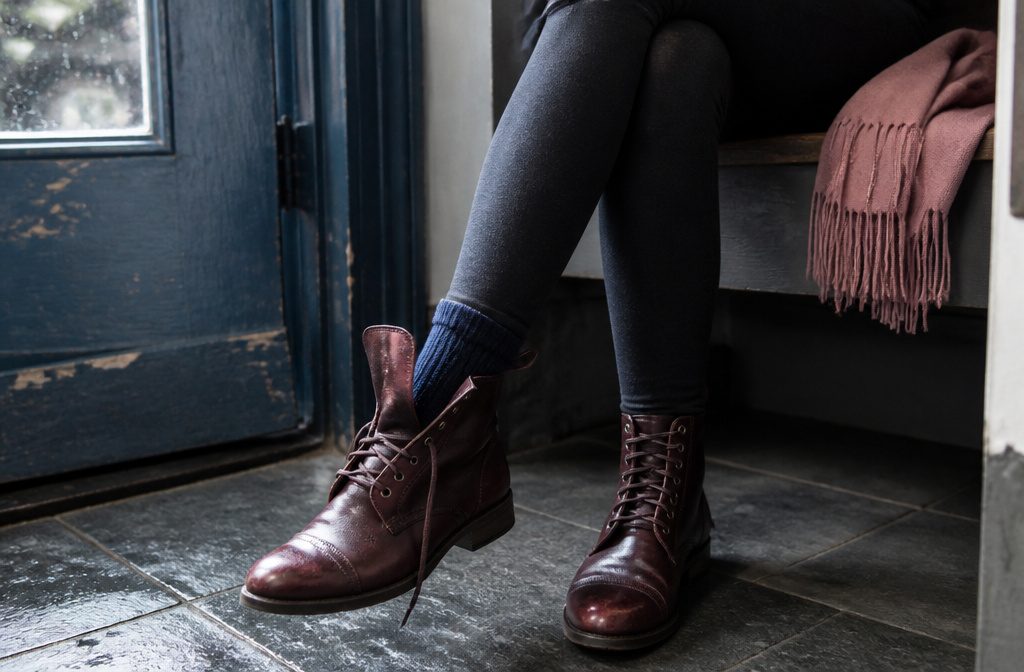
Wearing ankle boots with leggings comes down to managing the sock layer: hide it completely for a sleek line, show 1–2 inches of crew sock for a deliberate finish, or layer thin wool under the legging when you need warmth without bulk.
Most people get the height wrong, leaving an accidental gap at the ankle or bunching fabric at the boot opening.
No-show socks stay invisible under full-length leggings and heeled booties; ribbed crew socks work with combat boots and lace-ups where the cuff reads as layering rather than overflow.
1. Keep Socks Hidden for a Sleek Line
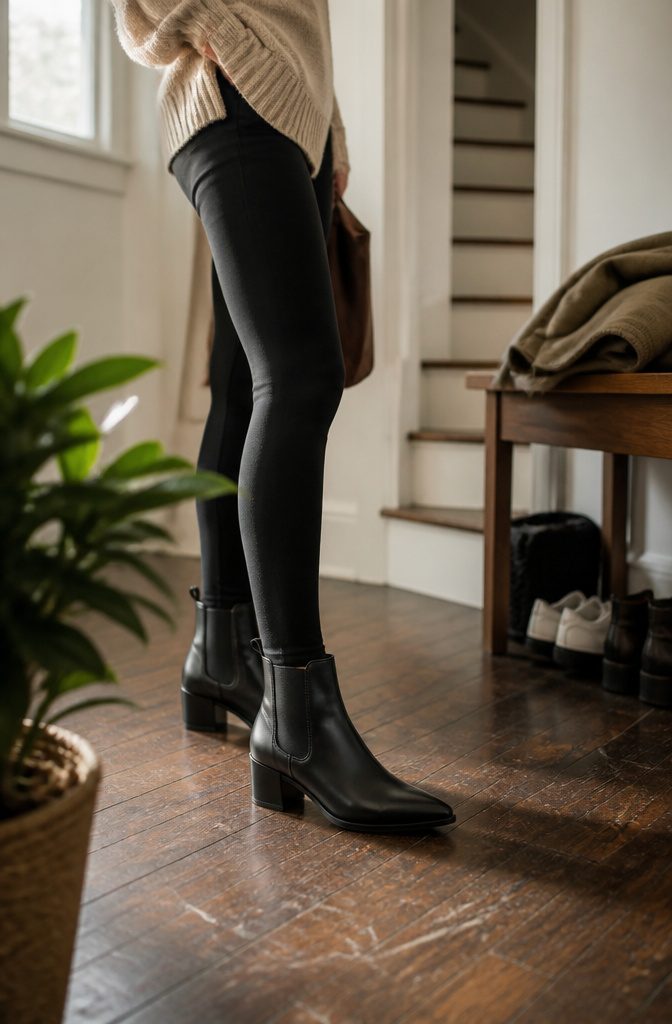
No-show or liner socks are what I use when I want leggings and boots to form one unbroken line.
They sit below the ankle bone, so they stay hidden beneath full-length leggings, existing only inside the boot to keep your foot comfortable and reduce friction where the insole meets skin.
This works especially well with heeled ankle booties, where any visible sock layer would break up the silhouette and make the whole outfit read less polished.
Make sure the legging hem sits flat against your ankle with no bunching.
If the fabric stacks or twists at the boot opening, the line looks cluttered even when the socks themselves are invisible. Thin, smooth leggings paired with a streamlined boot (Chelsea, pointed-toe, or sleek zip styles) give you the cleanest result.
Chunkier lug soles and combat boots can handle this method too, but they’re more forgiving if a crew sock shows; here, the hidden approach is about choice rather than necessity.
2. Show a Deliberate Crew-Sock Cuff
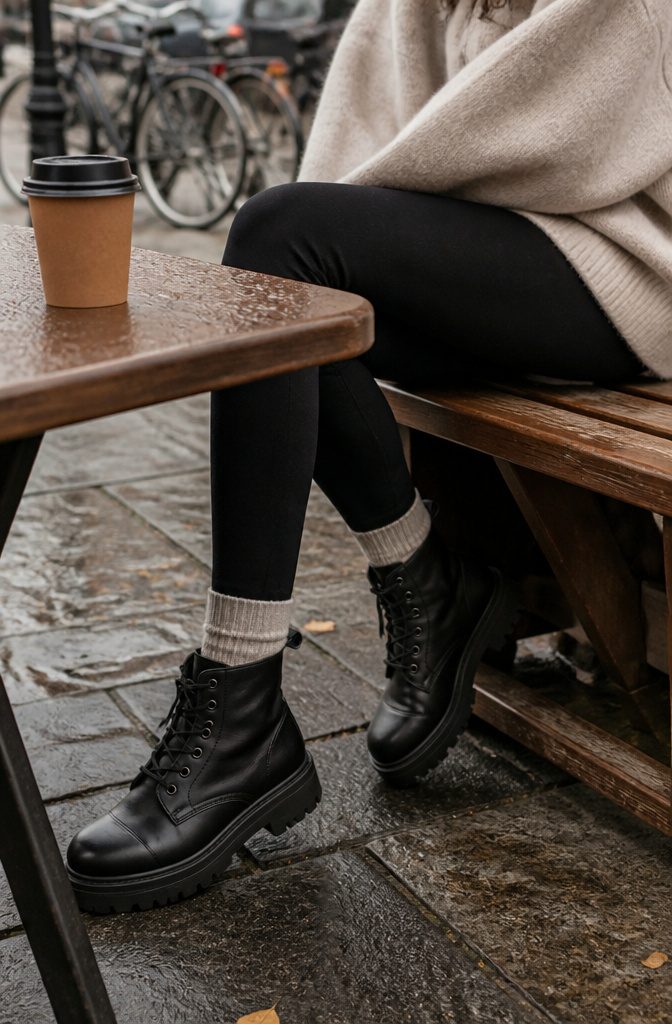
Pull a ribbed crew sock over the legging hem with about 1–2 inches showing above the boot shaft for a deliberate, casual finish.
This works best with lace-up, combat, or chunky ankle boots where the extra fabric reads as layering rather than bunching.
The cuff should sit flat and even, not twisted or folded twice, so it looks like a choice instead of an accident.
A neutral crew sock with just an inch of cuff showing is the cleanest lace-up-boot formula: it bridges the legging and boot without adding bulk at the ankle opening.
Darker socks disappear into black or brown boots; a lighter cuff stands out more but stays grounded if it picks up a color already in the outfit.
Skip this method with sleek, fitted booties where any visible sock reads as overflow rather than intention.
3. Add Warmth Without Ankle Bulk
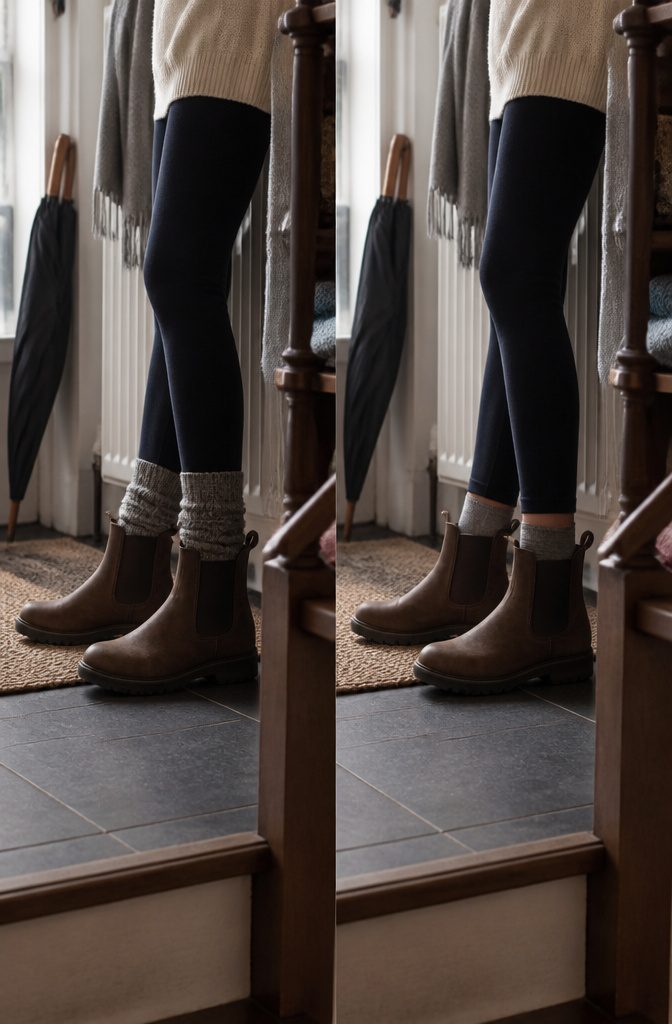
Thin knee-high or crew socks layered under leggings solve the warmth problem without turning your ankle into a padded tube.
Merino wool or performance blends stay warm while remaining thin enough that fitted booties still close comfortably around your ankle. Cotton blends work for everyday wear, but they add bulk faster than technical fabrics do when you need real insulation.
The trick only works if the boots have room for the extra layer. A bootie cut close to the ankle will feel tight the moment you add a sock under the legging, and the fabric bunches visibly at the shaft.
Roomier ankle boots let you stack thin layers without creating a lumpy line or making the boot feel a size too small.
Smoother, finer-knit socks also help: they compress more willingly than chunky knits, so the transition from legging to sock to boot reads as one clean line rather than three fighting textures.
4. Bridge a Cropped-Legging Gap With a Tonal Sock

7/8-length leggings stop just shy of where an ankle boot begins, and that gap at the ankle reads as accident unless you treat it like a layer.
A crew sock in the same family as the legging color (charcoal with black, oatmeal with tan) fills the visible stripe and looks like you meant to show it.
The sock becomes a bridge between two pieces instead of exposed skin that shortens the leg line.
Match value rather than exact shade: a medium-gray legging works with a slightly darker sock as long as both sit in the neutral zone.
The tonal approach keeps the eye moving down the leg without a hard contrast that chops the line in half.
Save high-contrast or patterned socks for when the gap is narrow or the boot shaft is tall enough to hide most of the sock.
5. Use Sock Color and Pattern to Finish the Outfit
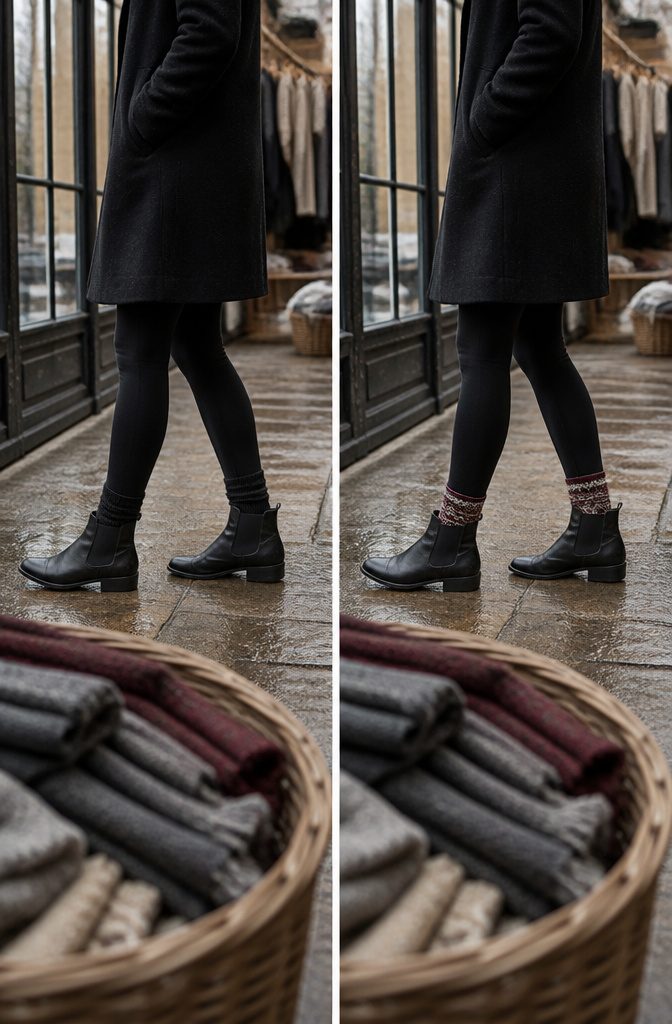
Match your socks to your leggings or boots when you want a continuous line from waist to floor.
Black leggings, black socks, black ankle boots eliminates all the breaks and looks polished even under a sweatshirt. The same works with tan or gray when your boots are a neutral shade.
For a more styled finish without adding pattern, repeat the sock color somewhere else in the outfit.
An oatmeal sock with tan boots reads as more deliberate when that tone shows up again in your sweater or coat. The repetition makes it look chosen rather than incidental.
Contrast and pattern add personality, but keep them controlled. If your boots are plain, a small pattern in the sock works.
If your boots are already a statement, let the sock stay quiet. A patterned sock with patterned boots or loud leggings reads as chaotic rather than styled, so limit the outfit to one statement element when you show contrast.
Sock Height and Where It Lands
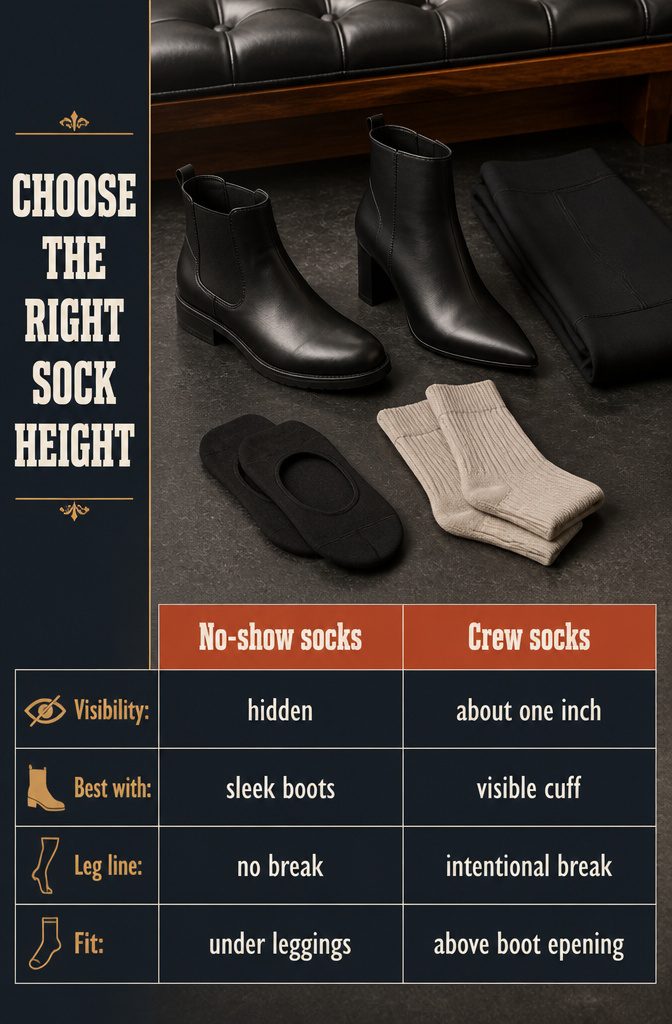
No-show socks disappear under full-length leggings and work best when you want zero visible break between boot and leg.
They keep the boot comfortable without adding a line at the ankle, and they suit heeled or sleek ankle boots where a visible sock would interrupt the shape.
Crew socks are the preferred option when you want the sock to show. They sit high enough to create a clean cuff above the boot opening and stay in place without constant adjustment.
A ribbed crew sock in a neutral shade shows about an inch of fabric and reads as intentional rather than accidental.
Ankle socks are the riskiest height because they often land exactly where the boot shaft ends, creating a stacked edge that looks unplanned.
If your leggings are truly full-length and your boots are low-cut, ankle socks may stay hidden, but if you see bunching at the opening, switch to no-show or crew.
Thin knee-high socks work under leggings for warmth without adding bulk at the ankle. Choose a smooth, fine-knit pair so the extra layer does not thicken the transition point where legging meets boot.
Material and Bulk at the Ankle
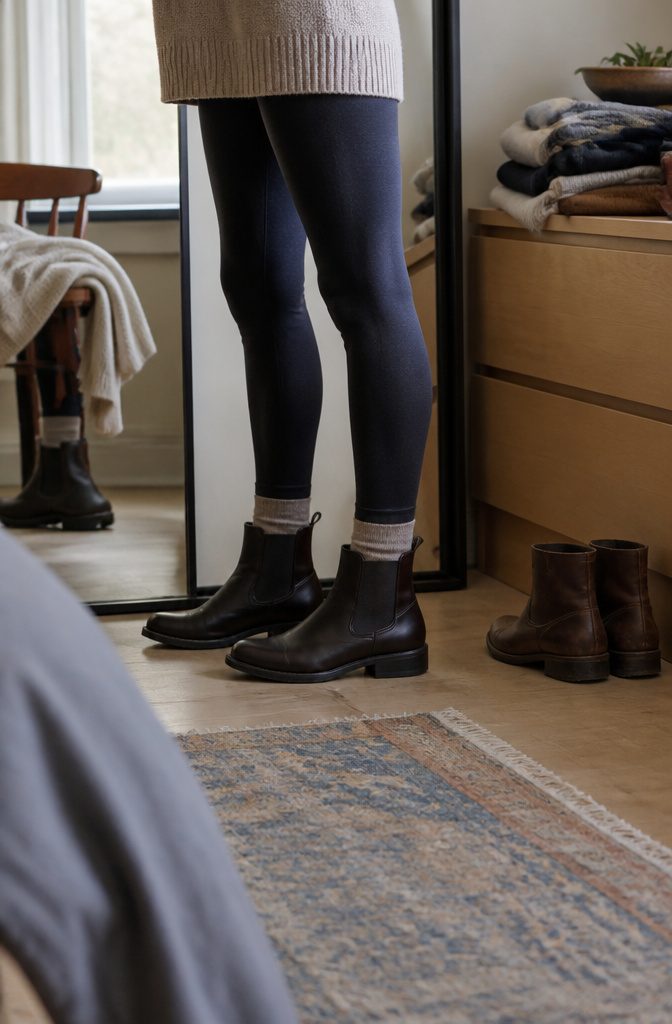
The fabric you choose affects how the boots settle and how your ankle reads from a few feet away. Cotton blends breathe well enough for most wear and sit comfortably inside casual boots without fuss.
When the temperature drops but you still want a clean line, merino wool or a performance blend keeps you warm without the thickness that turns a streamlined boot into a tight squeeze.
Finer-knit socks, with a smoother surface and tighter weave, look more polished and disappear better under tailored boots.
Bulky socks turn fitted booties into a problem: they compress around your ankle, the fabric bunches where the shaft meets the sock, and you end up with lumps that read through fitted legs or show as wrinkles above the boot line.
If your boots rub or blister regularly, the issue often sits at the seam or the heel pocket, not the boot itself.
A sock with cleaner construction and better elastic hold can make the same pair of boots wearable all day.
Boot Shape Changes the Sock Choice
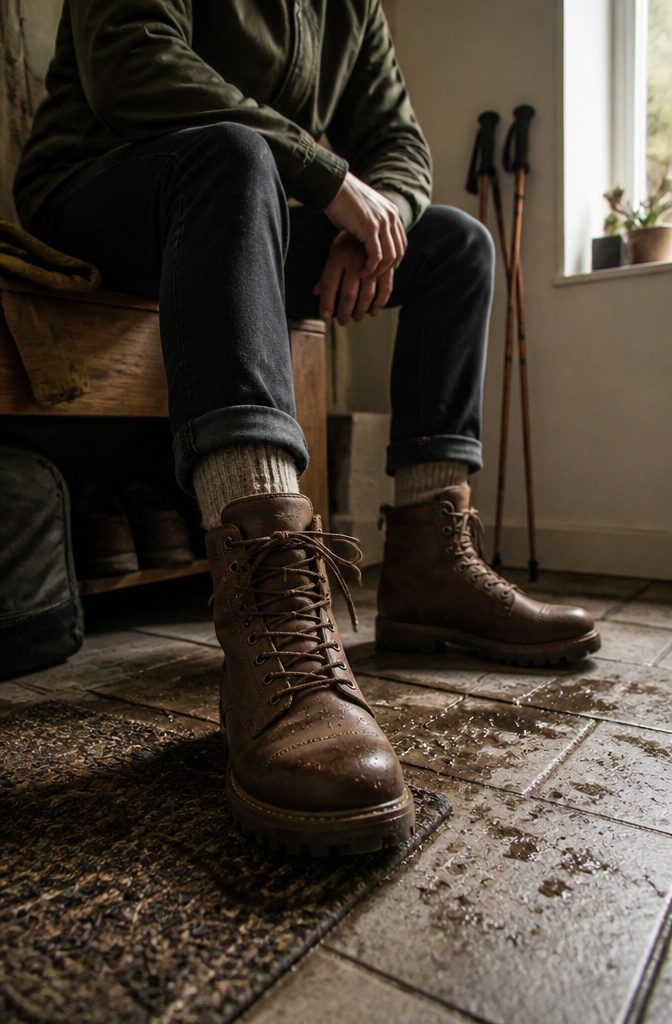
Combat boots and lined hikers leave room for thick wool blends or ribbed cuffs; fitted Chelsea boots and pointed-toe booties do not.
Match sock bulk to boot volume or the fabric bunches at the ankle and the boot pinches across the top of your foot.
Roomier lace-up styles handle cozy layering without looking cramped. If the boot has a padded collar or sits loose around the ankle, a chunky knit sock disappears inside and adds warmth you actually feel.
Hiking-inspired ankle boots work the same way: enough room in the shaft that a thicker sock reads as intentional, not forced.
Sleek Chelsea boots and heeled dress booties need thin, smooth socks or fine-knit no-shows.
Anything with texture shows through fitted leather, and anything with bulk makes the boot fit tighter than it should. The polished silhouette depends on the transition staying flat.
Common Problems and How to Avoid Them
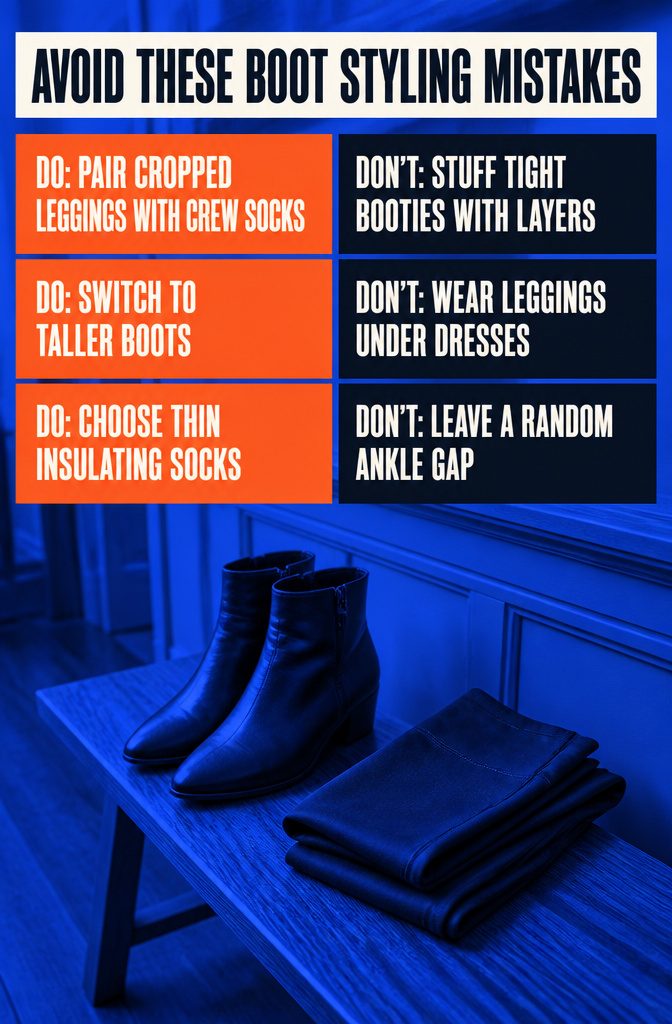
A few combinations reliably undermine an otherwise solid outfit.
- Random ankle gap between leggings and boots. Cropped leggings that stop mid-calf with ankle boots create a chopped-up line, especially if the sock edge sits right at the boot opening. If your leggings are cropped, commit to visible crew socks or switch to taller boots.
- Bulky "stuffed boot" ankle from too many layers. Thick socks plus tight booties plus bunched leggings makes for discomfort and a messy silhouette. For warmth, choose thinner insulating socks or wear thicker socks with boots that have more room in the shaft.
- Layering leggings under dresses like tights. Leggings create extra bulk at the waist and ankle when layered under dresses. True tights look smoother and feel more intentional for dress-and-boot outfits in cold weather.
Testing Comfort and Fit
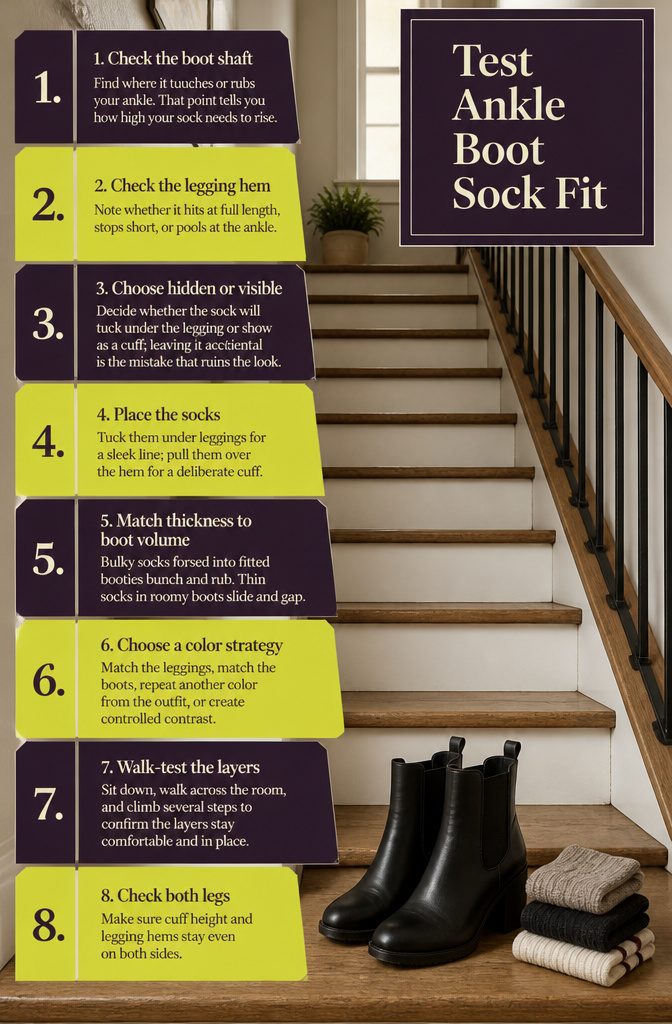
- Check the boot shaft. Find where it touches or rubs your ankle. That point tells you how high your sock needs to rise.
- Check the legging hem. Note whether it hits at full length, stops short, or pools at the ankle.
- Choose hidden or visible. Decide whether the sock will tuck under the legging or show as a cuff; leaving it accidental is the mistake that ruins the look.
- Place the socks. Tuck them under leggings for a sleek line; pull them over the hem for a deliberate cuff.
- Match thickness to boot volume. Bulky socks forced into fitted booties bunch and rub. Thin socks in roomy boots slide and gap.
- Choose a color strategy. Match the leggings, match the boots, repeat another color from the outfit, or create controlled contrast.
- Walk-test the layers. Sit down, walk across the room, and climb several steps to confirm the layers stay comfortable and in place.
- Check both legs. Make sure cuff height and legging hems stay even on both sides.
Frequently Asked Questions
What is the best way to wear socks with ankle boots and leggings?
Use thin no-show or crew socks hidden under full-length leggings for a sleek line, pull crew socks over the legging hem to show 1–2 inches of deliberate cuff, or layer thin knee-high socks under leggings for warmth without ankle bulk.
Avoid bunching fabric at the boot opening, which breaks up the silhouette and looks accidental rather than intentional.
Should socks be hidden or visible with ankle boots?
No-show socks stay hidden for a polished, unbroken leg line with heeled or sleek booties, while crew socks pulled over leggings create a visible 1–2 inch cuff that works with combat or chunky lace-up boots.
Choose based on boot style: fitted dress booties need hidden socks, roomier lug-sole boots handle visible layering without looking cluttered.
What are the key differences between crew socks and boot socks?
Crew socks sit higher on the calf and work over legging hems to create a deliberate visible cuff, while boot socks (or no-show liner socks) stay below the ankle bone and disappear inside the boot for a hidden finish.
Crew socks suit chunky or lace-up boots where the cuff adds intentional layering; no-show socks suit sleek, fitted booties where any visible fabric interrupts the line.
Can you wear thick socks with ankle boots?
Only if the boots have room in the shaft.
Thick wool or chunky knit socks work with combat boots, lined hikers, or loose lace-up styles that leave space for the extra bulk, but forcing them into fitted Chelsea boots or pointed-toe booties creates bunching at the ankle and makes the boot pinch across the top of your foot.