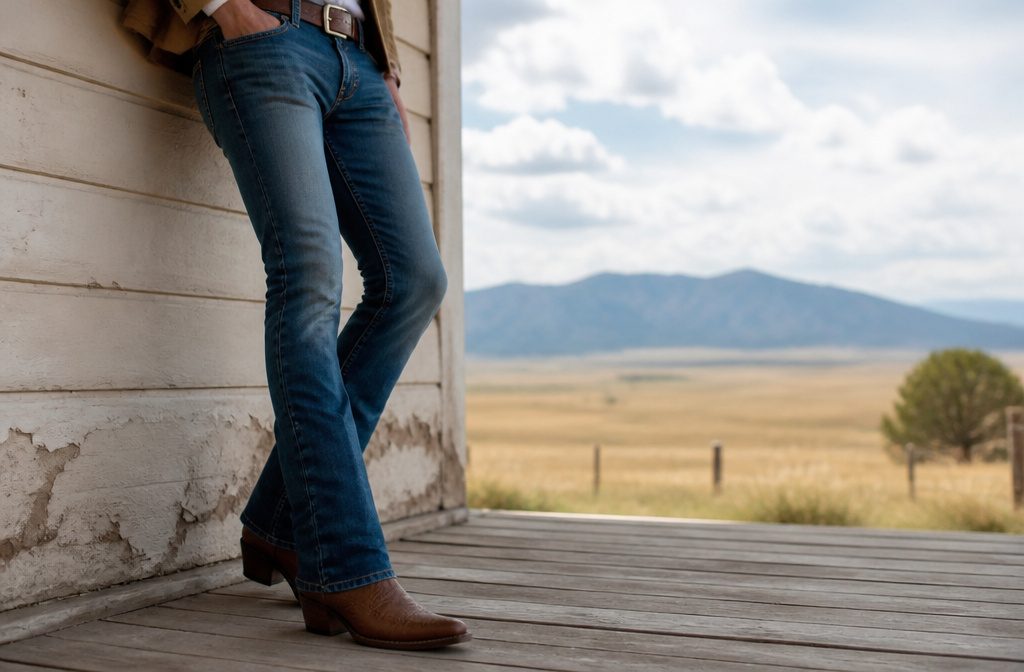
Pairing western boots with jeans means choosing the right denim cut for the boot shaft: bootcut and flare clear the leather without bunching, while skinny fits tuck inside to show stitching and tooling.
Most outfits fail when the jean hem catches mid-shaft or pools at the ankle, breaking the line from waist to floor.
This guide covers 12 styling combinations, from graphic tees to blazers, and explains how boot height, leather type and hem length determine whether the pairing reads deliberate or disconnected.
1. Casual Denim and Graphic Tee
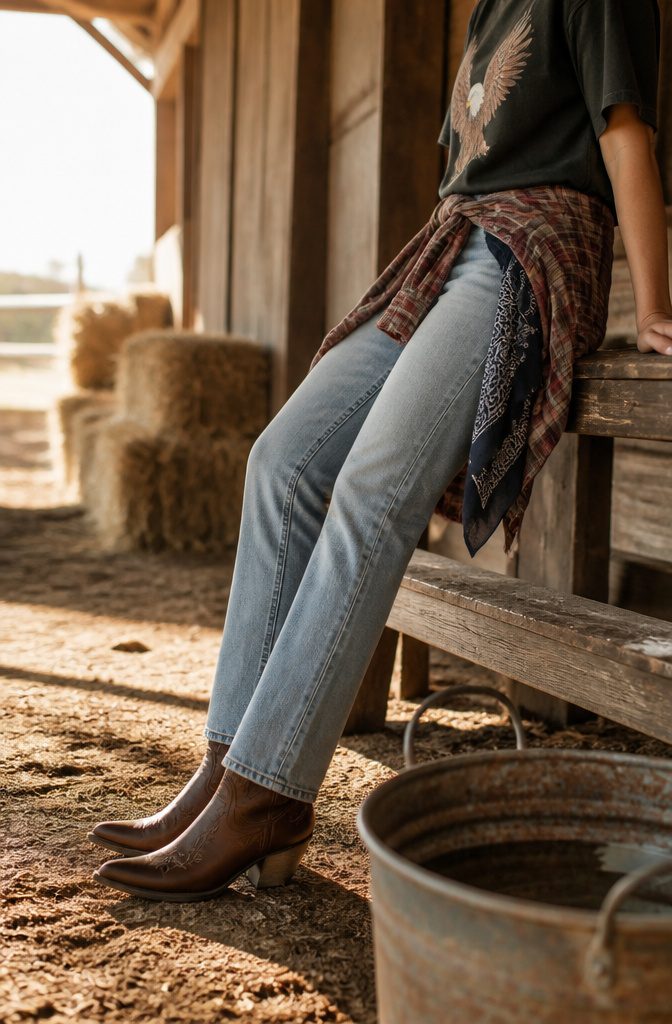
A graphic tee, straight-leg jeans and cowboy boots land you at the most wearable end of western styling.
Pointed-toe boots keep the silhouette cleaner than round toes, and straight-leg denim balances the boot shaft without bunching at the ankle or swallowing the leather. Darker washes read slightly more finished; lighter denim leans into the relaxed intent.
Distressed jeans fit here too, and throwing a flannel over the tee adds a layer you can tie at the waist or leave open.
A bandana or a statement belt pulls the pieces into one thought instead of three separate ones. The graphic tee itself does some work: it names the casualness outright, so the boots register as deliberate rather than costume.
2. Western-Chic Blouse Outfit
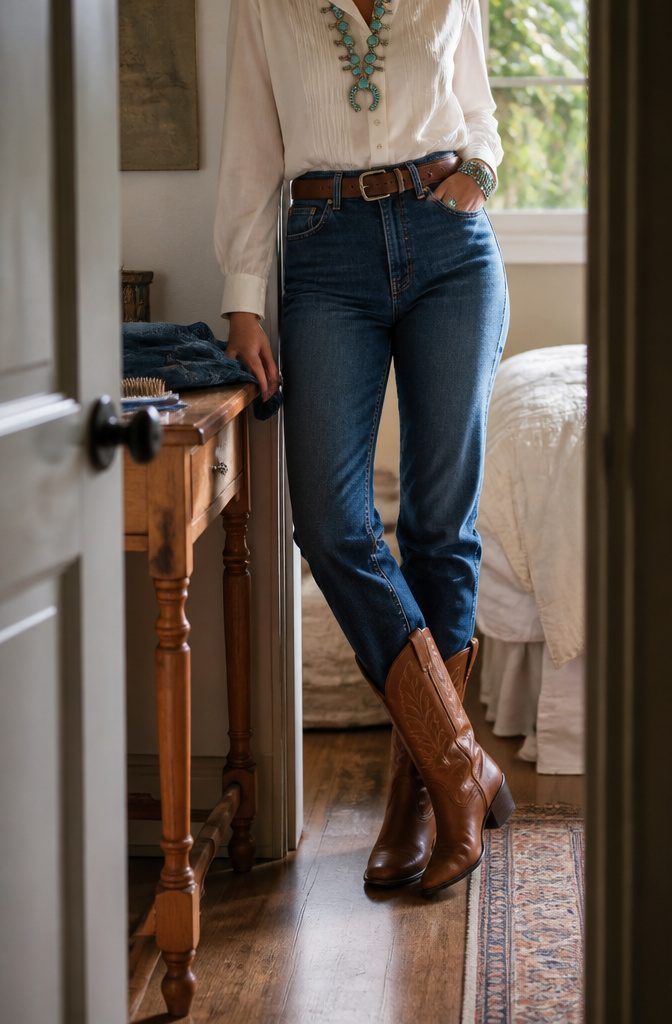
High-waist jeans tucked into western boots give you clean lines and a polished silhouette that reads more pulled-together than most casual denim looks.
Pair them with a blouse rather than a tee (something in cotton or silk with a collar or button placket) and tuck it all the way in so the waistband stays visible.
The Anthem 9" Reba works well here because the shorter shaft keeps the focus on the waist and hips instead of cutting your leg in half.
Add turquoise jewelry to finish the outfit: a squash blossom necklace, cuff bracelet, or dangly earrings will do it.
The stone picks up the western theme without leaning into costume territory, and the color contrast against denim and leather keeps the whole thing from reading too neutral.
3. Ranch-Ready Outfit
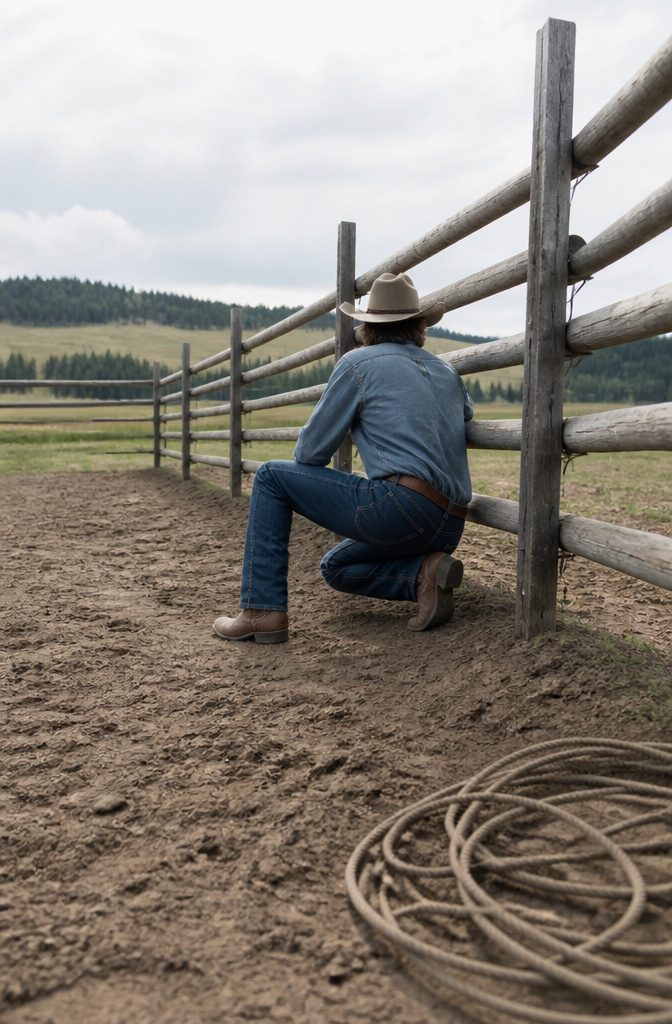
Relaxed bootcut jeans keep the line clean when you need to move: they sit low enough that the boot shaft shows but won’t ride up when you’re crouched by a fence or climbing into a truck.
Pair them with a utility shirt in canvas or chambray and tuck it loosely so the leather belt does the work of holding the silhouette together.
The Annie Up 13" Western boot has the height to balance bootcut denim without disappearing under the hem, and the shaft stays put through a full day outdoors.
This is the outfit that works when function comes before anything else: no extra layers to snag, nothing tight enough to restrict movement, and boots built to take whatever the ground throws at them.
4. Dressy Look with a Dress
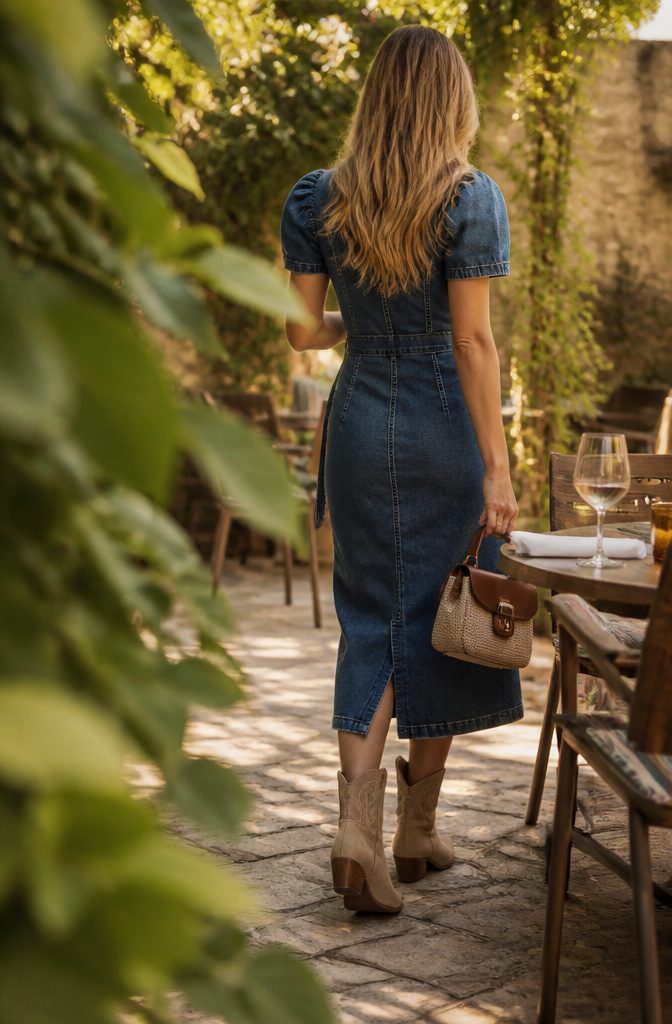
A denim midi dress with a defined waist pulls cowboy boots into dressier territory, for brunch, garden parties, a casual dinner where jeans would fall short.
Look for details like puff sleeves or a tie-front that lean into the Western feel rather than fighting it.
Ankle cowboy boots in neutral tones keep the line clean and let the dress do the work; anything taller competes with the hem.
A wide-brim hat or a vintage-inspired handbag builds character without crowding the outfit. Jewelry should stay subtle: a single piece that complements the neckline, not a stack that pulls focus.
The fitted silhouette of the dress balances the structure of the boot; anything too loose reads casual again, and the pairing loses its effect.
5. Layered Look
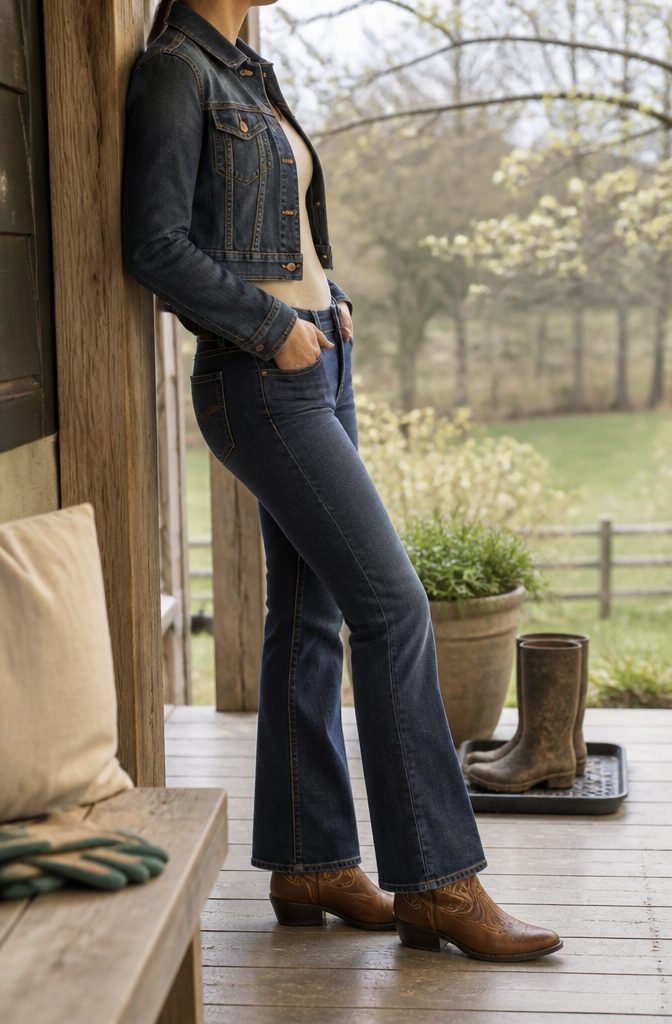
A cropped denim jacket over a fitted tank brings dimension without bulk, especially when the jeans sit at bootcut or flare. The jacket hem should land above the waistband so the silhouette stays clean from shoulder to boot shaft.
A long cardigan works the same way if it falls past the hip but stays open (buttoning it closed adds weight where you want flow).
Brown or black leather boots handle most jacket washes, but a jacket with contrast stitching or hardware picks up detail the boots already carry.
In spring or fall, the tank underneath keeps you comfortable through temperature swings, and swapping it for a fitted tee gives you winter layering without adding a third piece.
The flare keeps the boot visible rather than fighting for space under a straight leg.
6. Vintage-Inspired Outfit
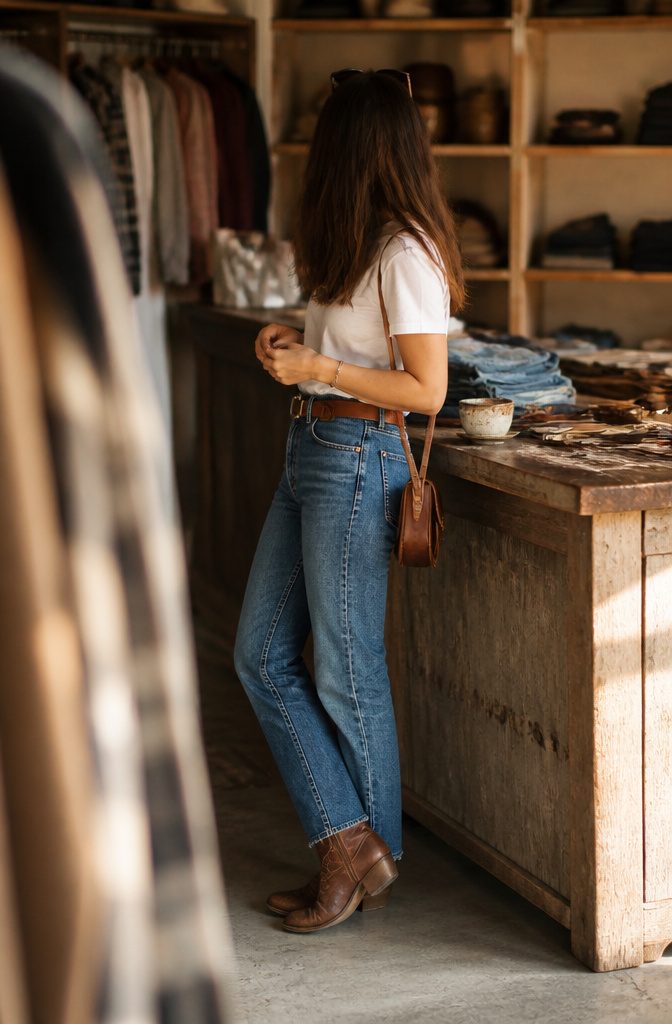
High-waisted jeans anchor the vintage look best when paired with older western boots, the kind with worn leather and patina you can’t fake.
The high rise keeps the proportions right and lets the boot shaft show without a gap. Skinny or wide-leg cuts both work; the waist should sit at or above your natural waist.
A plain white tee or a secondhand western shirt keeps attention on the boots. Tucking the top sharpens the line and shows off a leather belt, which you want if the boots have tooling or stitching worth noticing.
Vintage accessories (a crossbody bag, retro sunglasses, a turquoise ring) finish it without competing. The outfit reads as deliberate rather than costumed when the boots look like they have history and everything else stays simple.
7. Cold-Weather Outfit
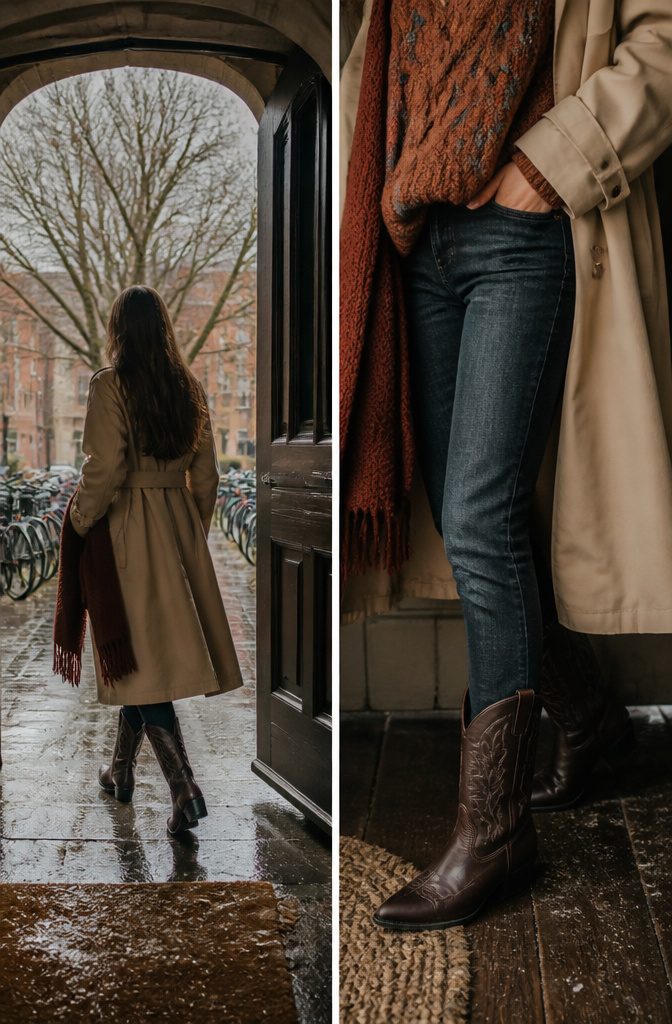
Skinny jeans tucked into cowboy boots anchor a cold-weather look that layers warmth without losing shape.
Add a chunky knit sweater (cable or ribbed works equally well) and the proportions stay balanced: the slim leg keeps the sweater from reading as shapeless, and the boots ground the bulk up top.
A long trench coat over the whole setup adds structure and a bit of formality, which matters if you’re heading somewhere past errands.
The coat should hit mid-calf or longer so it doesn’t cut the line awkwardly at the boot shaft. Stick to neutral tones in the coat and boots so the sweater can carry pattern or color without the outfit fighting itself.
This combination works from November through March in most of the U.S., and swapping the trench for a wool overcoat keeps the same silhouette if temperatures drop further.
8. Warm-Weather Outfit
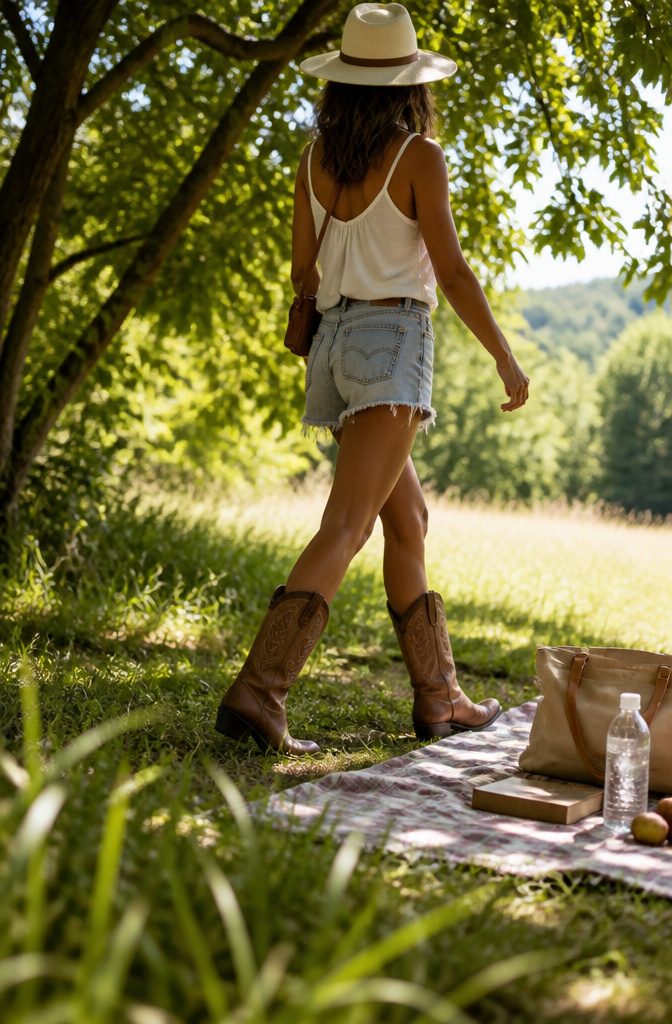
Cutoff denim shorts swap in for jeans when the temperature climbs, and the pairing still reads Western as long as the boots stay front and center.
A breezy tank top in cotton or linen keeps things light, and the shorts let the boot shaft show completely. The hem should hit mid-thigh or just above, long enough to balance the boot height without covering it.
Lighter washes work better here than dark indigo; they reflect heat and suit the casual tone.
A wide-brim hat adds sun protection without weighing down the look, and a crossbody bag keeps your hands free. The outfit breathes, the boots ground it, and nothing has to be tucked or layered.
9. Casual Outdoor Outfit

Relaxed-fit jeans with cowboy boots and a lightweight, flowy top handle casual outdoor settings without overthinking it.
The relaxed cut gives you room to move, useful if the day involves anything beyond standing still, and the flowy top keeps the silhouette from going too baggy.
A cotton voile or linen blend works when it’s warm; chambray or a loose knit when it’s not.
This pairing works for a park day, a farmers market, or anything where comfort matters more than dressing up. The boots ground the outfit enough that the flowy top reads as intentional rather than sloppy.
Keep the wash medium to dark if the boots are well-worn; a clean dark rinse next to scuffed leather looks more thought-through than light denim does.
10. Semi-Formal Outfit
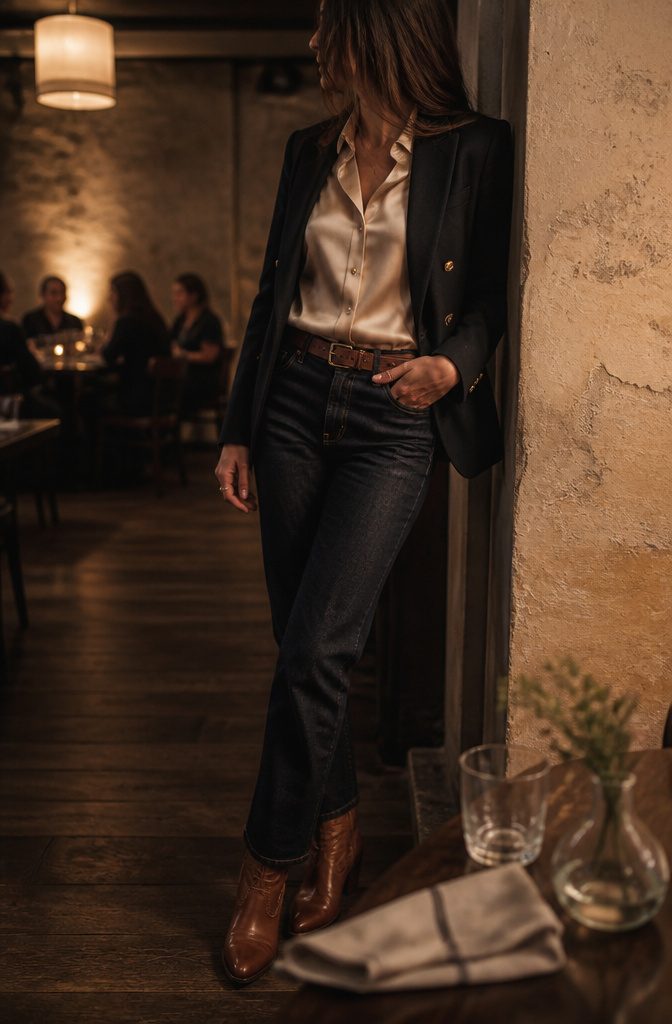
Tailored jeans are the move here. A dark wash without distressing reads cleaner with a blazer, and the straight or bootcut leg balances the boot shaft better than a skinny fit would.
Pair them with a dressy blouse (silk or satin fabric instead of cotton) and add a structured blazer to pull it together.
The boots stay visible but read as intentional rather than casual when the rest of the outfit is polished.
This works for semi-formal events where full dress code isn’t required but jeans alone would feel too relaxed. The blazer does most of the lifting: it shifts the whole outfit into dressier territory without needing to swap the boots.
Keep accessories minimal (a leather belt that matches the boot tone, small jewelry) so the focus stays on the silhouette rather than competing details.
11. Texture-Mixing Outfit
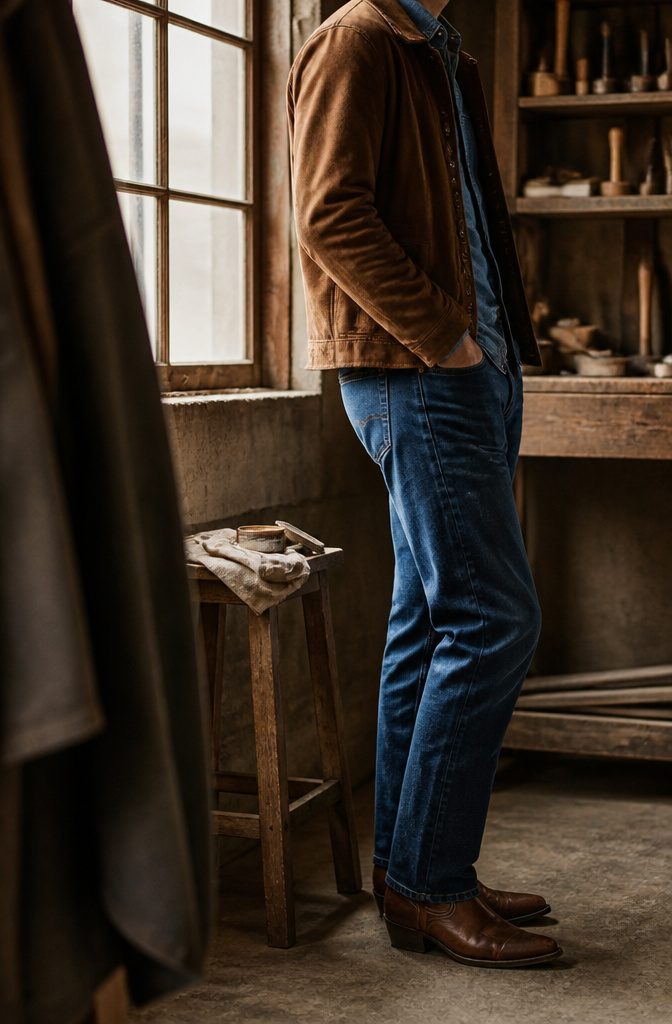
A suede jacket layered over denim creates the kind of material contrast that makes an outfit feel considered rather than thrown together.
The denim shirt underneath keeps the look grounded, while the suede adds weight and a different surface that catches light differently than cotton twill.
Pair this with straight-leg jeans and leather western boots to carry the texture play through the whole outfit without introducing too many competing ideas.
If suede feels like too much commitment, try a chunky knit cardigan instead. The bulk of the knit sits differently against denim than woven fabric does, and the softness plays well with the stiffness of good boot leather.
Keep the color palette narrow; three materials are enough without adding four colors, and the outfit holds together without looking like you raided three different decades.
12. Pattern-Mixing Outfit
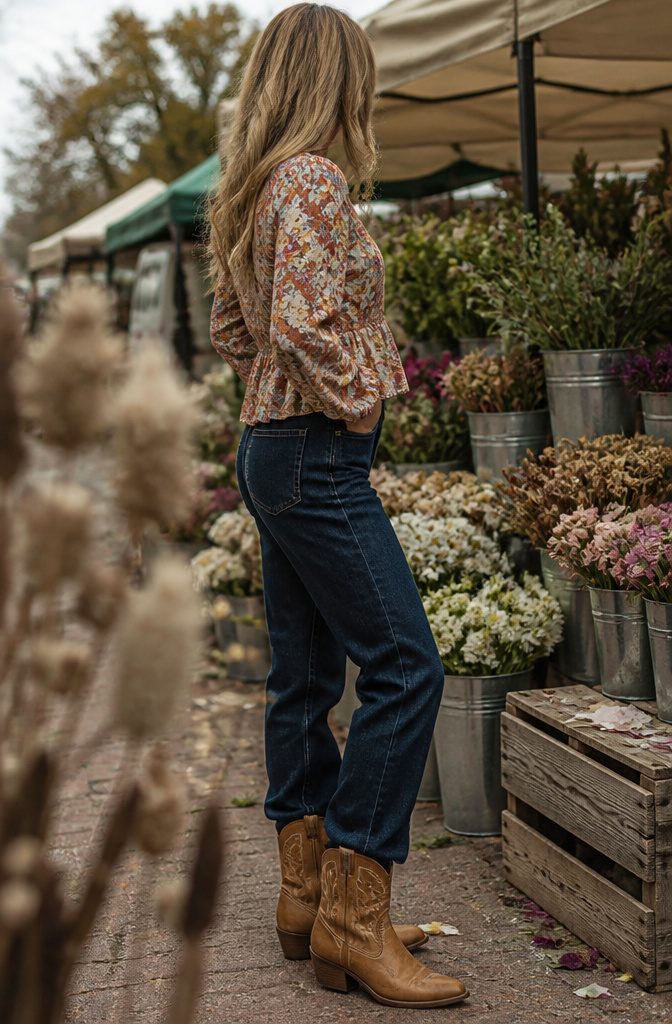
A patterned top pulls attention upward and gives the outfit a reason to be looked at twice, but only if the colors already talk to each other.
Keep the palette coherent: if the boots are tan and the jeans dark indigo, a floral blouse in rust, cream and soft blue will read as intentional; one in hot pink and lime will look like three separate outfits worn at once.
Floral prints work because they carry enough detail to balance the tooling or stitching on the boot shaft without competing for the same visual weight.
Stripes run the same way, especially vertical ones that echo the long line the boot already creates from ankle to hem.
Subtle animal prints (think leopard in muted browns rather than high-contrast black and white) add texture without turning the jeans into an afterthought.
Mixing texture with the pattern helps.
A printed cotton blouse over denim, with suede or leather boots, gives the outfit three surfaces to work with instead of fighting for dominance in one. The pattern does its job at eye level; the boots finish the thought below.
How Denim Cuts Work with Boot Shafts
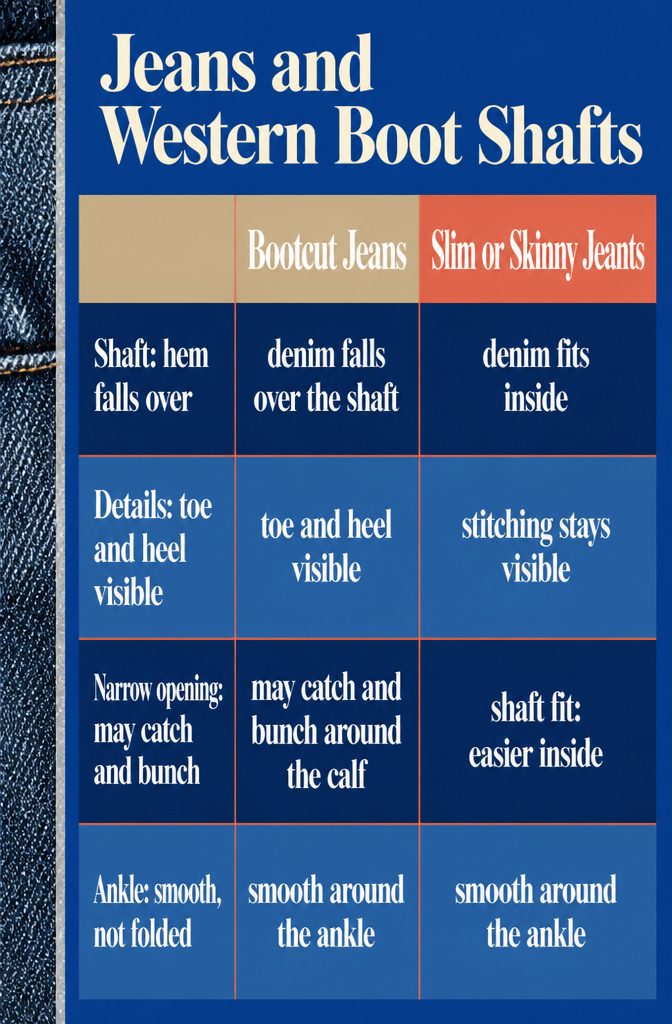
Bootcut jeans have a slight flare below the knee that lets the hem fall over the shaft without catching, leaving the toe and heel visible.
Straight-leg jeans can work the same way when the leg opening clears the shaft comfortably, but a narrow opening may catch on the leather and bunch around the calf.
Slim and skinny jeans fit more easily inside the shaft, keeping stitched patterns and leather details in view.
Denim tucked into boots should lie smooth around the ankle rather than gather into a thick fold that presses against the leg. When jeans go over boots, the hem should clear the ground instead of dragging beneath the heel.
The right inseam depends on the heel height, so jeans that fit well with a low walking heel may sit noticeably higher with a taller fashion heel.
Boot Materials and What They Mean
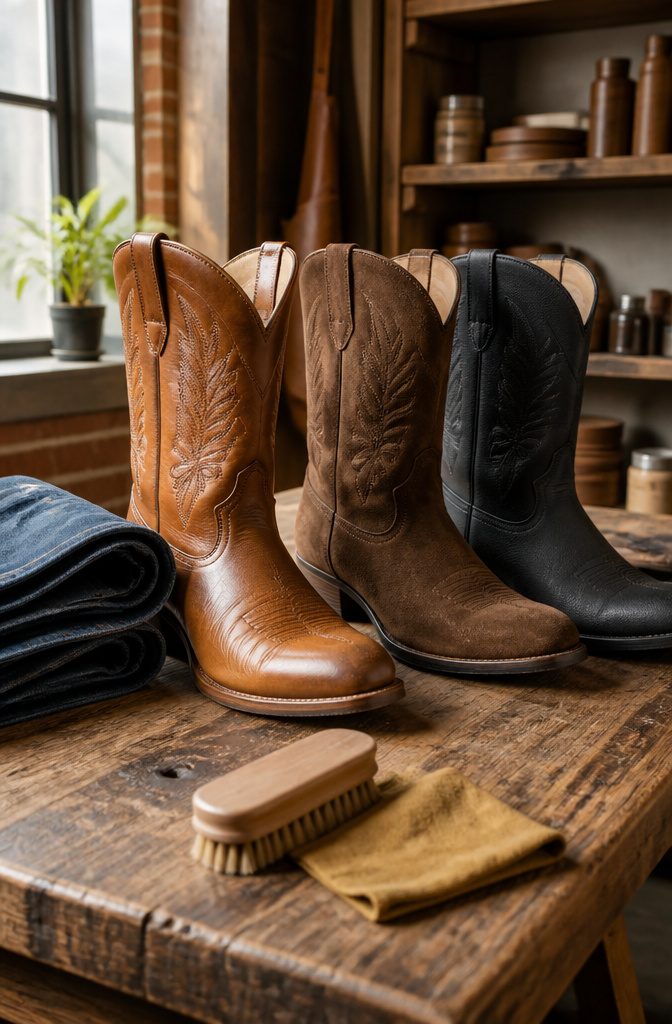
Full-grain leather retains the natural grain and surface marks from the hide, and with regular wear and conditioning it develops a patina that changes the color and finish over time.
One thing worth knowing: dark denim can transfer dye onto lighter leather, especially when new or if the boot gets damp.
If that matters, break in dark jeans a few washes before pairing them with tan or natural leather boots, or start with a darker boot that won’t show the color pickup.
Suede has a softer, napped surface that reads more casual than smooth leather and pairs well with most denim washes, but it needs different care: water and mud can leave visible marks that brushing alone may not lift.
Synthetic materials vary widely depending on how they’re made. Some offer decent flexibility and breathability, others feel stiff or trap heat.
Synthetics tend to cost less and require less upkeep than leather, but they usually don’t soften or mold to the foot the same way, and they won’t develop that worn-in character over time.
Choosing Boots for the Activity
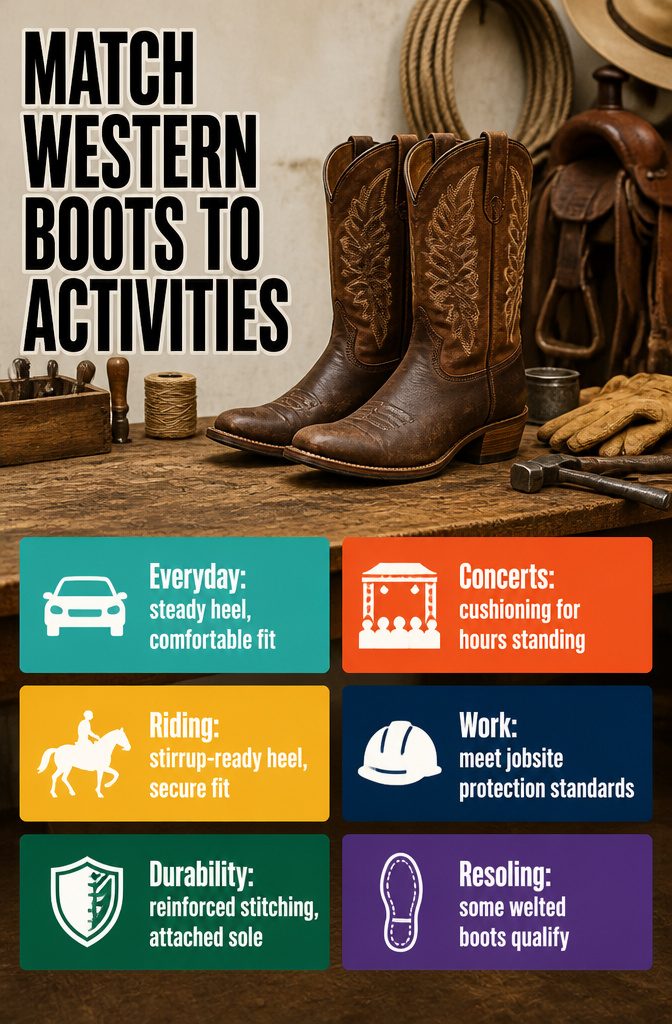
The occasion matters more than the look. Concert boots need toe room and cushioning for hours of standing; a striking silhouette does nothing for your feet at hour three.
Riding boots require a heel and sole suited to the stirrup, plus a secure fit; a western shape alone does not make a boot safe in the saddle.
Jobsite boots must meet workplace protection standards rather than rely on leather that looks sturdy.
Consider these function-first details:
- Everyday wear: A comfortable fit and a steady heel that works from parking lot to restaurant floor.
- Concerts or long standing events: Prioritize underfoot cushioning over appearance.
- Riding: Heel and sole designed for stirrups, with a snug fit that won’t slip.
- Work environments: Boots that meet the specific protection requirements of your jobsite.
Construction matters for durability. Reinforced stitching and a well-attached sole hold up better, and some welted boots can be resoled by a qualified repair shop.
Frequently Asked Questions
How do you style jeans and cowboy boots together?
Start with straight-leg or bootcut jeans that balance the boot shaft without bunching at the ankle. Pair with anything from a graphic tee for casual wear to a blazer and dressy blouse for semi-formal events.
Tuck high-waist jeans into boots for a polished silhouette, or let bootcut denim fall over the shaft to show just the toe and heel.
What type of jeans look best with cowboy boots?
Bootcut and straight-leg jeans work best over boots, with a slight flare or leg opening that clears the shaft without catching.
Skinny jeans tuck easily inside boots to show off stitched details and leather patterns. High-waisted cuts keep proportions right and let the boot shaft show without a gap at the waistline.
Can you wear cowboy boots with skinny jeans?
Yes, skinny jeans tuck smoothly inside cowboy boots and keep stitched patterns visible.
The slim fit should lie flat around the ankle rather than gathering into a thick fold that presses against your leg. This pairing works well in cold weather under a chunky knit sweater or trench coat.
How should jeans fit over cowboy boots?
The hem should clear the ground instead of dragging beneath the heel, and the leg opening should fall over the shaft without catching on the leather.
Bootcut jeans have a slight flare below the knee that handles this naturally. The right inseam depends on heel height, so jeans that fit with a low walking heel may sit higher with a taller fashion heel.
What color boots go with blue jeans?
Brown and black leather boots handle most denim washes, while tan or natural leather pairs well with medium to dark washes.
Dark denim can transfer dye onto lighter leather, especially when new or damp, so break in dark jeans a few washes before pairing them with light-colored boots.
Neutral boot tones let patterned or colored tops carry the outfit without competing details.