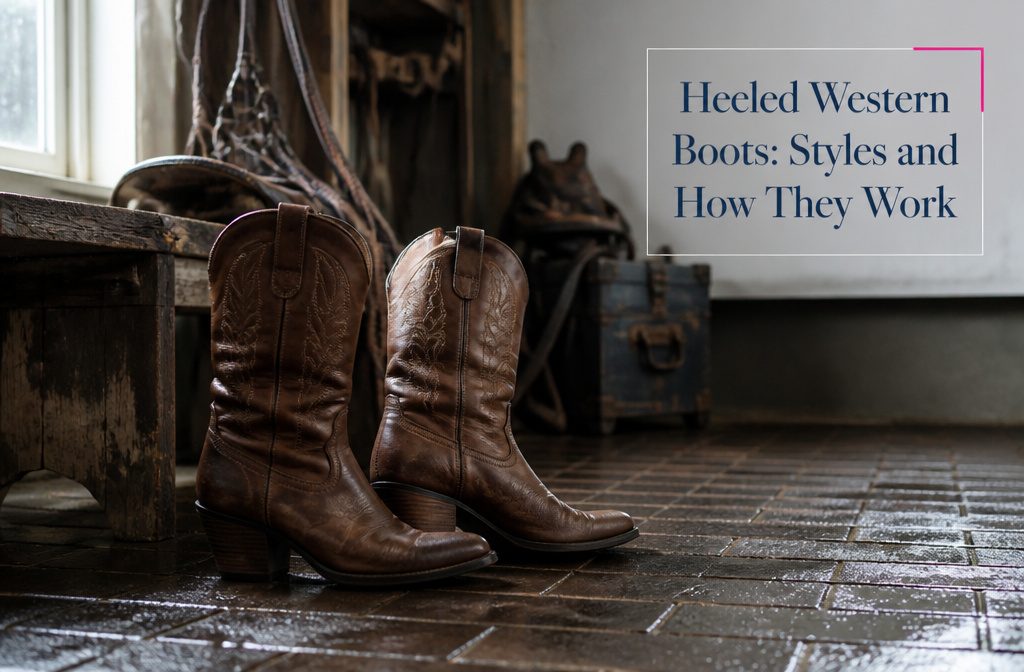
Heeled western boots are cowboy or cowgirl boots with raised heels between 1 and 4 inches, designed either for riding or for style.
The height and angle decide whether you can walk in them all day or whether they belong in the saddle.
A Fowler heel sits at 1-1/8 inches and was patented in 1883 for ranch work; a fashion heel climbs to 4 inches and trades every degree of walkability for presence.
1. Fowler Heels: The Low, Stable Traditional Choice
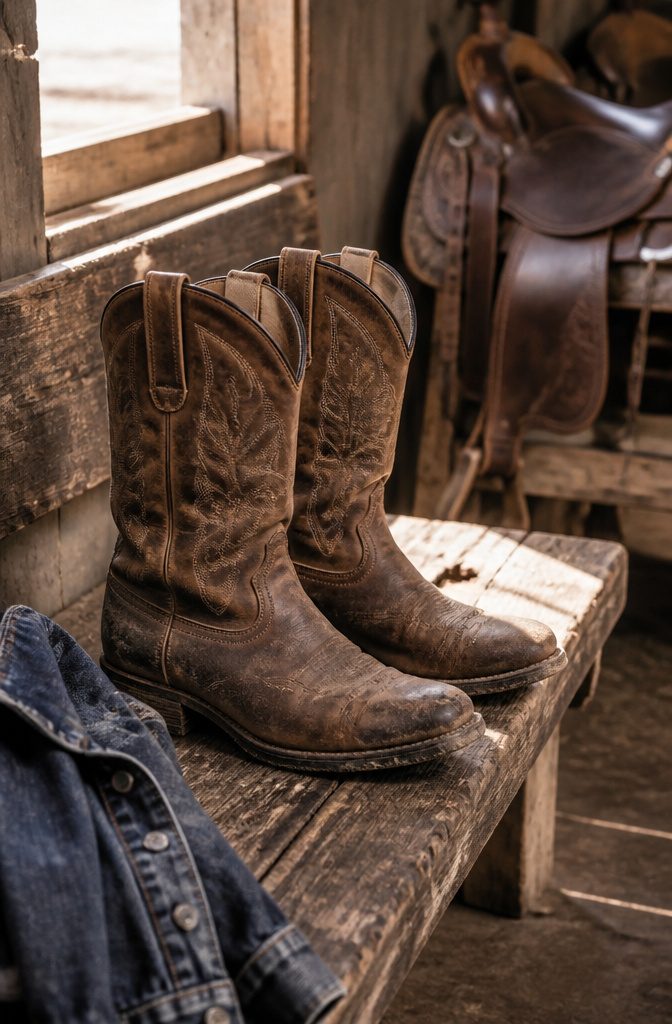
The Fowler heel sits at 1-1/8 to 1-1/4 inches, low enough that it won’t catch in a stirrup and stable enough for walking all day.
John Fowler patented the design in 1883, and it became standard ranch wear for exactly that reason: practical height, decent grip in mud, comfortable for hours on foot.
You’ll find them in two cuts. Straight Fowlers run perpendicular to the ground and give you the most stable base when you’re covering distance.
Pitched Fowlers angle back slightly at the rear of the heel, a look that turns up more often on dressier boots: the kind you’d wear to church rather than to muck stalls.
Both work with jeans or a skirt; the straight version just edges ahead if walking comfort matters more than the silhouette.
Recommended Products

[2.28" Comfortable Low Heel] Featuring a supportive low chunky heel (2.28in/5.8 cm) and almond toe, these brown knee high cowboy boots are designed for all-day comfort and provide arch support and reduce pressure—ideal for walking, riding, or daily wear

Faux leather upper with all over western embroidery
2. Roper Heels: Short and Sharp for Rodeo Work
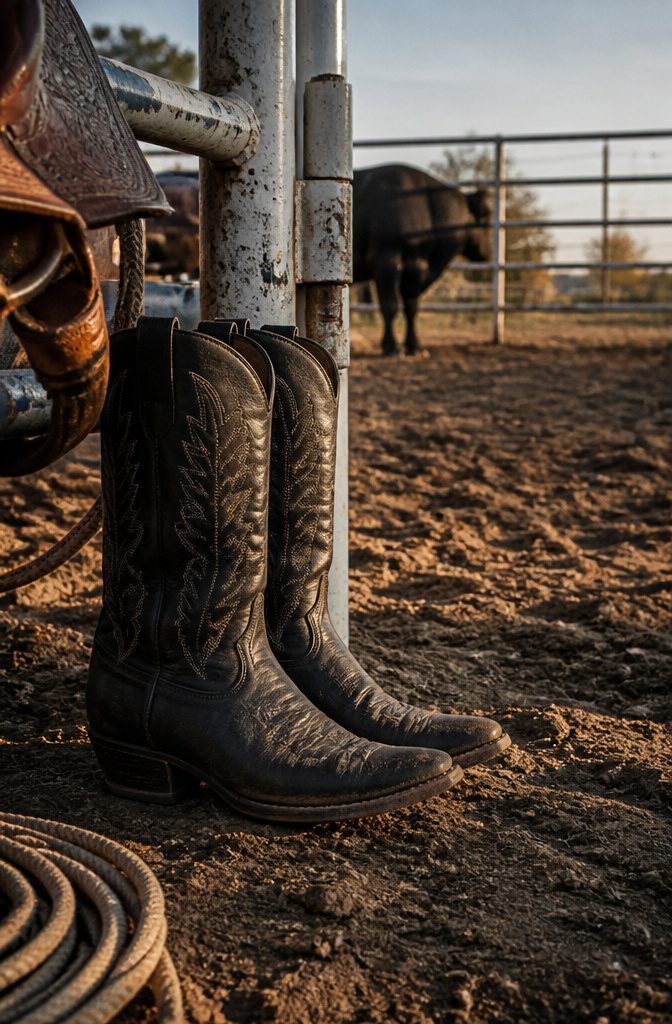
The Roper heel sits at 1 inch and angles sharply to lock into stirrups during roping events, where riders need to mount and dismount fast.
Rodeo cowboys who compete in these events rely on that grip when working around large animals at speed, and the short profile keeps the heel from catching when you bail out of the saddle in a hurry.
That low stance gives the Roper excellent stability on the ground, which matters when you’re standing next to a horse or steer that outweighs you ten times over.
The heel comes in both straight and pitched versions, though the angle is steeper than what you’ll find on a Fowler.
Riders rate it among the best heels for actual saddle work, but the same low clearance that steadies you in the arena makes it one of the less dramatic silhouettes if you’re after height.
Recommended Products
Faux leather upper with all over western embroidery

Faux leather upper with floral laser design for stylish western look

3. Walking Heels: Wide, Flat, Built for Hours on Your Feet
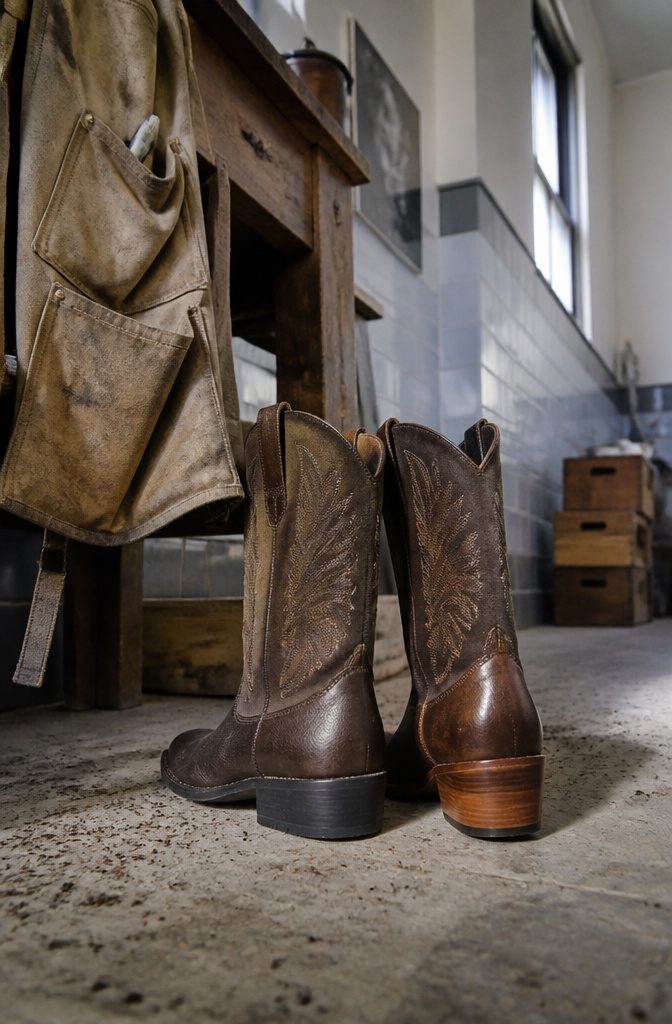
Walking heels sit at 1-3/8 inches, slightly taller than fowler or roper styles but still built for stability.
The heel is wide and flat from edge to edge, which puts more surface area on the ground and keeps your weight distributed rather than concentrated on a narrow point.
That width makes them noticeably more stable than a riding or fashion heel, especially over uneven ground or long stretches on your feet.
I’d pick these for a work boot or for anyone who wears boots most days and wants comfort without giving up the Western silhouette.
The flat profile also means your ankle sits at a gentler angle than it does in a riding heel, so your calves won’t tire as quickly during continuous wear.
Rubber versions show up more often in walking heels than in other Western styles, offering even more cushioning than the traditional wood construction.
Wood lasts longer under heavy use, but rubber absorbs more impact if you’re walking on concrete or tile all day.
Recommended Products
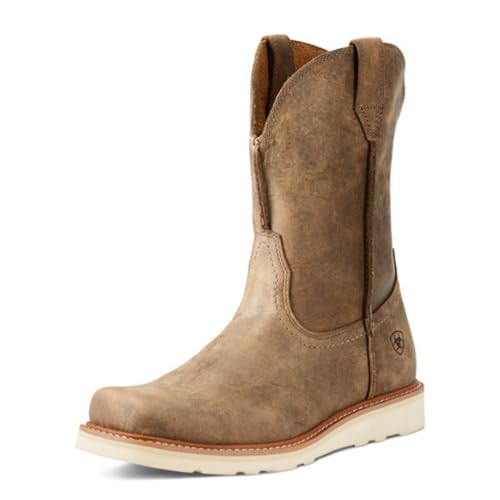
WESTERN FOOTWEAR: Featuring a blend of the classic leather upper reminiscent of the vintage western cowboy boots and a modern sole unit, these men’s boots from Ariat will be a phenomenal addition to your collection as robust and comfortable workwear.

Retro Western Detail: These cowboy boots feature a stylish square toe that gives your toes room to move, paired with exquisite embroidery that adds refined Western charm to every step.

Thoughtful Sizing & Fit: For a better fit, please check out the size chart before placing an order. We recommend to choose the large size between two sizes. If you require them to be a little loose, or you have wide feet or thick calves, please choose half or one size up
4. Cowboy Heels: The Traditional Riding Angle
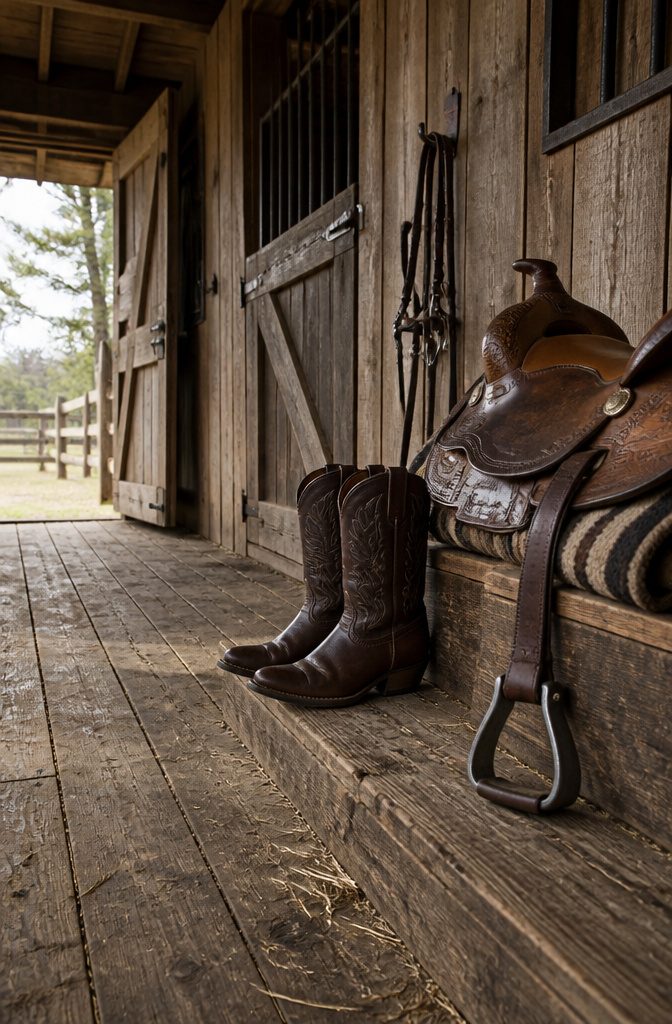
The cowboy heel sits at 1-1/2 to 1-3/8 inches with a noticeable slant, and that angle matters more than the height.
It was built for riding: the slanted design locks into a stirrup and keeps your foot from sliding through, which is why it became the standard Western work boot shape.
That same angle, though, tips your weight forward when you are standing still or walking across pavement, and after an hour or two the balls of your feet start to ache.
I still see this heel on most embellished fashion boots aimed at women, because the slant gives designers a clean surface to work with and the height reads as dressier without climbing into stiletto territory.
If you plan to spend the day on your feet rather than in the saddle, the roper or walking heel will feel better by mid-afternoon.
Recommended Products

Handcrafted Excellence: Each pair of our women's cowboy boots is meticulously handcrafted, ensuring superior quality and unique detailing.

Handcrafted Excellence: Each pair of our women's cowboy boots is meticulously handcrafted, ensuring superior quality and unique detailing.

【Elegant and Fashionable】: Dixhills brown cowboy boots for women embody timeless style, allowing you to experience the perfect fusion of western charm and modern fashion. This unique cowgirl boots features classic embroidery and sparkly rhinestone, adding charm and sophistication to every step you take, elevating your style.
5. Riding Heels: Tall and Slanted for Saddle Hours
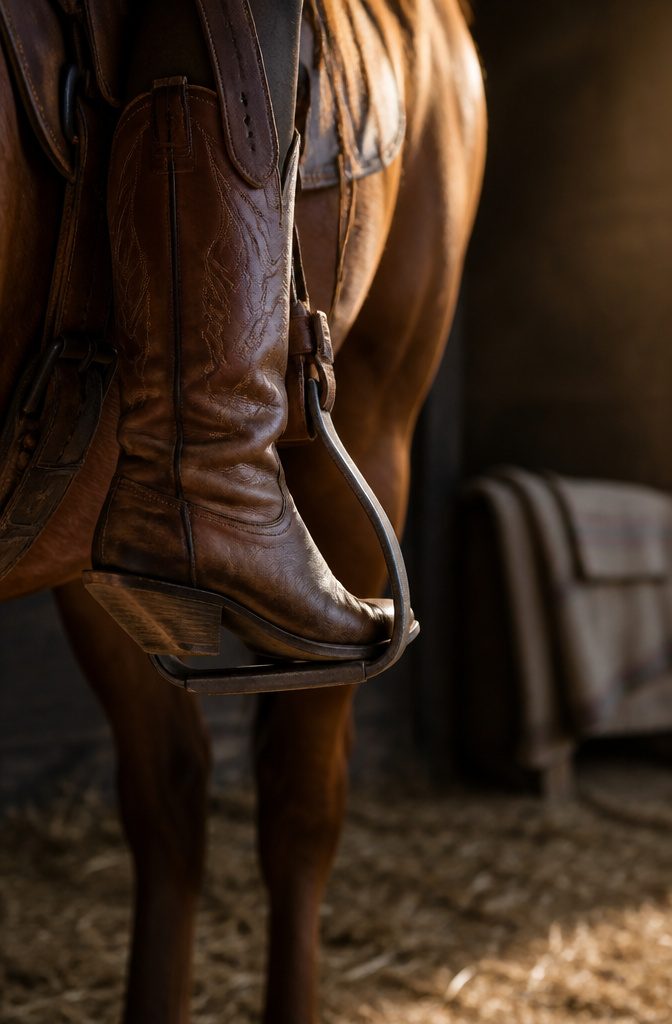
The riding heel stands 2 inches tall with a sharp backward slant, built to lock your boot into the stirrup rather than slide you across town.
That angle catches the stirrup bar and keeps your foot from shooting forward when the horse moves under you, which matters more the longer you stay mounted.
Spend hours in the saddle and the heel does its job without complaint; spend hours on pavement and you’ll feel every degree of that slant pushing your weight forward onto the ball of your foot.
The design picks function over versatility.
If you ride regularly and need a boot that won’t betray you mid-canter, the riding heel delivers exactly what it was drawn for. If your day involves more walking than posting, a flatter profile makes more sense.
6. Fashion Heels: Narrow, High, Made to Stand Out
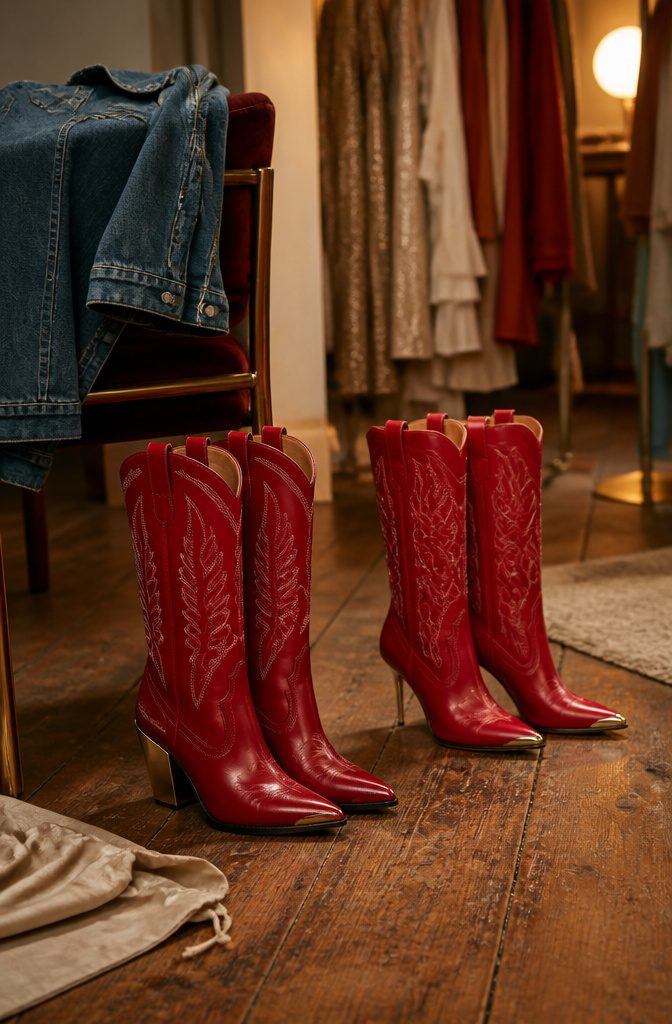
Fashion heels sit at 3-4 inches, narrow and slanted, built to make an impression rather than log miles.
The heel itself comes as a block or a slender stiletto, often in bold colors or exotic leather that announces itself from across a room.
These are the tallest heels you will find on a Western boot, nearly always paired with a cowgirl silhouette rather than a work boot cut.
Comfort takes a back seat here.
I would not choose these for walking long distances, working outdoors, or riding. They are statement boots, not utility boots.
Most pairs need breaking in before you can wear them comfortably for more than an hour or two. Plan to work the leather at home first if you are buying a pair for an event.
That said, they deliver on presence. A fashion heel adds height and confidence to denim and a t-shirt as easily as it does to a dress, and the decorative details (contrast stitching, embroidery, fringe, metallic accents) make each pair distinct.
If you want a boot that stands out and are willing to trade walkability for it, this is the heel that does that work.
Recommended Products

CLASSY APPEAL: Beat the day with these women’s work boots from Ariat’s versatile footwear collection. These fashionable women’s boots are perfectly paired with both western and work outfits.

Cowboy Boots: These cowgirl boots with classic western boots style and embroidery on shaft and foot. Womens cowboy boots features round toe, with mid chunky heel, side zipper, decorative sequins, breathable cowboy boots for women, womens cowboy boots, boots for women cowboy style, comfortable country boots for women, suede cowboy boots for women narrow calf, botas vaqueras para mujer, cowboy boots for women with heel, womens cowboy fringe boots 2024

Modern Cowgirl Boots: On the ranch means on your feet. These roper boots are designed to work as hard as you do and keep you in comfort throughout the day
How Heel Height Changes Comfort and Walkability
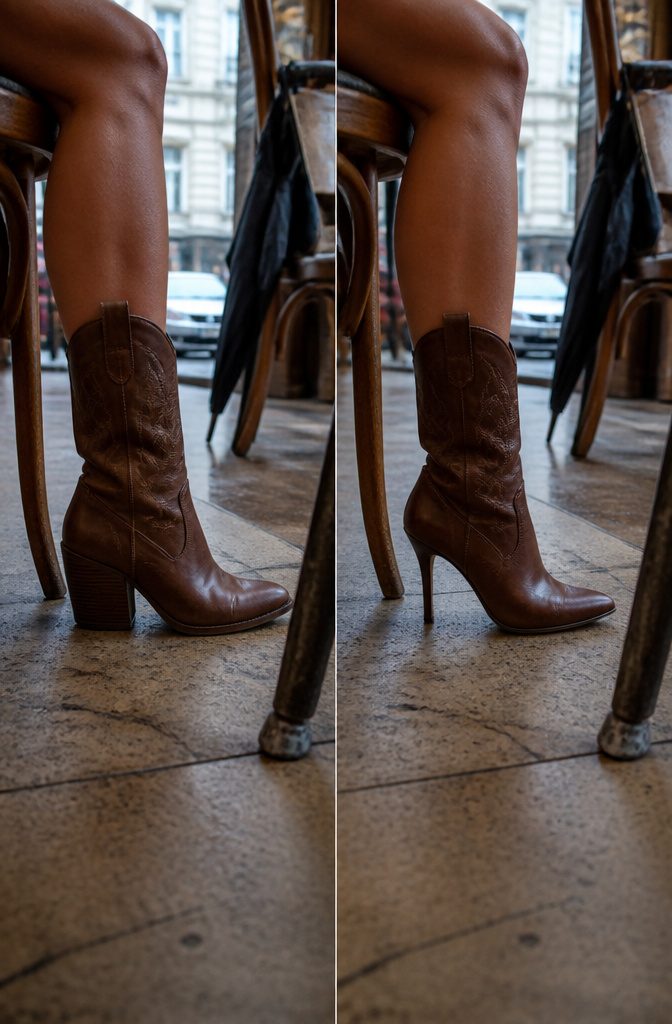
Block heels sit at the walkable end of the Western range.
A sturdy block heel between 10 and 12 cm spreads weight evenly across the base, so you can wear them through a long day without the forward pitch that comes with slimmer profiles.
That makes them the usual pick when you need boots that work for hours rather than an hour.
Taller, narrower heels give you the dramatic silhouette but ask for shorter stretches on your feet. The trade-off shows up fast: a 12 cm stiletto looks sharp for dinner but turns punishing by the third city block.
If you are choosing between the two, let the day decide: block heels for standing meetings and market runs, slim heels when most of the event happens seated.
Recommended Products

ROUND TOE: These men's cowboy boots feature a classic roper boot round toe and 1" roper heel, at home on and off the ranch, can be worn as casual boots, work boots, or dress boots


Faux hair-on-hide leather upper with leopard print
Shaft Height, Toe Shape, and the Look You Get
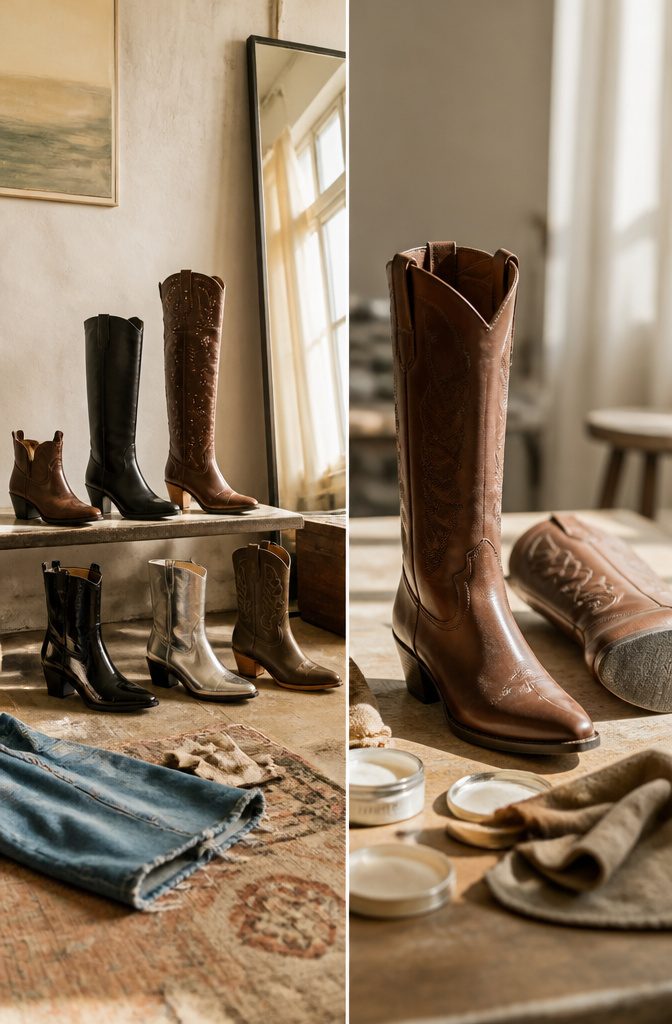
Shaft height runs from ankle boots past the knee to over-the-knee styles, and each changes the silhouette. Ankle boots work under jeans or with skirts when you want the Western detail without committing to full cowgirl.
Knee-high and taller boots make a statement. They read more costume or fashion-forward, especially in shiny finishes or embellished leather.
Toe shape matters just as much.
A pointed toe pulls the look toward dressy or sleek, while a round toe keeps it casual and easier to wear day to day. Matte leather feels traditional; shiny patent or metallic finishes push the boot into fashion territory fast.
The heel itself sets the tone before you add anything else.
A taller, angled cowboy heel pairs naturally with embellishments like stitching, studs, and tooled patterns because the shape already leans ornamental. Lower block heels in clean black or warm brown leather stay closer to classic Western without the decoration.
Recommended Products

Soft Faux Leather & Slouchy Western Shape: These slouchy ankle boots for women are shaped from supple, breathable faux leather that drapes into a relaxed vintage shaft, letting feet move naturally while the smooth interior helps reduce rubbing during all-day fall markets, travel, or casual office days

EASY ON & OFF: Slip into comfort with dual pull tabs and a handy inner zipper for effortless wear. The roomy square toe gives your feet plenty of space to relax, keeping you comfortable on all-day adventures.

[CUTOUT DISTINCT LOOKS]: Designed with decorative perforated panels and a slip-on design, these western-inspired ankle boots create a textured look with effortless style. Pair them with denim, dresses, or casual layers for everyday outings
Frequently Asked Questions
Recommended Products

Western-Inspired Design. Classic stitching and pointed toe bring authentic cowgirl character with a modern feminine update

Handcrafted Excellence: Each pair of our women's cowboy boots is meticulously handcrafted, ensuring superior quality and unique detailing.

2026 Ergonomic Comfort: Walk From The Office To The Dance Floor Without Hesitation. Featuring A Cushioned Arch-Support Insole And A Stable 2-Inch Block Heel, These Shoes Are Built For 12+ Hours Of Wear. They Provide The Support Needed For A Full Day Of Festival Walking Or A Night Of Line Dancing At A Country Concert
What heel height is best for walking in Western boots?
Walking heels at 1-3/8 inches give you the most comfort for long days on your feet.
The wide, flat base distributes your weight better than taller or angled heels, and your calves won’t tire as quickly. Block heels between 10 and 12 cm also work well when you need boots that stay comfortable for hours.
What is the most comfortable heel height for cowboy boots?
Fowler heels at 1-1/8 to 1-1/4 inches are the most comfortable for all-day wear.
The low, stable design won’t catch in stirrups and gives you a solid base whether you’re walking or riding. Roper heels at 1 inch are even shorter but angle more sharply, making them better for rodeo work than casual wear.
What is the difference between cowboy and riding heels?
Cowboy heels sit at 1-1/2 to 1-3/8 inches with a noticeable slant, while riding heels stand 2 inches tall with a sharper backward angle.
Both lock into stirrups, but the riding heel’s steeper pitch makes it better for long saddle hours and worse for walking. The cowboy heel splits the difference between riding function and ground comfort.
Are high heeled cowboy boots hard to walk in?
Yes, especially above 2 inches. Fashion heels at 3-4 inches are the tallest Western style and prioritize looks over walkability.
Taller heels with a slant push your weight forward onto the balls of your feet, which gets painful within an hour or two if you’re standing or walking rather than sitting.
What type of heel is best for riding horses?
Riding heels at 2 inches with a sharp slant lock your boot into the stirrup and keep your foot from sliding forward when the horse moves.
Roper heels at 1 inch also grip stirrups well during roping events and make mounting and dismounting faster. Both outperform fashion or walking heels for actual saddle work.