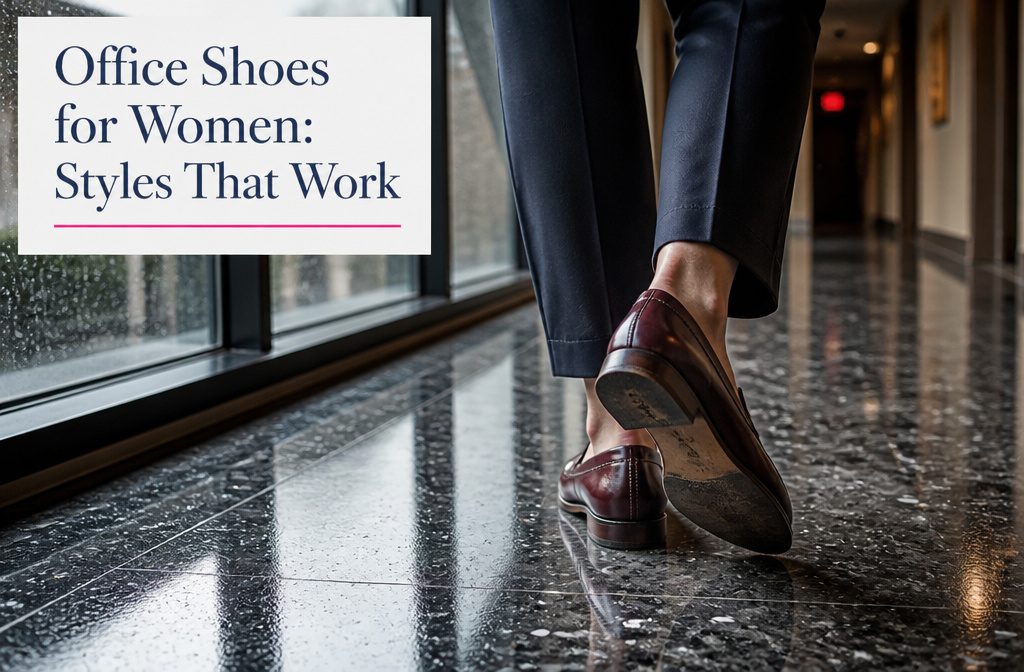
Office shoes for women span loafers, boots, sneakers and heels, each covering different dress codes and comfort thresholds.
The hardest part is not finding a pair that looks right but finding one that still feels wearable six hours in, which is why cushioning and arch support filter the field before style does.
Flats with zero padding leave your heels sore by the third meeting, and a heel over two and a half inches cuts your standing window to less than half the day.
1. Loafers and Flats
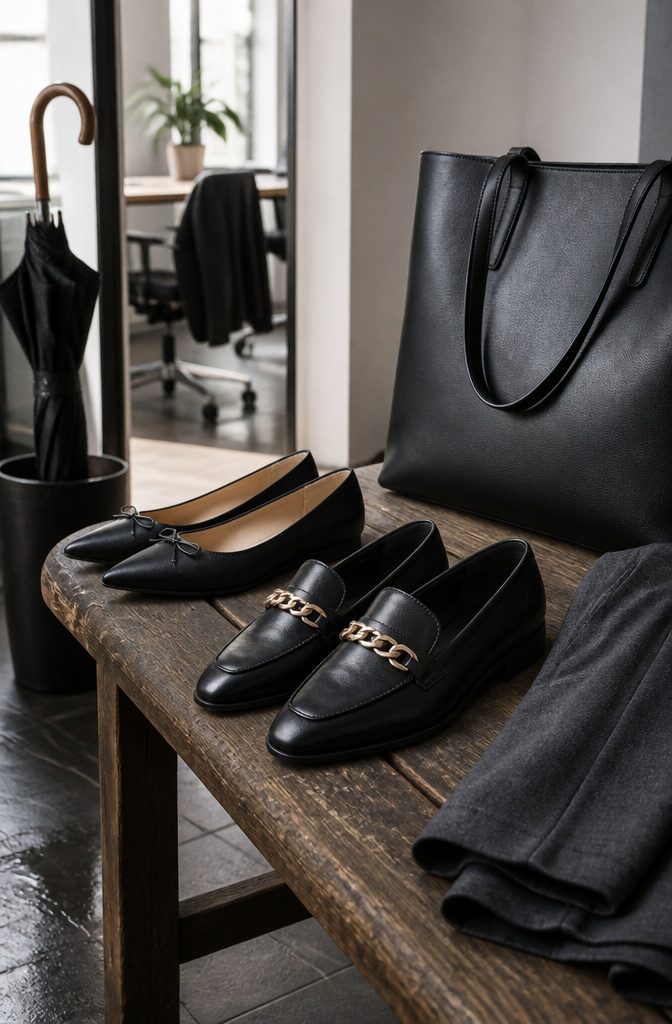
Loafers and flats solve two problems at once: they clear most dress codes without argument, and they let you walk from your car to your desk without planning around pain.
The closed toe is what makes them safe across offices, and the flat sole is what makes them last past ten in the morning.
Ballet flats work when the cut is clean rather than fussy. Pointed-toe versions from Jimmy Choo keep the line sleek, and the taper reads as more finished than a round toe when the rest of the outfit leans formal.
Penny loafers in black leather stay neutral enough to repeat three times a week. The pair from Coach runs a gold chain across the vamp, just enough detail to separate them from school shoes without tipping into costume.
Leather holds up better than suede if you walk through weather, and black pairs with everything already hanging in a work closet.
2. Minimalist Boots
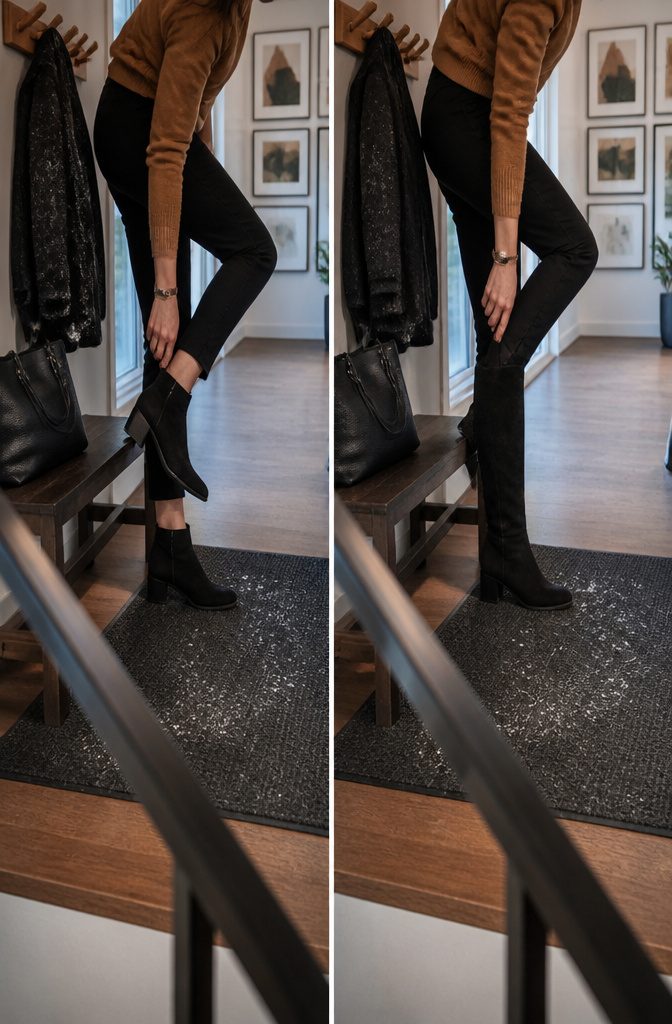
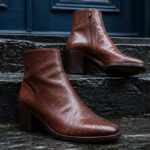
Boots solve the cold-weather problem without looking casual. Ankle boots work with any trouser cut (skinny, straight or wide-leg) because they stop low enough that the pant hem decides the silhouette, not the boot shaft.
Look for a chunkier heel if you’re walking more than a block; it gives you height without pitching you forward.
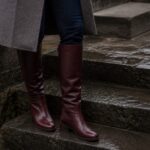
Tall boots suit skinny pants or dresses at offices that skew fashion-forward. Black beats brown: it coordinates faster in the morning, and most work trousers are charcoal or navy anyway.
Suede holds up better than you’d expect if you treat it once before the first snow, and the texture reads polished rather than rugged when the leather is matte.
3. Office Sneakers
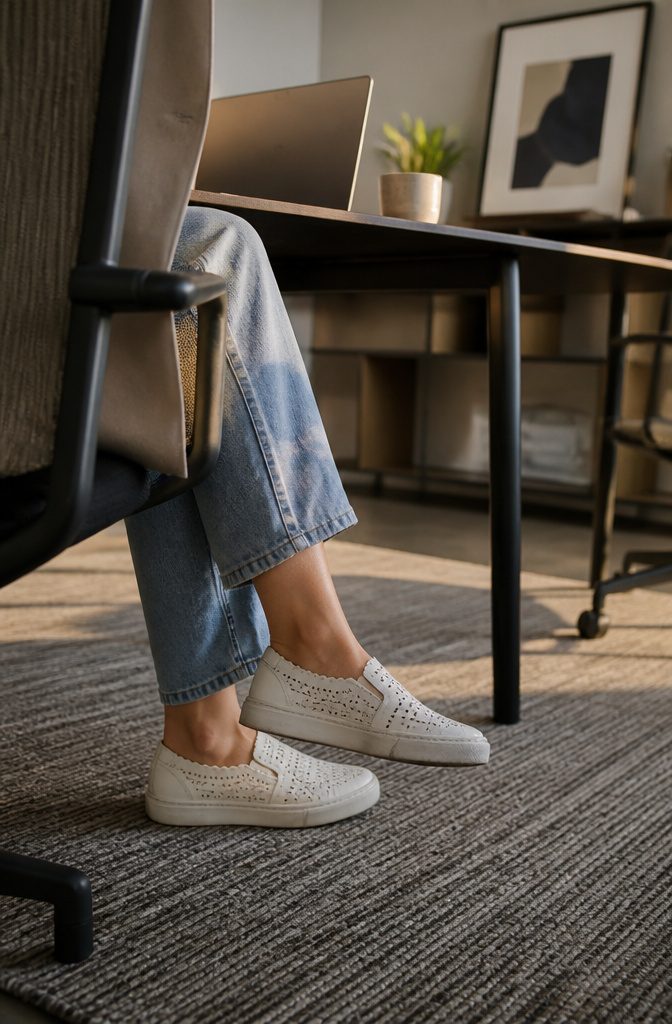
Sneakers built for the office lean away from athletic details and toward refined materials.
The slip-on format does most of the work: no laces means the silhouette reads closer to a loafer, which keeps them grounded in workwear rather than weekend wear.
Black perforated leather or white laser-cut designs carry enough texture to look considered without tipping into dressy territory.
A white pair works especially well in power casual setups: straight jeans, blazer, done. The scalloped edge on styles like Porte & Pare’s white sneakers pushes the silhouette just feminine enough to balance structured separates.
RALLY Leather Slip-On Skate Sneakers handle the same job with a flatter profile. Both stay neutral enough to disappear into the outfit rather than compete with it.
4. Heels
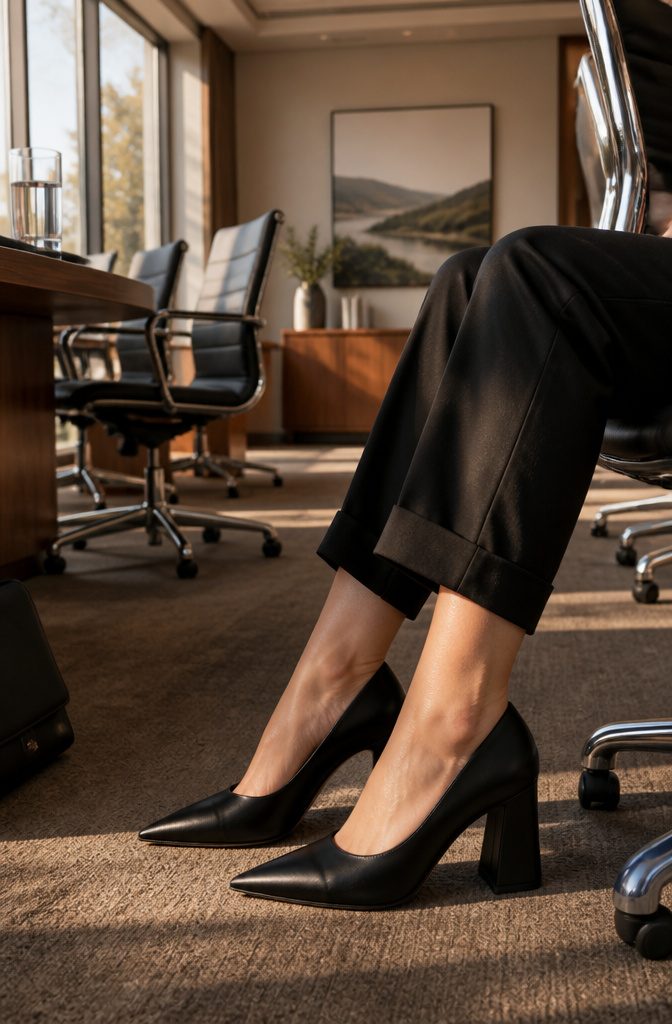
Heels sit at the formal end of the office shoe spectrum, which means they bring polish but not all-day comfort.
A lower heel under two and a half inches lets you stand through meetings and walk a few blocks to lunch without your feet staging a revolt by three o’clock.
Block heels distribute weight better than stilettos, so your foot doesn’t slide forward into the toe box with every step.
Higher and thinner heels sharpen the silhouette but shorten the wearing window.
A Manolo Blahnik pump commands a room, but most people swap into flats by mid-afternoon. A Marc Fisher block heel is structured enough for client presentations and stable enough that you’re not counting the minutes until you can sit down.
Fit and Comfort
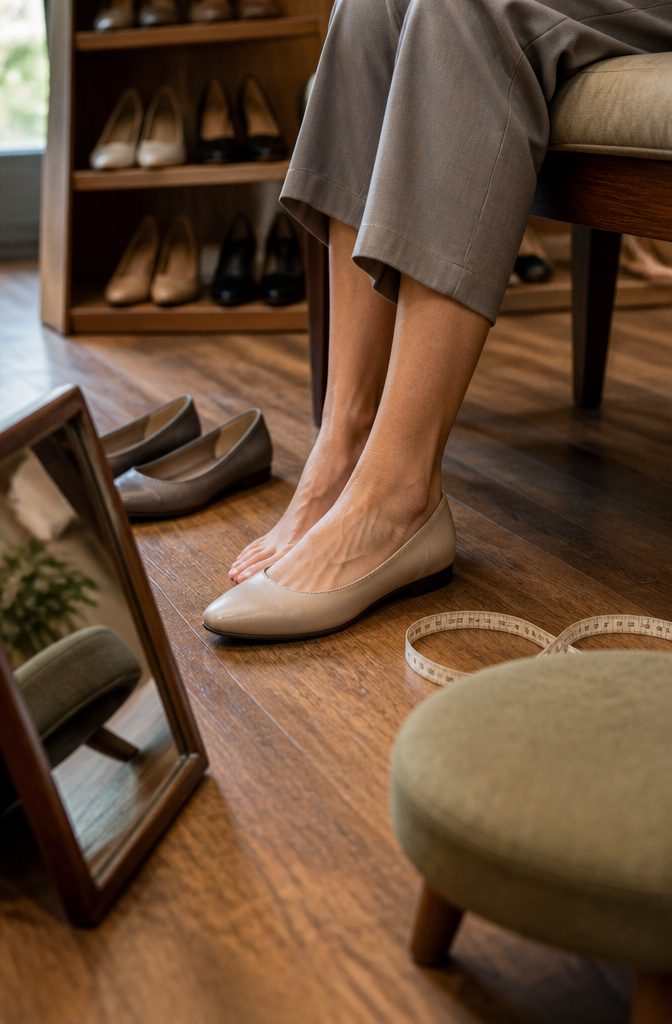
A shoe that hurts by mid-morning is a shoe you will stop wearing.
Blisters form, your gait changes to avoid the pressure point, and by afternoon you are hobbling back to your desk instead of walking with the confidence the outfit was supposed to give you.
Fit comes first, which means trying shoes on before committing rather than ordering your usual size and hoping the leather will stretch.
Cushioning matters more than it looks like it should. Flats with zero padding feel like walking barefoot on pavement, and by the third meeting your heels are sore and your arches are tired.
Look for shoes with actual arch support built in, not just a flat insole. If you have high arches, you may need structured support rather than a soft footbed, and some brands design around that from the start.
A wide-ish toe bed keeps your toes from crowding into a point, which shows up as discomfort long before it shows up as visible pinching.
The material against your foot should feel smooth from the first wear. Rough fabric or stiff lining does not soften enough to fix the problem, it just extends the break-in period into a daily annoyance.
Breathable shoes keep your feet cooler through a long day, and that alone can make the difference between a pair you reach for and a pair that sits in the closet.
Dress Codes
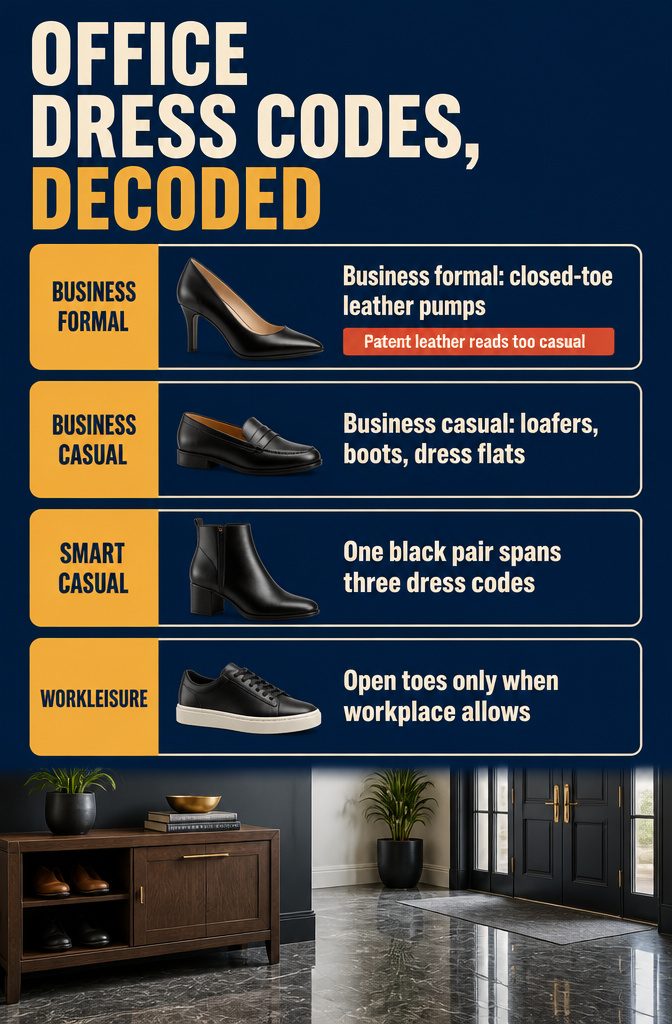
Business formal means closed-toe pumps in black, navy or nude leather; polish matters, and patent reads too casual. Business casual opens the door to loafers, ankle boots and dressier flats, which you can wear through most workdays without switching.
Smart casual and workleisure blur the line further: leather sneakers, block-heel booties and tailored loafers all hold up as long as they look intentional rather than athletic.
Open-toed shoes stay off the table unless your workplace explicitly allows them.
Most offices default to a closed-toe rule even when the dress code does not spell it out, so a pointed-toe flat or a sleek loafer covers more situations than a mule or sandal ever will.
The practical advantage is that one pair of black leather loafers or ankle boots works across three of the four codes: you are not buying separate shoes for formal Tuesdays and casual Fridays.
A second pair in cognac or taupe gives you rotation without redundancy.
Color Choices
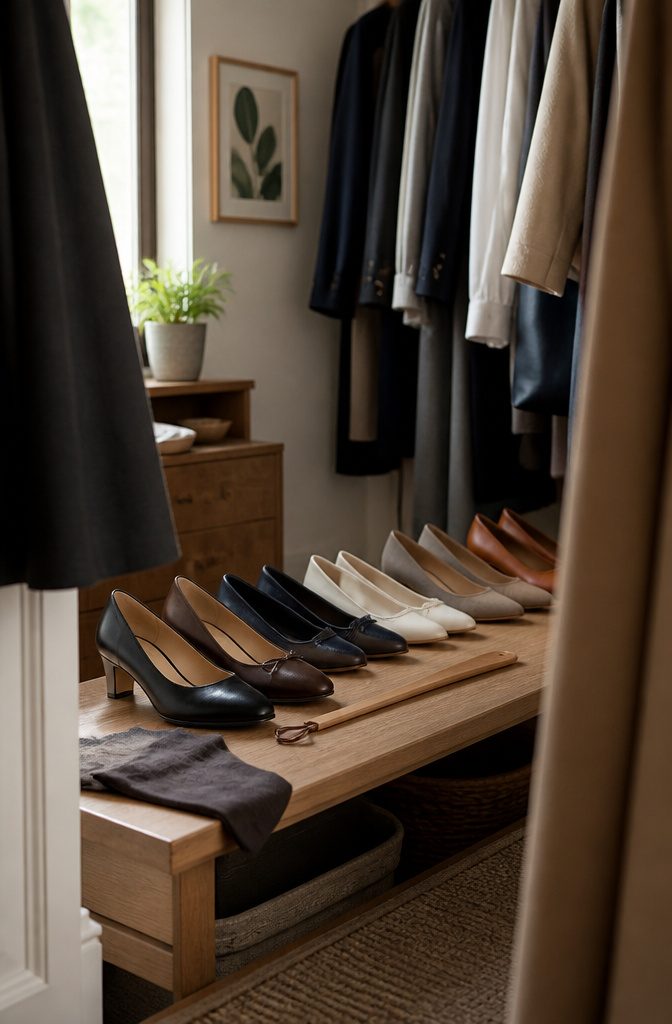
Black and dark brown land at the top of the shopping list because they pair with the widest range of what already hangs in your closet.
A black pump works under navy trousers and charcoal skirts without a second thought, and brown sits just as cleanly next to camel, olive, or cream. Start with one pair in each before anything else goes in the cart.
Navy and white fill in the rotation once those two are covered. Navy reads as a neutral in most offices and carries slightly less visual weight than black, which helps when the outfit already runs dark.
White works for spring and summer weights, though it shows scuffs faster and demands more upkeep than the darker options.
Tonal shades come next: grey, taupe, cognac. These sit between core neutrals and actual color, so they stretch the wardrobe without fighting it.
Save bold colors for last. A red flat or green loafer only earns its closet space after the foundation does its job day in and day out.
Standing All Day
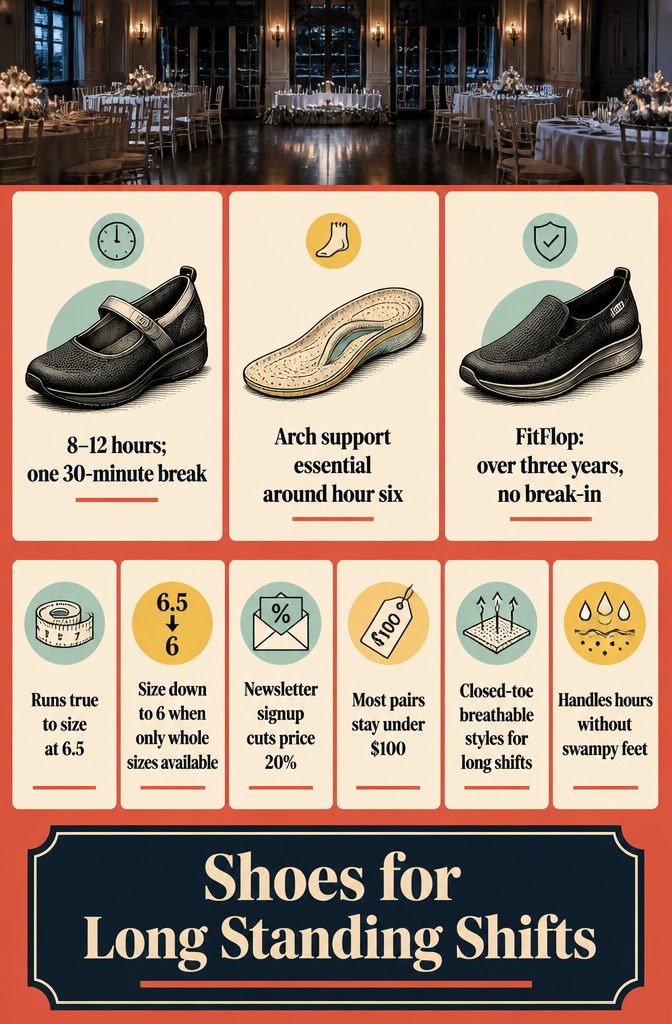
Standing all day shifts the priority list. Cushioning matters more than silhouette, and arch support stops being negotiable somewhere around hour six.
Working weddings for 8–12 hours with just a thirty-minute break taught one photographer exactly where shoes fail: not in the first hour, but when the reception hits and your feet have already logged a full shift.
She landed on FitFlop after a year of testing and kept them for over three years with no break-in period required. The brand runs true to size at 6.5, though when only whole sizes are available she sizes down to 6.
Newsletter signup drops the price twenty percent, keeping most pairs under $100. Closed-toe styles in breathable construction handle the hours without leaving your feet swampy by the end of the night.
Frequently Asked Questions
What are the best office shoes for women?
Loafers and flats, minimalist boots, office sneakers, and heels cover most workplace needs.
Black leather loafers or ankle boots work across 3 of the 4 dress codes, so you’re not buying separate shoes for different days. A second pair in cognac or taupe gives you rotation without buying duplicates.
How do I choose office shoes for my dress code?
Business formal requires closed-toe pumps in black, navy or nude leather. Business casual allows loafers, ankle boots and dressier flats.
Smart casual and workleisure accept leather sneakers, block-heel booties and tailored loafers as long as they look intentional rather than athletic. Open-toed shoes stay off the table unless your workplace explicitly allows them.