Vegetable-tanned leather is animal hide preserved using tannins from tree bark, leaves, and roots rather than synthetic chemicals.
The process takes up to 2 months compared to a single day for chrome tanning, which is why only about 10% of leather gets this treatment and costs run higher.
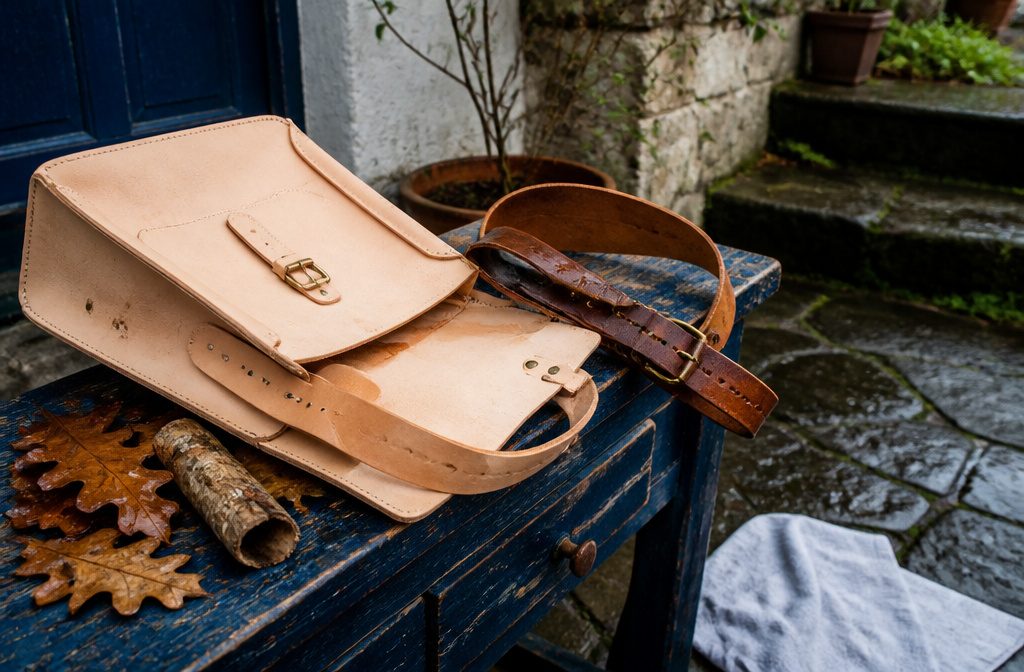
The material arrives stiff and pale tan, then darkens and softens over years of use as it absorbs oil, moisture, and light.
What Vegetable-Tanned Leather Is
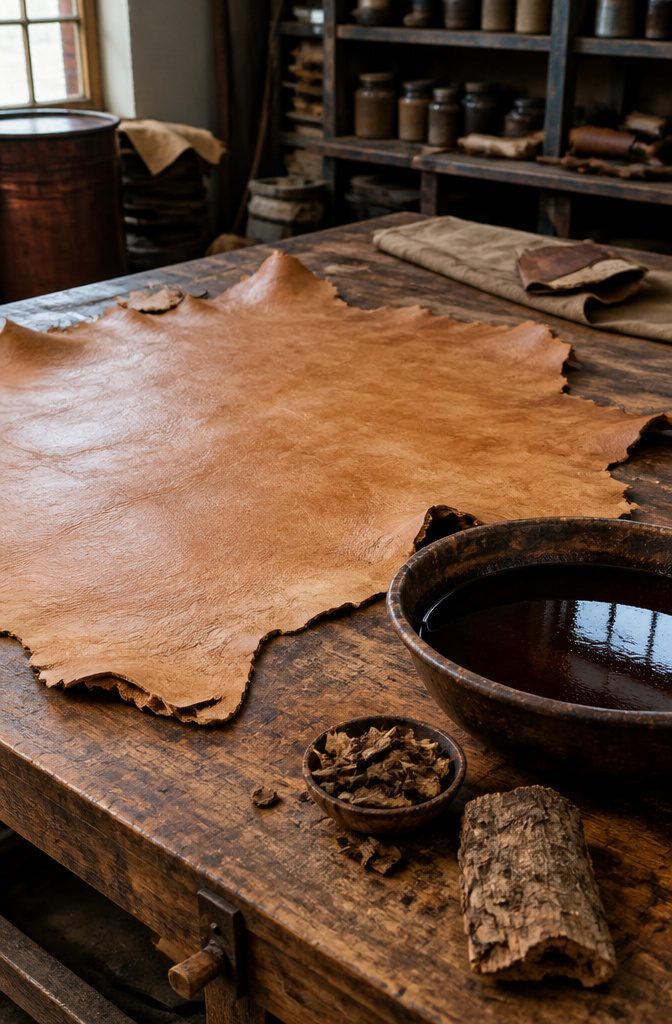
Vegetable tanning uses tannins from tree bark, leaves, and roots to turn animal hide into leather.
The process alters the proteins in the skin to preserve it and protect it from moisture and decay. This is still real animal leather, not vegan leather, which is synthetic material made to imitate it.
The method is over 5,000 years old.
Evidence of vegetable-tanned leather appears on ornaments left on stone coffins in ancient Egypt. Each region used what grew nearby: chestnut in Europe, oak in the UK.
Today only about 10% of leather is vegetable-tanned.
The rest is chrome-tanned, which finishes in a day. Vegetable tanning takes up to 2 months.
Recommended Products

📌 PROFESSIONAL-GRADE THICKNESS FOR ALL YOUR PROJECTS: 5-6 oz (1.9-2.3mm) This is the perfect thickness for durable leather craft. It's stiff enough to hold its shape for tooling and stamping, yet still flexible for clean folding and molding.

【Veg-taned Leather】The natural vegetable tanned leather is made of full grain leather with a smooth top texture, blended with advanced Italian natural vegetable tanning techniques in a natural beige color that retains all of the leather's original grain and markings.

📏 DIMENSIONS & COLOR: 2-3 oz (1-1.4mm) Pre-Cut 12x24 Veg Tan Leather. Made from Bullhide, our full grain leather hides are vegetable tanned. Each piece is cut to specific dimensions making it easy to start working on your project quickly. Quickly get to work on your leathercraft and tooling projects.
How the Process Works
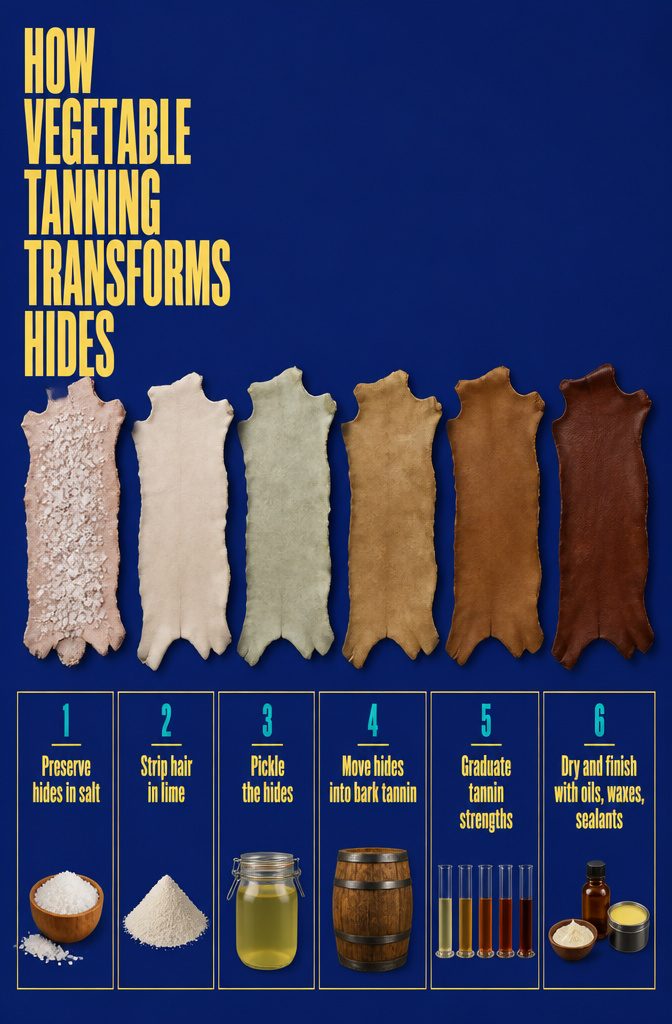
The hides arrive preserved in salt to keep the grain intact while they wait in storage. From there they go into a liming pit, a drum filled with lime that strips the hair.
The lime itself used to be dumped straight into rivers until regulators shut most tanneries down for it, and only a few remain in the United States today.
Once the hair is gone, the hides are pickled and moved into drums of tannin extracted from bark.
Historically this step happened in a series of pits with rising tannin concentrations; modern tanneries add drums to push the tannin through faster, but the hides still move through graduated strengths until the process finishes, which can take up to 2 months.
After drying, the leather gets a final treatment of oils, waxes, and sealants (some tanneries use proprietary oil-based dyes at this stage).
Recommended Products

Your Blank Canvas: Natural undyed color means you choose the finish. Dye it, paint it, or leave it natural — it develops a rich patina over time.

Premium Genuine Leather (Veg Tan Leather) - This is a Vegetable-tanned base with a hot oil & wax Crazy Horse finish. Crazy Horse requires a hot oil finish. Scratches rub out by hand and deepen into a vintage patina. Not suitable for laser engraving. Made from vegetable tanned full grain Crazy Horse cowhide, our leather sheets offer durability, flexibility, and rich texture ideal for crafting, tooling, and sewing projects great leather sheets for leather working. Each piece is carefully selected to ensure consistent quality and an authentic leather feel.

Your Blank Canvas: Natural undyed color means you choose the finish. Dye it, paint it, or leave it natural — it develops a rich patina over time.
Natural Color and How It Ages
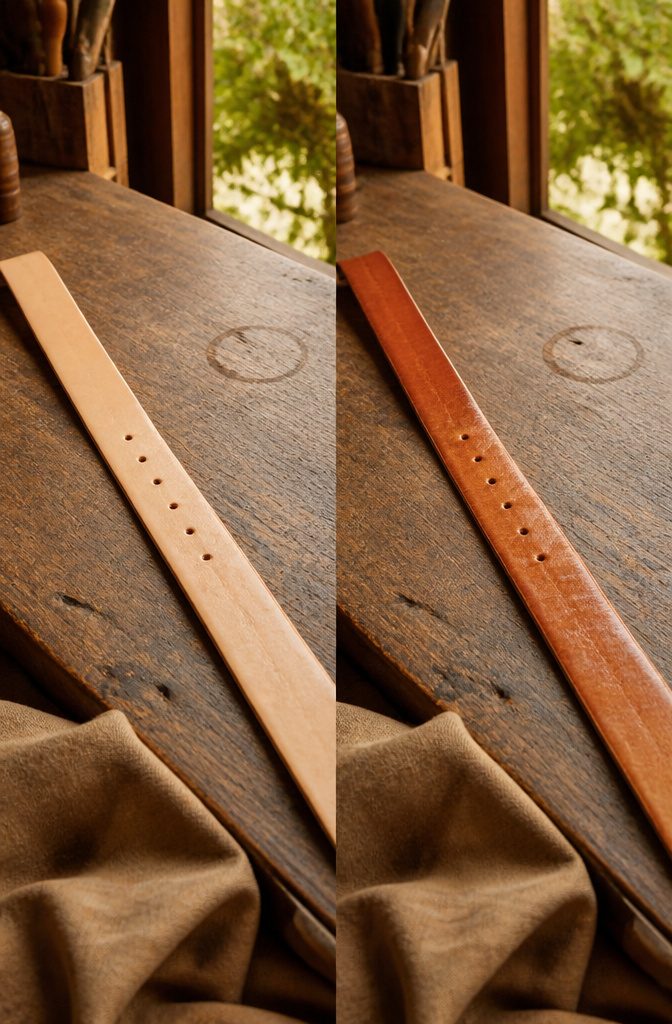
Vegetable-tanned leather arrives in light tan with natural variation, often feeling stiff and firm to the touch.
That stiffness is temporary. The leather softens and darkens as it takes in oil from your hands, moisture from the air, and light from daily use.
Over months and years, the pale tan shifts toward deep caramel brown, and the surface builds a marbled shine called patina.
Water leaves marks, dirt adds depth, and sunlight accelerates the color change. The lack of synthetic coating means every exposure registers, so two pieces handled differently will age differently.
Because the hide accepts color readily, vegetable-tanned leather takes dye, paint, and tooling cleanly when new, but once that patina sets in, the leather has already told its own story.
Recommended Products
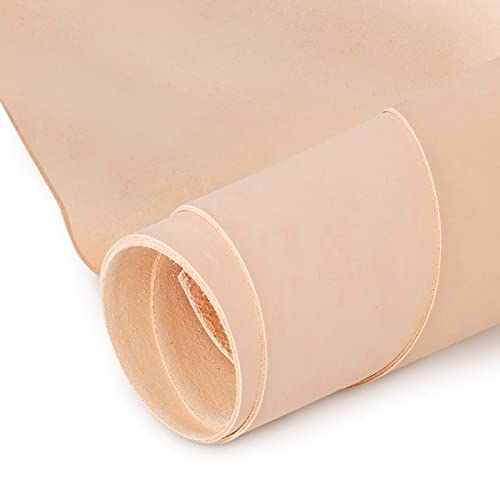
【Thick Leather Sheet】Vegetable tanned leather, really good quality leather, strong stretch, clean texture, blended with advanced technology, eco-friendly and healthy. Soft leather with a nice rich tanning, one side is smooth like a jacket, the other side feels naturally soft. Our tooling leather hide is waterproof, wrinkle-free and sturdy, very flexible and easy to treat and color.

Material: Dublin Horween Leather & Hardware: 316L stainless steel
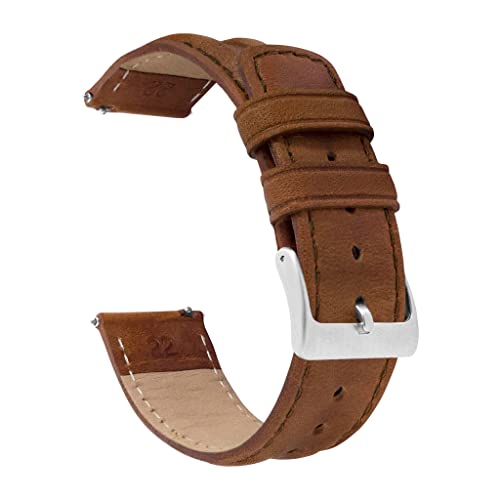
Material: Dublin Horween Leather & Hardware: 316L stainless steel
What It Works For
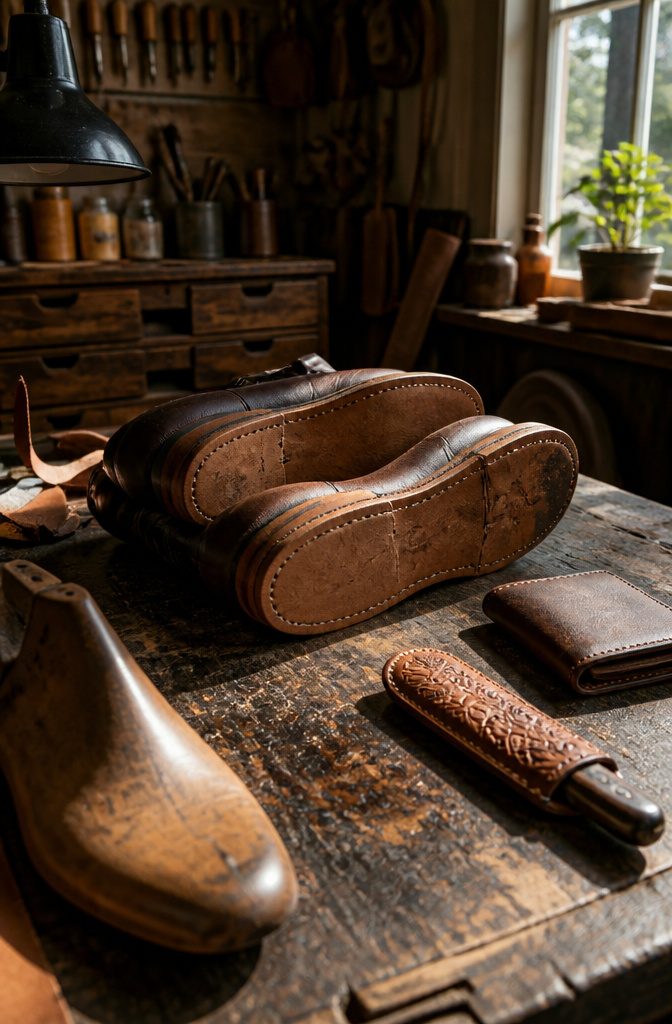
Vegetable-tanned leather shows up in bags, belts, wallets, and shoes: usually as sturdy soles rather than uppers that flex. Saddles and holsters rely on it for structure that holds shape under stress.
Tooled leather goods, from knife sheaths to custom watchbands, work well because the tanning method leaves the surface receptive to stamping and carving. At 4–5 oz thickness, it handles bookbinding, aprons, and jewelry without adding bulk.
The stiffness that makes it good for holsters limits what it can do in garments or anything requiring substantial give.
A shoe made entirely from veg-tan would feel like walking in cardboard; most manufacturers use it where rigidity helps and chrome-tan where the leather needs to bend.
The upholstery trade likes it because you can buy a full hide and cut pieces to size. It starts stiff and softens with use.
Recommended Products

Italian Vegetable-Tanned Leather: We select high-quality Tuscan vegetable-tanned leather imported from Italy, processed with natural plant tannins. Made in China following strict ISO9001 quality control. The leather matures naturally day by day, forming exclusive patina and texture that belongs only to you.

VEG TAN LEATHER: Vegetable Tanned Cowhide Tooling Leather Full Grain Natural Cowhide

Italian Vegetable-Tanned Leather: We select high-quality Tuscan vegetable-tanned leather imported from Italy, processed with natural plant tannins. Made in China following strict ISO9001 quality control. The leather matures naturally day by day, forming exclusive patina and texture that belongs only to you.
Durability, Cost, and Production Trade-Offs
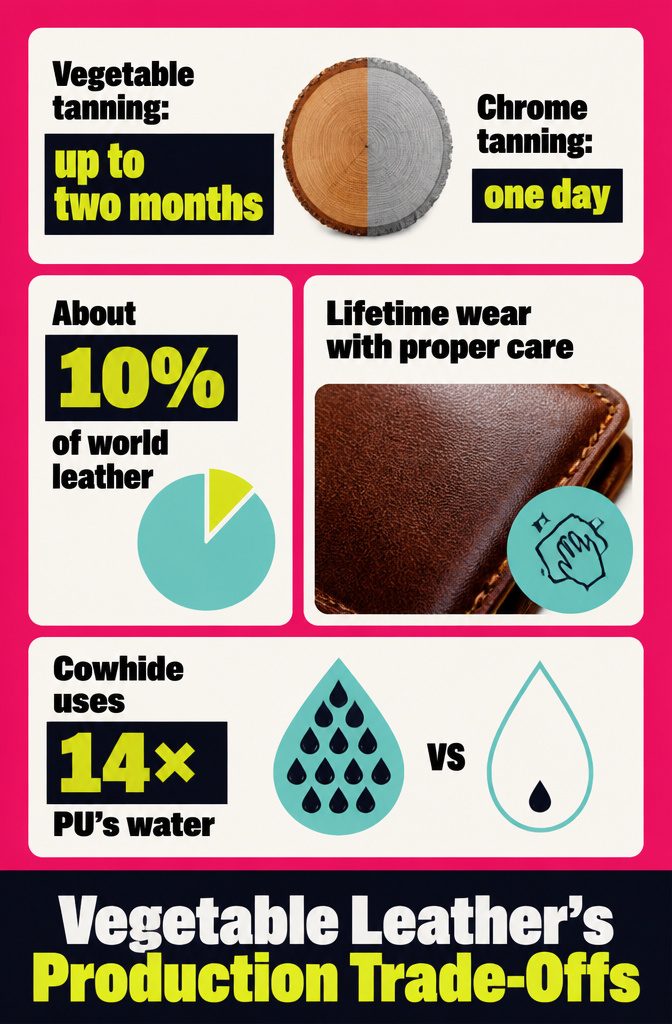
Vegetable tanning takes up to two months compared to a single day for chrome tanning, which explains the higher cost and why only about 10% of the world’s leather gets this treatment.
The long process, specialized skills, and minimal automation push prices up, but the result is leather that lasts a lifetime if you care for it properly.
The sustainability claims are less settled than they sound.
MAHI presents vegetable tanning as a responsible choice when done right, turning slaughterhouse waste into goods instead of landfill. Collective Fashion Justice disputes the advantage:
Thanks to data from the Higg Materials Sustainability Index we know that leather from cow skins uses 14 times more water than synthetic PU leather does.
The water and emissions footprint sits mostly with raising cattle, not with the tanning itself, which makes comparing tanning methods alone a narrower question than it first appears.
Recommended Products

DIMENSION: 5-6 Oz. (2-2.4mm) Thickness Weight Size: 2"x84" (5.1x213cm) | Heavy Duty Bull hide belts strap. Bull hide Not Weak as Cowhides. Every veg tan leather blanks belt is cut according to specific sizes, which helps you quickly start working on your leather craft project which saves you time and money by avoiding scraps, remnants, sheets, & leftover hide parts.
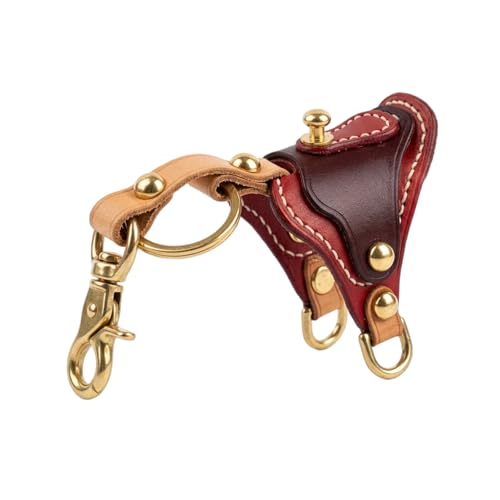
Genuine Italian Vegetable-Tanned Leather: Evolves with Time-Crafted from premium top grain vegetable-tanned leather sourced directly from Tuscany, Italy. This leather retains its natural texture and breathes. Over time, it absorbs oils from your hands to develop a rich, deep amber patina, making your keychain a unique piece of art that tells your personal story

Chrome-Tanned Leather and Vegan Alternatives
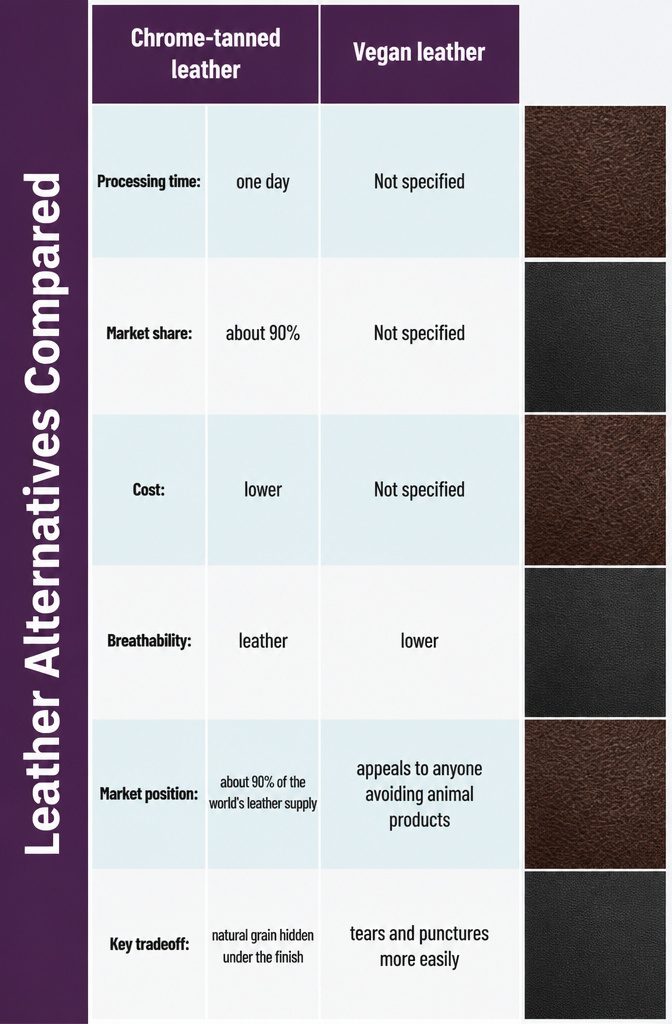
Chrome tanning turns hide into leather in about a single day using chemicals and acidic salts, while vegetable tanning takes up to 2 months. The speed difference explains why chrome-tanned leather accounts for roughly 90% of the world’s leather supply.
Chrome leather arrives softer, with more color choices, and costs less because the process runs on automated equipment. It doesn’t carry the sweet scent of vegetable-tanned leather, and the natural grain stays hidden under the finish.
Vegan leather isn’t leather at all.
Made from polyurethane or PVC, it mimics the look without using animal hide. It appeals to anyone avoiding animal products, but the tradeoff shows up in breathability, durability, and texture.
Vegan leather tears and punctures more easily than the real material, and it lacks the smell and the way real leather breaks in over time.
Oil-tanned leather starts with vegetable tanning, then adds oils for a waxy feel that sheds water better.
Rawhide skips tannin baths entirely: soaked in lye, stretched, and dried stiff. It’s mostly a historical material now, replaced by modern tanning for everything but a few saddle shop and instrument applications.
Recommended Products

✍️ DIMENSIONS: 8-9 oz. (3.2-3.6mm) Heavy & Thick weight Bull Hide Leather 4-6 SQ FT. Our Veg Tan & full-grain leather hides are vegetable tanned. Quickly get to work on your leather craft and tooling leather projects. We offer many different pre-cut hide sizes from 2.5 to 24 SQ FT. Our wide variety perfectly fit all of your Leather Craft Project & Workship needs in Tooling, Engraving, Stamping, Molding, Dyeing, and Crafts.

FULL GRAIN GENUINE LEATHER BELT: Handmade by Amish craftsmen from premium Full Grain Buffalo Leather, this mens leather belt is built for strength, comfort, and long-lasting use. Crafted from one solid piece of leather with a classic design, making it a reliable choice for everyday wear, jeans, work, or dress occasions.
📏 DIMENSIONS & COLOR: 2-3 oz (1-1.4mm) Pre-Cut 4-6 SQ FT Veg Tan Leather. Made from Bullhide, our full grain leather hides are vegetable tanned. Each piece is cut to specific dimensions making it easy to start working on your project quickly. Quickly get to work on your leathercraft and tooling projects.
How to Care for It
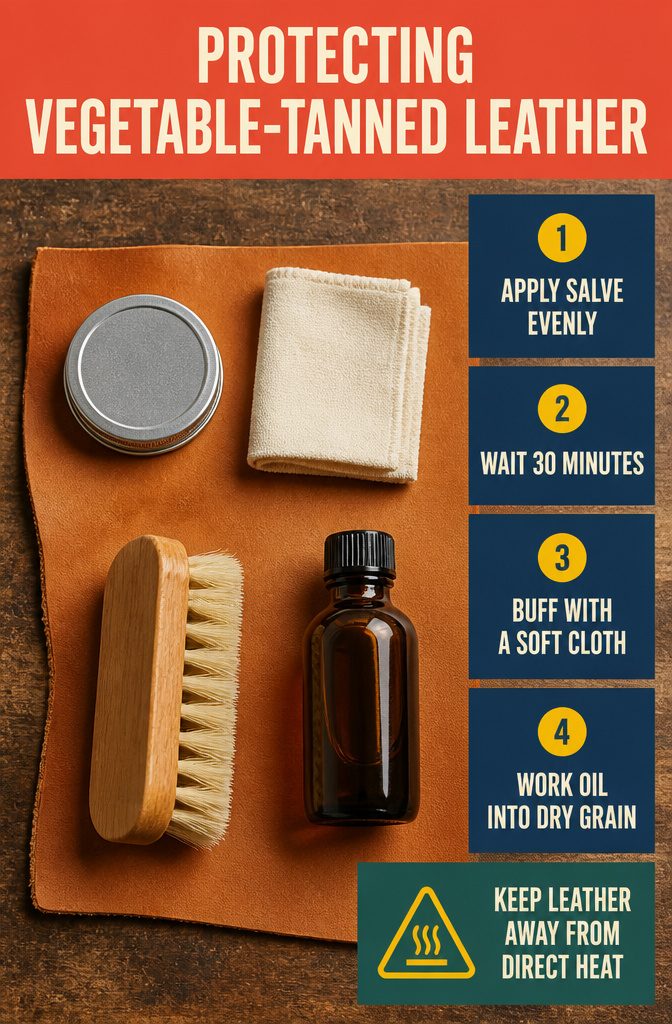
Vegetable-tanned leather needs protection before it sees regular use. Leather salve adds water resistance.
Apply it evenly, wait 30 minutes, then buff with a soft cloth. Unprotected veg-tan stains easily when wet, so either treat it or accept the marks as part of the patina.
For dryness or minor surface damage, work leather oil into the grain with your fingers.
Conditioning keeps the material supple and slows cracking. If you use the piece often, clean it once a week with an animal-hair brush; synthetic bristles scratch the surface.
Saddle soap lifts dirt and stains without stripping the leather. Scrub gently with a Tampico brush, then wipe clean with a warm damp cloth.
Keep veg-tan away from direct heat and never blow-dry it, even after it gets wet. Water tolerance improves after the first month of use, but the leather remains more vulnerable to moisture than chrome-tanned alternatives.
Recommended Products

Your Blank Canvas: Natural undyed color means you choose the finish. Dye it, paint it, or leave it natural — it develops a rich patina over time.

RICH COLOR PENETRATION - Bring leather projects to life with deep, vibrant color that reaches into veg tanned leather, helping leather belts, wallets, bags, and accessories stand out beautifully.

Genuine Leather Journal: Luxurious full-grain leather cover, naturally tanned for an authentic feel. Embrace the craftsmanship with this durable, Floral embossed leather notebook, ideal for writers, travelers, and journal enthusiasts seeking a premium writing experience.
Leather Grades and What They Mean
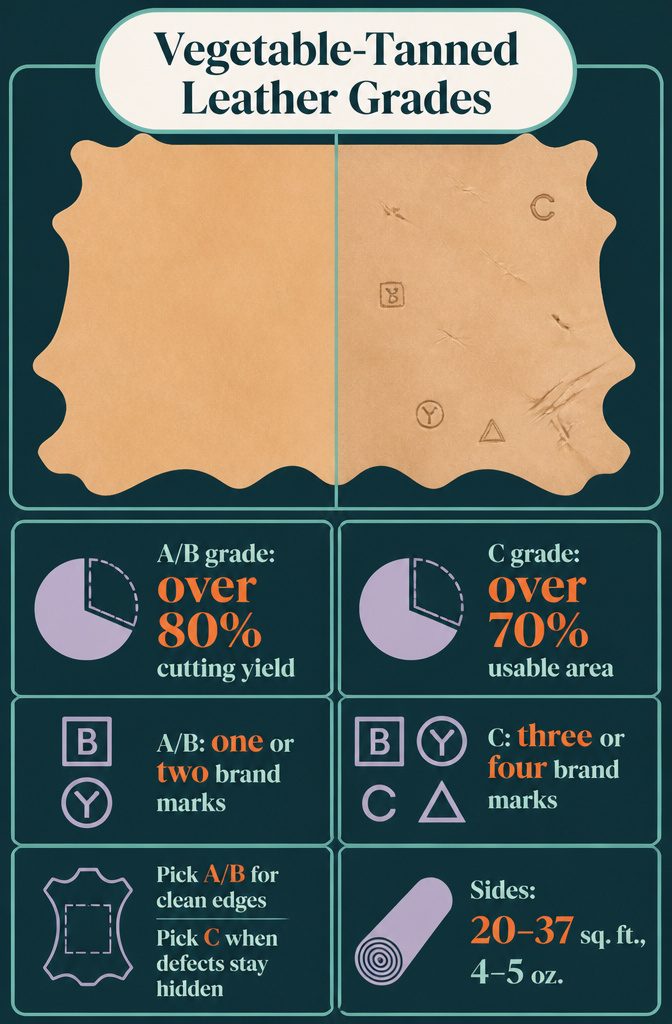
Veg-tan leather sides are sold in grades A/B and C, and the letter tells you how much usable surface you get.
Grade A/B carries over 80% cutting yield: most of the hide works for projects, with maybe one or two brand marks and light defects like closed scratches or bite marks.
Grade C drops to over 70% usable area, with three or four brand marks plus more visible flaws: open scratches, scars, small holes.
The grade matters most when you are cutting small pieces from a large side; if your pattern lands on a scar, that section is wasted.
Sailrite stocks natural veg-tan sides from Brazil in small (20–26 sq. ft.), medium (26–31 sq. ft.), and large (31–37 sq. ft.) sizes, all at 4–5 oz. weight.
Pick grade A/B if the project shows both faces or needs clean edges; grade C works fine for anything where defects stay hidden or add character.
Recommended Products
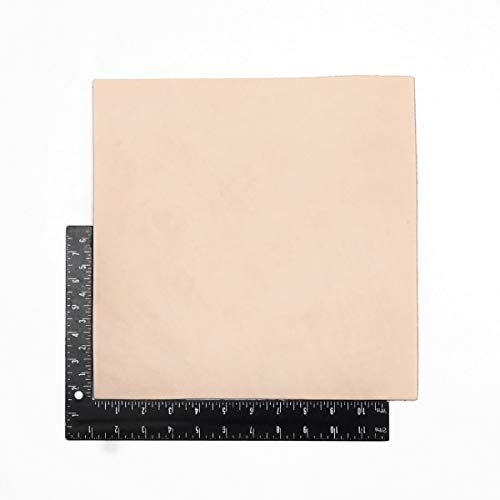
Premium Full Grain Leather – High-quality imported vegetable tanned leather with a smooth surface ideal for tooling and customization.
Full Grain, Top Grain, and Split Leather
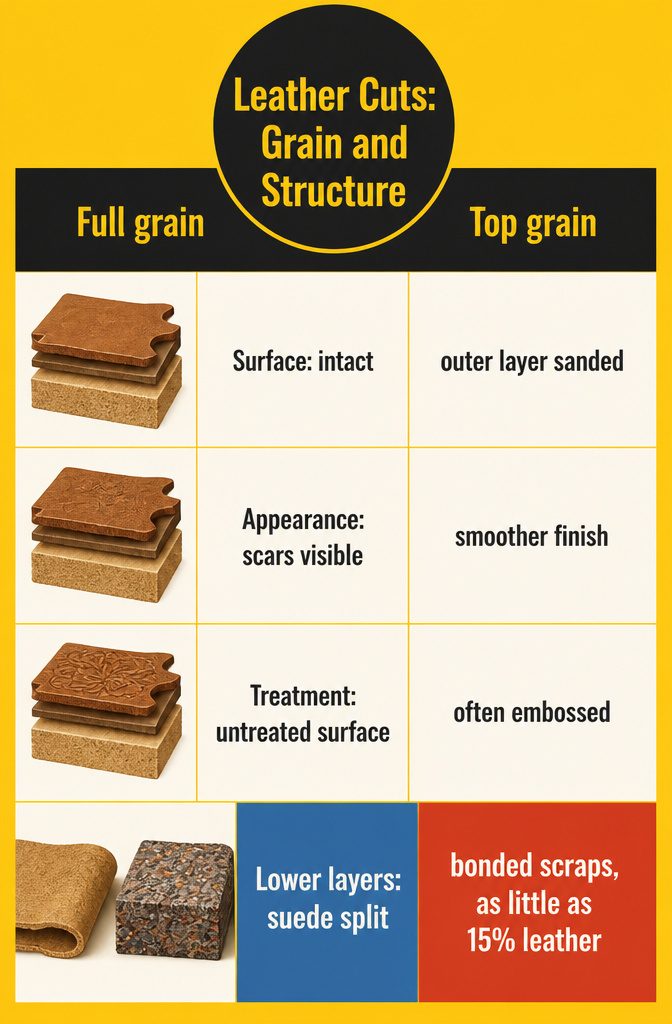
Vegetable tanning refers to how the hide is treated, not which part of the hide you’re buying.
A hide can be up to half an inch thick (too bulky to use as-is), so tanneries split it into layers, and each layer gets a different name.
Full grain keeps the surface intact, using the skin just below the hairline. It’s the strongest option, and any scars or stretch marks from the animal stay visible.
Top grain starts the same way but sands down the outermost layer for a smoother finish, then often gets embossed with a texture that mimics the original surface.
Split leather comes from what’s left after the top is removed.
That inner layer turns into suede: softer, less structured, used for gloves and linings. Bonded leather scrapes together scraps and dust with binding agents onto a backing cloth.
It may be as little as 15% actual leather, closer to particle board than solid wood, and it wears out faster than any cut from a full hide.
All of these (full grain, top grain, split, bonded) can be vegetable tanned or chrome tanned. The grain tells you which part of the hide; the tanning method tells you what chemicals turned it into leather.
Recommended Products

Italian Vegetable-Tanned Leather: We select high-quality Tuscan vegetable-tanned leather imported from Italy, processed with natural plant tannins. Made in China following strict ISO9001 quality control. The leather matures naturally day by day, forming exclusive patina and texture that belongs only to you.
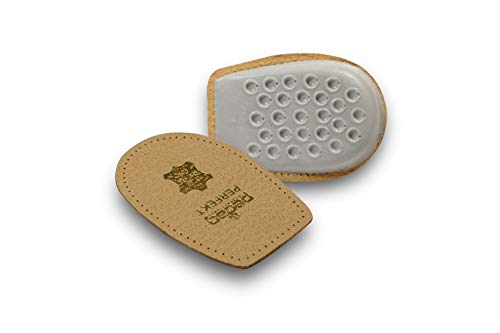
Targeted heel cushioning absorbs shock to protect your ankles, knees, hips, and spine

Insoles to Correct Supination - Correct Plus is a 3/4 Vegetable Tan Leather Orthotic that helps correct over-supination, preventing bow-leggedness and ankle inversion sprains.
Frequently Asked Questions
Recommended Products
DIMENSION: 5-6 Oz. (2-2.4mm) Thickness Weight Size: 1"x84" (2.54x213cm) | Heavy Duty Bull hide belts strap. Bull hide Not Weak as Cowhides. Every veg tan leather blanks belt is cut according to specific sizes, which helps you quickly start working on your leather craft project which saves you time and money by avoiding scraps, remnants, sheets, & leftover hide parts.

America’s Premium luxury Western Lifestyle brand — trusted by over 1,000,000 customers worldwide. Proudly designed in Texas by master craftsmen, our genuine leather collections set the standard for Western fashion. Featured on major platforms like New York Fashion Week’s Runway 7, we fuse heritage and style to celebrate the spirit of the West through trend-setting designs and premium materials.

Carhartt Men's Saddle Leather Belt I Men's classic contrast stitch leather belt
What is vegetable-tanned leather?
Vegetable-tanned leather is real animal hide treated with tannins extracted from tree bark, leaves, and roots instead of chemicals. The process alters the proteins in the skin to preserve it and protect it from moisture and decay.
It takes up to 2 months to complete, far longer than the single day required for chrome tanning. Only about 10% of leather worldwide uses this method.
Is vegetable-tanned leather more expensive?
Yes, vegetable-tanned leather costs more than chrome-tanned leather because the process takes up to 2 months versus a single day, requires specialized skills, and uses minimal automation.
The long production time and artisanal nature push prices higher, but the leather lasts a lifetime with proper care.
How do I care for vegetable-tanned leather?
Apply leather salve before regular use to add water resistance, wait 30 minutes, then buff with a soft cloth.
Clean weekly with an animal-hair brush and use saddle soap for stains, scrubbing gently with a Tampico brush before wiping with a warm damp cloth.
Condition dry leather with leather oil worked into the grain to keep it supple and prevent cracking.
Is vegetable-tanned leather sustainable?
The answer is disputed. Some manufacturers present it as a responsible choice that turns slaughterhouse waste into durable goods, but research shows no significant environmental differences between vegetable and chrome tanning processes.
The water and emissions footprint sits mostly with raising cattle, not with the tanning method itself.
Does Louis Vuitton use vegetable-tanned leather?
The material appears in bags, belts, wallets, shoe soles, saddles, and holsters, typically in products where structure and durability matter more than flexibility.