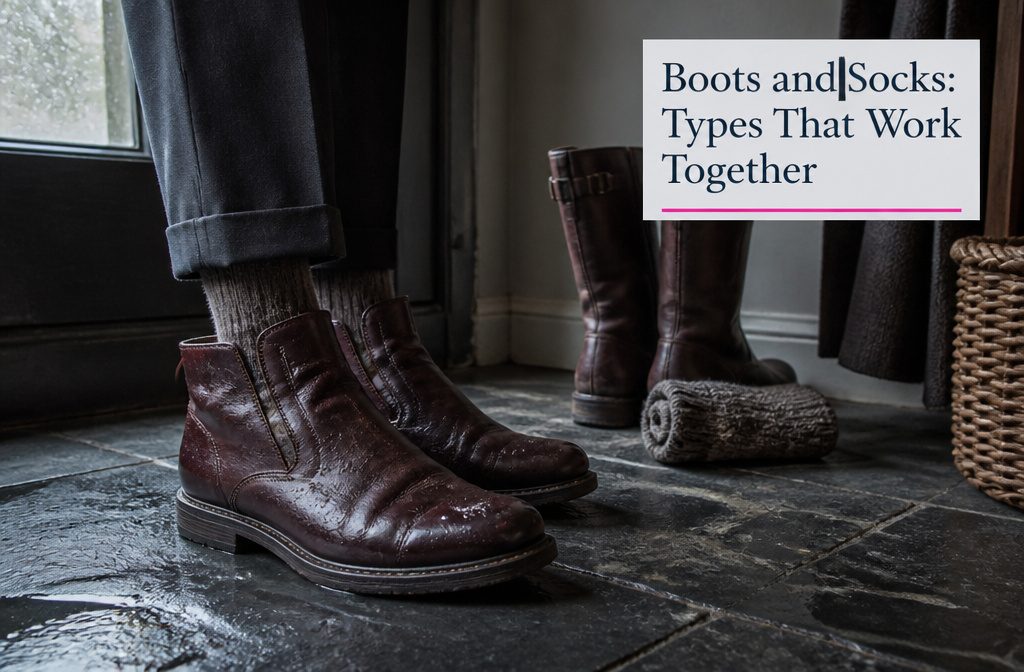
Boots and socks work together when the sock height matches what the boot leaves visible and the fabric handles moisture without trapping it against your skin.
The pairing shifts with boot style: crew socks show above ankle boots, knee-highs fill the gap under tall shafts, and dress socks stay thin enough to disappear under tailored trousers.
Merino wool wicks sweat and insulates even when damp, which matters more than cotton’s breathability once you spend hours in a closed boot.
Why Socks Matter With Boots
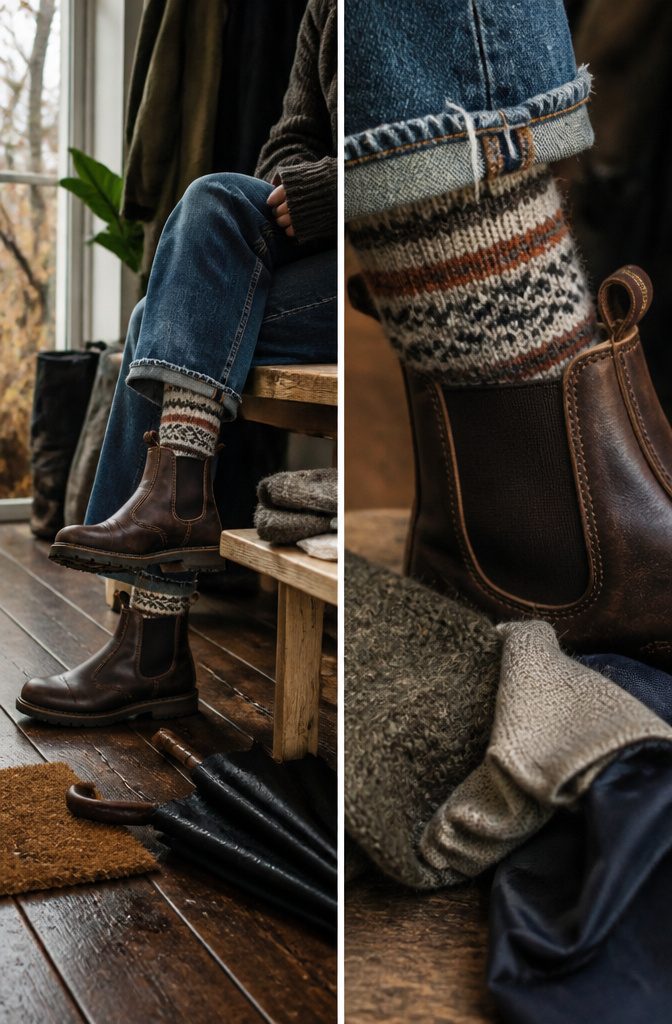
Socks do more than fill the gap between your foot and the boot. They cushion the sole and heel, putting a layer between skin and the stiff leather or synthetic lining that would otherwise rub blisters during a long day.
That cushioning matters most in the first few wears, before the boot breaks in, and again any time you walk farther than usual.
Moisture control is the second job. Feet sweat, and a boot traps that moisture unless the sock wicks it away from the skin and spreads it across a larger surface to evaporate.
A damp foot inside a boot gets cold fast in winter and breeds odor in summer; the right sock fabric keeps both from happening.
Warmth or cooling depends on what the sock is made from. Wool holds heat even when damp, which is why it shows up in winter hiking socks.
Cotton breathes but does not insulate, so it works better in mild weather. Synthetics wick moisture faster than either natural fiber, though they can feel less comfortable against bare skin.
Styling is the last reason, and it is not minor.
A flash of patterned sock above an ankle boot or a bright crew sock folded over a tall boot changes the whole outfit. Color and texture give you a second decision point after you choose the boot itself.
1. Crew Socks
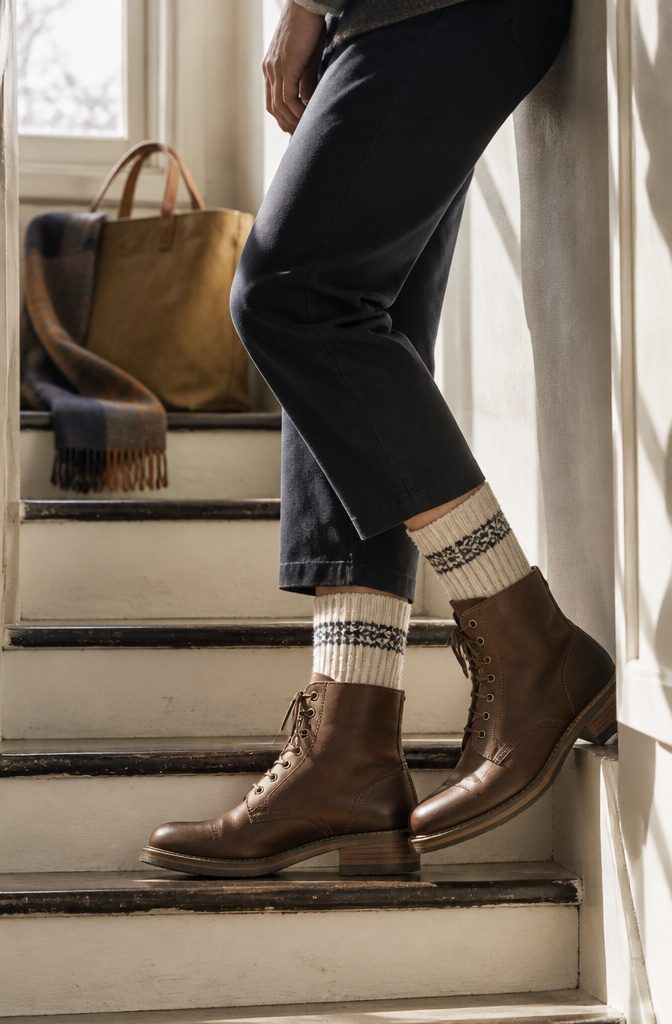
Crew socks reach mid-calf and pair well with most boot styles, which makes them a reliable starting point when you’re not sure what to reach for.
The coverage sits high enough to show above ankle boots and combat boots, and they tuck neatly inside knee-high styles without bunching. Cotton versions work for moderate temperatures, while wool adds warmth when the forecast drops.
The visible line above the boot means crew socks become part of the outfit rather than disappearing into it.
A neutral pair keeps the focus on the boot, but a pattern or contrast color adds texture without requiring anything else to change.
They offer more warmth than ankle socks and less bulk than knee-high options, which puts them in the middle of the range for both coverage and weight.
2. Boot Socks
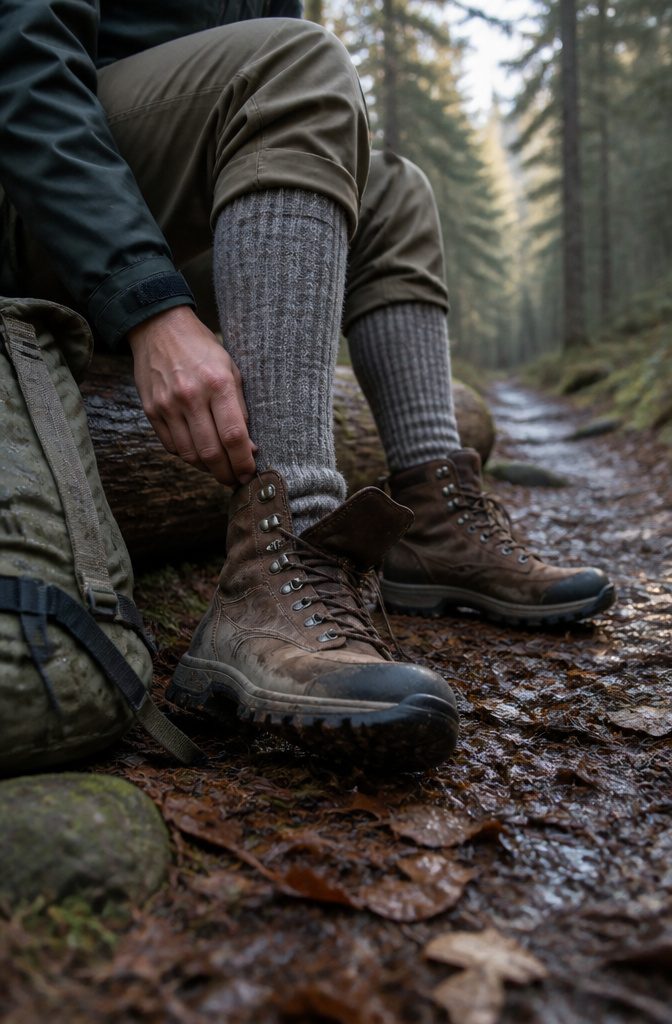
Boot socks run thicker and taller than everyday crew socks, built for hiking boots, work boots, and any tall shaft where friction and moisture pile up over hours.
The extra cushioning sits at the heel and ball of the foot, the two spots that take the most pounding on a long day outdoors.
Most are made from merino wool blends or synthetic wicking fabrics that pull sweat away from the skin, which matters more than you’d think: damp socks inside a closed boot turn into blisters faster than anything else you’ll wear.
I reach for boot socks anytime I’m lacing up for a trail or a full day on my feet in work boots.
They cost more than cotton crews, but the padding holds up through repeated washings and the height keeps the boot cuff from rubbing your calf raw.
3. Ankle Socks
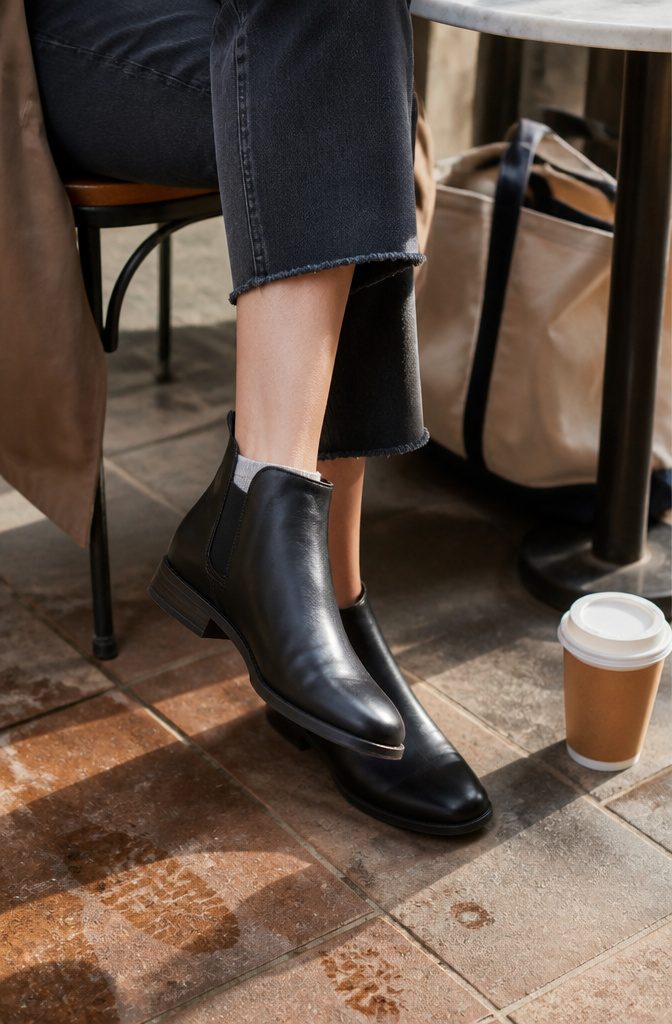
Ankle socks sit below the ankle bone, which makes them the least visible option when you pull on boots.
I reach for them with ankle boots or low-cut booties where a taller sock would bunch above the boot line and show.
They also work when you want the boot itself to be the focus and any visible sock would break the line from boot to leg.
You give up coverage. Ankle socks leave more of your lower leg and foot exposed, so they offer less warmth and less cushioning than crew or boot socks.
That makes them better suited to mild weather or situations where you’re not spending hours on your feet.
If the boot has a stiff back or you’re walking more than a few blocks, a taller sock usually feels better by the end of the day.
4. Knee-High Socks
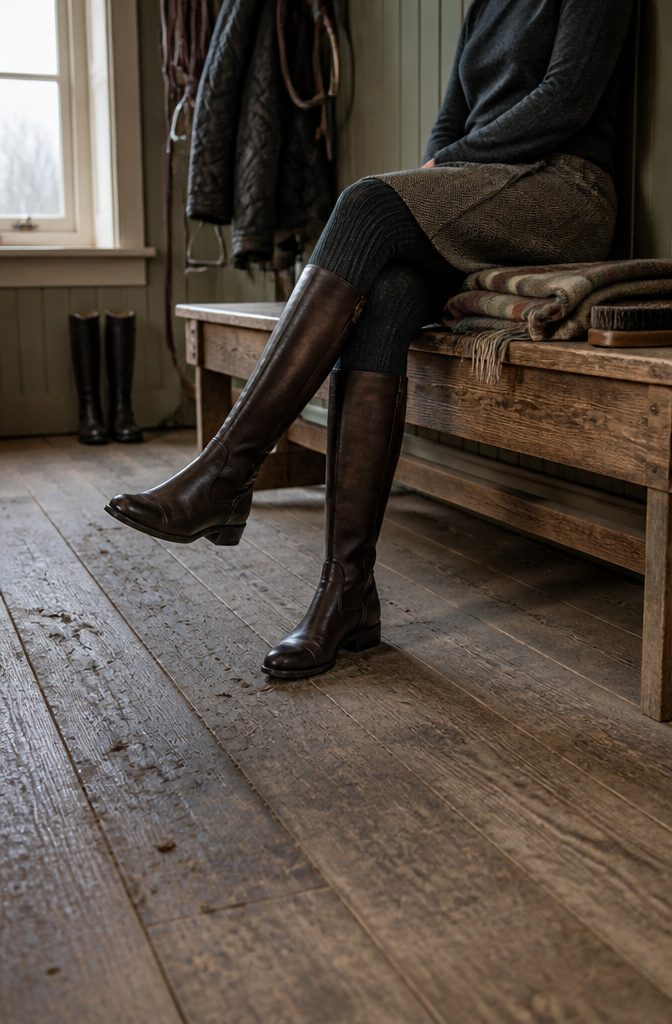
Knee-high socks end just below the knee and give you the most coverage when you’re wearing tall boots.
The extra length means no cold gap between your boot top and the hem of your pants or skirt, which matters when you’re outside in winter or wearing a dress that sits above the boot shaft.
They also stay put better than shorter styles because the elastic band sits against a wider part of your leg.
I reach for knee-highs with riding boots or any boot that comes up past mid-calf, since a crew sock would leave a strip of bare leg exposed every time I sit down or cross my legs.
They work under skinny jeans or leggings without bunching at the ankle, and they add a layer of warmth that ankle socks can’t match when the temperature drops below freezing.
5. Dress Socks
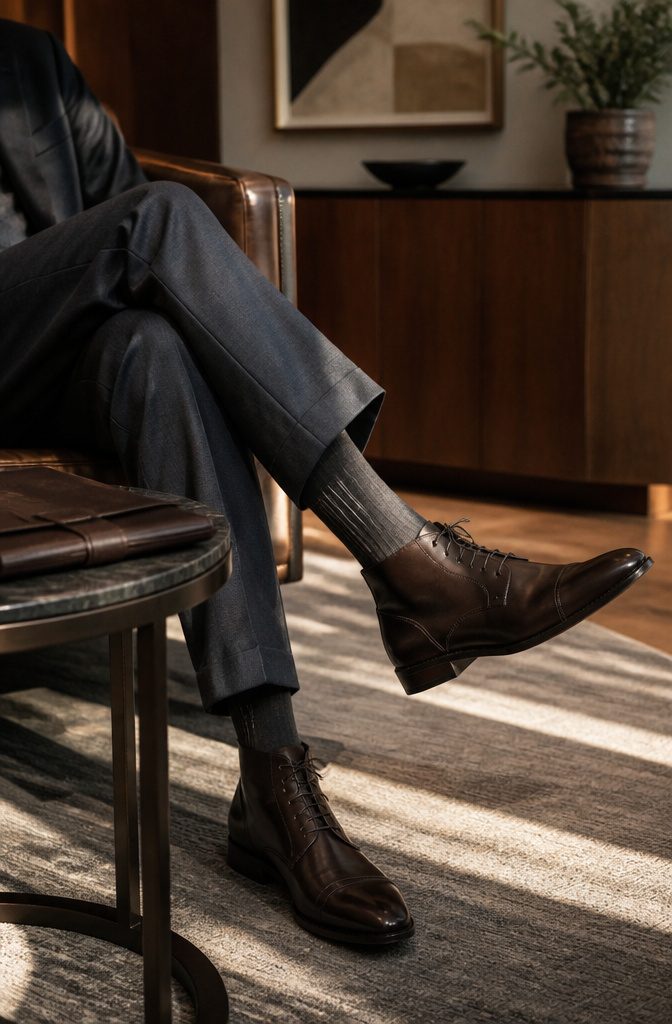
Dress socks sit thinner and smoother than the others, built for dress boots and formal settings where bulk shows through a slim trouser leg.
They use finer cotton blends or merino wool rather than the heavier knits that belong in hiking socks, and the fabric holds a cleaner line against leather.
Patterns stay subtle when they appear at all: a thin stripe, a small geometric, nothing that competes with tailored trousers or a blazer.
I reach for them when the outfit calls for dress boots and a button-up shirt, since the sock needs to disappear rather than announce itself.
They work best in colors that match the trousers or stay one shade darker, keeping the leg line unbroken from knee to ankle.
Cotton, Wool, and Synthetic Materials
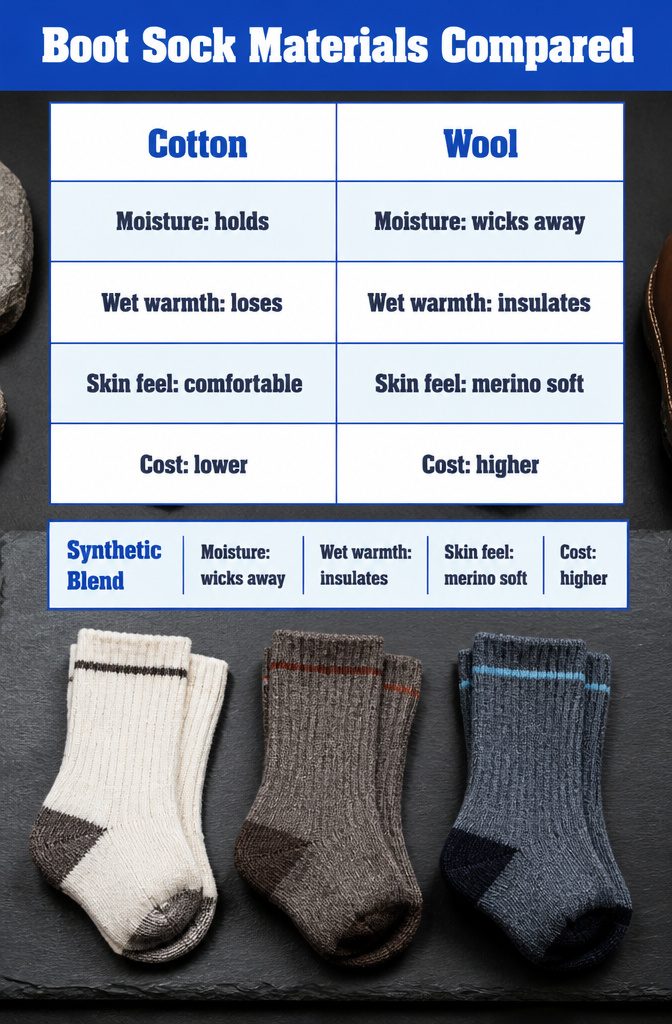
Cotton breathes well and feels comfortable against the skin, which is why it shows up in everyday boot socks.
The catch: cotton holds moisture rather than moving it away, so your feet stay damp if you sweat or walk through slush. That makes it a poor choice for long days in boots or cold-weather wear.
Wool insulates even when wet and pulls moisture away from the skin, which is why it dominates the boot-sock category.
Merino wool is soft enough to wear against bare skin without the itch older wool is known for, and it works for both casual wear and dressier boots.
Wool socks cost more than cotton, but the warmth and dryness justify it if you spend hours in boots.
Synthetic blends (polyester, nylon, or a mix of both) dry faster than cotton and stretch more than pure wool.
They hold their shape through repeated wear and washing, and most moisture-wicking sport socks rely on synthetics for that reason. A wool-synthetic blend gets you insulation with better durability and a snugger fit around the calf.
Match Sock Height to Boot Style
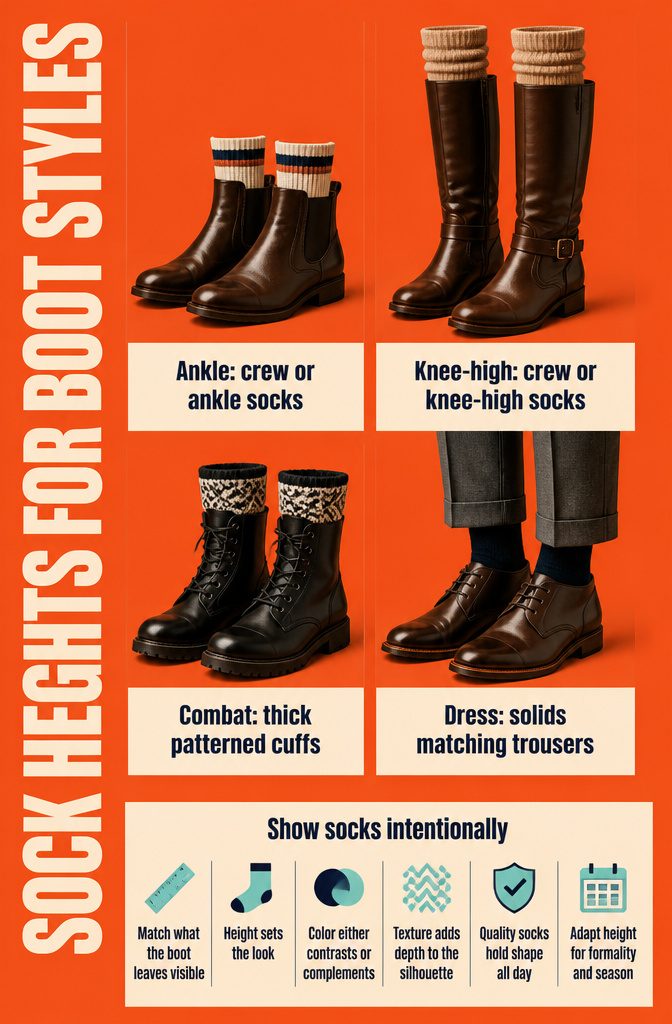
Boot style determines how much sock you should show and which length keeps the look intentional rather than accidental.
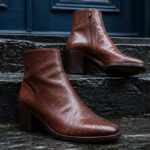
- Ankle boots work with crew or ankle socks that sit above the boot line. Go for patterns or colors that contrast or complement the leather.
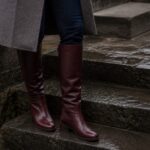
- Knee-high boots pair with knee-high or crew socks. Scrunch them slightly for a relaxed feel, or pull them smooth for something more polished.
- Combat boots call for thicker, patterned socks that peek out at the top. The bulk adds to the edgy silhouette instead of fighting it.
- Dress boots stay formal with solid or subtly patterned dress socks that match your trousers.
Letting socks show is the point, not a styling mistake. The height you choose just has to match what the boot leaves visible.
Use Color and Pattern for Contrast or Complement
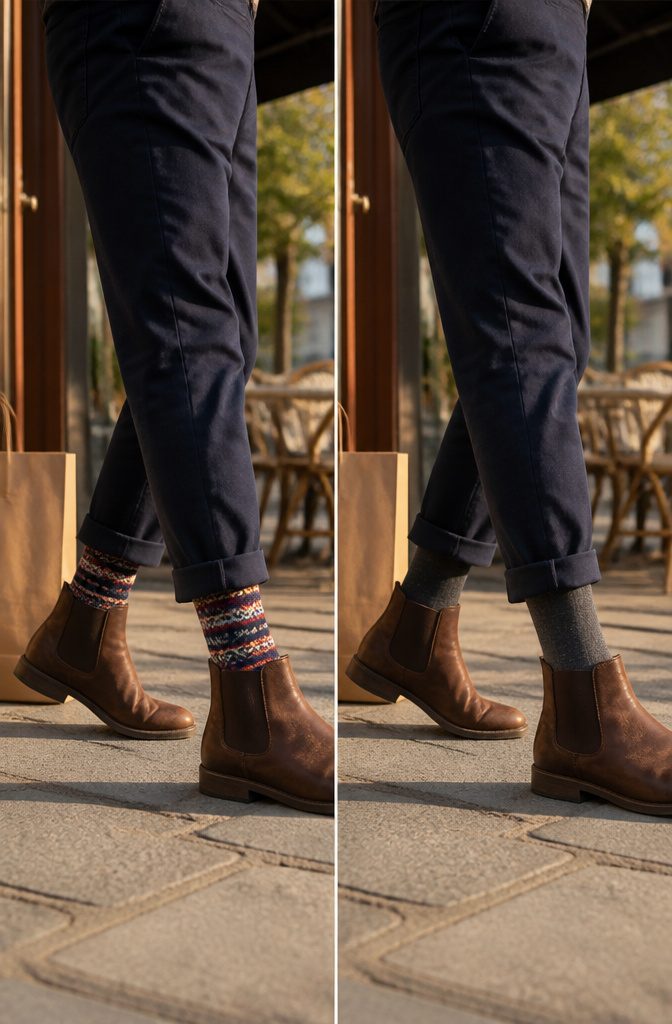
Sock color and pattern can anchor your outfit or shake it up, depending on how you play them.
If your boots are neutral, a pair of colorful or patterned socks adds a pop without much effort. Go the other way with bold boots and neutral or subtly patterned socks, and the boots stay the focal point.
Cuffing your pants makes socks visible, so treat them like part of the composition rather than an afterthought. A subtle cuff reads relaxed; a more pronounced one turns the socks into a deliberate statement.
The occasion decides how far to push it: colorful or patterned socks suit casual outings, while subdued tones fit business meetings where polish matters more than personality.
Layer Socks in Cold Weather
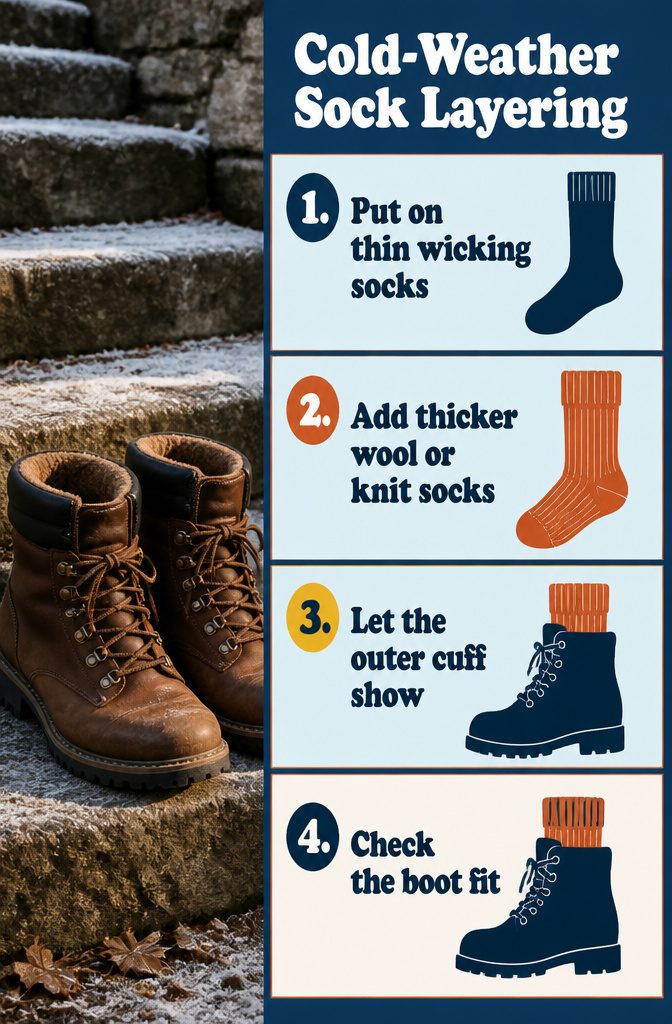
A thin moisture-wicking sock worn underneath a thicker wool or knit pair adds warmth without the bulk of a single overstuffed layer.
The inner sock pulls sweat away from your skin, while the outer one provides insulation and the texture you want showing at the boot cuff.
The setup works best when temperatures drop below freezing and you need serious coverage without losing circulation in a boot that already fits snugly.
Thick wool socks trap heat in summer and make your feet sweat through any boot lining.
Cotton socks in winter do the opposite: they hold moisture against your skin and leave you colder than you started. Match the weight to the season, and save layering for the days when a single pair leaves you underdressed.
Casual Day: Ankle Boots With Slim-Fit Jeans
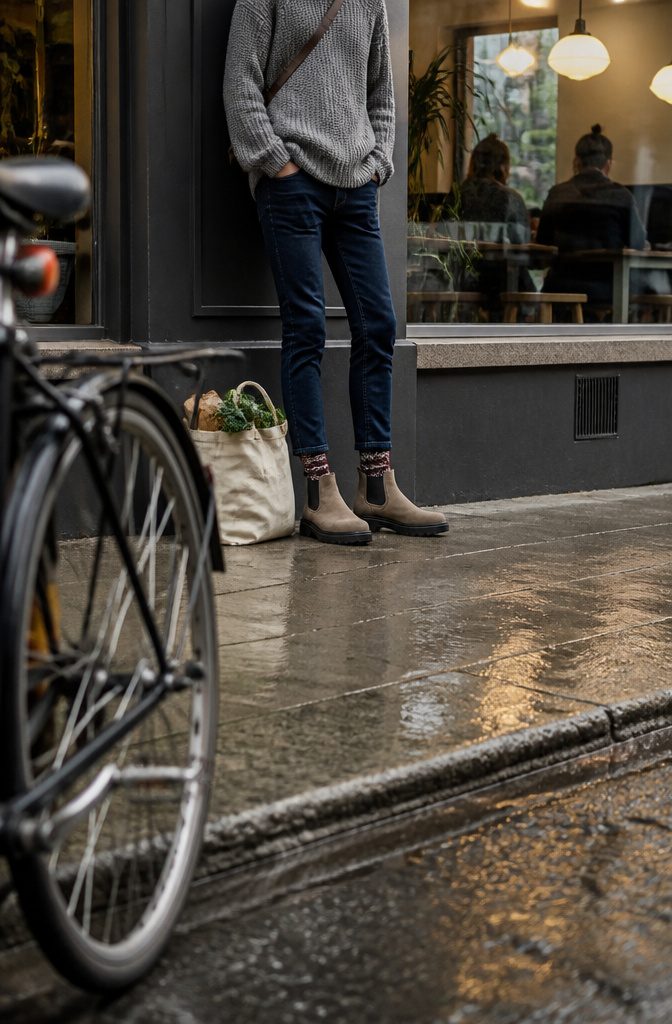
Ankle boots keep a casual outfit grounded without feeling heavy, especially when you pair them with slim-fit jeans and a chunky knit sweater.
Crew socks or ankle socks work best here: crew socks can peek out above the boot line, and that little flash of pattern or color breaks up the silhouette in a way that feels intentional rather than accidental.
If your boots sit in a neutral shade, socks in a fun pattern pull focus without competing.
A crossbody bag and minimal jewelry keep the look from tipping into effort; this combination reads as put-together but not precious, the kind of thing you reach for on a Saturday when errands stack up but you still want to look like you made a choice.
Office: Dress Boots With Tailored Trousers

Dress boots work best here with dress socks that match your trousers or carry a subtle pattern, nothing that screams for attention when you cross your legs in a meeting.
Pair them with tailored trousers and a crisp button-up, and the line from boot to sock to trouser stays clean enough that nobody notices the transition. A blazer pulls the whole thing into professional territory without trying too hard.
The boots themselves should sit on the dressier end: leather, polished, nothing chunky. Ankle-height dress boots keep the proportion right under trousers that break just above the boot shaft, and the sock fills that gap without bunching or sliding.
Solid colors in charcoal, navy, or black are the safest call, but a thin stripe or small geometric holds up fine if the rest of the outfit stays quiet.
Outdoor Adventure: Hiking Boots With Thicker Boot Socks
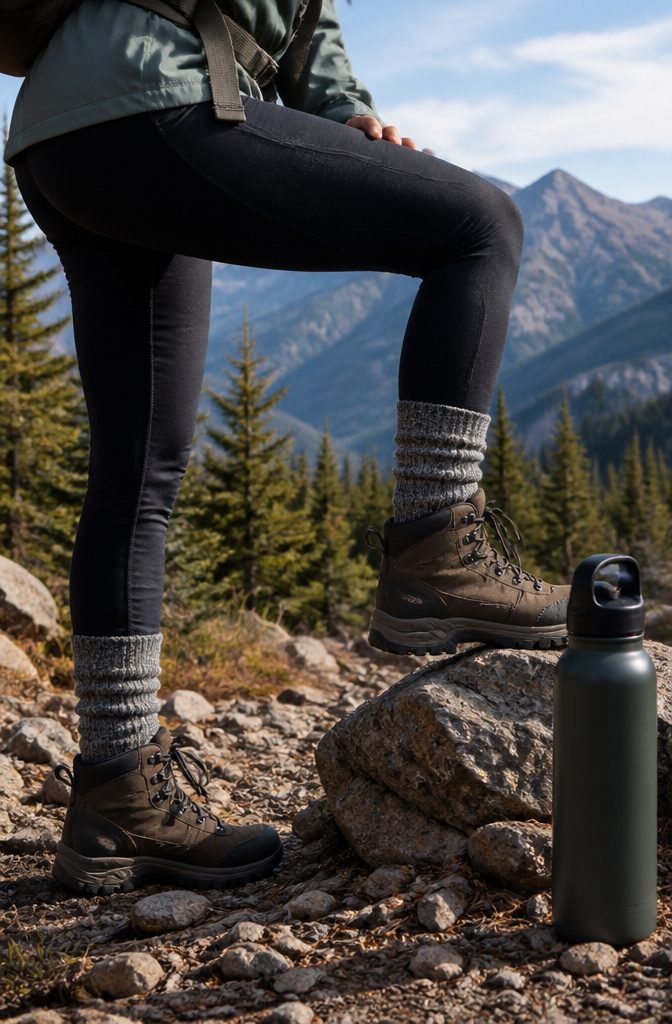
Hiking boots pull on thicker boot socks for a reason: they sit between foot and leather long enough to matter.
A moisture-wicking sock keeps sweat off skin when the trail runs uphill, and wool or synthetic blends dry faster than cotton once you stop moving.
Boot socks reach mid-calf or higher, so the cuff stays above the boot opening and nothing slides down to bunch under your heel halfway through the day.
Pair them with moisture-wicking leggings rather than cotton joggers. The same principle holds: fabric that moves sweat outward dries between water crossings and doesn’t stay cold against your legs when you slow down.
A breathable top in merino or polyester does the same work on your torso, and a lightweight jacket goes over it when wind picks up or temperature drops fast at altitude.
Keep the backpack light enough that shoulder straps don’t dig in through the jacket, because a heavy load turns comfort gear into something you want off.
Evening Out: Knee-High Boots With a Fitted Dress
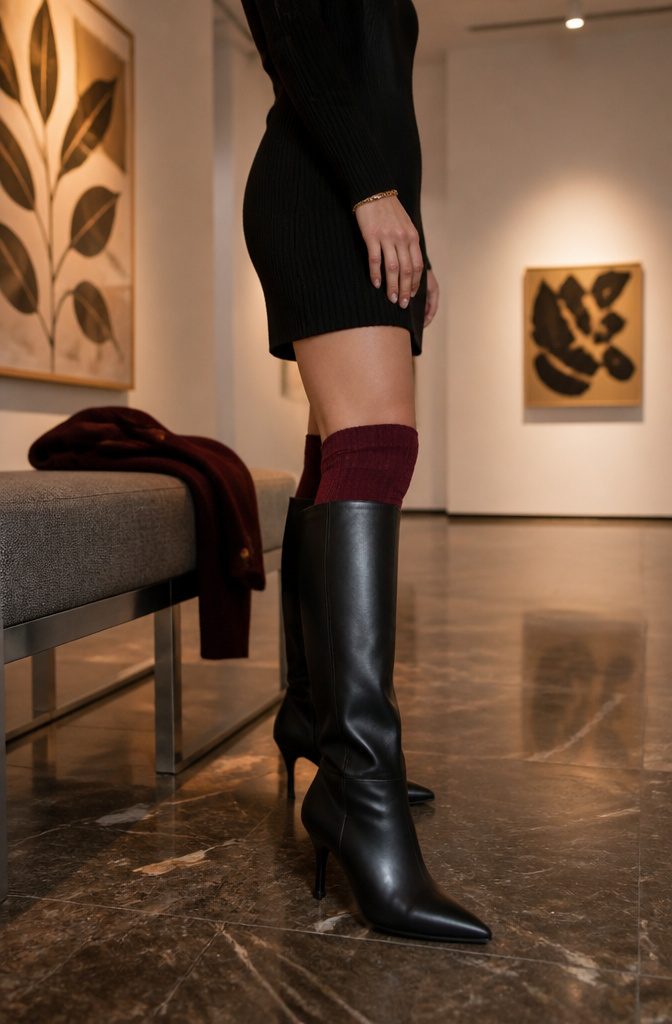
A fitted dress, knee-high boots, and knee-high socks make a deliberately layered evening look that still reads polished rather than schoolgirl.
The proportion works because the dress hem usually hits mid-thigh, so a few inches of sock show between hem and boot shaft, turning functional coverage into an intentional styling choice.
Thin knits in black, charcoal, or burgundy keep the line clean when the dress is dark; a lighter neutral like camel or cream softens the silhouette with a looser midi dress.
The boots carry most of the visual weight, so let them be the texture or shine moment. Smooth leather boots pair better with matte socks, and a suede shaft reads more casual even when the dress is structured.
Boots with a pointed toe or kitten heel keep the proportions sleek enough for dinner or a gallery opening; anything chunkier tips the outfit toward daytime.
Layered Winter Look: Combat Boots With a Long Cardigan
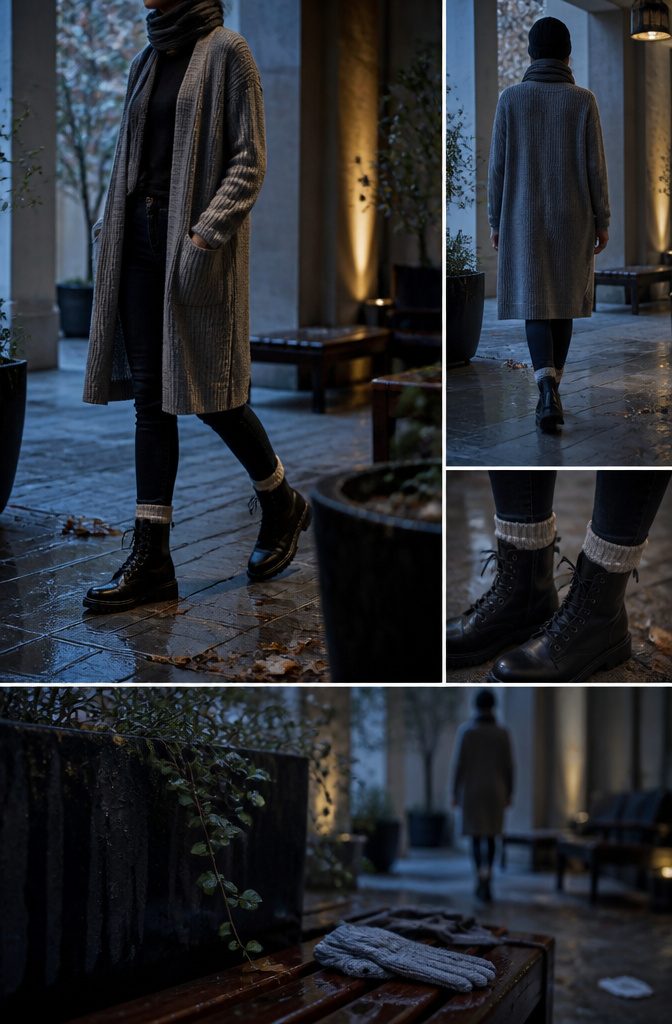
A long cardigan worn open over a fitted turtleneck creates instant visual balance when paired with combat boots.
The cardigan’s length (hitting anywhere from mid-thigh to knee) anchors the silhouette without adding bulk at the waist, which matters when you’re layering multiple pieces in cold weather.
Skinny jeans or leggings keep the line clean underneath, and crew socks peeking just above the boot cuff add texture without fighting for attention.
Combat boots ground the look with their platform sole and lace detail, while ankle boots in leather or suede work if the cardigan falls below hip level.
Add a scarf looped once and a beanie pulled low, and the outfit reads as intentional layering rather than just piling on warmth.
The cardigan stays open so the turtleneck shows through; buttoning it closed flattens the whole thing into a single block of fabric.
Frequently Asked Questions
Are crew socks good for boots?
Crew socks pair well with most boot styles because they reach mid-calf, which means they show above ankle boots and tuck neatly inside taller boots without bunching.
They offer more warmth than ankle socks and work in cotton for moderate temperatures or wool when it gets cold.
What socks should I buy for boots?
Buy crew socks for everyday wear with most boot styles, boot socks for hiking or work boots where you need extra cushioning, and ankle socks for low-cut boots where you want minimal visibility.
Wool or wool blends work best for moisture control and warmth, while cotton suits mild weather.