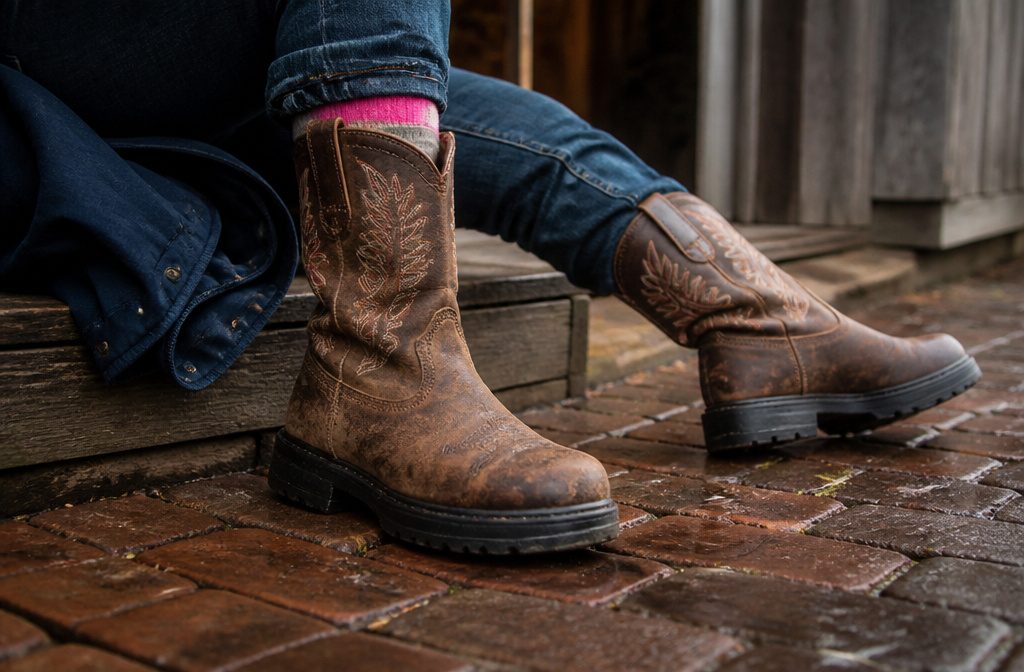
Steel toe cowgirl boots are Western-style work boots built with reinforced caps that meet ASTM impact and compression standards, rubber soles rated for slip or electrical hazard resistance, and either traditional pull-on shafts or lace-up ankle support.
The catch: most run a half size small, so sizing up matters if you’re between measurements or wearing thick socks.
Options range from Irish Setter’s 9-inch pull-on with metatarsal guards to Twisted X’s machine-washable Bomb Lite that works from barn to dinner without looking like safety gear.
Irish Setter Marshall Pull-On
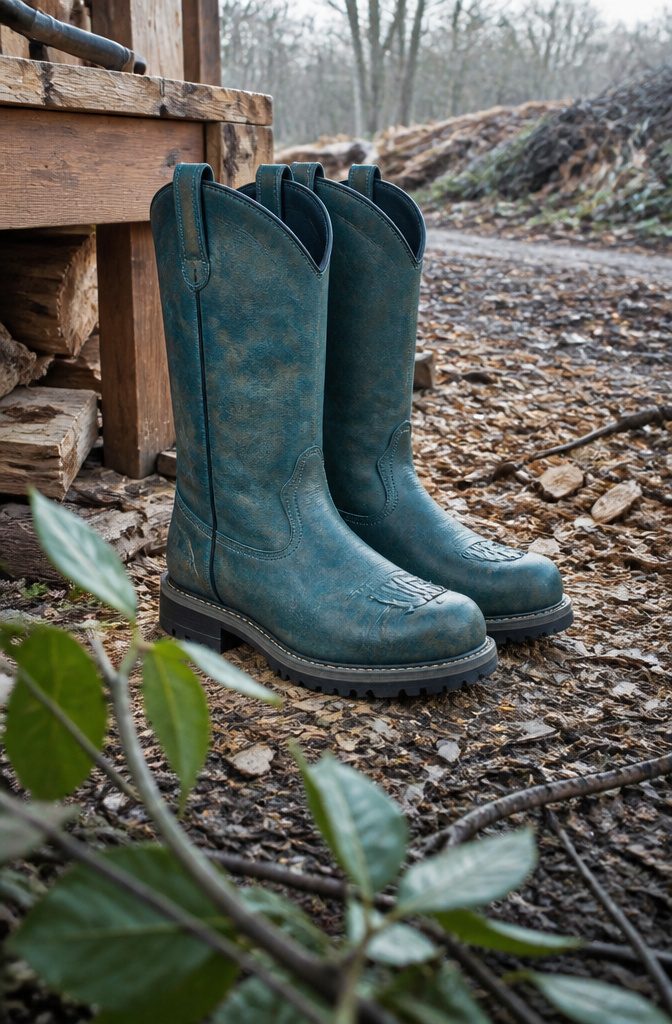
The Marshall pulls on easy enough, and the 9-inch shaft hits mid-calf where a boot should if you’re moving through brush or kicking through debris all day.
Irish Setter added a metatarsal guard over the top of the foot, so you get coverage beyond what the steel toe alone handles.
The buffed metallic finish on the teal leather is not subtle, which works if you want a boot that doesn’t look like every other pair on the job site.
The sole is rated for electrical hazard protection and heat resistance to 475°F, meeting ASTM standards for both.
It comes in Medium and Wide widths, and the whole boot is waterproof. The brown version trades the metallic look for full-grain leather that cleans up well enough to wear outside of work.
Durango Women’s Rebel RD3315
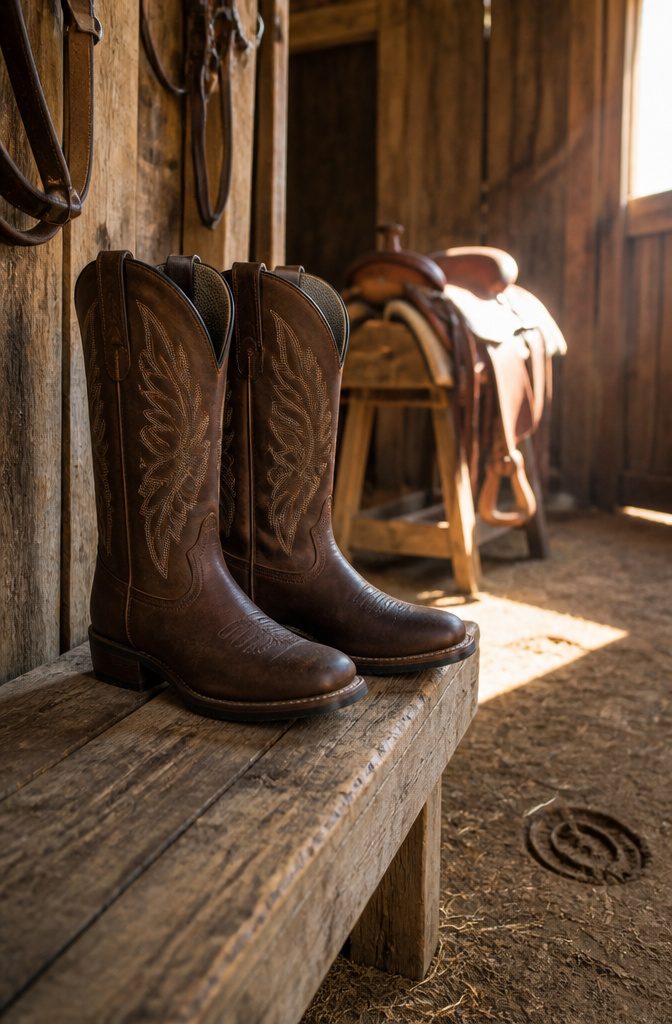
The Durango Rebel splits the difference between a riding boot and a walking boot, which matters if you spend part of your day mounted and part of it covering ground on foot.
The 1¼-inch rocker heel sits lower than a classic Western heel but higher than a sneaker, so your foot rolls through each step instead of landing flat.
A steel shank runs through the sole for support, and the cushioned footbed keeps long days from wearing you down.
The chocolate brown leather and stitched detailing read Western enough for a barn or ranch setting, but the silhouette stays clean enough that you can wear them to run errands without looking like you just stepped out of the arena.
The mesh lining keeps air moving around your leg, and the dipped topline lets jeans slide over the shaft without catching. If you need one pair to do the work of two, this is the build that makes it possible.
Justin Ladies Gypsy Steel
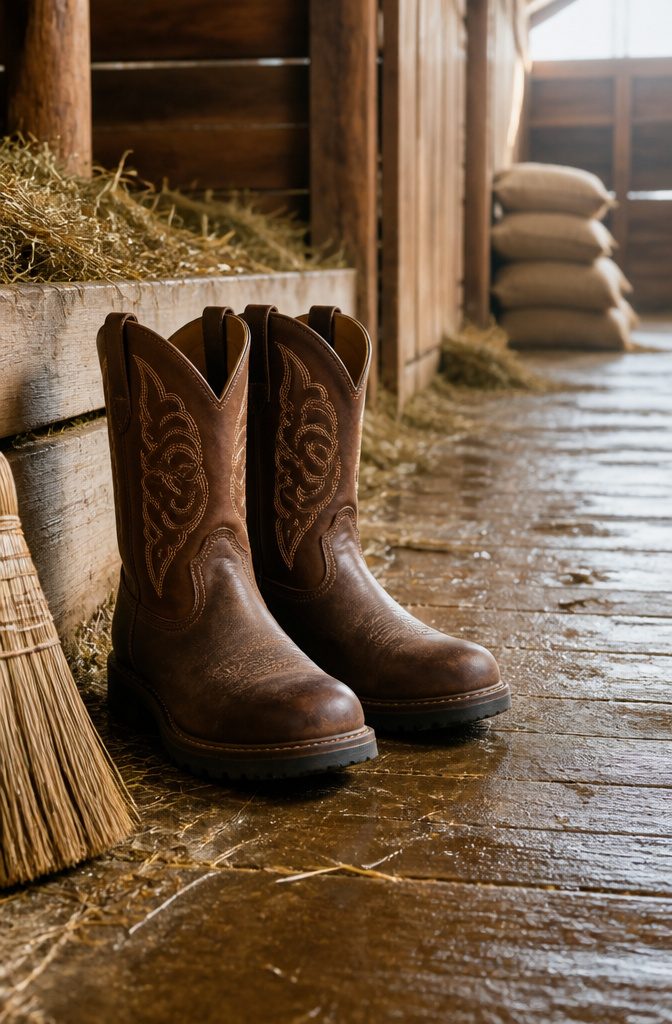
The Gypsy Steel is built for anyone who finds square toes uncomfortable or unappealing.
Its round toe shape fits feet that don’t work with the wider square profile, and the cut looks closer to a traditional riding boot than a barn boot.
Justin styled this one with contrast stitching across a chocolate-chip leather shaft, so it reads more finished than most steel-toe work boots.
The J-Flex Flexible Comfort System keeps the sole responsive through a full day, and the steel toe and instep give the same protection as any other safety boot on the list.
The leather is waterproof, and the rubber outsole handles wet barn floors without slipping. If you want safety certification in a boot that doesn’t announce itself as workwear, this is the pair.
Twisted X Bomb Lite
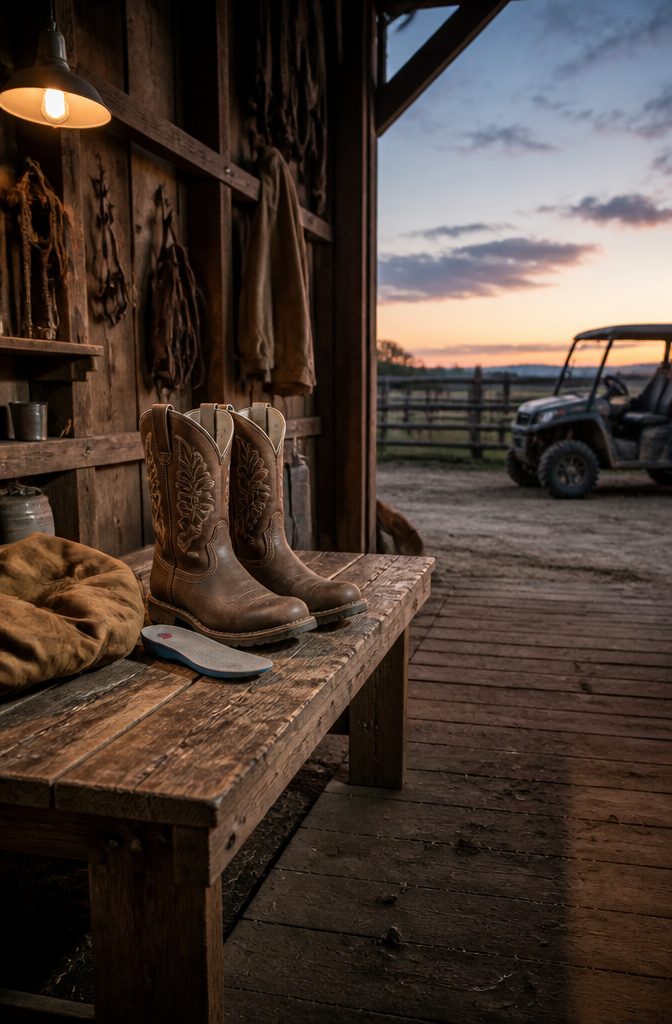
The floral embroidery on the 11-inch shaft turns this into a boot you can wear after the workday ends.
The Twisted X Bomb Lite has the steel toe and oil-resistant sole a work boot needs, but the neutral brown Bomber leather and decorative stitching let it pass from the barn to dinner without looking like safety gear.
The machine-washable footbed wicks moisture and comes out for cleaning, which matters if you’re wearing these all day. The XSD insole keeps the fit stable, and the long heel base stays planted without adding bulk.
This boot runs about a half size small, so order up if you’re between sizes. If your budget only covers one pair and you need it to cover three jobs, this one does the crossing.
Justin Ladies Deanne
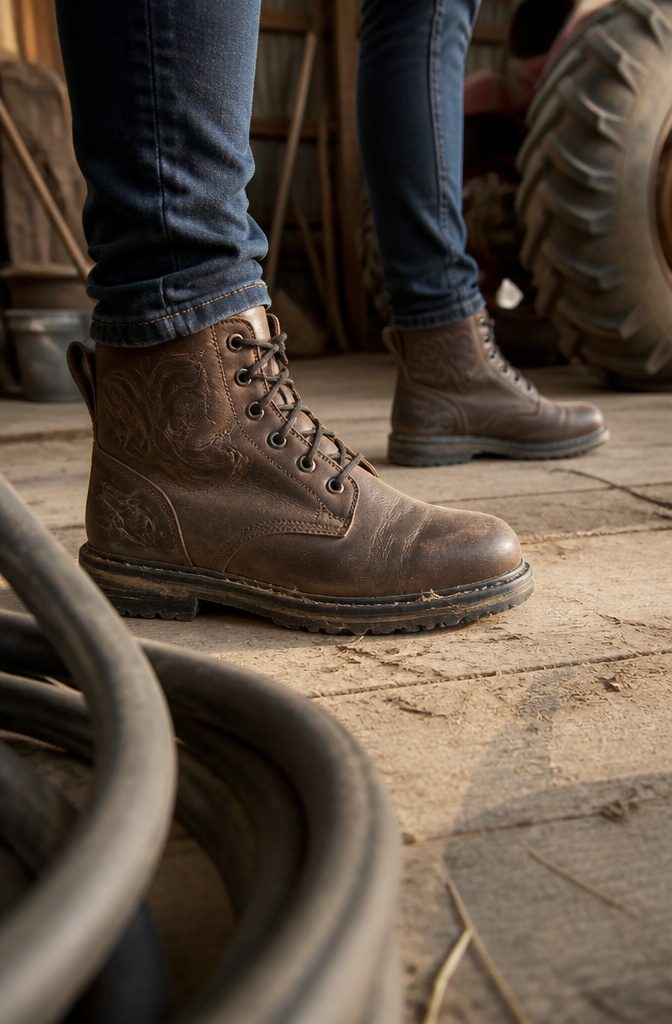
The lace-up design means you can dial in the fit around your ankle, which pull-on styles just don’t allow.
Justin’s Deanne gives you that adjustability along with serious ankle support, useful if you’re on uneven ground or climbing in and out of equipment all day.
The boot is waterproof and built around a Nano Comp composition toe, so you get ANSI protection without the weight of steel.
A full orthotic insole sits under your foot, and the round toe box and rubber sole keep the comfort going through a long shift.
The scrolled stitching and details make it one of the better-looking options in the safety-toe category. If you’re required to wear approved boots for work, this is a style that doesn’t look like a concession.
Dan Post Parkston Steel Toe
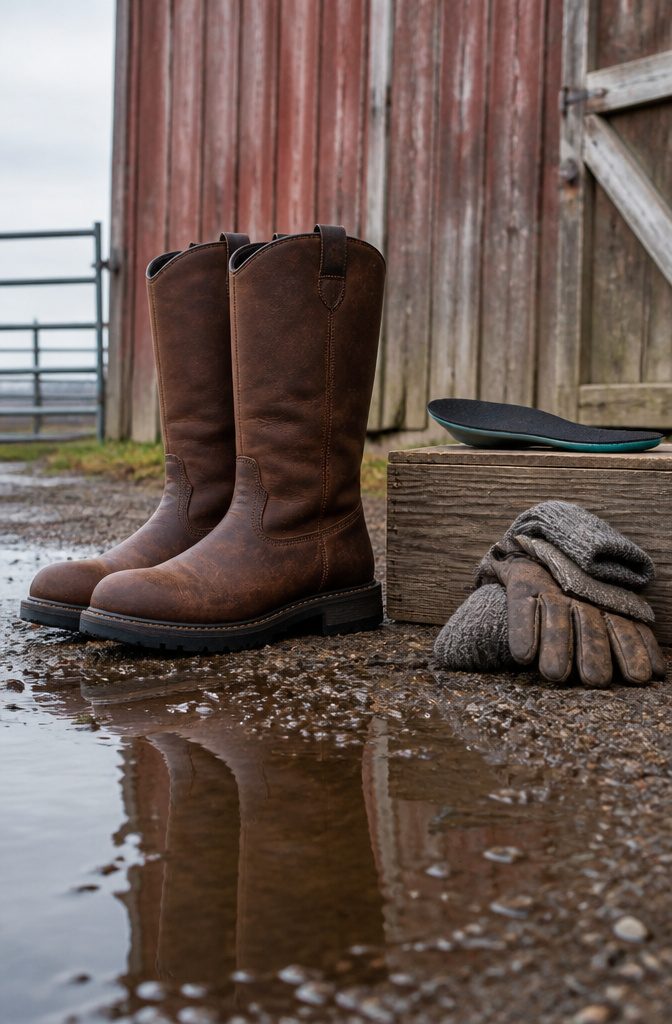
The Parkston runs a half size small, so order up if you’re between sizes or plan to wear thick socks.
Dan Post kept the styling simple: brown leather, a steel toe that meets ASTM standards, and an oil- and heat-resistant rubber outsole that holds up on concrete or gravel.
The boot is waterproof all the way through, not just treated at the surface, which matters if you work outdoors or around standing water.
The leather softens fast enough that you skip the usual break-in limp, and the removable orthotic insole keeps things comfortable through a full shift.
The 1.5-inch heel sits low enough for all-day wear but still fits a stirrup if you ride.
The 11-inch shaft looks right with jeans tucked or stacked, and the boot cleans up well enough that you can wear it straight from the barn to dinner without looking like you just left work.
Durango Lady Rebel Patriotic Boot
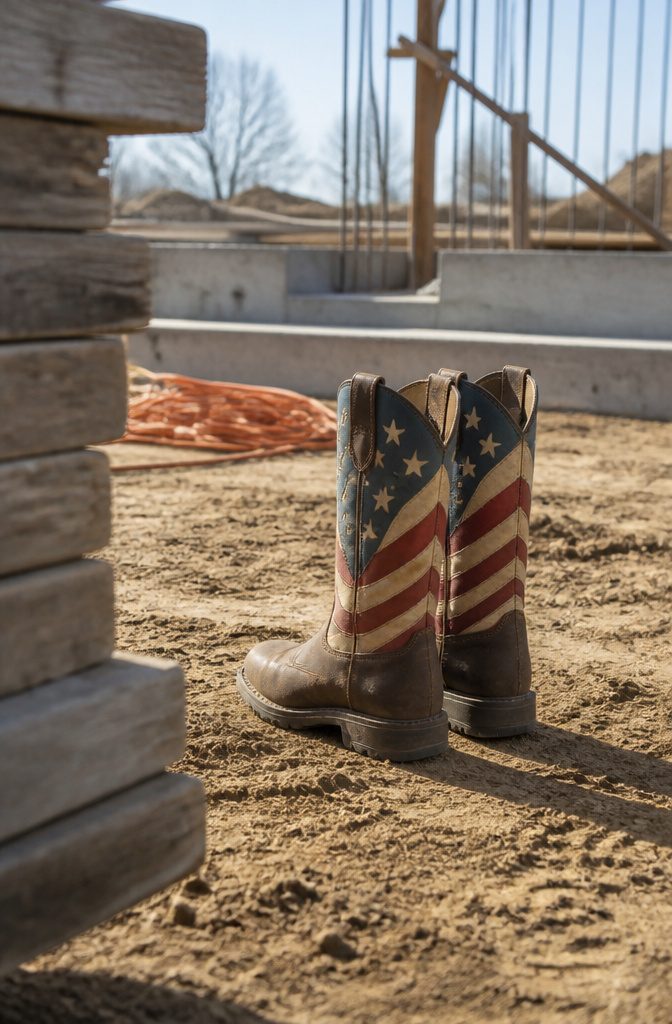
The Durango Lady Rebel Patriotic brings Western flair straight to the jobsite with an American flag graphic running up the 11-inch leather shaft.
That design element sets it apart in a category that tends toward plain brown or black, and it holds up through the kind of wear most decorative stitching would not survive.
The boot runs on Durango’s Suspension System, a cushioned footbed and flexible shank meant to absorb impact across concrete floors or uneven outdoor ground.
The 1¼-inch heel splits the difference between a roper and a riding heel: low enough for all-day walking, high enough to stay secure in a stirrup if you ride outside of work hours.
The steel toe meets ASTM F2413 standards, so it clears the safety requirements for most industrial and construction settings without adding the bulk of an oversized cap.
Match Protection to Your Job Requirements
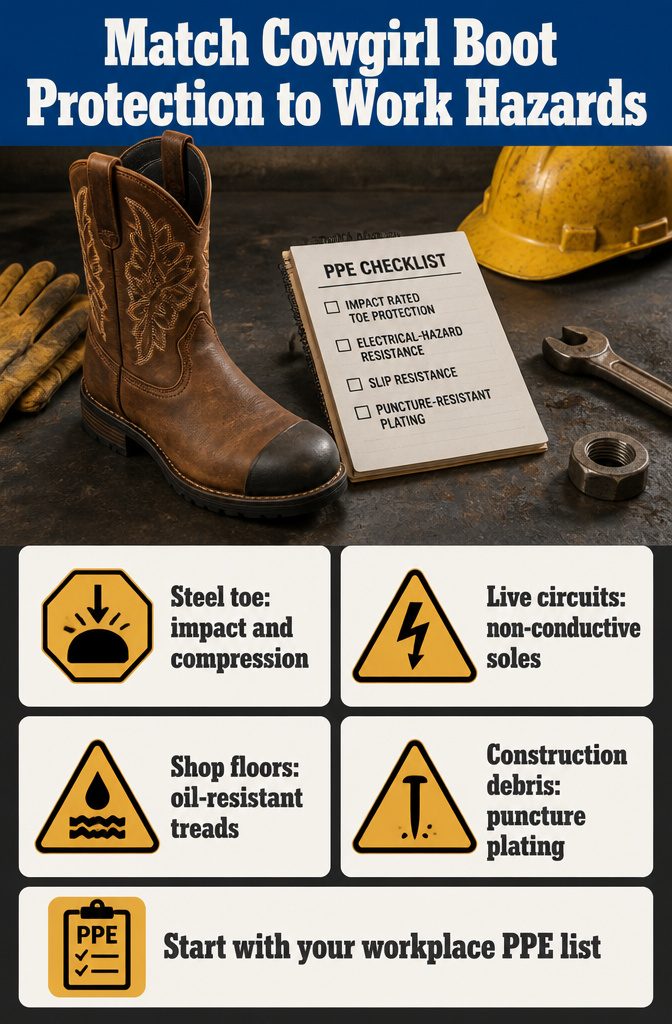
Start by checking what your employer actually calls for: impact-rated toe protection, electrical-hazard resistance, slip resistance, or puncture-resistant plating.
Steel-toe boots protect against both impact and compression, which matters if you work around dropping tools or rolling stock, but some jobs stack requirements (non-conductive soles for live circuits, oil-resistant treads for shop floors, puncture plating for construction debris).
A boot rated for one hazard may not cover another, and assuming it does leaves you short on protection.
Different environments demand different combinations, so matching the boot to the specific risks on your job site is not optional. If your workplace runs a PPE list, start there rather than guessing from the boot’s name.
Fit the Boot to Your Foot and Your Socks
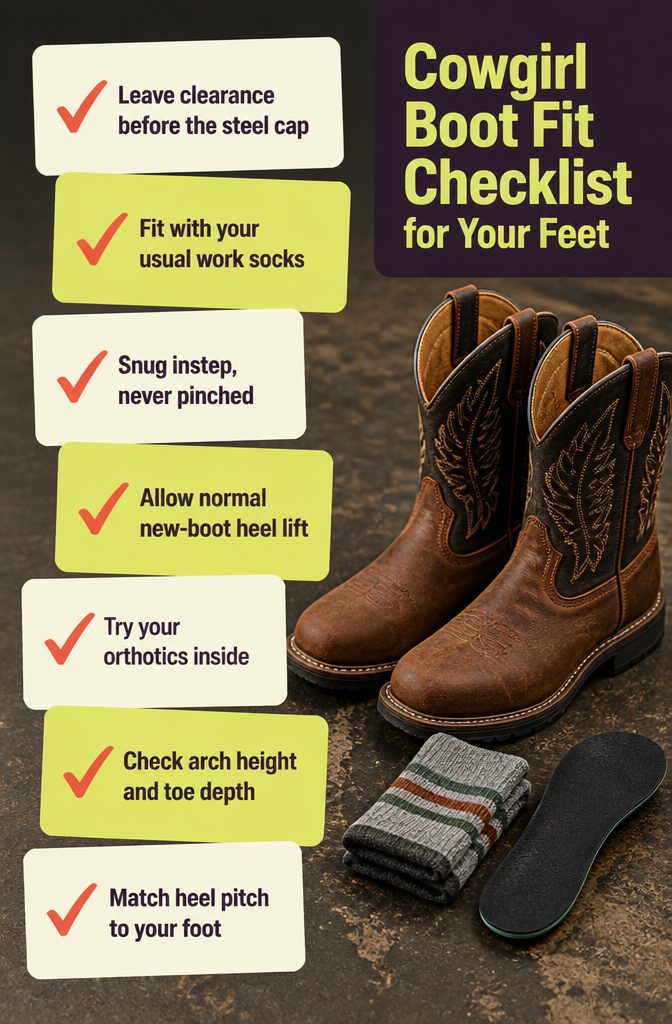
Your toes should not press against the steel cap at the front. The point of the cap is to absorb an impact before it reaches you, and that only works if there is clearance.
Fit the boot with the socks or supports you normally wear, because thickness changes how much room is left.
The instep should feel snug without pinching; leather stretches some as it breaks in, but a boot that hurts on day one rarely becomes comfortable just from use.
The heel should stay reasonably secure when you walk, though a bit of lift is normal in a new Western boot.
If you wear orthotics, most lace-up and pull-on styles will accept them without trouble.
Arch height, toe box depth and heel pitch all shift comfort more than any single brand does, so narrow feet with high arches may hate the boot a flat-footed wearer swears by.
Steel Versus Composite Toes
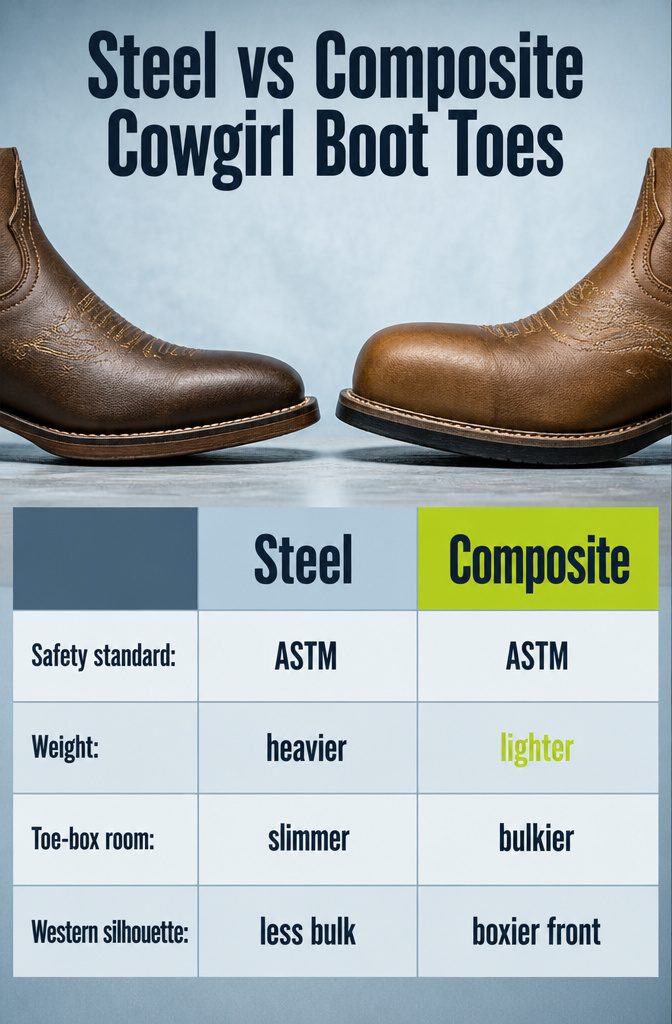
Composite toes use carbon fiber, fiberglass, or Kevlar instead of steel, and both meet ASTM safety standards.
The difference shows up in weight and fit: composite versions are physically lighter to wear, which matters over a long shift, but the material takes up more room inside the boot, so the toe box sits bulkier than a steel toe cut to the same protection level.
Steel toes pack the impact resistance into a thinner profile, leaving more room for your foot without adding bulk to the boot’s silhouette.
That tighter fit is why you see more style variation in steel toe cowgirl boots right now: the slimmer cap works better with a traditional Western shape.
Composite toes work when weight is the deciding factor, but expect the boot to look and feel a bit boxier at the front.
How Western Work Boots Differ From Traditional Cowboy Boots
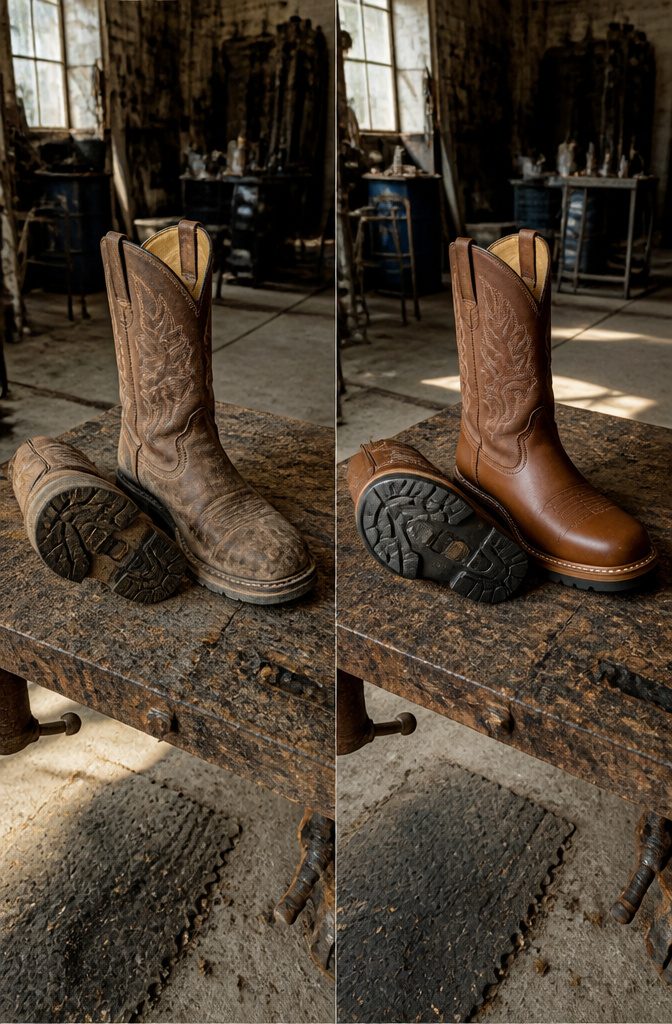
Western work boots trade the riding silhouette for a walking platform.
The outsole shifts from smooth leather to slip-resistant rubber with tread, and the heel drops from the angled Cuban profile to a straight half-inch roper heel that distributes weight evenly when you are on your feet all shift.
Cushioning midsoles absorb impact in a way traditional cowboy boots never needed to.
The toe box opens up.
Where pointed vaquero styles prioritized stirrup clearance, work boots default to round or square toes that give your foot room to swell without pinching after hour six. The wider profile also accommodates steel, composite, or alloy safety caps without cramping.
Slip-on construction stays, but the reason matters: if your boot gets caught, you can kick free faster than you could unlace.
Between the rubber sole, the protective toe, and the lack of exposed stitching on high-wear zones, the boot is built to take damage instead of asking your foot to.
Frequently Asked Questions
What’s the difference between a composite toe and steel toe?
Both meet ASTM safety standards, but composite toes use materials like carbon fiber or Kevlar and weigh less. Steel toes pack the same protection into a thinner profile, leaving more room inside the boot without adding bulk to the silhouette.
Are steel toe boots dangerous?
No.
The claim that steel toes break and cut your foot under pressure is a myth. Steel toes protect against compression, impact, piercing, and cutting better than any other option.
Can women wear men’s work boots?
Yes.
Size down about 1.5 sizes from your women’s size, wear thicker socks, and add supportive insoles if needed. Men’s boots typically run wider and have different arch placement than women’s styles.
What is the difference between men’s and women’s work boots?
Women’s work boots are built with narrower widths and higher arches to match typical foot shape differences. Sizing scales also differ, along with some color and style options, but the safety features remain the same.
Can you get safety features you need from a Western-style boot?
Yes, if the boot carries the required certifications for your job. Western work boots deliver the same steel toes, electrical hazard protection, and slip resistance as traditional safety boots, just in a different silhouette.
What makes a Western-style boot a work boot?
Treaded rubber outsoles replace smooth leather soles, straight roper heels replace angled Cuban heels, and cushioned midsoles absorb impact over long shifts.
The toe box opens up to round or square profiles that fit safety caps, and slip-on construction lets you kick free fast if the boot gets caught.