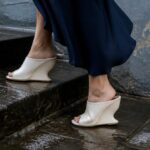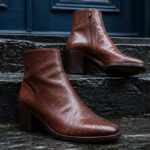
Boots women fashion covers ankle boots, Chelsea boots, knee-highs, over-the-knee styles, combat boots, western boots, winter boots, kitten heels, sock boots, and slouchy boots.
The right pair depends on heel height, shaft length, and whether you need waterproofing or a silhouette that works under trousers.
This season brings back sock boots in stretch fabric, slouchy styles with deliberate wrinkling, and patent finishes that resist salt stains better than suede.
1. Ankle Boots and Booties
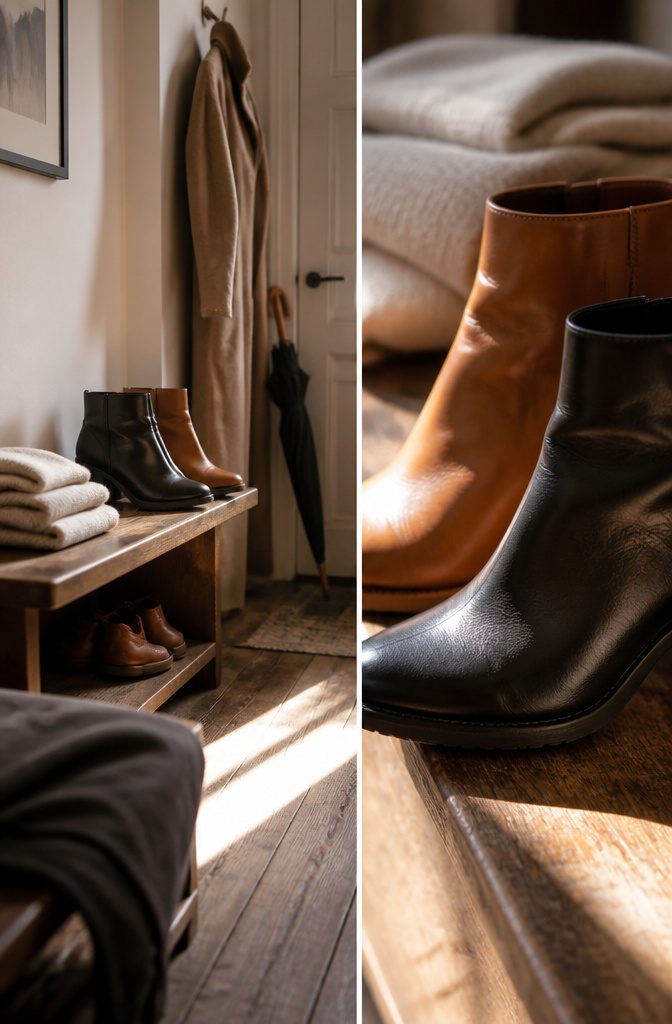
Ankle boots sit at or just above the ankle and work harder than most footwear. They pair as easily with jeans and sweaters as they do with dresses and skirts, making them a true year-round essential.
The cropped height gives them range that taller boots don’t have: you can wear them under cropped trousers, over skinny jeans, or with midi skirts without the styling getting complicated.
Heel options matter here.
Flat ankle boots lean casual and cover more ground comfortably. Block heels add height without wobble, which makes them a strong choice if you’re on your feet through meetings or errands.
Kitten heels and higher heeled styles dress the boot up for office wear or dinner. Wedge ankle boots split the difference, giving you lift with more surface contact than a stiletto.
For versatility, black or tan leather ankle boots win. They don’t fight the rest of your wardrobe, and leather holds up better than synthetic materials season after season.
2. Chelsea Boots
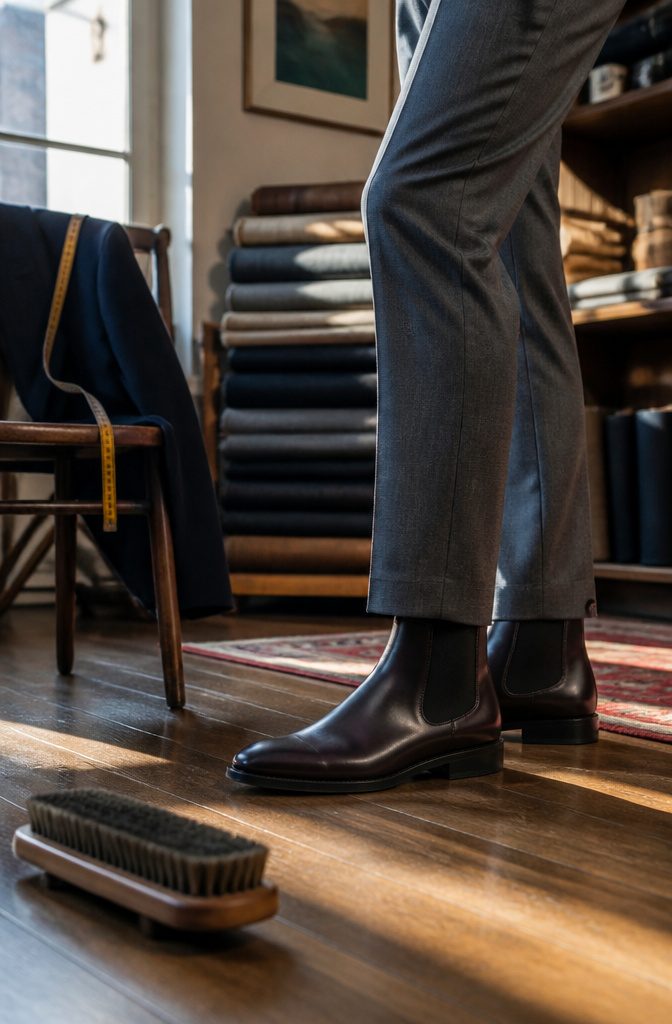
Chelsea boots earned their reputation as a slip-on style that actually looks polished: no laces, no fuss, just elastic side panels that stretch when you step in and snap back to hold the boot close to your ankle.
The side gussets sit flush, which keeps the silhouette clean enough for tailored trousers and slim enough that they disappear under straight-leg jeans without bunching.
Most designs include a small loop or tab at the back to help you pull them on.
The ankle-high cut stops just above the bone, which makes them easier to walk in than taller boots but still substantial enough to anchor an outfit.
Leather versions lean more structured; suede softens the look and works better with midi skirts or relaxed fits.
I reach for them when I want boots that read as intentional rather than casual, but I’m not committing to a full knee-high moment.
3. Tall, Knee-High, and Riding Boots
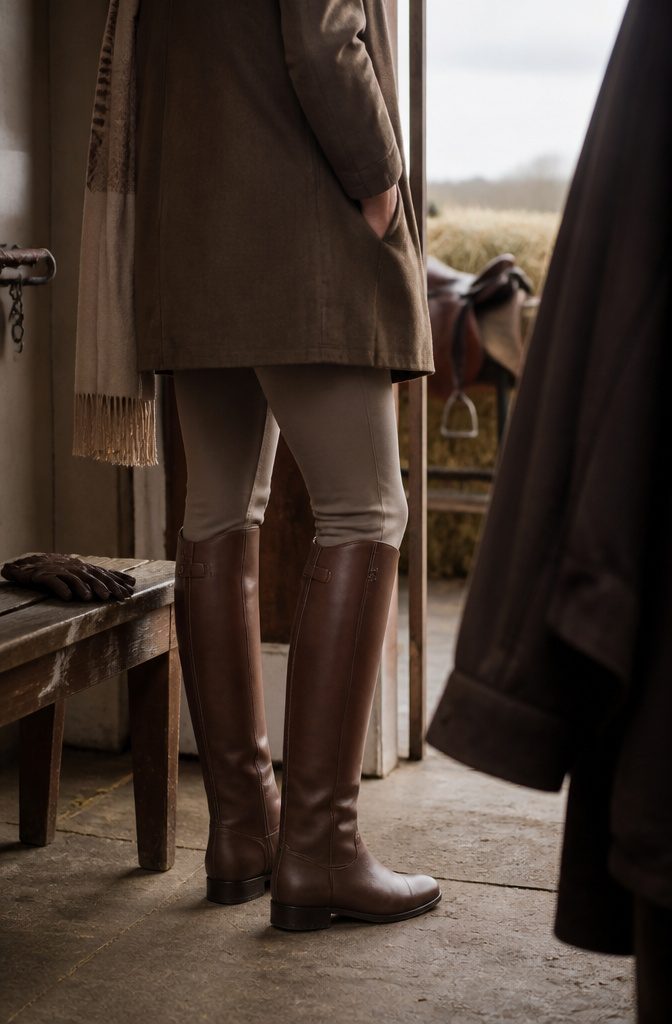
Knee-high boots remain the most classic option in the tall boot category, and for good reason: they pair cleanly with everything from sweater dresses to slim trousers without overwhelming the leg line.
A sleek style with a heel works best for fall, and you control the drama by choosing heel height.
Riding boots bring the same shaft length but shift the look toward equestrian: straight shaft, structured fit, often finished with minimal hardware. Miu Miu, Toteme, and Stuart Weitzman all return to this style regularly.
Either silhouette streamlines an outfit by creating one continuous line from knee to floor, which is why they work layered over pants or worn with skirts that hit above the boot shaft.
Stick with black or brown leather if you want a pair that covers the most ground. Riding boots look right with long coats and scarves; knee-highs in suede soften the whole outfit without losing structure.
4. Over-the-Knee Boots
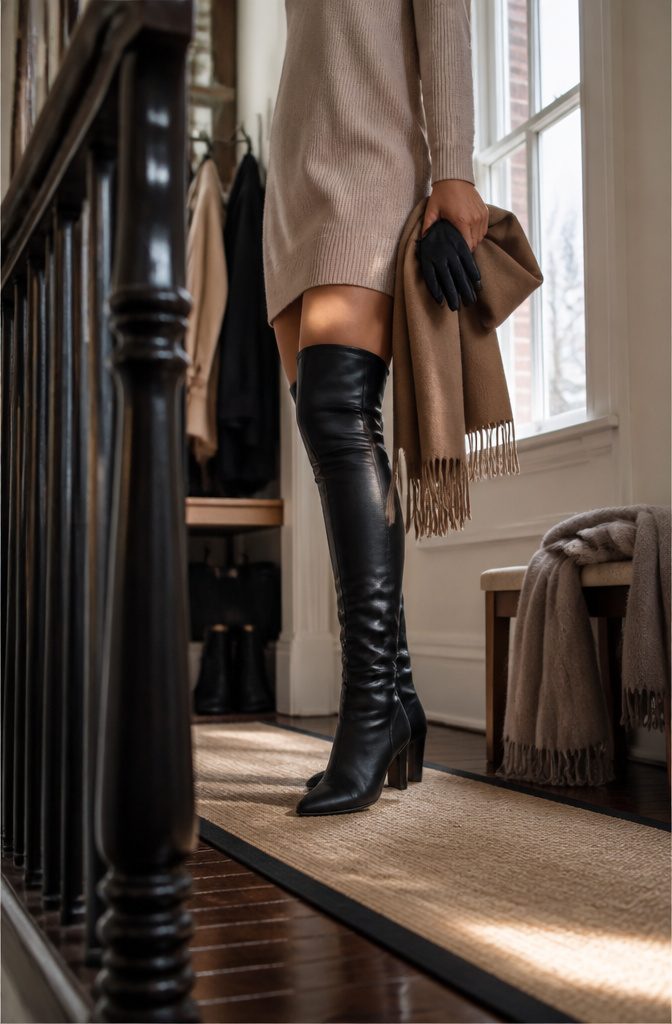
Over-the-knee boots stretch well past the knee and read as the boldest boot in a wardrobe.
They lengthen the leg in a way shorter styles can’t, which makes them work best when that line stays unbroken: pair them with a mini dress or skirt so the boot meets bare skin, or tuck skinny jeans and leggings in completely.
The streamlined effect matters more than the hem length. Midi skirts work as well as minis, as long as the boot stays visible.
In colder weather, the tucked-jean approach makes more practical sense than exposing your thighs.
Keep the rest of the outfit neutral and skip heavy accessories; the boot is already doing the work. A monochrome palette from boot to hem gives the cleanest result.
5. Combat and Moto Boots
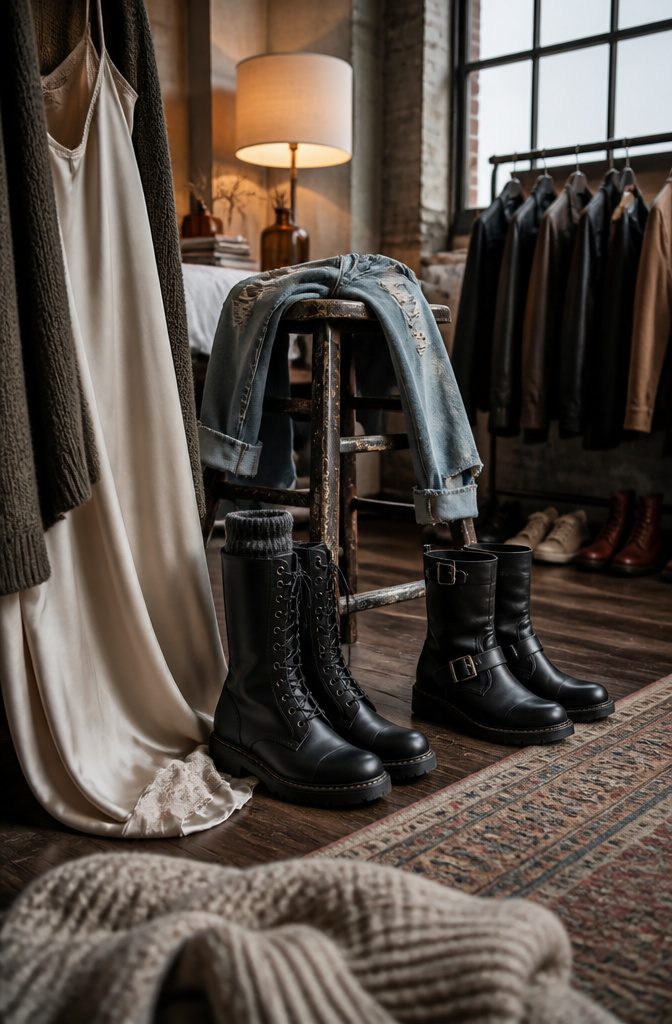
Combat boots carry lace-up fronts and lug soles thick enough to shift the whole silhouette, while moto boots lean on buckles, straps, and reinforced panels borrowed straight from motorcycle gear.
Both deliver the same rugged contrast when you drop them into an otherwise soft outfit. Pair them with a slip dress or a chunky knit, and the balance reads intentional rather than accidental.
The edge works because the boot fights the rest of the look instead of matching it. Flowy dresses, leggings, even ripped jeans all benefit from the weight a combat sole brings to the hemline.
If you want a looser fit around the calf or a square toe that feels less aggressive, moto styles give you those options without losing the toughness that makes the style worth wearing.
Bottega Veneta’s lug-sole version leans dramatic; Prada’s goes understated but still gets the job done.
Thick socks visible above the boot shaft add a laid-back finish, though the boot works without them if that is not the vibe you are after.
6. Western and Cowboy Boots
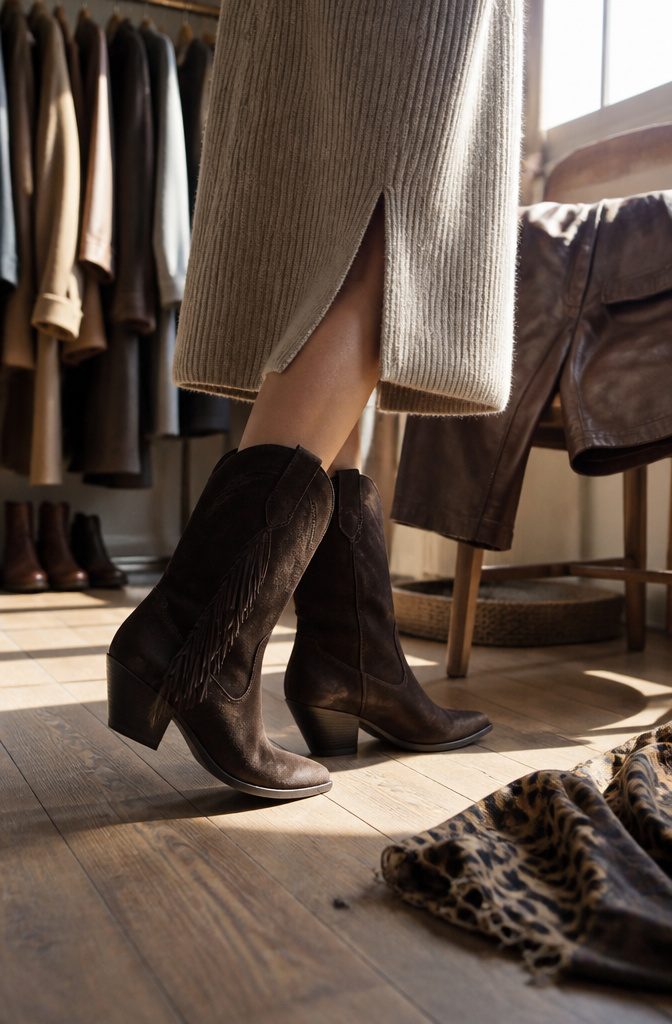
Western boots bring a pointed toe, a stacked heel, and a shaft that hits mid-calf: features sharp enough to read across a room.
Pair them with denim and the look stays familiar; swap in a ribbed knit dress or leather Bermuda shorts and the boot anchors something unexpected.
Gabriela Hearst ran hers with faux fur coats this season, and Schiaparelli added horse-bit harnesses to suede pairs, pulling the style away from its yeehaw roots without losing the silhouette that makes it work.
Black neutrals let the boot do the talking. For more bite, animal prints and bold colors are showing up this season.
Fringe, embossed leather, and suede textures add another layer without complicating the shape. The toe stays pointed, the heel stays angled, and that combination gives you height and structure in one piece.
7. Winter-Friendly Boots
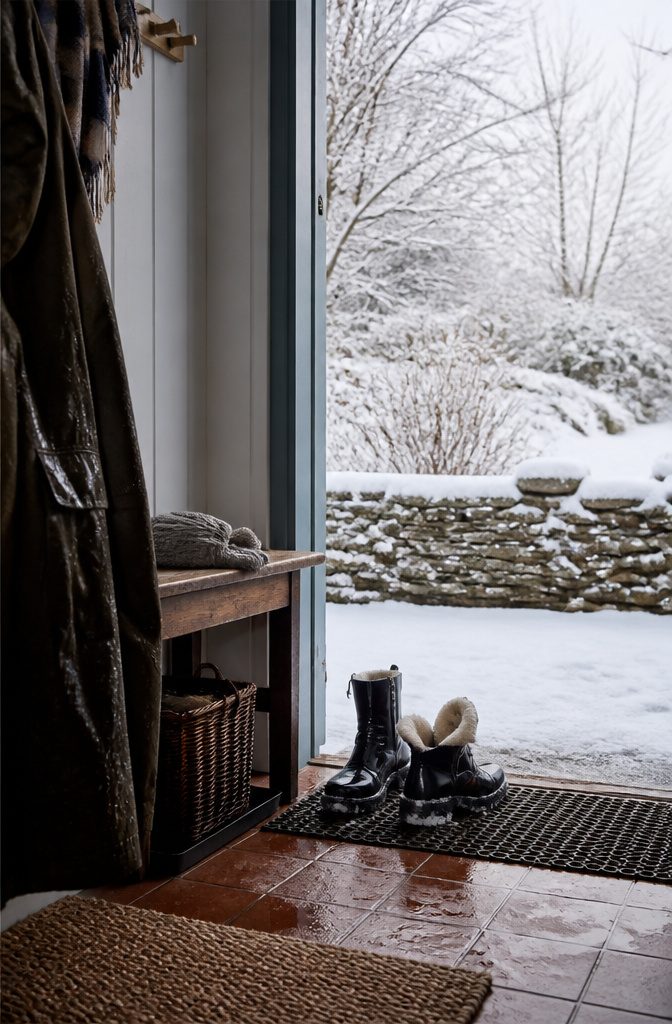
Waterproof leather and rubber soles matter more than you’d think when snow is on the ground.
Brands like Sorel and Timberland build boots with traction that actually grips ice, water-resistant finishes that keep slush out, and insulation rated for single-digit temperatures. The difference shows up the first time you walk three blocks in January.
Faux shearling lining adds warmth without the bulk of a heavy sock, and faux fur trim around the top seals out drafts better than a plain leather cuff.
Both materials sit close to the foot, so the boot still fits under straight-leg jeans without bunching at the ankle.
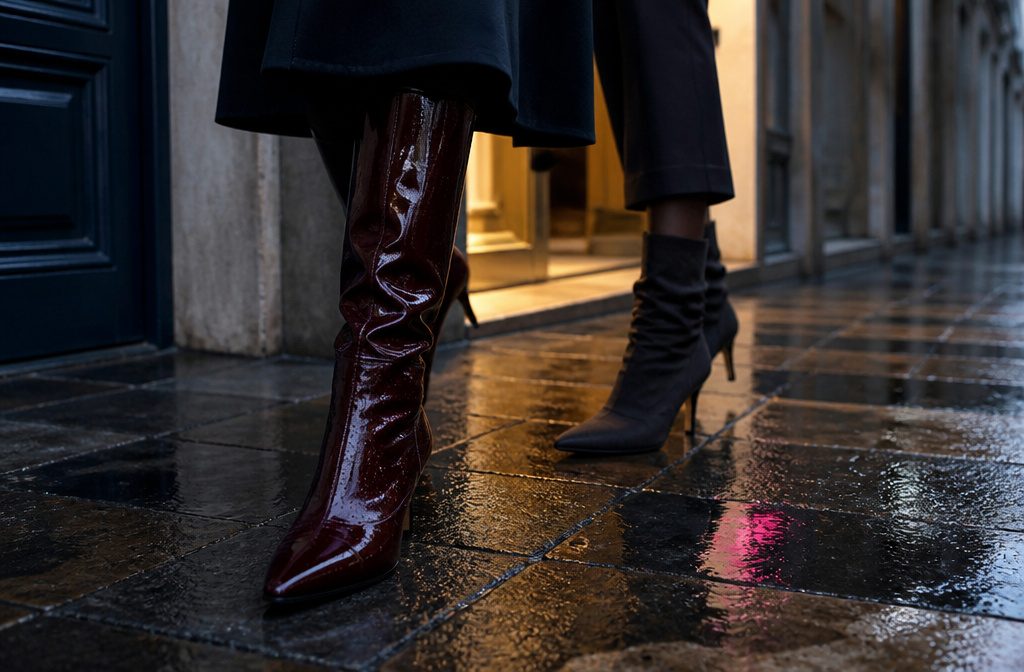
High-shine boots are a new stand out of the season, with a texture that feels super luxe, but also easy to style and integrate with your wardrobe. An added bonus, they’re more water-resistant compared to suede.
— Vogue
That water resistance becomes the deciding factor if you’re choosing between finishes.
A glossy patent boot handles salt stains and puddles better than suede, and you can wipe it down in seconds rather than treating it with a protectant every few weeks.
8. Kitten-Heel Boots
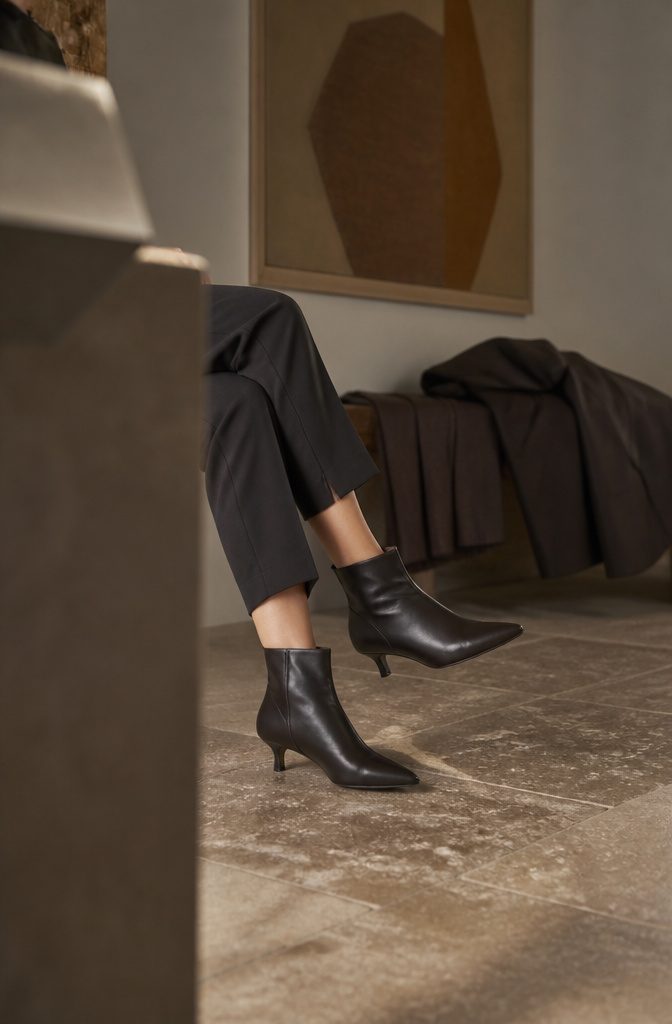
Kitten-heel boots put roughly 1.5 to 2 inches under your heel, enough to lengthen the leg without demanding the postural adjustments a stiletto forces.
I reach for them when the day runs long but the occasion still calls for polish: office meetings, gallery openings, lunch that stretches into evening.
The silhouette reads refined rather than casual, which means they pair better with tailored separates than with athleisure. Cropped pants show the full boot and keep proportions clean; midi skirts soften the look without hiding the heel.
Price range spans wide (J.Crew delivers accessibility, Toteme lands at the investment end), but the low heel itself is the functional anchor.
Your foot sits closer to the ground, so balance comes easier than it does in a pump, and you can walk more than a few blocks without planning your route around a place to sit.
9. Sock Boots
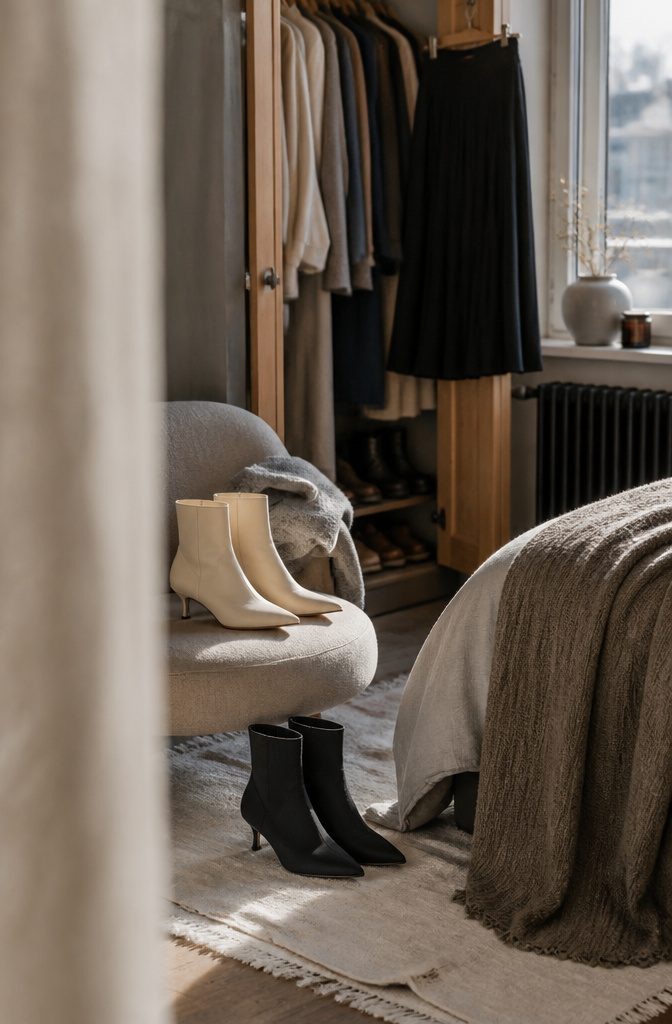
Sock boots came back hard for fall 2025, and the silhouette is slim, ankle-hugging, and close to the foot in a way that reads delicate rather than clunky.
Toteme, Chloé, and Chanel all showed versions, and emerging labels like Herbert Levine sold out fast.
The appeal is partly the streamlined look (no bulk at the ankle) and partly the subversive edge of treating a boot like hosiery. Stretch fabric shows up often, which is what lets the boot hug without gaping.
I’d reach for buttery leather when the budget allows, since a refined line is the goal and stiff material fights it. Pair them with midi skirts or cropped trousers where the slim shaft stays visible.
10. Slouchy Boots
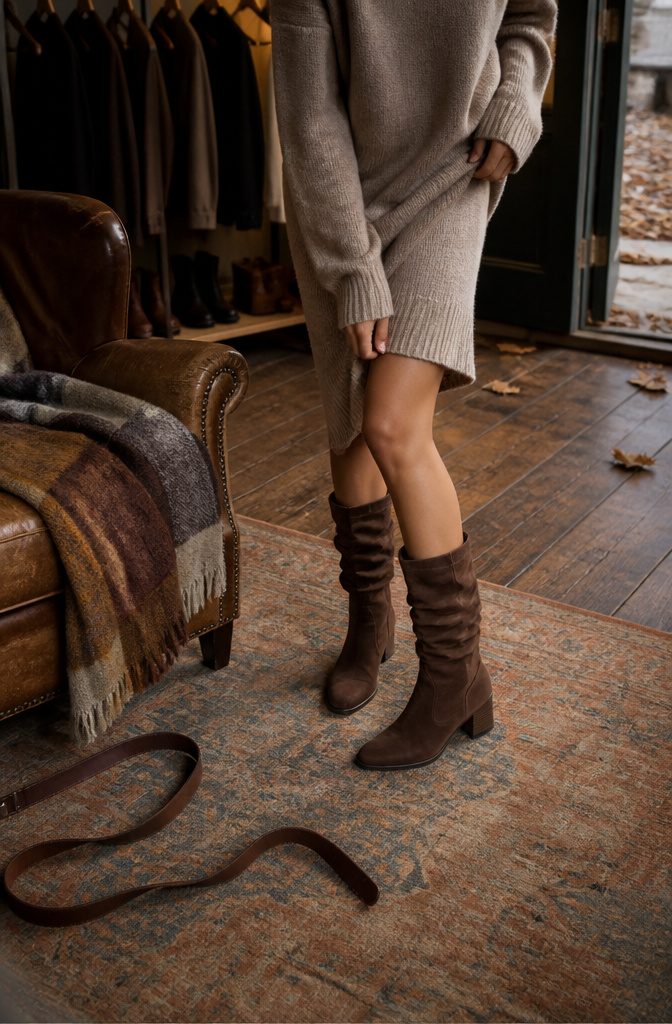
Scrunched, relaxed silhouettes showed up across fall 2025 runways in nearly every possible configuration: shearling-lined at Louis Vuitton, buckled and set on block heels at Miu Miu, thigh-high and jet black at Khaite.
The defining feature is deliberate wrinkling along the shaft, whether that sits at the ankle or runs all the way to the knee.
Some come with stacked heels and a worn-in patina already applied, while stiletto versions work when the outfit needs more polish: a sweater dress or midi skirt rather than jeans.
The darker edge of this season’s moto boho trend leans into scrunched ankle boots with hardware, but the same slouchy shape also appears in cleaner iterations without buckles or studs.
If you want one pair that bridges both moods, a mid-calf boot in suede splits the difference.
Pairing Boots With What You Already Own
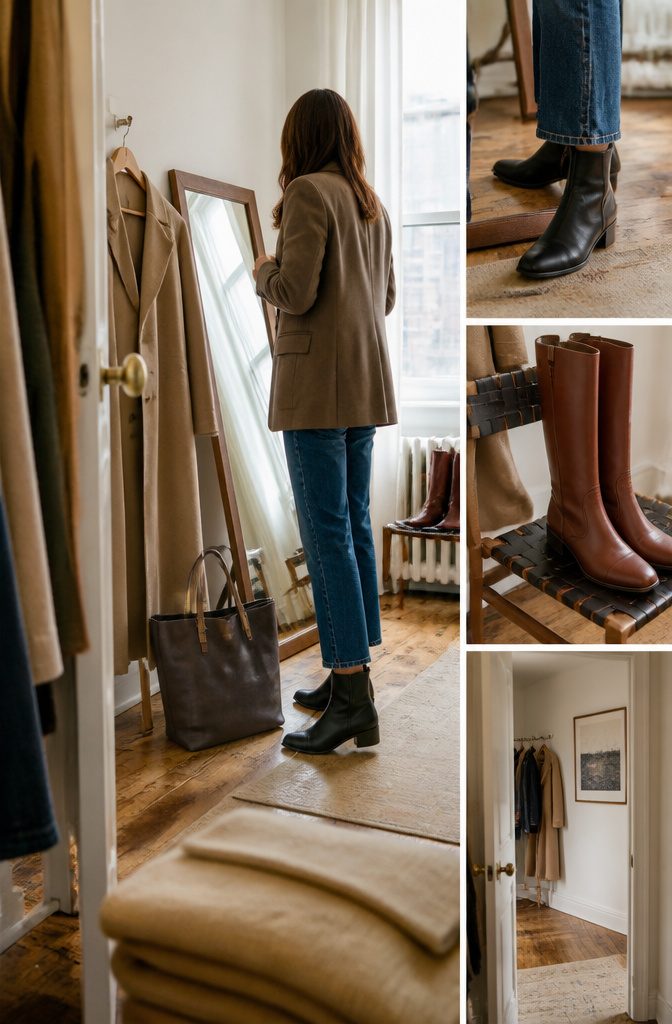
Ankle boots work with jeans in any cut, but cropped jeans and a blazer settle the proportions cleanest: the break sits above the boot line, the blazer balances the visual weight below.
Swap the blazer for an oversized sweater when the outfit turns casual, or tuck skinny jeans into tall riding boots for a streamlined cold-weather look that pairs well with long coats.
Dresses and skirts run the same boots in opposite directions. Chelsea boots ground shorter hemlines without losing the polish a suit or tailored outfit expects, which makes them reliable for work.
Tall boots flatten under midi skirts or shift the whole silhouette taller when paired with leggings, and either move works from day through evening if the boot itself is clean-lined.
Black or tan leather ankle boots cross more occasions than any other style. They hold up in formal settings, they read casual with denim, and the heel height decides how far into winter they go before riding boots take over.
Picking Boots for Comfort
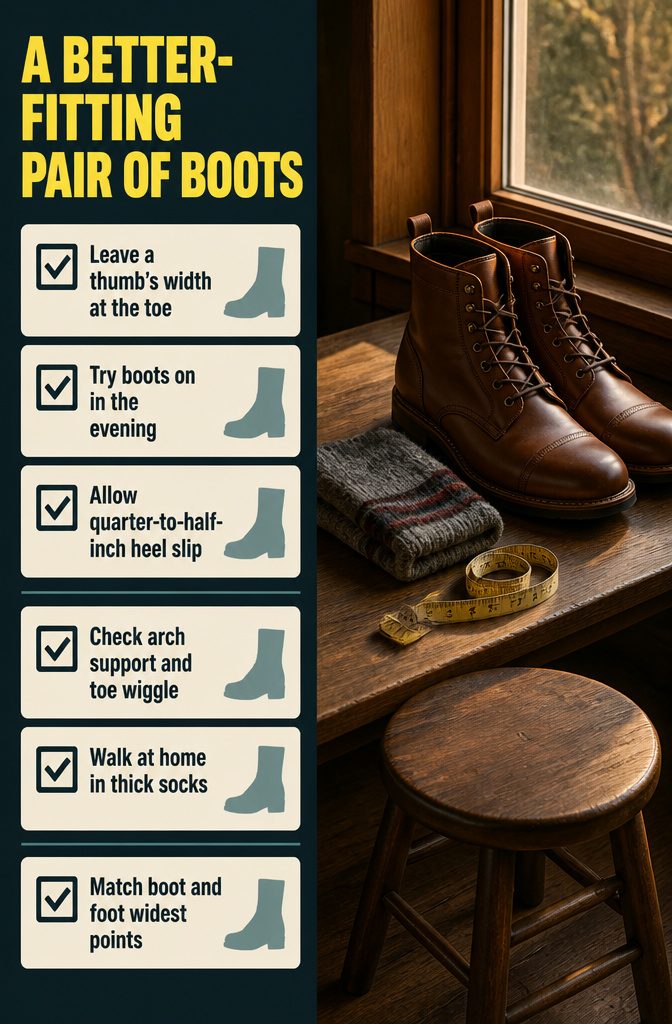
Measure your feet before you order, and leave about a thumb’s width between your longest toe and the boot’s tip.
Feet swell as the day goes on, so try boots on in the evening when your foot is at its largest.
A little heel slippage is normal (roughly a quarter to half an inch) because quality boots mold to your foot over time, especially when you wear thicker socks.
Cushioned insoles and arch support make all-day wear possible. Check that the boot fits snugly everywhere except the heel, and that your toes can wiggle without pressing against the front.
Breathable materials keep your feet comfortable in longer stretches, and heel height matters more than it seems: pick one you can walk in for a few blocks without regret.
Walk around at home in thick socks to soften new boots before you commit to a full day.
The widest part of the boot should line up with the widest part of your foot so the boot bends where your foot bends, which keeps the fit from fighting you with every step.
Caring for Leather and Suede
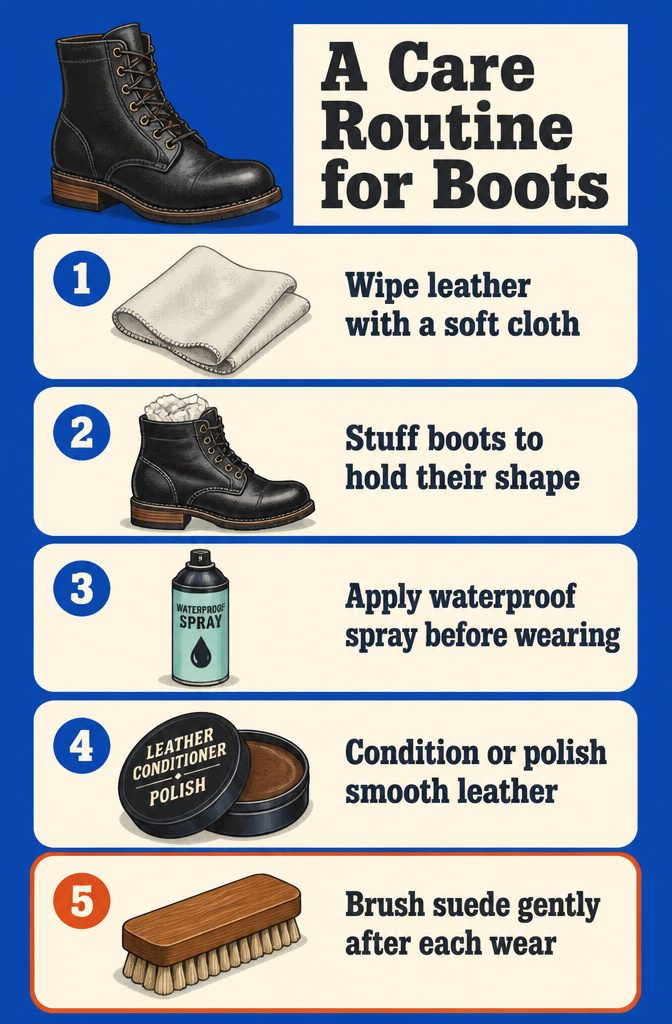
Wipe leather boots down with a soft cloth after wearing them to clear off dirt before it sets.
Store them with shoe inserts or crumpled tissue inside to hold their shape, and keep them in a cool, dry spot away from heat vents or direct sun, both of which dry out leather and crack it over time.
A few materials keep boots in shape:
- Waterproof spray, applied before the first wear and again every few weeks in wet weather
- Leather conditioner for scuffs and dry patches on smooth leather
- Leather polish to restore color and shine
- Suede brush to lift the nap and remove surface marks on suede or nubuck
Suede takes more care than smooth leather. Brush it gently in one direction after each wear, and never use water or standard leather products on it.
Frequently Asked Questions
How do I choose the right size for women’s boots?
Measure your feet and leave about a thumb’s width between your longest toe and the boot’s tip.
Try boots on in the evening when your feet are at their largest, and expect a quarter to half inch of heel slippage at first since quality boots mold to your foot over time.
The widest part of the boot should line up with the widest part of your foot so it bends where your foot bends.
What should I look for in comfortable boots?
Look for cushioned insoles and arch support if you’ll be wearing them all day.
The boot should fit snugly everywhere except the heel, your toes should wiggle without pressing the front, and breathable materials help during longer stretches. Pick a heel height you can walk in for a few blocks without regret.
What are the latest trends in women’s boots?
Slouchy boots with deliberate wrinkling along the shaft showed up across fall 2025 runways, from shearling-lined versions to thigh-high styles.
Sock boots came back hard with slim, ankle-hugging silhouettes in stretch fabric. Western boots moved beyond yeehaw roots with pointed toes, stacked heels, and mid-calf shafts paired with everything from ribbed knit dresses to leather Bermuda shorts.
What are the most versatile boots for women?
Black or tan leather ankle boots cross more occasions than any other style because they hold up in formal settings, read casual with denim, and the heel height decides how far into winter they go.
Chelsea boots slip on without laces or fuss and stay polished enough for tailored trousers while still working under straight-leg jeans.
Are over-the-knee boots still in style?
Yes.
Over-the-knee boots stretch well past the knee and lengthen the leg in a way shorter styles can’t, which makes them work best when paired with a mini dress or skirt so the boot meets bare skin, or with skinny jeans and leggings tucked in completely.
Keep the rest of the outfit neutral since the boot is already doing the work.
How can I break in new boots without pain?
Walk around at home in thick socks to soften new boots before you commit to a full day.
A little heel slippage is normal at first since quality boots mold to your foot over time, especially when you wear thicker socks.
Can you wear boots in spring and summer?
Ankle boots work year-round because the cropped height pairs as easily with jeans and sweaters as with dresses and skirts. For warmer weather, stick with lighter materials or choose styles in tan instead of black.
How do I wear over-the-knee boots without looking overdone?
Keep the rest of the outfit neutral and skip heavy accessories since the boot is already doing the work. A monochrome palette from boot to hem gives the cleanest result, and the streamlined effect matters more than the hem length.