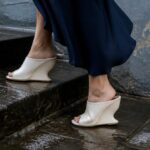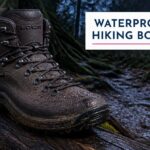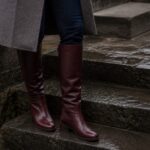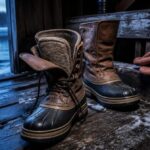
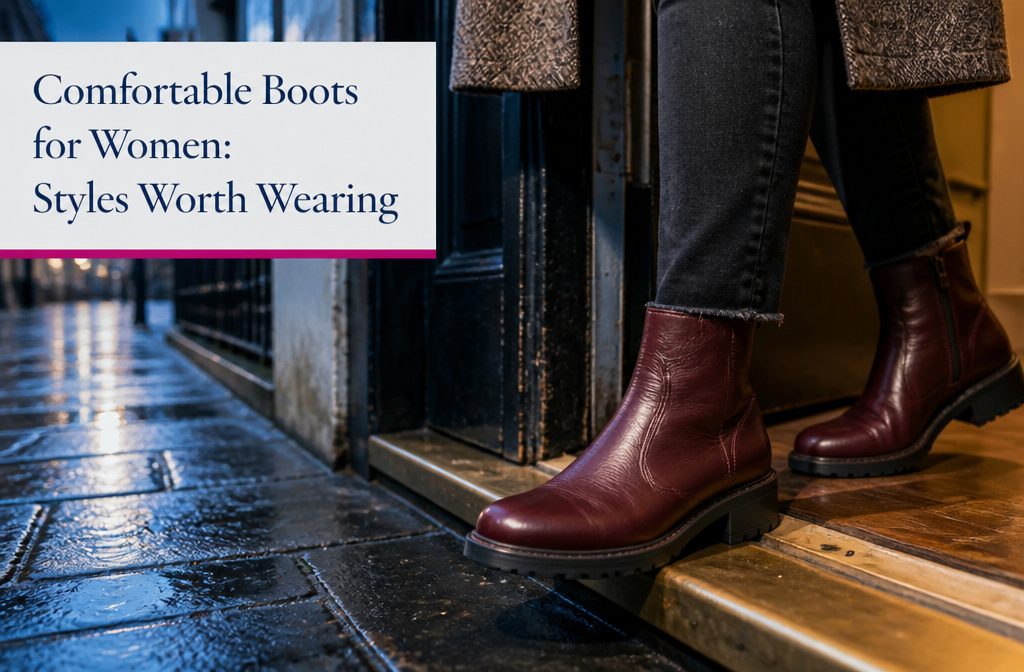
Comfortable boots for women are boots designed to minimize foot pain during extended wear, usually through cushioned footbeds, supportive arches, or roomy toe boxes.
The challenge is finding pairs that look polished enough for work or dinner without requiring you to change shoes the moment you get home.
The 15 pairs ahead include options as low as $27 and as high as $278, from dress ankle boots with removable orthotics to waterproof hikers that grip ice.
1. Gentle Souls Emily
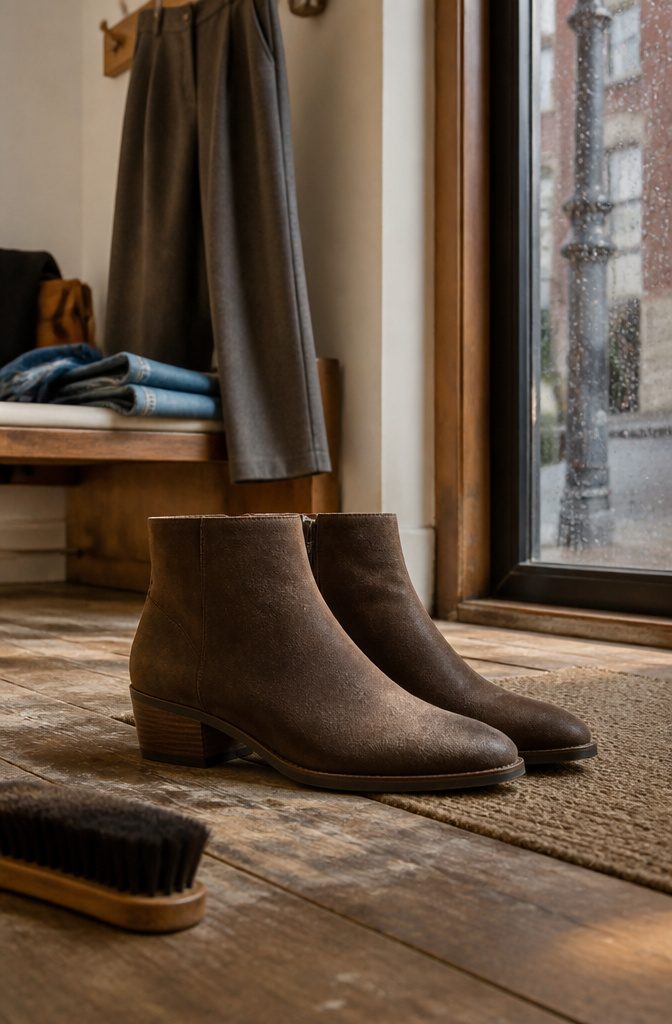
The Emily fits close through the stretch suede upper without pinching feet shaped by bunions or hammertoes. Comfortable enough for a dressier outing as long as you can slip into something softer once you’re home.
The slim profile works well under wide-leg trousers and straight jeans, and the low heel keeps the silhouette sleek without forcing your weight forward.
Sizing runs 5 to 11 in medium width.
Prices sit between $133 and $199 depending on where you buy, with Kenneth Cole, Nordstrom, and Amazon all carrying them. The ankle height and narrow cut make larger feet look smaller, which matters if you care about that kind of thing.
2. L’Amour des Pieds Hadirat
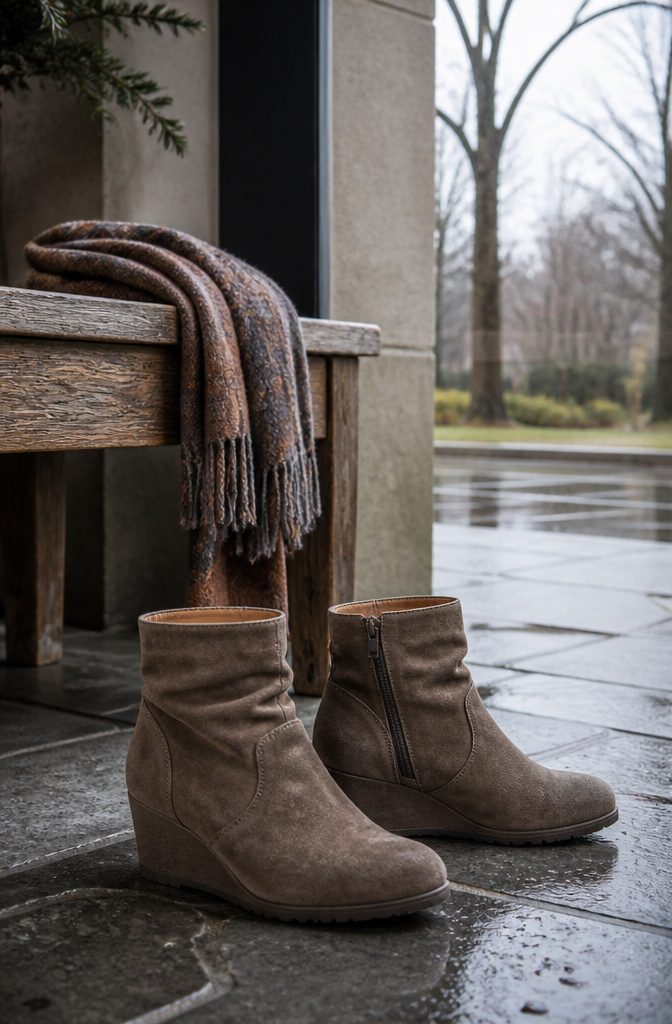
The L’Amour des Pieds Hadirat is a slouchy ankle bootie built for feet that object to pressure points.
Soft suede or lambskin gives instead of pressing, and the uncoated nappa lining sits smooth against skin where a finished lining would rub. A memory foam footbed and flexible arch support mold to your foot rather than fighting it.
The back zipper means no twisting to get in, which matters if bending or pulling aggravates anything. The wedge measures 1.75 inches and the lug sole grips, so it works for light weather use.
Sizes run 5.5 to 11 in medium width. The price is $250 from L’Amour Des Pieds and Nordstrom, steep but consistent with what you pay for quality construction and materials soft enough for sensitive feet.
3. Taos Mini Crave
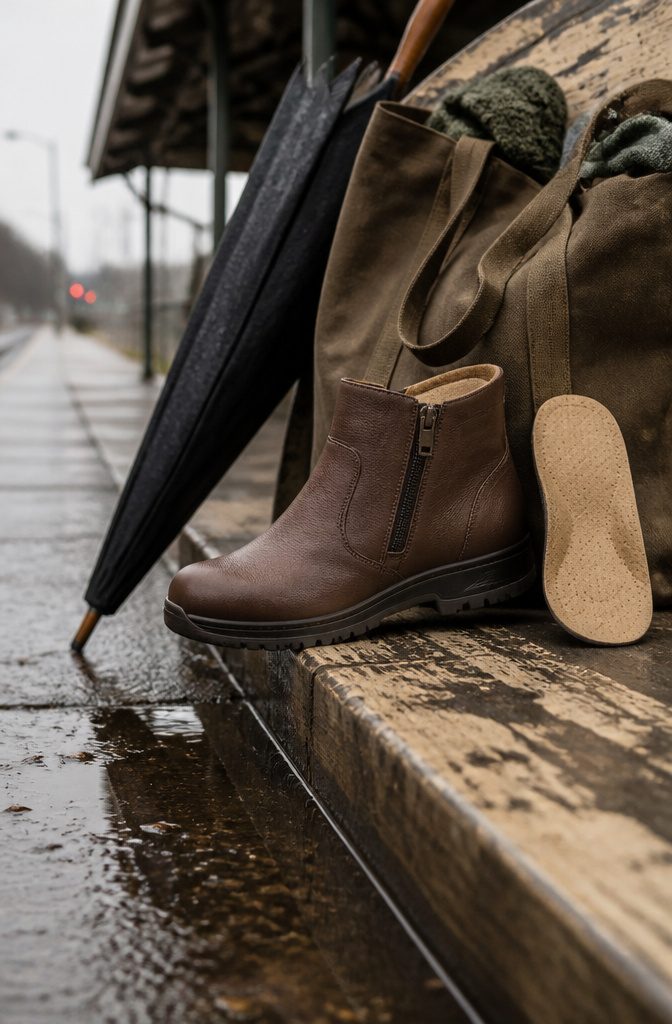
The Mini Crave packs the same arch and metatarsal support as the full-height original into a shorter silhouette, which means you get Taos construction quality without the bulk above the ankle.
The footbed is cushioned and removable if you need a custom orthotic, and the rubber outsole grips well enough for wet pavement. A side zipper keeps entry quick when you’re juggling bags.
Sizes run 37–42 (6–11.5) in European sizing, with medium and wide widths available in select colors.
At $210, this sits at the upper end of everyday ankle boots, but the support justifies it if you’re walking several blocks at a time or standing through a long shift.
The leather holds up better than the suede options some competitors offer at this price.
4. Dansko Baylin
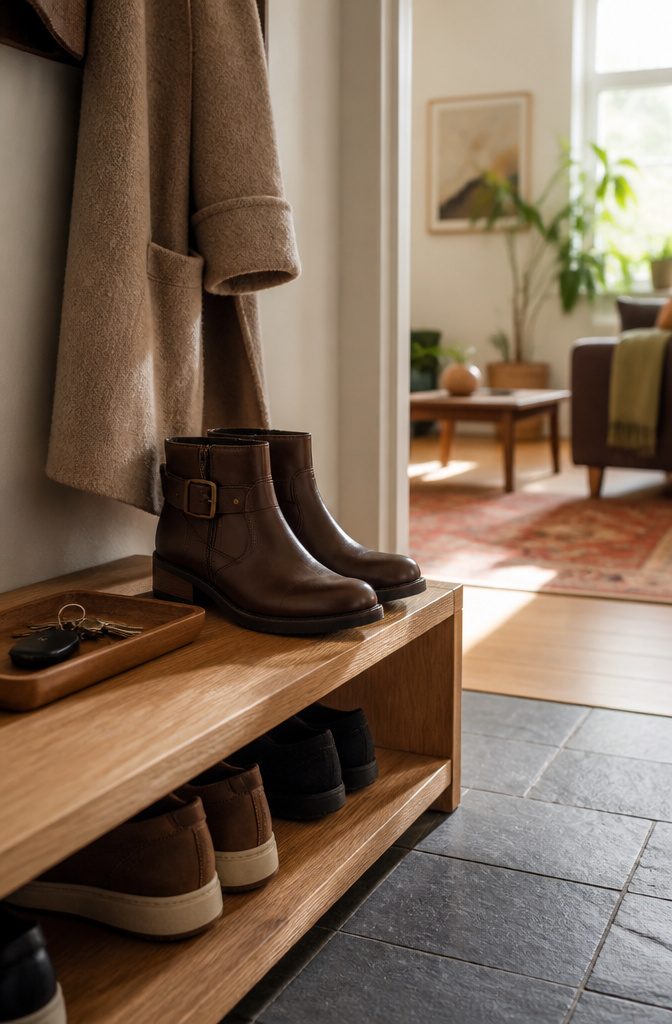
The Baylin’s stiff, slightly rockered sole does the bending work your big toe joint can’t, which is why it caught attention in hallux rigidus circles.
Dansko built the boot with a dual-density EVA footbed for cushion and support, and gave it a generous toe box so toes move without pressure on the joint.
The inside zip matters more than it sounds: you’re not forcing your foot past a sore joint every time you pull the boot on.
Leather lining keeps it breathable, and the studded buckle detail means it reads more polished than orthopedic. Sizes run 5.5–11.5 in regular width. $200 from Dansko, Zappos, and Nordstrom.
5. Ariat Wexford Chelsea
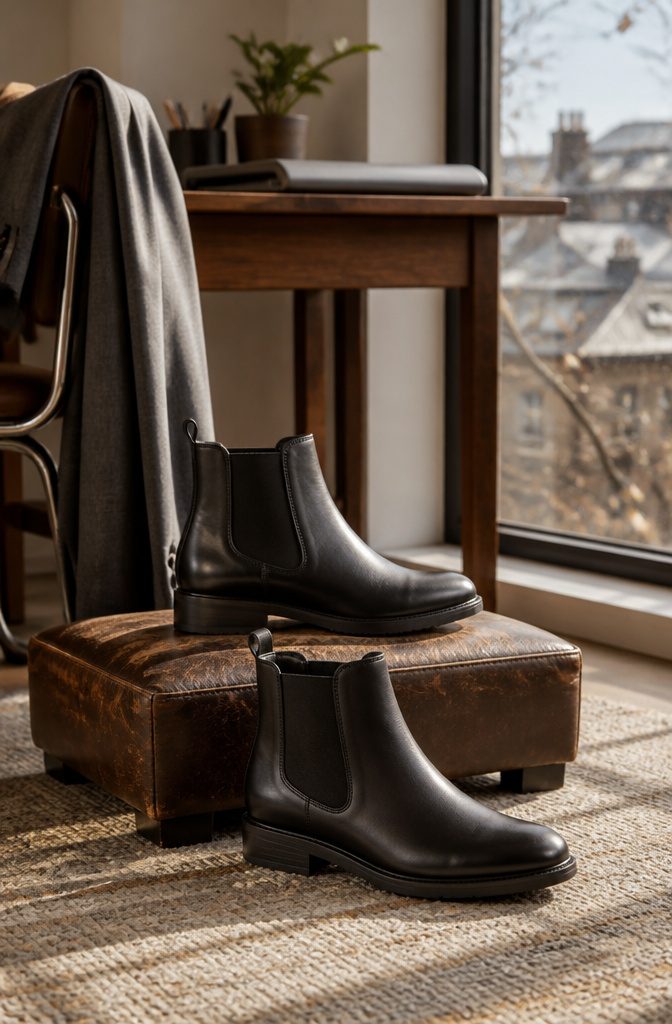
A follower who has worn these for four years with plantar fasciitis recommended the Wexford, and the feature set explains why: a heel stabilizer paired with a lightweight shank gives midfoot support without the weight that fatigues your feet by midday.
The ankle height keeps them office-appropriate while the structure does the work a sandal cannot.
They come in black and a few other colors that dress up or down depending on the rest of the outfit. Sizes run 5.5 to 11 in medium and wide widths, which covers most feet but stops short of extended sizing.
At $200 from Ariat, Zappos, Amazon or Nordstrom, they sit in the middle of the price range for boots built with orthopedic features rather than just cushioning.
6. Frankie4 Liberty
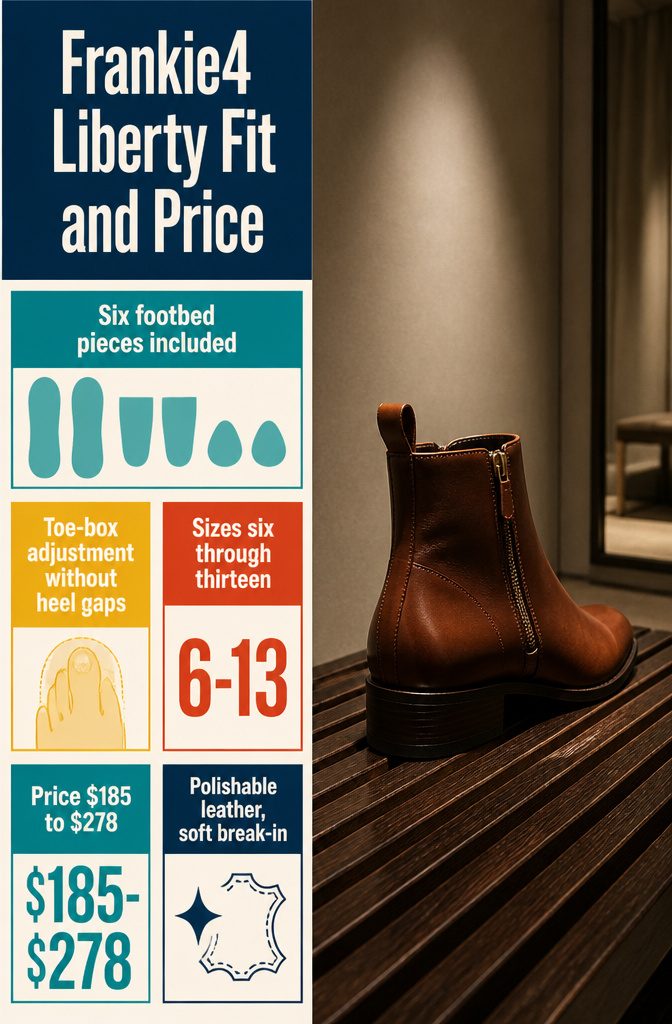
The Sole Saver pack sets these apart: two full-length footbeds, two half-length footbeds, and two forefoot cushions arrive with every pair, so you adjust the fit until the toe box works for bunions or wide feet without gapping at the heel.
Sizes run 6 through 13, wider than most dress ankle boots manage, and the price sits at $185 to $278 depending on finish.
The leather holds polish well enough for work but breaks in soft, which matters when you’re dressing up something that still has to walk you through a full day.
My Frankie4 Levis handle eight-hour substitute teaching shifts without complaint, and the Liberty uses the same footbed system.
7. Orthofeet Emma
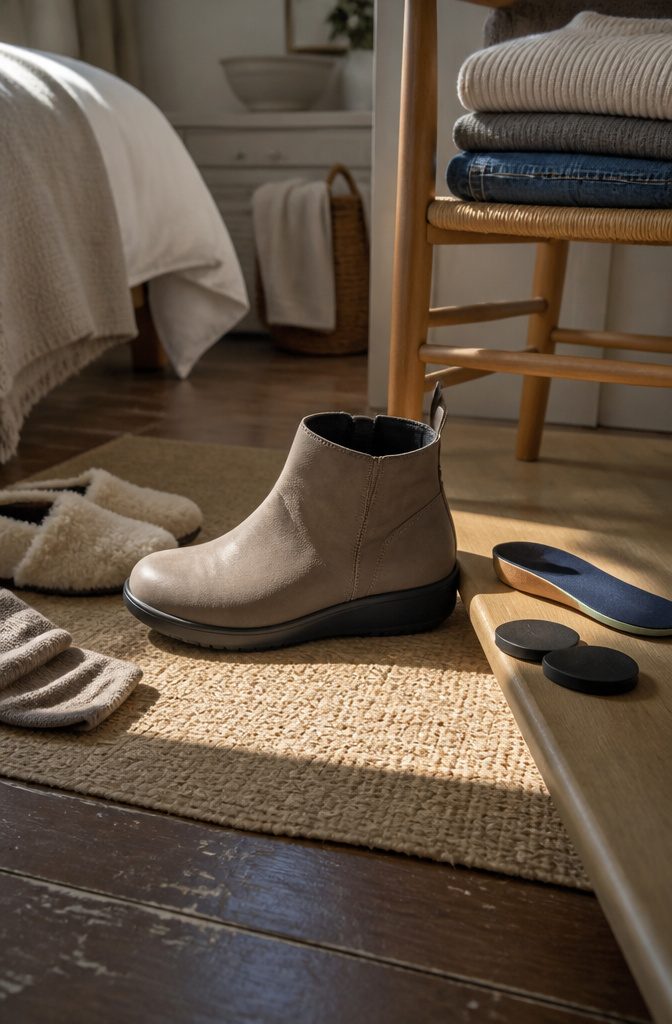
The Orthofeet Emma comes with premium orthotic insoles, an arch booster you can add or skip, and fitting spacers that let you dial in exactly how snug the boot sits.
The toe box runs both high and generous, which matters if you’re dealing with bunions, neuromas or hammertoes: room where most boots pinch. Available in sizes 6 through 11, medium and wide widths, for $130 from Orthofeet or Amazon.
A customer with wide feet, bunions and plantar fasciitis called them the rare boot that checked every box, including style, which is usually the thing you give up.
8. Clarks Ashland Mabel
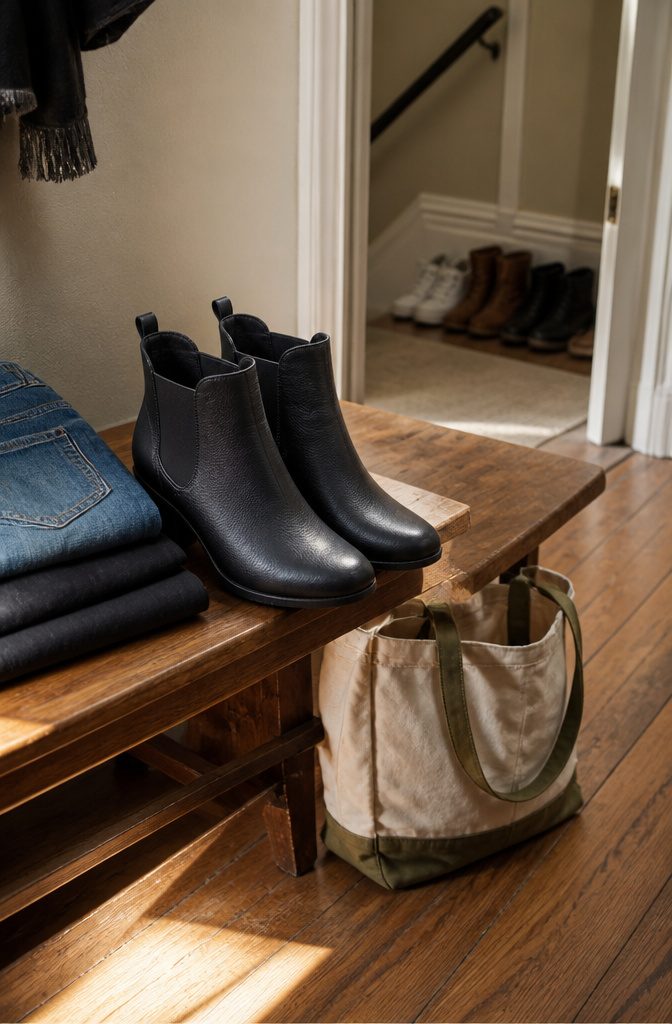
The Clarks Ashland Mabel runs $27–84 depending on where you catch it, which puts real comfort within reach without the usual compromise on foot support.
The cushioned footbed and grippy outsole handle daily wear, and the 1.5-inch heel keeps things walkable without tipping into flat-shoe fatigue.
The flexible build means you skip the break-in lottery entirely. Multiple reviews mention comfort right out of the box.
Width options separate this one from most affordable boots: narrow, medium, wide, and extra-wide, all running through sizes 5–12.
That toe box width matters more than most marketing copy lets on, since a boot that pinches at hour three stops being a bargain fast.
The lightweight construction keeps your stride easy on longer errand runs, and the ankle height works under straight-leg denim or over ponte pants without bulk at the opening.
9. Vagabond Dorah Pull On Chelsea Boots
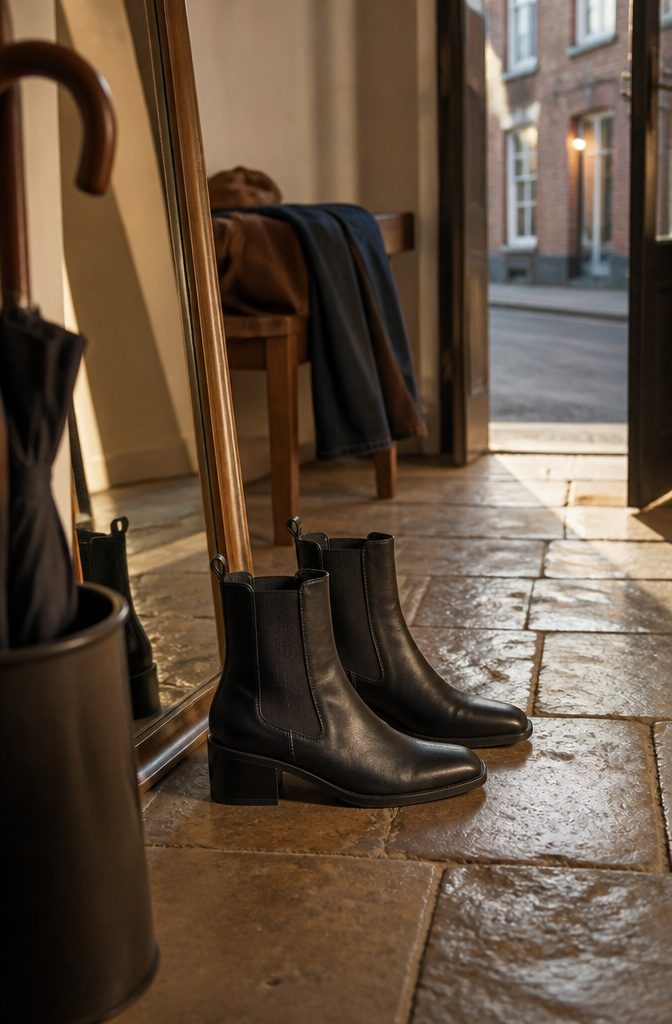
The Vagabond Dorah Chelsea boots are built from supple full-grain leather that skips the usual stiff break-in window, walkable straight out of the box with no pinching reported.
The square toe box gives your toes actual room to spread, which matters if you have wider feet or just hate that squeezed feeling pointed boots deliver.
A block heel adds height without turning a walk into a wobble, and the shaft hits above the ankle for lateral support that helps prevent rolling.
The footbed cradles your arches rather than leaving them flat against the sole, and elastic side panels let you pull the boots on without wrestling.
They do run snug at first, especially around the midfoot, but the leather stretches out after a few wears.
Initially they can feel tight coming off, then they loosen into an easy slip. The soft leather holds your foot in place without sliding around inside the boot.
They run on the expensive side, but the material quality and the fact that they pair with nearly anything justify the cost if you wear boots often.
10. Reformation Frances Knee High Boot
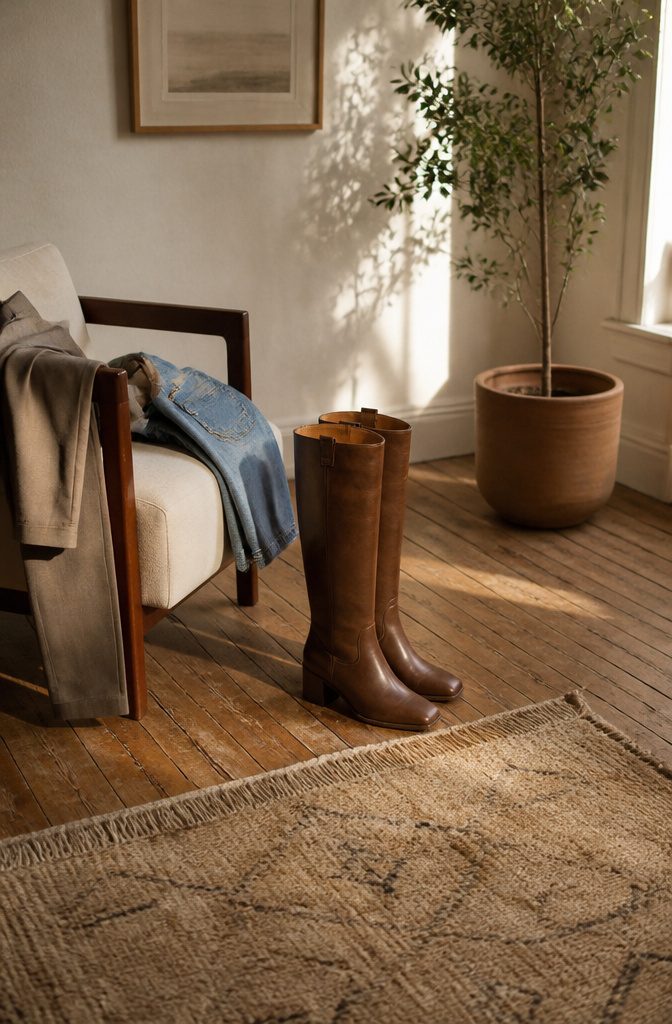
The square toe box gives wide feet plenty of room, and the shaft fits a wider calf without binding.
I’d size down half to a full size; the usual 9.5 came up large enough that a 9 would have been the better call. A heel pad inside keeps the foot from sliding forward if you stick with your regular size.
The block heel and soft leather break in fast. No blisters on the first night out, which new boots almost never manage.
The leather softens after a few wears and picks up the lived-in look the initial shine was missing. The seventies vibe from the square toe and block heel works with shorts in summer and trousers once it cools off.
11. Vivaia Regina Pro
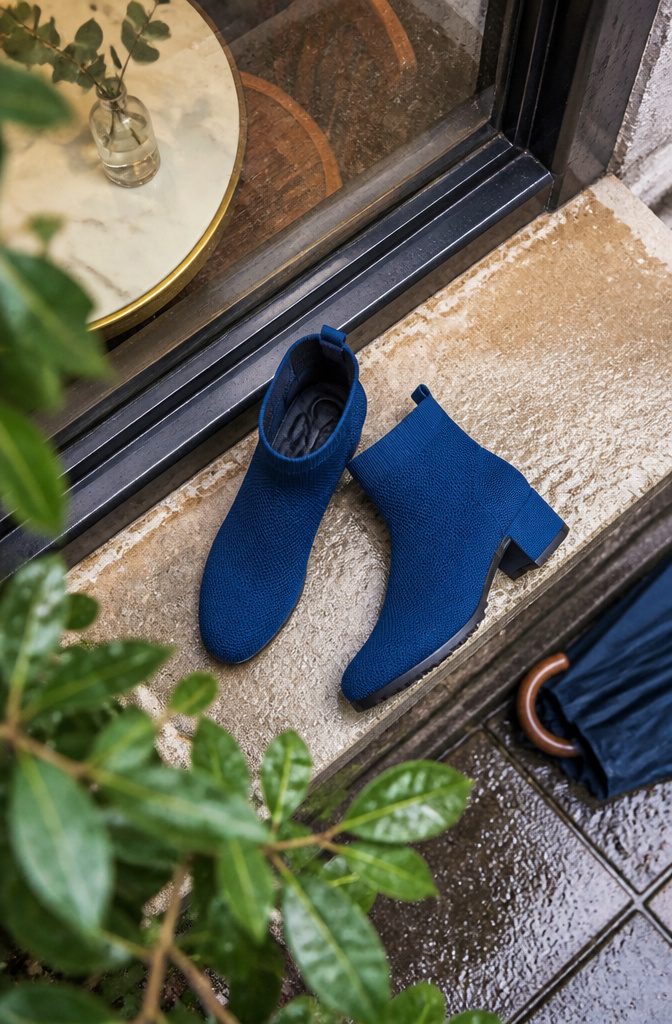
The knit fabric stretches around your ankles like a sock, but the structure underneath keeps things supportive enough for a block heel.
The insole delivers double arch support, which cushions the foot and takes pressure off wherever you tend to feel it first in heels. That combination matters when you’re covering distance on foot rather than just walking from the car.
The water-repellent finish surprised me when I looked at the material: it reads as delicate knit, but it handles light weather without looking soaked through.
The rubber outsole grips slippery pavement better than most heeled boots manage, which keeps you steady when the sidewalk turns wet.
Made from recycled plastic bottles, the boot comes in 17 colorways, far more than most ankle boots offer.
The pull tab at the back lets you slip them on without wrestling the opening, and they come off just as easily at the end of the night.
They run narrow, so if your foot is wide or tends to swell, size up or skip them entirely.
12. Sorel Ona Ave Trek Waterproof Boots
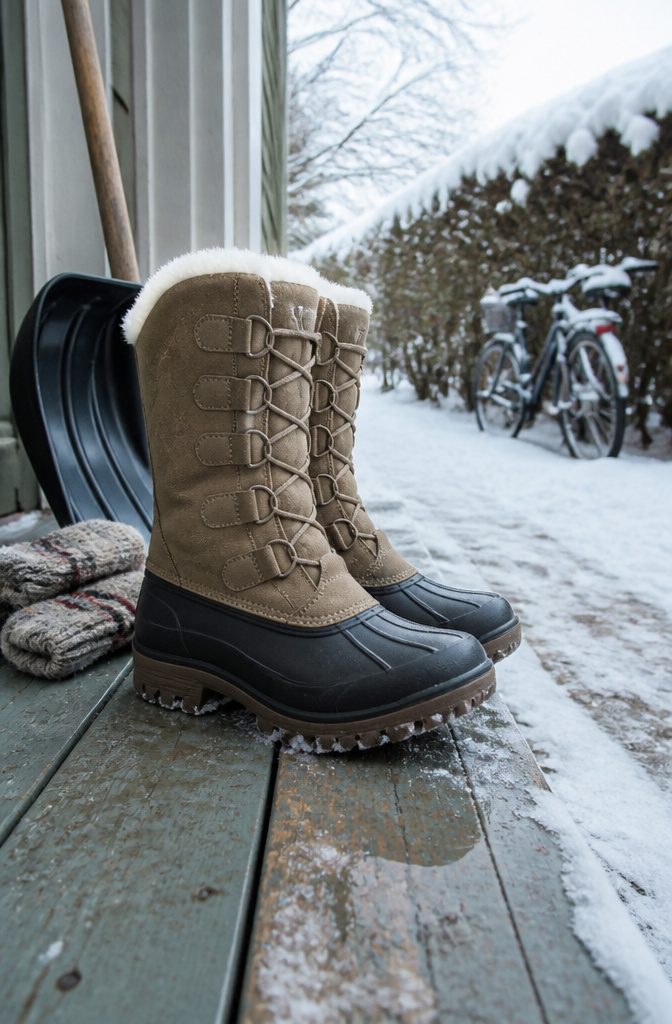
The Ona Ave Trek handles deep snow and slush without letting water through.
Sorel built the shaft from waterproof suede and textile, sealed it to a vulcanized rubber shell that wraps up past the ankle, and lined the inside with faux fur that traps warmth when temperatures drop.
The removable EVA footbed adds cushioning underfoot, and the lugged rubber outsole grips on ice better than most fashion boots manage.
This is a winter-specific boot. The insulation and high shaft make it too warm for anything above forty degrees, and the chunky sole reads casual rather than polished.
It works for commutes through February sleet, weekend errands when the sidewalks haven’t been cleared, or any day when you need traction more than you need elegance.
Sorel runs true to size, but the footbed takes up room; if you wear thick socks in winter, size up half.
13. Hunter Eloise
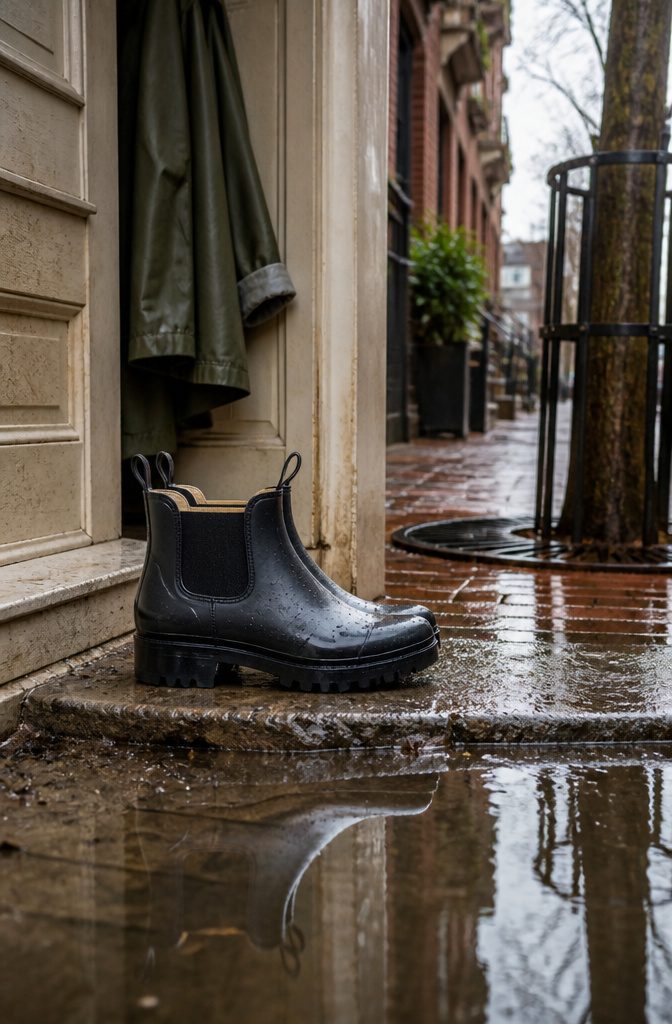
The ankle height keeps these rain boots from feeling heavy, but they still sit high enough to block water from getting in.
The lugged sole grips wet pavement better than a flat tread, which matters when you’re walking on city sidewalks after a storm.
Neoprene lines the upper, adding insulation that works in cold rain and light snow. I’ve seen people wear these year-round because that extra warmth doesn’t make them unbearable in milder weather.
The toe box runs roomy, so your toes don’t get compressed even after hours of wear. A cushioned insole sits underfoot, which helps on days when you’re covering distance.
Pull loops at the front and back let you get them on quickly. The fit skews large, though (no half sizes available), so sizing up can leave you with more room than you wanted.
14. Oboz Sawtooth X Mid Waterproof Hiking Boots
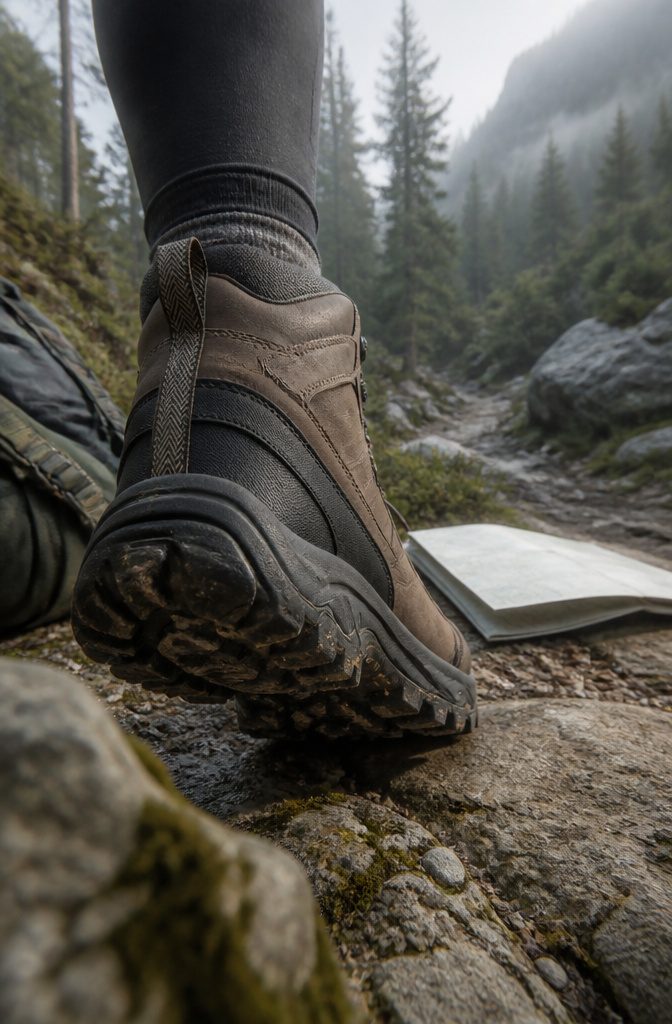
The Oboz Sawtooth X Mid proves itself in wet weather (snow and rain included) with waterproof construction that holds up on actual trails.
The nylon shank between the insole and outsole gives you underfoot protection and keeps you balanced on uneven ground, while the rubber outsole grips rock and gravel without slipping.
These boots need a few long walks before your trip. They lack the immediate give of softer hikers, which is typical of boots built to last.
The stiffness pays off in ankle support: the mid-height design stops your foot from rolling on rough terrain, and your lower leg stays secure the whole way through.
Wide sizes are available if you need extra room across the forefoot or have bunions. The full price sits at $190, though the linked pair shows at $87.
15. Ingiliz Genny 02 Leather Ankle Boots
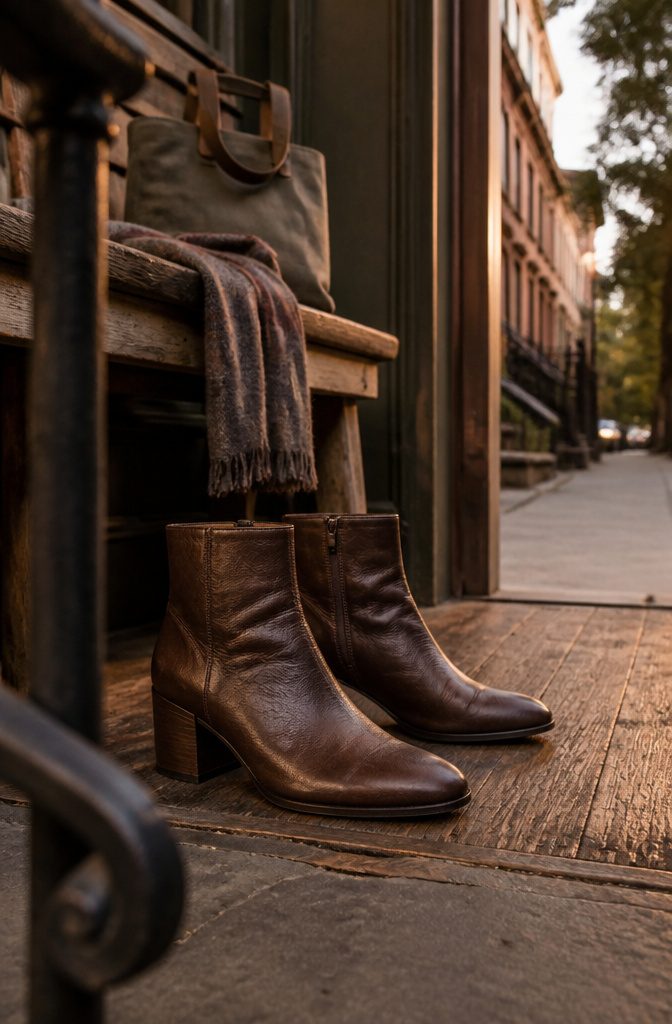
The Ingiliz Genny 02s ran zero break-in for an editor who walks over six miles daily.
Soft leather shaped to her foot after one wear. The block heel gives more support than a narrow one, which means less wobble and no pain even after miles on pavement.
That heel adds height without punishing your arches, and the leather itself is supple enough to hold your foot in place without pinching.
The trade-off: the sole can slip on certain surfaces. Traction is light, so stairs and polished floors need attention.
If you’re mostly on sidewalks and dry ground, these work. If you cross a lot of tile or wet pavement, the slip becomes a real consideration.
Frequently Asked Questions
What should I consider when buying comfortable boots for women?
Check the width options first: boots that fit your forefoot width matter more than any other feature.
Then look at arch support, heel height, and whether the toe box gives your toes room to spread. If you have specific foot issues like bunions or plantar fasciitis, prioritize boots with removable insoles so you can add custom orthotics.