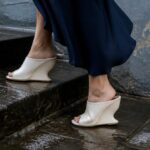
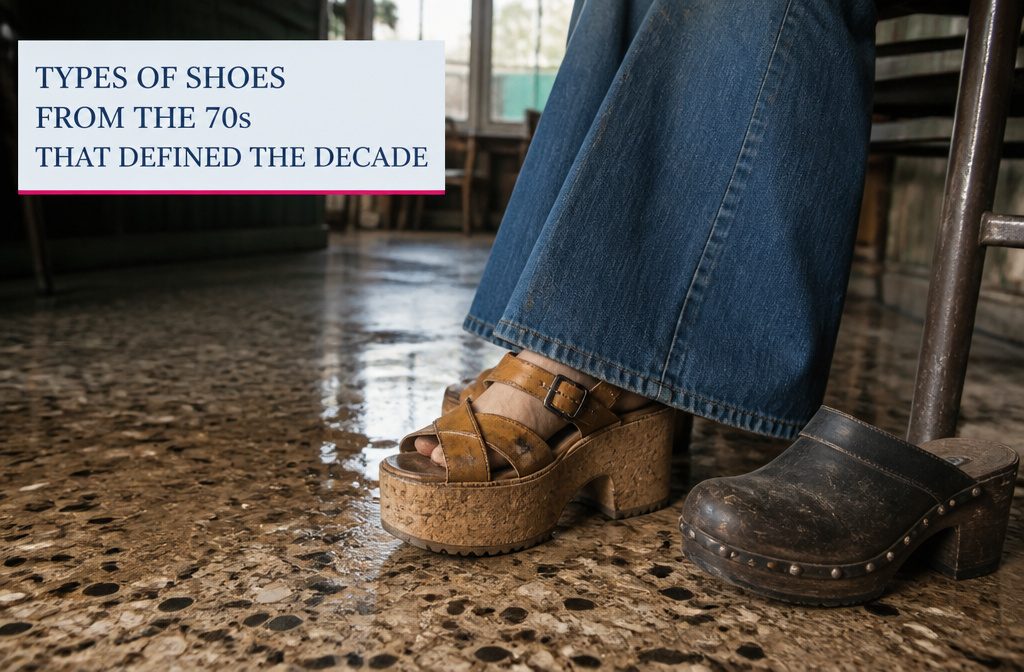
Platform sandals, clogs and boots all worked, depending on where you were going. The catch: platforms kept bell-bottom hems off the ground without leaving a gap at the ankle, which made the practical choice the fashionable one.
Salvatore Ferragamo introduced the platform sandal in 1938 using wood and cork soles, but the style went mainstream by 1970 and lasted through the early 1980s.
1. Platform Shoes
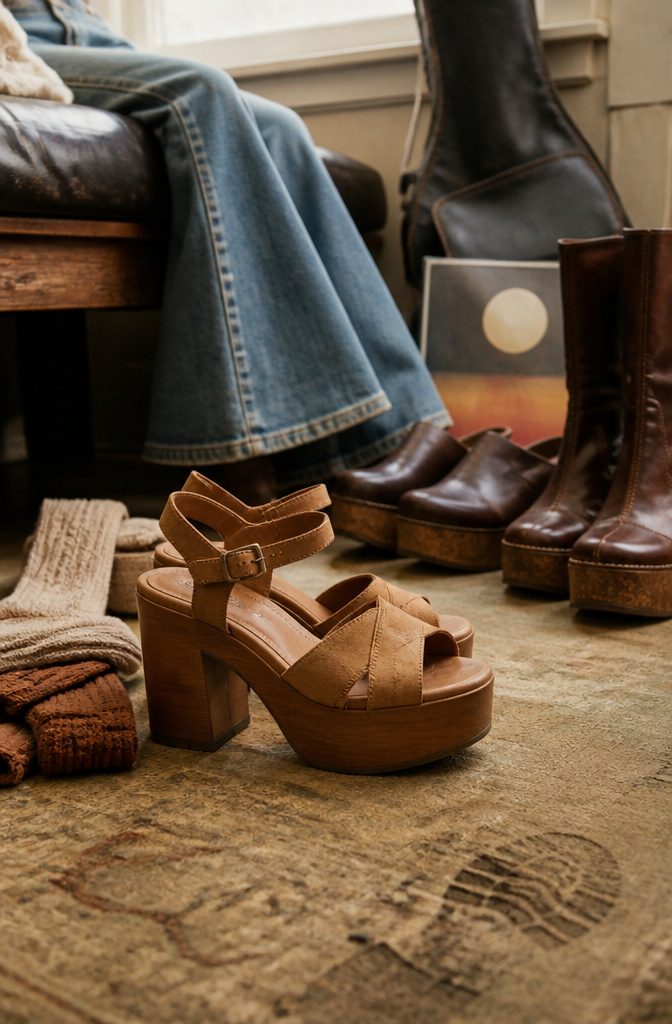
Platforms may have a centuries-old lineage, but the modern version arrived in the early 1930s and vanished for most of the 1950s.
The style reappeared in the late 1960s and went mainstream by 1970, lasting through the early 1980s before fading again.
Platform sandals, clogs, and boots all saw wide adoption, from everyday wear to the extreme heights favored in urban culture and by musicians like KISS.
The variety meant platforms worked for different occasions. Platform sandals paired with tights became a signature look, while platform clogs often appeared with knee-high socks.
Platform boots rounded out the category. Salvatore Ferragamo introduced the platform sandal in 1938 (called "The Rainbow"), using wood and cork soles due to wartime rationing.
By the 1970s, the practical benefit remained: platforms kept bell-bottom hems off the ground without the awkward gap shorter heels left at the ankle.
Hush Puppies offered a platform version in Breathin’ Brushed Pigskin at about $19 in 1972, marketed as lighter and more comfortable than competing styles.
2. Men’s Dress Shoes
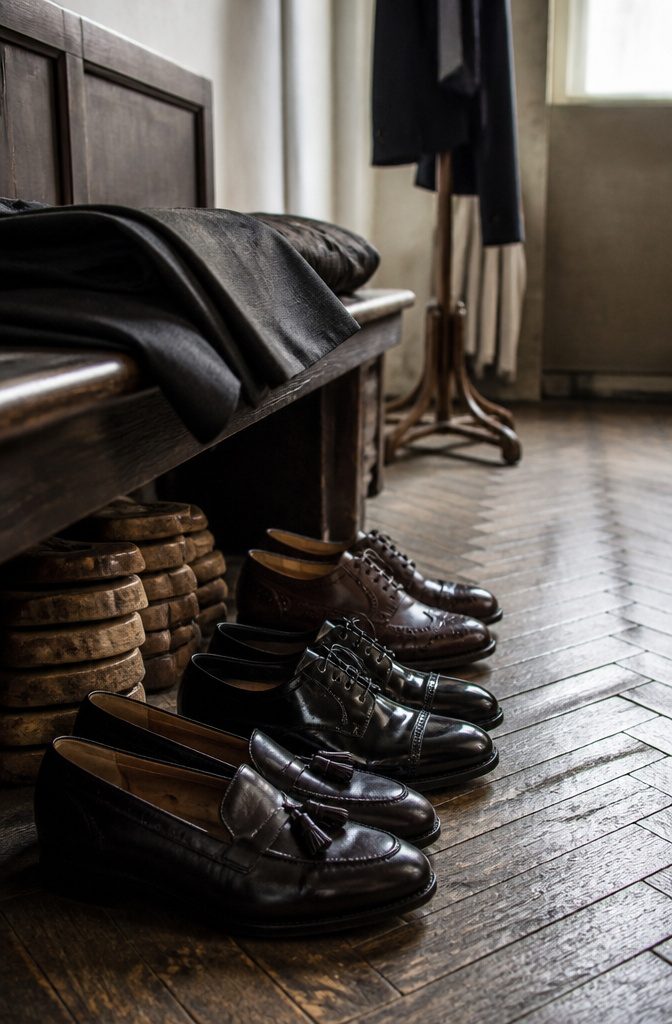
Not much changed for men who needed to look respectable. Loafers, Oxfords and brogues stayed in rotation through the decade, just as they had since the fifties.
The Florsheim Designer Collection in 1977 leaned on supple leather and hand-detailing meant to sit well with European-cut suits, priced lower than imports and made in a wider range of sizes than the continental versions.
Patent leather dress shoes turned up for formal occasions, and tassel loafers held their place in business casual wardrobes.
The reliable styles ran alongside platform boots and two-tone sneakers, not instead of them.
A man in the seventies could dress for the office in wingtips one day and step out in stack-heeled Chelsea boots the next, depending on where he was going and what he wanted the room to notice.
3. Athletic and Casual Men’s Shoes
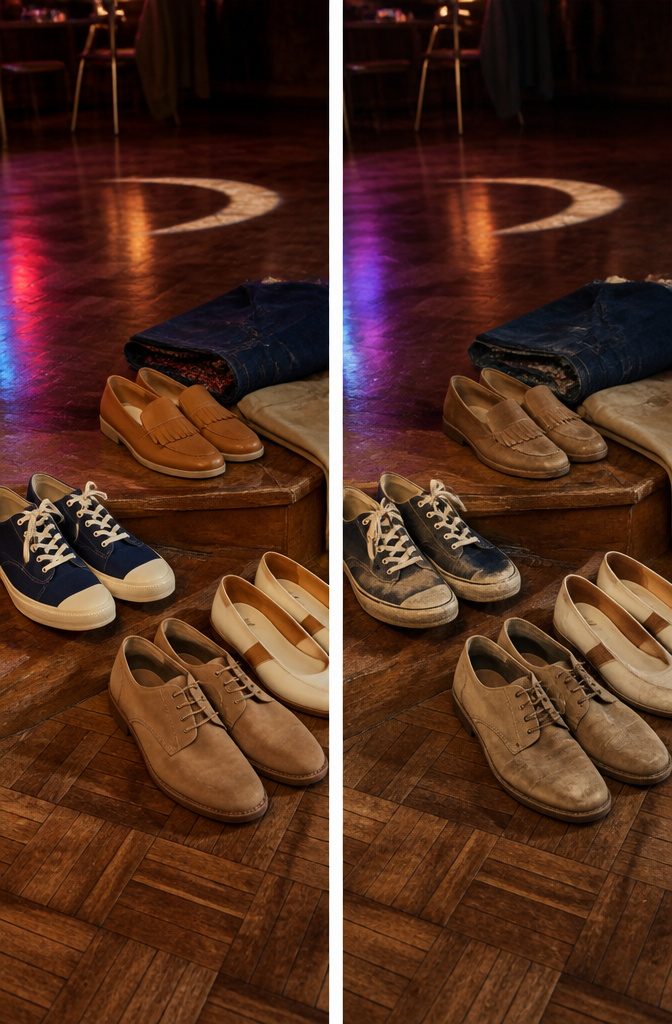
Keds Knockarounds in 1972 came in canvas with rubber soles, built for weekend wear rather than the court.
Campus Footgear a year earlier ran the same direction: low-profile lace-ups in leather or suede, no technical pretense, just a clean silhouette that worked with jeans or khakis.
By 1979 the category had widened into soft leathers and brushed nubuck with athletic detailing, neutral enough for the office but loose enough for the disco floor afterward.
The styling stayed relaxed: slip-ons with kiltie accents, stitched and punched details, tan and beige outnumbering the expected brown and black.
Current reissues pull from the same decade but land closer to the track shoe. Loewe’s Ballet Runner merges a ballet flat silhouette with a 1970s runner shape, offered in cream, yellow, and retro browns at $550.
Re/Done’s nylon sneaker lifts directly from a vintage find, and Adidas has brought back archive styles from the same years through recent collaborations.
4. Men’s Boots
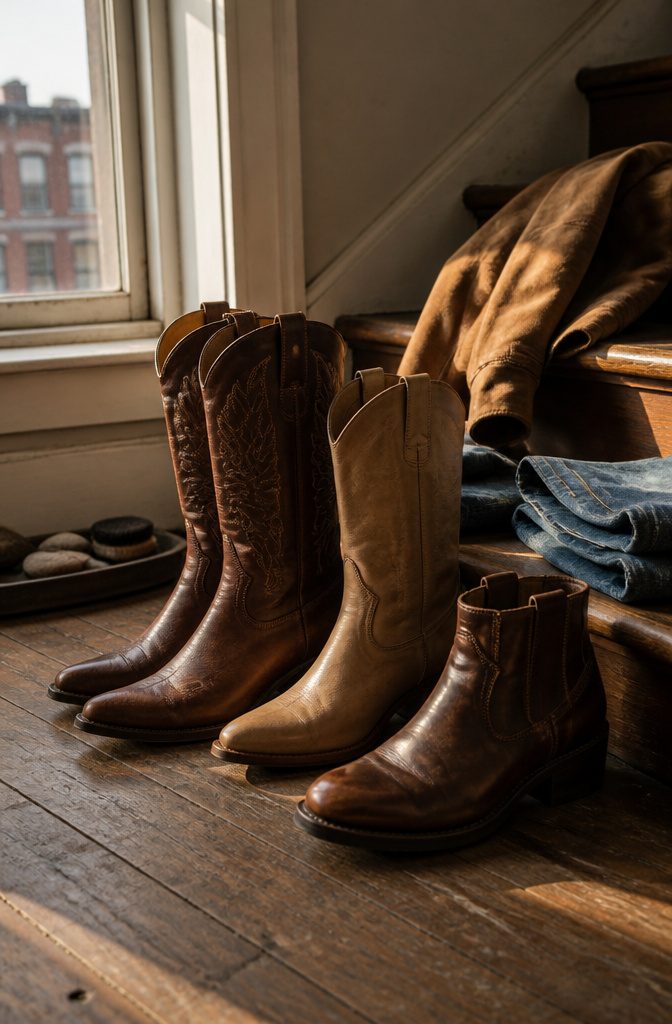
Cowboy boots moved out of ranch country and onto city streets during the 70s, showing up in fashion spreads alongside bell-bottoms and suede jackets.
Acme had built its reputation on authentic western boots (the kind made for riding), but by 1973 the company launched Dingo fashion boots to catch the wave of men wearing boots with street clothes rather than denim and spurs.
The Dingo line and the imported Dingo Royal Barons carried western styling without the full work-boot heft, priced to move at a moment when boots were no longer just for cowboys.
Work boots and hiking styles held their ground too, practical where the fashion boots leaned decorative. A low boot in leather could go either direction depending on the sole and the stitching.
What tied them together was height: men in the 70s wore boots that showed, and the shaft sitting above the ankle became part of the silhouette rather than something hidden under trousers.
5. Sandals
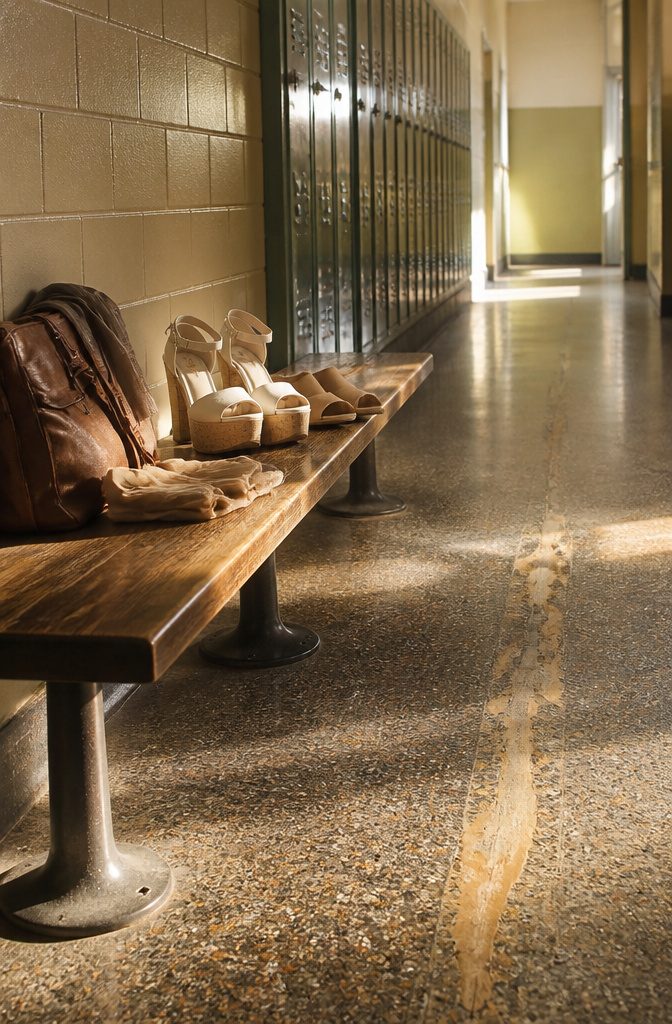
Sandals arrived in boardrooms by spring 1979, a shift that marked how far casual styling had traveled.
The look leaned on soft leathers and brushed nubuck, with tan, beige and driftwood replacing the traditional brown and black that had dominated office footwear.
These weren’t beach slides repurposed for work; the detailing stayed trim, with stitched accents and slip-on construction that kept them polished enough for management meetings.
Platform sandals dominated high school hallways earlier in the decade, often paired with bell-bottoms wide enough that the extra height kept hems off the ground.
The style crossed into black urban fashion, where extreme platform heights became the defining look by mid-decade. By 1978 the platform sandal still had enough reach that it showed up in Canadian streetwear, though the end was near.
White platform sandals worn with tights read as pure seventies even at the time: a combination specific enough that it registered as a misstep outside that narrow window.
6. White Shoes and Boots
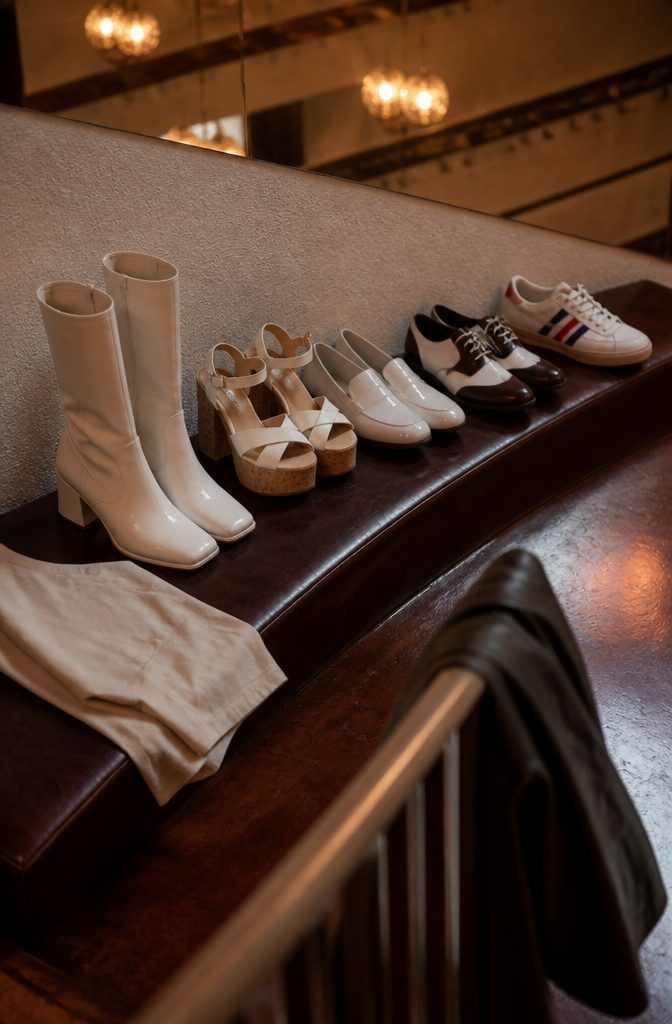
White boots became a signature look of the decade, worn by both men and women in calf-high and knee-high cuts.
Men paired white leather boots with flared trousers and printed shirts, while women wore them with miniskirts and midi dresses. The look appeared in everything from go-go styling early in the decade to disco ensembles by the late seventies.
White platform sandals were a summer staple, often with ankle straps and thick cork or wooden soles.
The same bright white showed up in men’s dress shoes, particularly patent leather loafers and two-tone spectators that broke from the brown-and-black convention of earlier decades.
White low-top sneakers with colored stripes crossed into casual wear, and the clean look worked equally well with denim or linen trousers.
Current Retro Sneakers Inspired by the 1970s

Loewe’s Ballet Runner sits at $650 and merges the lines of a ballet flat with a 1970s track shoe, a softer silhouette than the chunky sneakers that have dominated for years.
Re/Done offers a nylon runner at $460, inspired by a vintage find, while Tory Burch’s $228 option (called The Tory) leans into the same laid-back tennis shoe shape.
"I’m intrigued by the laid-back, sporty aesthetic—no physical activity required. Plus, some of them were inspired by styles originally produced in the 1970s, or they’re reissues of the originals, which makes them feel less like a sneaker trend and more like a vintage treasure."
— Vogue
That vintage credential matters if you want a runner that reads retro rather than performance. Nike’s $90 pair and Saucony’s $45 reissue both pull from archive designs, as does the Adidas collaboration at $120.
Spalwart ($300), A-Cold-Wall ($290), Marni ($590), Onitsuka Tiger ($80), Karhu ($98), and Diadora ($180) round out the field, most leaning into neutral tones and slimmer proportions that work under cropped trousers or with dresses.
The 1979 Palette: Brown, Black, Tan, Beige, Driftwood
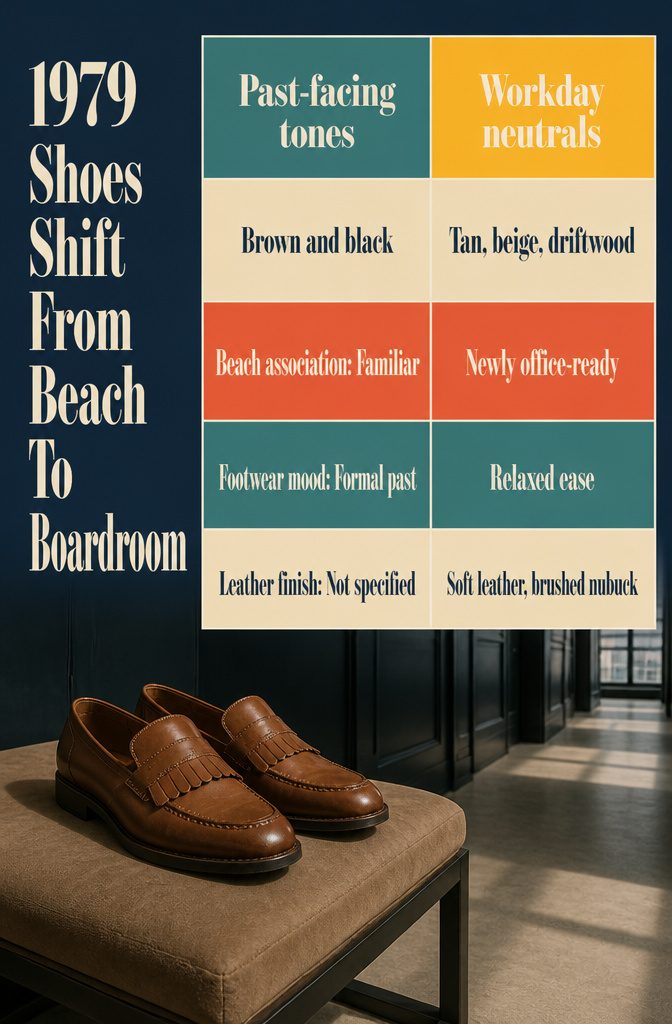
By the end of the decade, brown and black were paying respects to the past while tan, beige, and driftwood stepped into the boardroom.
The March 1979 shift tracked a broader loosening in menswear: unconstructed blazers, narrowed pants, and footwear in soft leathers and brushed nubuck that moved as easily to a management conference as to the disco floor.
Neutral tones matched the relaxed styling that spring, and the new palette signaled a man whose feet were, as the Footwear Council put it, firmly planted.
Slip-ons arrived with kiltie accents, stitched and punched details replaced formality with ease, and the colors that had spent summers at the beach were suddenly appropriate for work.
Frequently Asked Questions
What shoes were big in the 70s?
Platform shoes dominated the decade in sandal, clog, and boot forms, appearing everywhere from high schools to urban fashion.
Men wore loafers, Oxfords, brogues, cowboy boots, and white leather boots, while athletic-inspired casual shoes in canvas and soft leather gained ground.
Sandals in neutral tones moved into professional settings by 1979, and white boots became a signature look for both men and women throughout the decade.
Are go-go boots 60s or 70s?
Go-go boots originated in the 1960s but continued into the early 1970s as part of the white boot trend that defined the decade.
White boots in calf-high and knee-high cuts remained popular throughout the 70s, worn by both men and women with everything from miniskirts to disco outfits.